
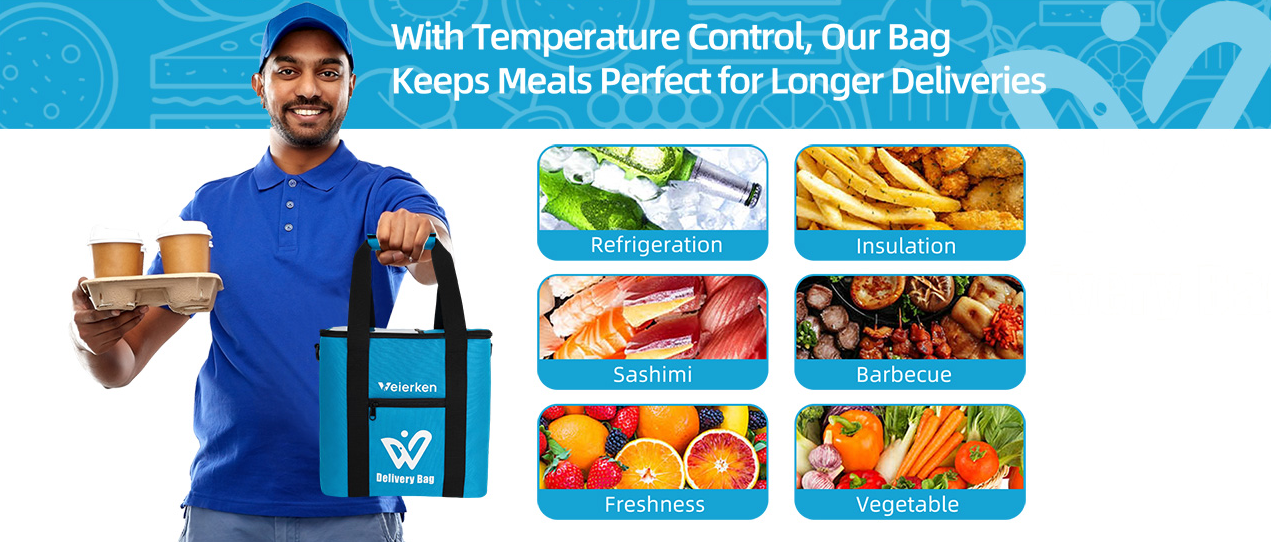
Les marques d'abonnement de repas diététiques font face à un marché agressif. Les coûts d'acquisition des clients continuent d'augmenter, tandis que la fidélisation des clients repose sur deux éléments fragiles : la fraîcheur des aliments et la perception de la marque. Lorsqu'un client reçoit une salade keto tiède ou un bol riche en protéines qui fuit, il ne blâme pas le livreur. Il annule son abonnement.
Les boîtes en carton à usage unique et les emballages en aluminium fragiles perdent leur viabilité. Les répressions réglementaires sur les déchets d'emballage, l'augmentation des taxes sur les décharges et les prix volatils des matières premières ont poussé les opérateurs à repenser leurs chaînes d'approvisionnement. Les emballages réutilisables et performants sont passés d'un centre de coûts à un atout critique.
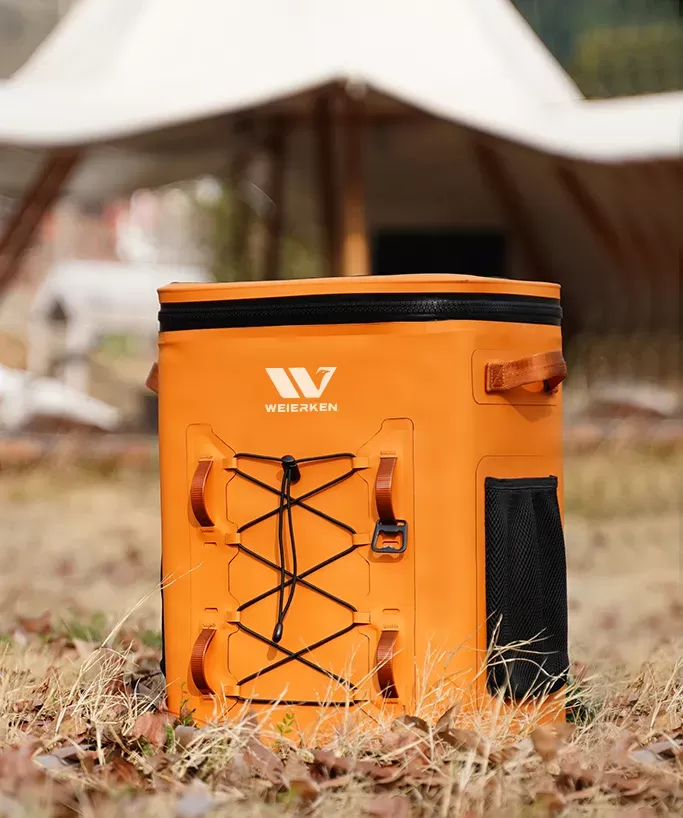
Chez Weierken, nous concevons et fabriquons des glacières souples de qualité commerciale et des solutions d'emballage thermique pour des programmes alimentaires mondiaux. Nous voyons comment les principales entreprises de préparation de repas gèrent leurs lignes de fulfillment. Aujourd'hui, les sacs isothermes pour la livraison de repas diététiques doivent fonctionner comme des réfrigérateurs légers et mobiles qui protègent vos marges alimentaires et renforcent votre identité de marque chaque matin.
Voici les sept principales caractéristiques que les responsables des achats, les opérateurs de cuisines cloud et les fondateurs de marques de repas doivent évaluer pour leurs programmes d'emballage de 2026.
1. Contrôle thermique de qualité médicale et intégration de changement de phase
La norme de base pour la logistique des repas frais est de maintenir les températures internes des cargaisons en dessous de 4°C (39,2°F) pendant 4 à 8 heures. La mousse de polyéthylène expansé (EPE) standard de 3 mm laminée à un film en aluminium bon marché ne peut pas atteindre cet objectif pendant les heures de pointe d'été.
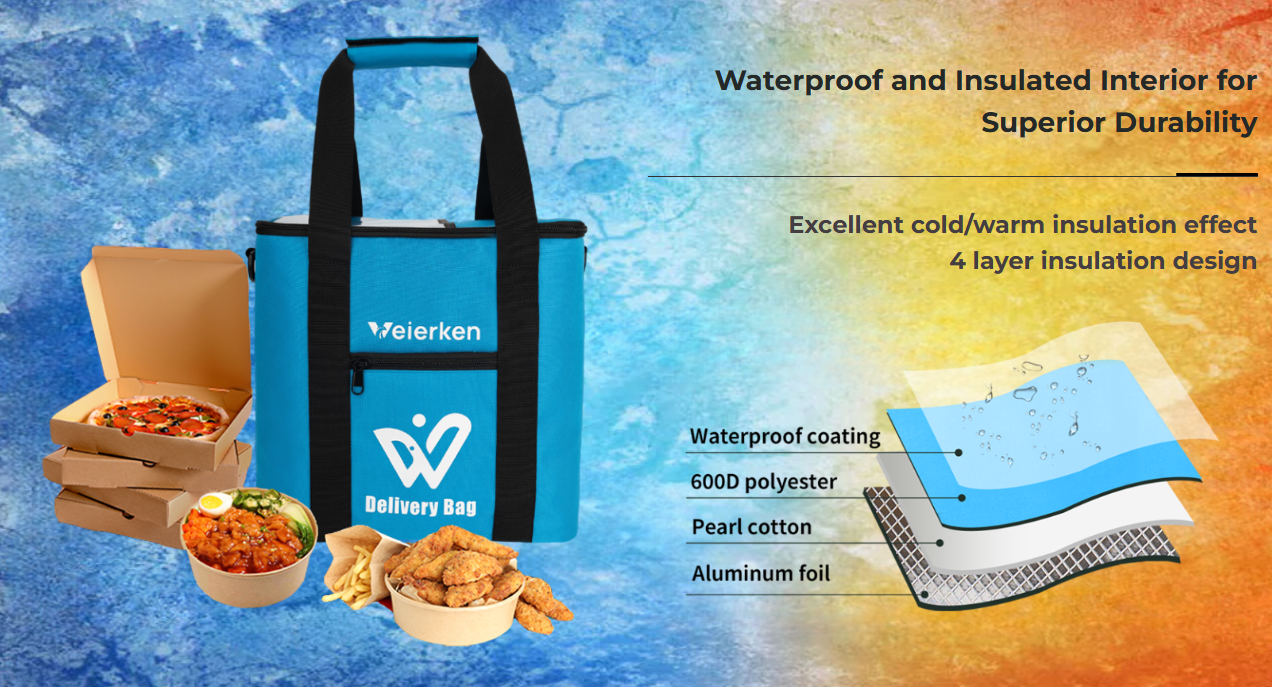
Les sacs commerciaux modernes reposent sur une architecture composite thermique multicouche :
Écran extérieur : Polyester ou nylon résistant à l'eau de haute densité pour dévier la chaleur et l'humidité directes.
Isolation centrale : Mousse de polyuréthane ou de NBR à cellules fermées de haute densité, associée à des couvertures en aérogel légères ou à des panneaux d'isolation sous vide (VIP) le long des murs critiques.
Barrière de radiation : Films réfléchissants thermiques scellés à chaud, de qualité alimentaire, qui renvoient la chaleur ambiante vers l'extérieur.
Poches de matériau à changement de phase (PCM) conçues : Manchons dédiés pour les packs de gel congelés ou les briques à changement de phase non toxiques à +0°C garantissent l'absence de points froids et empêchent les dommages par congélation directe aux produits frais.
Cette barrière thermique empêche la croissance microbienne, aide les marques à se conformer aux normes strictes de sécurité alimentaire HACCP et garantit que les repas arrivent croquants, frais et prêts à consommer.
2. Conformité à l'économie circulaire : tissus 100 % rPET et empreintes carbone faibles
L'environnement réglementaire entourant les emballages jetables se resserrera considérablement d'ici 2026. Les mandats de Responsabilité Élargie des Producteurs (REP) et les taxes sur les emballages plastiques des entreprises à travers l'Amérique du Nord et l'Europe pénalisent les marques qui s'appuient sur des sacs en polyéthylène à usage unique ou du polystyrène expansé (EPS).
Changer vos sacs isothermes pour la livraison de repas diététiques en polyéthylène téréphtalate recyclé certifié (rPET) offre un soulagement réglementaire instantané. Les usines de tissu fabriquent du rPET en broyant des bouteilles en plastique post-consommation en flocons, en les fondant en chips et en les filant en fil durable. Un sac cooler de taille moyenne détourne entre 15 et 35 bouteilles en plastique des décharges locales.
Les équipes d'approvisionnement devraient exiger la certification Global Recycled Standard (GRS) de leurs partenaires d'usine. Les sacs réutilisables en rPET offrent aux abonnements de repas fitness, keto et de clean-eating une histoire de durabilité mesurable qui résonne directement avec les consommateurs soucieux de leur santé.
3. Intérieurs modulaires et anti-basculement pour les conteneurs de préparation de repas de précision
Les plans de repas diététiques reposent sur un équilibre exact des macronutriments. Les marques emballent plusieurs articles par livraison : conteneurs de préparation rectangulaires, petits récipients à vinaigrette, jus verts pressés à froid et packs de vitamines à température ambiante. Les conteneurs lâches qui glissent à l'intérieur d'un sac surdimensionné entraînent des aliments écrasés, des présentations de repas peu attrayantes et des déversements désordonnés.
Les sacs de livraison de repas industriels nécessitent des agencements internes structurés et modulaires :
Diviseurs amovibles à crochets et boucles : Permettent au personnel de cuisine d'ajuster les dimensions intérieures à la volée en fonction des commandes quotidiennes de 3 repas, 5 repas ou de taille familiale.
Manchons pour bouteilles sur les parois latérales : Des boucles élastiques robustes maintiennent les bouteilles de jus en verre ou en rPET debout pour éviter qu'elles ne roulent et ne subissent des dommages dus aux chocs.
Poches pour packs de glace suspendus : Garder les packs de gel surélevés au-dessus des conteneurs de repas permet à l'air froid de circuler naturellement vers le bas, maximisant la convection thermodynamique.
Inserts de base rigides : Des plinthes en polypropylène (PP) amovibles en nid d'abeille répartissent le poids de la charge utile et empêchent l'affaissement au centre pendant le transport par coursiers à vélo et à moto.
4. Ingénierie hygiénique sans couture : soudures étanches et doublures antimicrobiennes
Un modèle de logistique inverse en boucle fermée s'effondre si le nettoyage des sacs retournés prend trop de temps ou coûte trop cher. Si du bouillon de poulet, de la vinaigrette ou de la condensation s'infiltrent dans les lignes de couture intérieures, les bactéries se multiplieront à l'intérieur du noyau d'isolation. Le sac développe rapidement des odeurs nauséabondes et doit être jeté.
Des fabricants comme Weierken résolvent ce problème en remplaçant la couture standard à l'aiguille et au fil par un soudage à haute fréquence par ultrasons. Les doublures en PEVA de qualité alimentaire ou en TPU de forte épaisseur ne contiennent aucun trou d'aiguille, formant une baignoire interne 100 % étanche.
De plus, des matériaux de doublure avancés de 2026 intègrent des agents antimicrobiens à base d'ions d'argent directement dans la matrice polymère. Cela inhibe 99,9 % de la croissance bactérienne et de la formation de moisissures. Les équipes de nettoyage de cuisine peuvent pulvériser l'intérieur avec des désinfectants sûrs pour les aliments, l'essuyer avec un chiffon en microfibre et retourner le sac à la ligne d'emballage en quelques secondes.
5. Suivi logistique intelligent : RFID, NFC et capteurs de température
Les emballages réutilisables représentent des actifs d'entreprise sur le terrain. Lorsque les clients accumulent des sacs ou oublient de les retourner lors de leur prochaine journée de livraison, vos coûts de remplacement de flotte augmentent. L'intégration de technologies de suivi IoT passives et actives protège votre investissement en inventaire.
Les sacs isothermes modernes pour la livraison de repas diététiques disposent de fentes intelligentes intégrées et discrètes :
Inlays RFID / UHF passifs : Cousus à l'intérieur de la couture, ils permettent aux scanners d'entrepôt d'enregistrer des centaines de sacs entrants et sortants simultanément lorsque les fourgonnettes de livraison passent par les quais de chargement.
Patches NFC de retour client : Un client tapote son smartphone contre un badge extérieur pour réserver une collecte de sacs vides ou déclencher le renouvellement de sa livraison.
Poches pour enregistreurs de données Bluetooth Low Energy (BLE) : Une poche interne TPU dédiée contient des capteurs de température miniatures. Les coursiers et les responsables des opérations peuvent extraire sans fil les journaux de chaîne du froid de l'ensemble du trajet sans ouvrir le sac et compromettre les températures des aliments.
6. Durabilité de Qualité Commerciale pour Réduire le Coût par Livraison
Les marques débutantes évaluent l'emballage uniquement en fonction du prix d'achat unitaire. Les directeurs de la chaîne d'approvisionnement expérimentés évaluent l'emballage en fonction du coût par livraison (CPT).
Considérez les calculs : une boîte en carton à usage unique associée à du papier bulle enveloppé dans du foil peut coûter 3,20 $ par livraison. Un sac isotherme réutilisable et robuste fabriqué par Weierken peut coûter 14,00 $ à produire. Si ce sac survit à 70 cycles de livraison et de retour, le coût d'emballage tombe à seulement 0,20 $ par livraison. Vos économies s'accumulent à chaque itinéraire de livraison complété.
Atteindre ce niveau de durabilité nécessite des normes de construction industrielle spécifiques :
Coutures Box-X et Bar-Tack : Points d'ancrage doublement renforcés aux jonctions des poignées résistent à des tests de traction dépassant 25 kg (55 lbs).
Fermetures Éclair Imperméables : Les fermetures à spirale standard échouent lorsqu'elles sont sollicitées aux coins. Les fermetures éclair imperméables en TPU épais ou à dents en nylon de taille #8/#10 résistent aux blocages, à la saleté et à une manipulation brutale.
Pieds Moulés Résistants à l'Abrasion : Des pare-chocs en PVC dur ou en caoutchouc sur le panneau inférieur empêchent le contact avec des trottoirs sales, des marches d'appartement humides, et des sols de cuisine.
7. Précision OEM/ODM Branding pour une Expérience de Déballage Premium
Un sac de livraison de régime se trouve sur le pas de la porte de votre client plusieurs jours par semaine. Il fonctionne comme un panneau publicitaire public pour votre service dans les couloirs d'appartement, les halls de bureaux et les quartiers suburbains. Des sacs de messagerie ternes et génériques signalent de la nourriture bon marché. Des sacs de marque personnalisée signalent une nutrition premium et des soins professionnels.
La personnalisation au niveau de l'usine transforme un refroidisseur standard en un atout de marque poli :
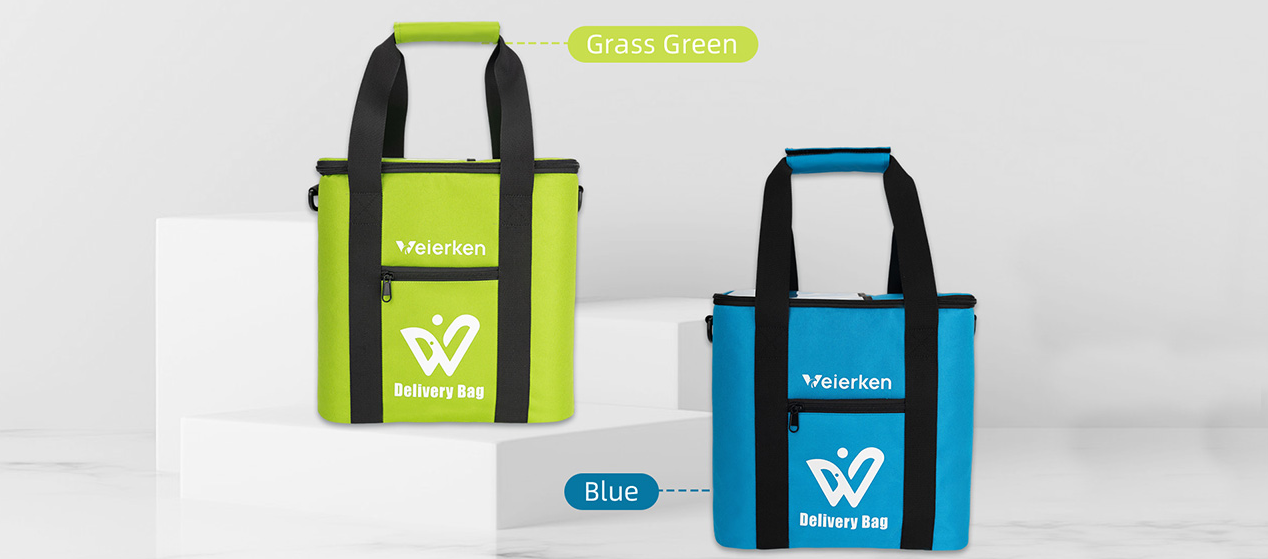
Coques Accordées à Pantone : Associez précisément les couleurs de votre marque corporative sur des tissus extérieurs résistants aux UV.
Accents de Sécurité Réfléchissants : Des passepoils réfléchissants de haute visibilité protègent les livreurs de nuit tout en encadrant proprement les lignes structurelles du sac.
Impression de Surface Écologique : Impression en soie à base d'eau haute définition, graphiques par transfert thermique, et patchs en silicone moulé offrent un contraste visuel net qui résiste à l'écaillage après plusieurs lavages.
Compartiments de Style de Vie Dédiés : Des poches zippées extérieures gardent en toute sécurité les cartes de menu quotidiennes, les feuilles de répartition des macronutriments, les ensembles de couverts en bois, et les inserts marketing de marque.
Comparaison des Caractéristiques : Usage Unique vs. Standard Réutilisable vs. Sac de Qualité Commerciale 2026
Le tableau ci-dessous décompose les différences techniques et opérationnelles entre les méthodes d'emballage de livraison courantes :
| Spécification / Caractéristique | Boîte à usage unique + Aluminium | Tote réutilisable standard | Spécification commerciale Weierken 2026 |
|---|---|---|---|
| Rétention thermique (Sous 4°C) | 2 à 4 heures | 3 à 5 heures | 6 à 10 heures (avec PCM) |
| Durée de vie moyenne | 1 livraison | 15 à 25 trajets | 80 à 120+ trajets |
| Nettoyage & Entretien | N/A (Éliminé) | Difficile (coutures cousues) | Essuyage / Soudé ultrasonique |
| Statut ESG & Réglementaire | Soumis à des taxes/pénalités | Synthétiques vierges mixtes | 100% rPET, certifié GRS |
| Préparation au suivi d'actifs | Aucun | Autocollant externe uniquement | RFID / NFC / BLE intégré |
Questions Fréquemment Posées (FAQ)
Q1 : Comment les sacs isothermes pour la livraison de repas diététiques maintiennent-ils des températures alimentaires sûres sans réfrigération active ?
A1 : Ces sacs combinent des barrières thermiques conductrices, convectives et radiantes. Les mousses à cellules fermées à haute densité (comme le NBR ou le PU) résistent au transfert de chaleur conductif de l'air extérieur. Une couche interne réfléchissante en aluminium ou PEVA reflète la chaleur radiante. Lorsqu'ils sont couplés avec des matériaux à changement de phase (PCM) ou des packs de gel conçus placés dans des poches supérieures dédiées, le flux d'air convectif naturel déplace l'air froid vers le bas sur les boîtes alimentaires, maintenant des environnements stables sous 4°C pendant des heures.
Q2 : Quelle est la véritable durée de vie moyenne et le coût par trajet d'un sac de livraison de repas commercial ?
A2 : Un sac de qualité commerciale construit avec des points de stress renforcés, des zips robustes et des tissus extérieurs en rPET offre entre 80 et 120 trajets dans des conditions de manipulation quotidienne de flotte. Bien qu'un sac initial coûte entre 10 $ et 18 $ selon les caractéristiques personnalisées, le coût par trajet tombe à environ 0,10 $ à 0,22 $, bien en dessous du coût récurrent de 2,50 $ à 4,50 $ des boîtes à usage unique et des enveloppes en papier.
Q3 : Notre entreprise peut-elle commander des dimensions de sacs personnalisées adaptées à nos contenants de préparation de repas spécifiques ?
A3 : Oui. En tant que fabricant OEM/ODM, Weierken conçoit des cavités de sacs autour de vos configurations de contenants spécifiques. Nous optimisons la largeur, la profondeur et la hauteur internes pour correspondre à votre nombre de piles de repas (par exemple, configurations de 4, 6 ou 8). Cet ajustement personnalisé élimine l'espace interne gaspillé, minimise le volume de réfrigérant requis et empêche les contenants de basculer pendant le transport.
Q4 : Comment les sacs isothermes en rPET aident-ils les marques d'abonnement de repas à se conformer aux réglementations mondiales sur l'emballage ?
A4 : De nombreuses juridictions mondiales imposent des taxes sur les emballages en plastique vierge et des objectifs stricts de détournement des déchets vers les décharges. L'utilisation de coques extérieures en rPET (polyéthylène téréphtalate recyclé) permet aux services de livraison de repas de contourner les frais de plastique vierge et de démontrer un cadre certifié d'économie circulaire. Weierken fournit une documentation GRS complète pour vérifier la durabilité de votre chaîne d'approvisionnement lors des audits d'entreprise.
Q5 : Quel est le calendrier de développement typique et la quantité minimum de commande (MOQ) pour des sacs personnalisés ?
A5 : Le développement de prototypes personnalisés prend généralement de 7 à 10 jours ouvrables, y compris la création de modèles, l'optimisation thermique et l'application du logo de la marque. Une fois que l'échantillon réussit les tests de stress thermique, les productions en série prennent environ 25 à 35 jours. Les MOQ de production standard commencent à 500 à 1 000 unités par coloris, permettant aux marques régionales émergentes et aux programmes nationaux établis de se développer efficacement.
Améliorez l'emballage de votre flotte avec Weierken
L'emballage doit protéger vos marges, garder les aliments frais et rendre votre marque instantanément reconnaissable dans la rue. Investir dans un emballage de mauvaise qualité entraîne des investissements en acquisition de clients gaspillés, un taux de désabonnement élevé et des livraisons alimentaires désordonnées.
Weierken fabrique des sacs isothermes durables et à haute efficacité pour les marques de livraison de repas diététiques à travers le monde. Notre équipe d'ingénierie vous aide à créer un sac adapté directement à vos itinéraires opérationnels, aux spécifications de conteneurs et aux indicateurs de durabilité de votre entreprise.
Prêt à éliminer le gaspillage de repas et à réduire votre coût par trajet ?
Contactez notre bureau d'ingénierie dès aujourd'hui pour demander un devis, télécharger notre Calculateur de ROI pour l'emballage de livraison de repas 2026, et commander un échantillon physique pour des tests de stress de chaîne du froid internes.