
Food delivery services face intense operational demands every day. Delivery riders carry hot pizzas, steaming soups, and freshly fried items across busy cities. Inside the delivery container, temperatures can regularly climb to between 70°C and 90°C.
Standard insulated bags often fail under these extreme conditions. Low-end materials warp, melt, and stick together, producing unpleasant chemical odors. When looking for high-quality commercial equipment, B2B buyers must partner with a professional melt proof delivery bag maker who understands high-temperature material science.
As an experienced industrial manufacturer, Weierken designs delivery solutions that handle these daily thermal stresses. Preventing thermal degradation requires more than just thick fabrics. It demands a systematic combination of advanced polymer selection, multi-layer thermal engineering, and precise manufacturing techniques.
1. Material Science: Moving from Melting PVC to High-Heat Polymers
Many budget-friendly insulated bags rely on Polyvinyl Chloride (PVC) for their inner linings. While PVC is cheap and easy to clean, it has a low glass transition temperature. When exposed to temperatures above 70°C, PVC begins to soften, lose its shape, and release a sticky residue.
This structural softening is often accompanied by plasticizer migration. This process can release chemical fumes that affect the smell and taste of the food. To avoid this, a professional melt proof delivery bag maker replaces low-grade PVC with high-performance polymers. These advanced materials maintain their structural integrity under constant thermal loads.
Food-grade TPU coating: Thermoplastic Polyurethane (TPU) safely handles temperatures from -40°C up to 120°C. A food-grade TPU coating does not contain volatile plasticizers, remains highly flexible, and offers excellent grease resistance.
Silicone-Coated Glass Fiber Fabrics: Used in industrial-grade food transport, these fabrics withstand intense contact heat. They do not melt or smoke, even when placed next to boiling-hot liquids.
High-Purity Aluminum Foils: Instead of metallic spray coatings that flake off, premium manufacturers use thick, laminated aluminum sheets. These sheets reflect heat away from the core padding.
By switching to these advanced polymers, manufacturers can prevent the inner lining of the bags from melting. This also ensures that the bags remain safe for food contact throughout their operational lifespan.
2. Multi-Layer Thermal Barrier Engineering
Heat travels in three ways: conduction, convection, and radiation. A standard insulated bag usually only addresses conduction by using a basic foam layer. However, a specialized melt proof delivery bag maker designs a multi-layered structure to manage all three types of heat transfer.
This multi-layer approach protects the inner components of the bag from high temperatures. It also ensures that the outer shell remains comfortable for delivery riders to carry.
The Reflective Barrier
The innermost layer features a high-grade thermal radiation barrier. This layer reflects up to 95% of infrared heat waves back toward the food container. This keeps the food hot while reducing the amount of heat that reaches the inner insulation padding.
The Structural Insulation Core
Cheap bags often use Expanded Polyethylene (EPE) foam, which can collapse when exposed to heat and pressure. Professional manufacturers like Weierken use high-density cross-linked polyethylene (XPE) or polyurethane (PU) foam.
The cross-linked molecular structure of XPE foam prevents it from thinning or breaking down under continuous thermal stress. This ensures the bag retains its shape and insulating properties over long-term use.
The Support Layer
Between the inner insulation and the outer fabric, a rigid support board is often integrated. These boards are made from heat-resistant polypropylene (PP) rather than cheap cardboard, preventing the bag from warping when exposed to steam.
3. Seamless High-Frequency Welding vs. Traditional Stitching
Even the best materials can fail if they are put together incorrectly. Traditional sewing uses needles that punch thousands of tiny holes through the outer fabric and inner lining. These puncture marks create weak points in the bag's structure.
When hot steam and grease seep into these needle holes, they degrade the inner insulation foam. Over time, this moisture buildup causes unpleasant smells, mold growth, and seam failures.
To solve this issue, an advanced melt proof delivery bag maker uses high-frequency welding (also known as radio frequency welding) instead of traditional sewing. This process uses electromagnetic energy to fuse the polymer layers at a molecular level.
Waterproof and Steamproof Seals: Welded seams create an airtight barrier, preventing moisture and grease from reaching the insulation core.
Uniform Strength: Fused joints are highly durable. They resist peeling and tearing, even when exposed to high temperatures and heavy loads.
Better Hygiene: Without stitch lines, the interior liner is smooth and easy to wipe down. This prevents food residue from getting trapped in the seams.
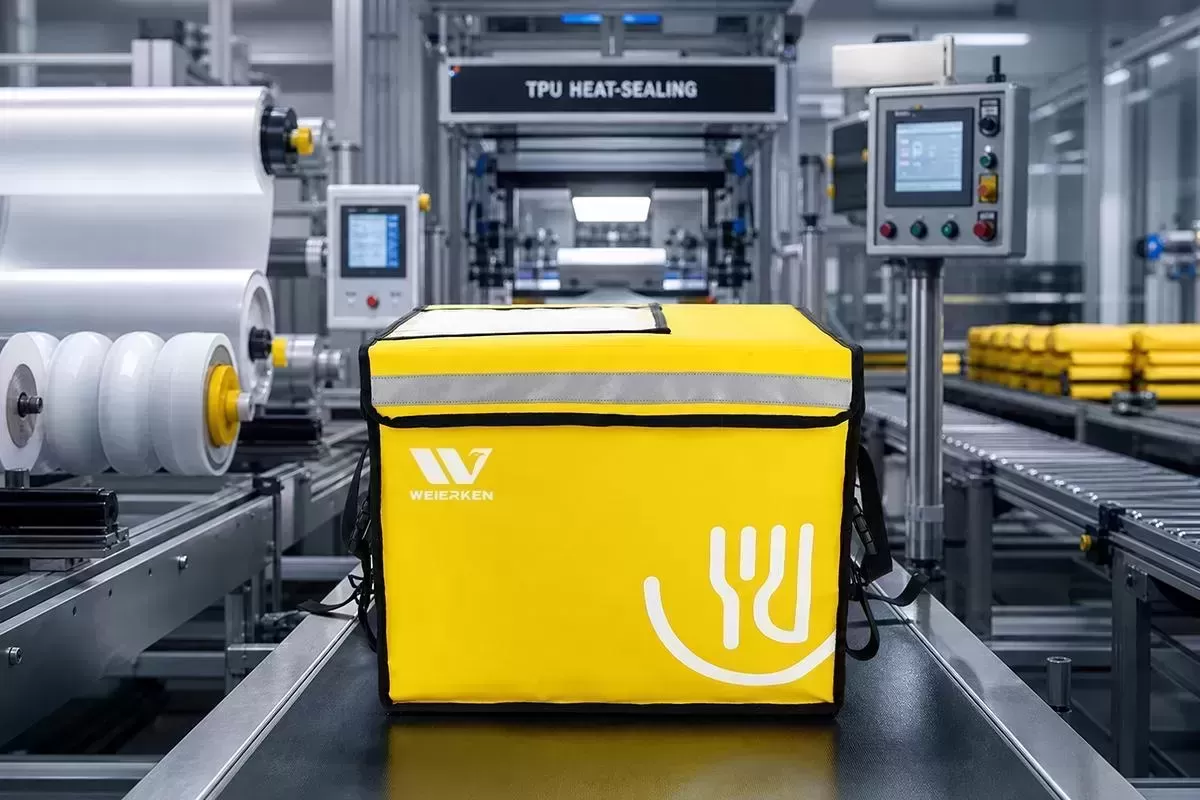
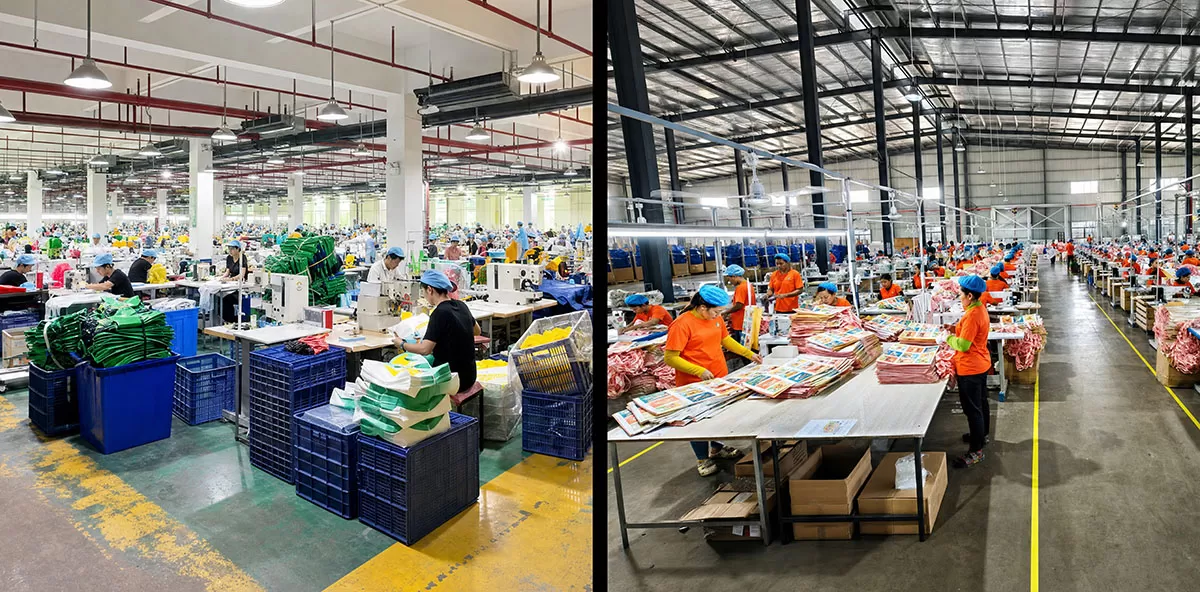
At Weierken, we use automated welding equipment to ensure consistent, high-strength seals. This manufacturing process eliminates the risk of joint failures caused by heat-induced thread degradation.
4. Venting and Moisture Regulating Tech
When hot food is placed in a sealed delivery bag, it continuously releases water vapor. If this steam cannot escape, it condenses on the cool inner surfaces of the bag.
Accumulated moisture can pose a significant challenge. The latent heat of trapped steam can accelerate the thermal degradation of cheap inner plastics, making them sticky and prone to tearing. It also ruins the food by making fried items and pizza crusts soggy.
A professional melt proof delivery bag maker solves this by adding moisture control systems to their designs. These features allow excess steam to escape without letting too much heat out.
One-way venting valves: These mechanical valves open when internal steam pressure rises. This releases hot vapor while keeping external dust and rain out of the bag.
Breathable Nanofiber Membranes: These specialized membrane patches allow water vapor molecules to pass through while keeping liquid water out.
Sloped Interior Channels: Some designs feature molded channels that direct condensation away from the food containers and into collectable drainage areas.
These features help keep the inside of the delivery bag dry. They protect the bag's liner from moisture damage while keeping food fresh and crispy during transport.
5. Rigorous Thermal Load Testing in Factory
A reliable melt proof delivery bag maker does not just promise durability—they prove it through rigorous testing. Quality control labs simulate extreme delivery conditions to ensure every batch of bags meets commercial standards.
Before any delivery bag design goes into mass production, its materials undergo several physical and thermal tests.
Thermal Aging Chamber Testing
Material samples are placed in environmental chambers heated to 90°C–100°C for several days. Technicians then check the materials for bubbling, cracking, peeling, or sticky surfaces. This ensures the bag can handle years of daily hot-food deliveries.
Cyclic Thermal Loading
This test subjects the bag to rapid temperature changes, cycling between cold outdoor temperatures and hot food delivery temperatures. This process tests the durability of the welded seams and structural panels under thermal expansion and contraction.
Peel Strength Analysis
After thermal testing, the welded joints are pulled apart using specialized tensile testing machines. This check ensures the seams maintain their strength and do not peel apart when exposed to hot grease and steam.
Comparative Analysis: Industrial vs. Consumer Grade Insulated Bags
To help procurement teams make informed decisions, the table below highlights the key differences between standard consumer-grade bags and industrial-grade solutions from a professional melt proof delivery bag maker.
| Feature | Consumer-Grade Bags | Industrial Melt-Proof Bags (e.g., Weierken) |
|---|---|---|
| Inner Lining Material | Low-grade PVC or thin metallic spray | Food-grade TPU coating or silicone-coated fiberglass |
| Seaming Method | Standard sewing thread (absorbs moisture) | High-frequency welding (seamless & airtight) |
| Insulation Core | Low-density EPE foam (collapses under heat) | High-density cross-linked polyethylene (XPE) |
| Max Operating Temp | Approx. 60°C – 65°C | Up to 100°C+ continuously |
| Moisture Control | None (causes interior condensation) | Integrated one-way venting valves or membranes |
| Average Lifespan | 2 to 4 months of heavy daily use | 12 to 24+ months under commercial use |
Frequently Asked Questions
1. Why do cheap delivery bags melt on the inside?
Cheap bags often use Polyvinyl Chloride (PVC) or low-grade PE film for their inner linings. These materials have low melting points and can soften at temperatures as low as 65°C. When they come into contact with hot pizza boxes or soup containers, they can melt, warp, and stick to food packaging.
2. What makes TPU better than PVC for food delivery bags?
TPU has a much higher melting point than PVC and remains stable at temperatures up to 120°C. It is also food-safe, highly resistant to oils and grease, and does not require chemical plasticizers to stay flexible. This prevents the lining from cracking, peeling, or releasing odors over time.
3. Why is XPE foam preferred over EPE foam for insulation?
EPE foam consists of independent bubbles that can collapse permanently when exposed to heat and heavy loads. Cross-linked polyethylene (XPE) has a stronger molecular structure. This allows it to retain its thickness, shape, and insulating performance even after months of exposure to high temperatures.
4. How does high-frequency welding improve bag durability?
Traditional stitching creates needle holes that let steam and grease leak into the insulation layer, causing mold and structural breakdown. High-frequency welding uses electromagnetic energy to fuse the materials together, creating a seamless, waterproof barrier that is as strong as the fabric itself.
5. Can these heat-resistant bags be customized with company logos?
Yes. A professional melt proof delivery bag maker like Weierken can customize your bags with high-temperature silkscreen printing or heat-transfer logos. This ensures your branding remains intact and does not peel or fade when exposed to steam and heat during deliveries.
Choosing a reliable delivery bag involves looking beyond simple aesthetics. For commercial food platforms and logistics businesses, purchasing cheap bags can lead to regular replacement costs, damaged food, and negative customer feedback. Investing in professionally engineered, heat-resistant bags is essential for smooth, reliable daily operations.
Working with an experienced melt proof delivery bag maker like Weierken gives you access to advanced materials, heavy-duty construction, and reliable quality control. Our bags are designed to protect your deliveries, keep food at the right temperature, and withstand the demands of commercial use.
Need durable, high-performance thermal delivery bags for your fleet? Contact our engineering and sales team today to discuss your requirements, customize your designs, or request a factory-direct quote.