

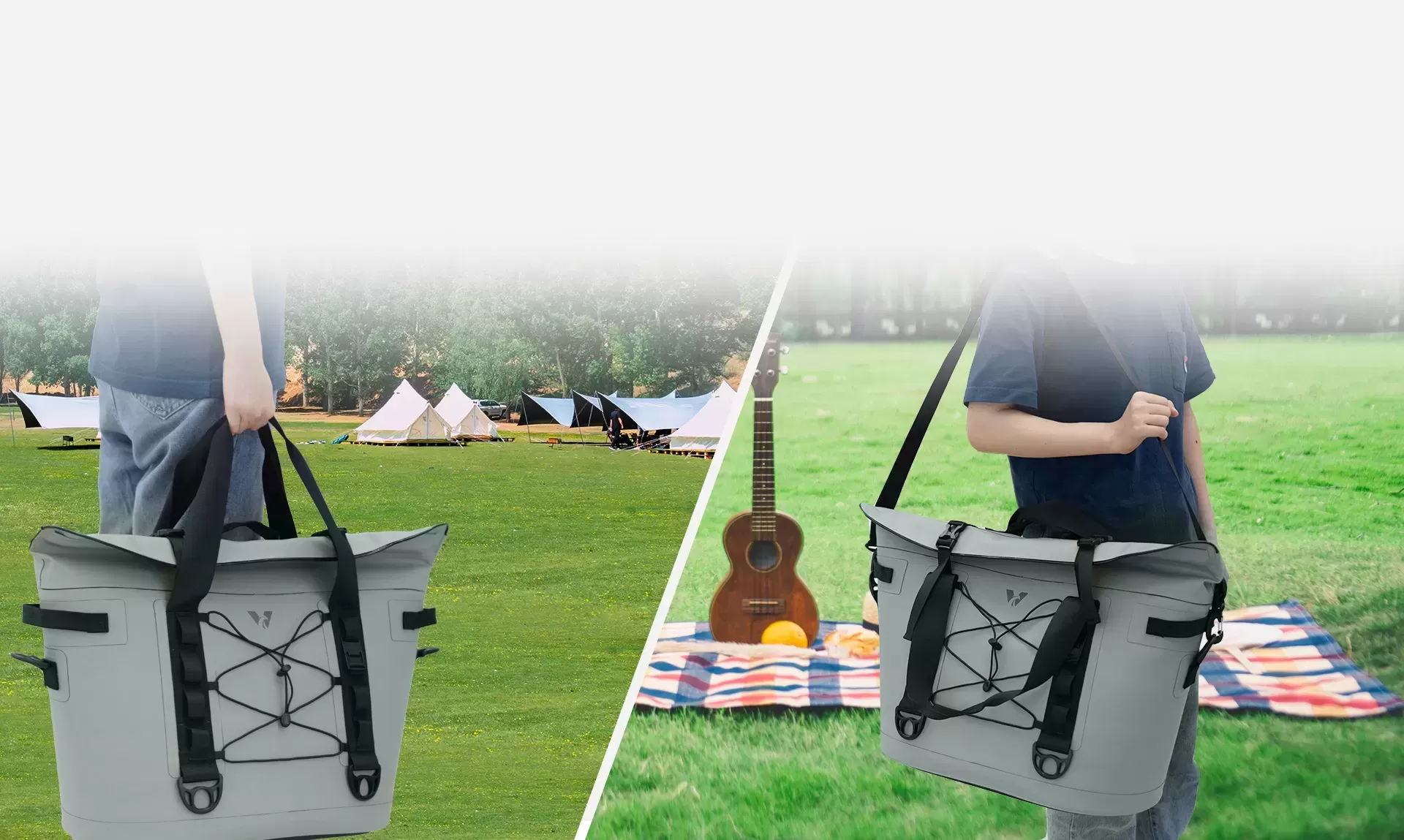
The global outdoor recreational market is experiencing a notable shift. More consumers are participating in demanding activities like multi-day camping, deep-sea angling, and off-road expeditions. These harsh environments put immense pressure on gear performance.
Standard thermal bags often fail under intense summer heat. Glued seams soften, stitching points leak, and cheap outer shells can melt or warp when exposed to hot vehicle interiors or direct sunlight. For brands, these failures lead to costly product returns and damaged reputations.
Addressing these challenges requires working with a specialized melt proof cooler bag maker like Weierken. By focusing on robust materials and advanced thermal engineering, we help brands deliver reliable gear to outdoor enthusiasts who refuse to compromise on quality.
The Cost of Thermal Failure in the Retail Market
B2B buyers face unique risks when sourcing outdoor gear. A single batch of leaking cooler bags can destroy consumer trust. Traditional coolers rely on stitched seams and standard PVC materials, which struggle under thermal stress.
When exposed to high cabin temperatures in parked vehicles, lower-grade plastics reach their glass transition phase. The seams weaken, the internal adhesive degrades, and the bag structural integrity fails. This issue has driven many brands to seek a dedicated heavy-duty cooler bag manufacturer.
Modern consumers demand gear that can survive sitting on a hot boat deck for hours. They expect ice retention that lasts for days, not hours. Choosing the right production partner ensures your product line meets these expectations without risking high warranty claim rates.
Defining Melt-Proof: Technical Specifications for High-Heat Environments
A true high-performance cooler bag is not simply a standard bag with thicker insulation. It requires a complete rethink of material science and assembly methods. Here is how modern manufacturing achieves true heat resistance.
RF Welding vs. Traditional Stitching
Stitched seams create thousands of micro-holes that let warm air enter and melted ice escape. Standard threads also degrade quickly under constant UV exposure and moisture.
To solve this, an experienced OEM thermal bag factory utilizes radio frequency (RF) welding. This process offers several advantages:
It uses electromagnetic energy to fuse material layers at the molecular level.
It creates a single, continuous barrier without needle punctures.
The resulting seam is actually stronger than the surrounding material itself.
This leakproof welded seam technology prevents structural failure when the bag is filled to capacity with heavy ice and beverages.
Material Analysis: TPU vs PVC Cooler Bags
The choice of raw materials determines how well a soft cooler handles high temperatures and physical abrasion. Comparing TPU vs PVC cooler bags reveals why premium brands are making the switch.
| Feature | TPU (Thermoplastic Polyurethane) | Standard PVC (Polyvinyl Chloride) |
|---|---|---|
| Heat Resistance | Maintains structural integrity up to 120°C without melting. | Softens and becomes sticky at around 60°C. |
| Environmental Impact | Biodegradable, recyclable, and toxin-free. | Releases harmful phthalates and chlorine during degradation. |
| Flexibility in Cold | Remains flexible down to -40°C. | Becomes brittle and cracks in freezing temperatures. |
| Abrasion Resistance | Excellent resistance to punctures and tears. | Moderate resistance; prone to wear along crease lines. |
By shifting production to TPU-coated nylon fabrics, Weierken ensures that our custom products remain stable even inside a vehicle trunk during peak summer heat waves.
Multi-Layer Insulation Architecture
To achieve long-term ice retention, the wall structure of the bag must minimize all three types of heat transfer: conduction, convection, and radiation. A typical premium build consists of three distinct layers:
The Outer Shell: Double-sided TPU-coated nylon that resists UV rays, grease, and high ambient temperatures.
The Core: High-density NBR (Nitrile Butadiene Rubber) closed-cell foam. Unlike cheap EPE foam, closed-cell NBR does not compress easily or absorb moisture over time.
The Liner: Food-grade TPU material that prevents bacterial growth and simplifies cleanup.
Sourcing Guide: Customization and Factory Capabilities
As a professional B2B buyer, you need to understand how a factory converts a design concept into a market-ready product. Finding a reliable melt proof cooler bag maker involves evaluating their design, testing, and compliance standards.
The OEM/ODM Customization Pipeline
Developing a custom cooler bag requires step-by-step verification to ensure performance standards are met before full-scale production begins.
3D Design & Blueprints: Engineering teams create detailed CAD models to optimize material usage and minimize seam stress points.
Rapid Prototyping: Factories produce functional samples within 7 to 10 days for initial physical evaluation.
Stress and Performance Testing: Prototypes undergo specialized testing to verify real-world durability.
These tests include pressure-testing the welded seams to ensure air tightness, load capacity testing on the handles, and thermal chamber evaluations to track ice retention rates under controlled, high-temperature conditions.
Compliance, Certifications, and Quality Standards
To import and distribute soft coolers in North American and European markets, compliance with international safety regulations is mandatory. Buyers should verify that their manufacturing partner holds the necessary credentials:
FDA & LFGB: Ensures all food-grade insulation materials used in the inner liner are safe for direct contact with food and beverages.
REACH & RoHS: Confirms the chemical components of the TPU and plastics are free from heavy metals and restricted substances.
Factory Audits: Certification under BSCI (Business Social Compliance Initiative) and ISO 9001:2015 guarantees ethical labor practices and consistent quality management systems.
Supply Chain Economics: MOQs and Production Capacity
Balancing inventory costs with production efficiency is a key consideration for purchasing managers. For high-quality, radio-frequency-welded bags, minimum order quantities (MOQs) typically range from 500 to 1,000 units per style.
This MOQ is necessary due to the complex setup times required for RF welding molds. During peak seasons, sourcing from a manufacturer with a reliable, high-volume production capacity ensures you can restock inventory without long delays.
Expanding Your Product Line: Key Commercial Applications
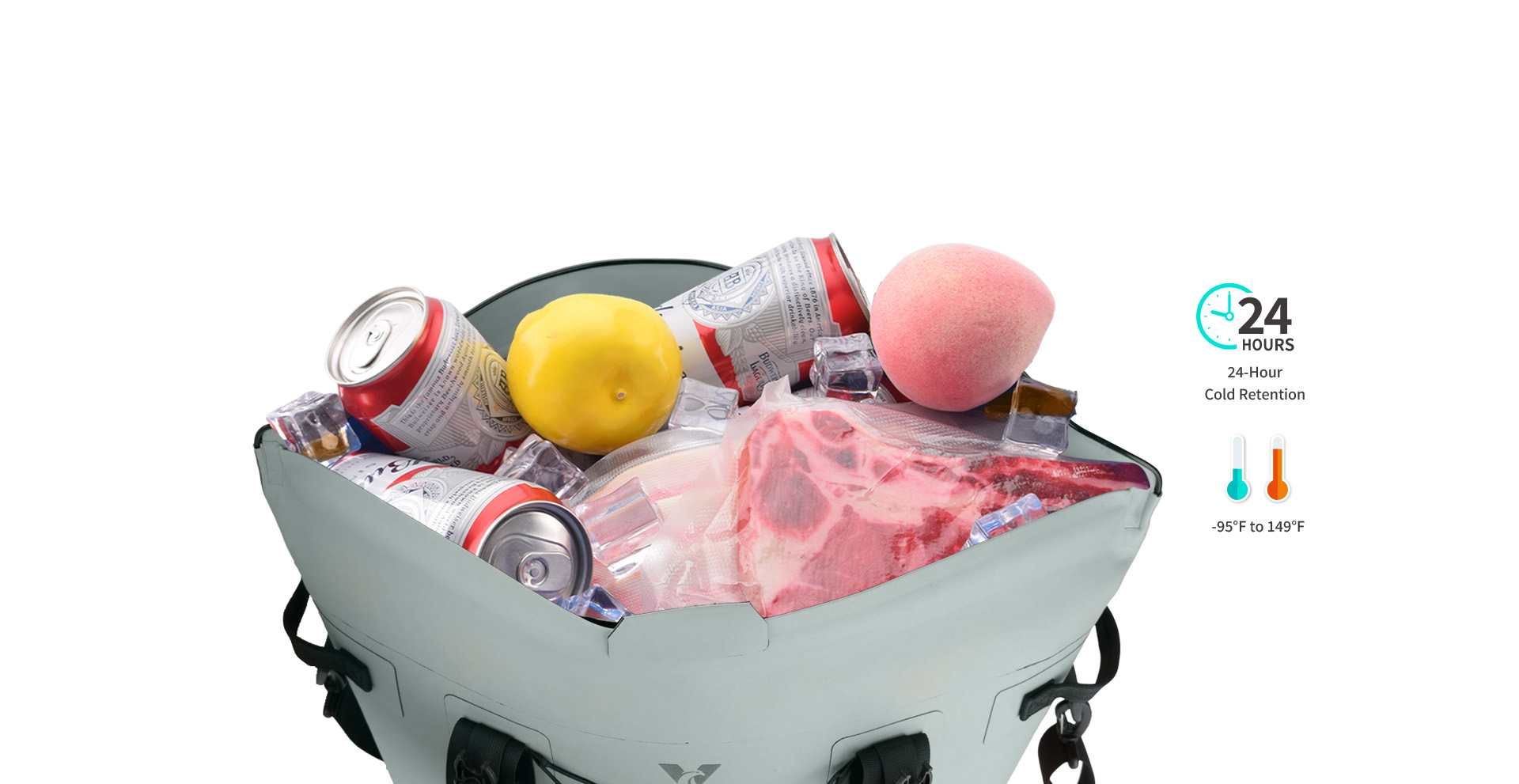
A high-performance cooler bag is versatile and appeals to several lucrative market segments. Retailers can market these products to various consumer groups, expanding their overall customer base.
Marine and Deep-Sea Fishing: Saltwater-resistant hardware combined with reliable thermal performance makes these bags ideal for boat decks exposed to salt spray and hot sun.
Overlanding and Off-Roading: Rugged outer shells handle the vibrations and dust of trail rides, fitting securely in the back of trucks without risking leaks.
Professional Food Delivery: High-end catering and delivery services require reliable temperature control to meet hygiene standards during hot summer days.
Wholesale Retail: Offering high-performance wholesale soft cooler bags allows outdoor stores to provide premium alternatives to traditional hard-sided coolers.
Frequently Asked Questions
1. What makes a cooler bag "melt-proof"?
A melt-proof bag uses high-performance materials like TPU-coated fabrics instead of low-grade PVC. It also replaces stitched seams with RF welding. This construction prevents the seams and shell from softening or melting in high-heat environments like hot vehicle trunks.
2. Is TPU safe for storing food and ice?
Yes, TPU is non-toxic, BPA-free, and phthalate-free. Premium manufacturers use food-grade TPU liners that comply with FDA and LFGB standards, ensuring the bag is safe for direct food contact and easy to clean.
3. How long can these soft-sided coolers hold ice?
Ice retention depends on ambient temperatures, ice-to-contents ratios, and the thickness of the insulation. High-density NBR closed-cell insulation can typically hold ice for 48 to 72 hours, even in hot summer conditions.
4. What is the typical MOQ for custom OEM cooler bags?
For custom RF-welded bags, the standard MOQ usually starts at 500 to 1,000 pieces. This requirement is due to the custom molds and specialized setup required for the high-frequency welding machines.
5. Can you add custom branding and logos to RF-welded bags?
Yes. Custom logos can be applied using silk-screen printing, laser etching, or TPU molded patches. These methods ensure the branding remains durable and does not peel off when exposed to water or heat.
Partner with an Experienced Manufacturer
Navigating the shifting demands of the outdoor market requires a manufacturing partner who understands material science and quality control. At Weierken, we focus on delivering reliable, durable thermal solutions tailored to your brand's requirements.
If you want to upgrade your product line, minimize customer return rates, and offer high-performance soft coolers, our team is ready to assist. Contact us today to discuss your project requirements, request a sample, or get a production estimate.