
Cold chain logistics, outdoor recreation, and direct-to-consumer grocery delivery are expanding rapidly. Because of this growth, buyer expectations for insulated gear have shifted dramatically.
A simple stitched bag with thin aluminum foil no longer cuts it for modern retail markets. Today's commercial buyers require 24-hour temperature retention, zero water leakage, food-grade safe linings, and sustainable fabrics.
Finding a trustworthy thermal bag odm partner requires looking beyond basic sewing capabilities. You need a production partner with deep engineering knowledge, material testing capabilities, and design expertise.
At Weierken, we help outdoor brands, large retailers, and private label sellers navigate these technical hurdles. This guide outlines the essential standards you should use to evaluate custom manufacturers in 2026.
The Evolution of Insulated Gear Manufacturing
The soft cooler and insulated bag market has moved far beyond simple low-cost promotional items. Consumers now expect heavy-duty performance once reserved exclusively for hard-shell coolers.
Understanding this industry shift helps you set clear expectations when selecting an OEM/ODM cooler bag 2026 partner. Modern thermal gear must balance several complex technical requirements simultaneously:
Thermal efficiency: Keeping contents cold or hot for 12 to 48 hours without heavy ice usage.
Leakproof integrity: Preventing melted ice from seeping through seams, stitch holes, or zippers.
Eco-compliance: Eliminating harmful PVC plasticizers and meeting strict global recycling standards.
Ergonomic utility: Integrating comfortable carry systems, molded bases, and modular storage pockets.
5 Core Criteria to Evaluate a Thermal Bag ODM Factory
Evaluating an original design manufacturer requires checking specific technical competencies. Use these five criteria to screen potential manufacturing partners during your sourcing process.
1. Advanced Thermal Engineering & Heat-Welding Tech
Stitched seams create thousands of needle punctures in bag linings. Melted ice eventually escapes through these tiny holes, damaging car trunks, store displays, or kitchen floors.
A reliable leakproof thermal bag supplier must utilize high-frequency voltage welding (RF welding) or hot-air seam sealing. Heat-sealed PEVA or TPU liners fuse the interior film into a single waterproof bucket.
Furthermore, inspect the insulation core materials offered by the factory:
EPE Foam (Expanded Polyethylene): Lightweight and budget-friendly, ideal for standard lunch totes and short-distance food delivery.
EVA / NBR Closed-Cell Foam: High-density, flexible insulation that provides structural rigidity and high thermal resistance for premium soft coolers.
Radiant Barrier Films: Reflective thermal foils that bounce radiant heat away from interior compartments.
2. Food-Safety Compliance & Sustainable Material Sourcing
The interior lining of a thermal bag directly touches fresh produce, beverages, and prepared meals. Cheap materials often emit strong chemical odors that ruin food products and trigger customer returns.
Your manufacturer must provide verifiable compliance documentation for all food-contact linings. Ensure their materials meet FDA (US) and LFGB (EU) food-grade standards, guaranteeing they are free from BPA, phthalates, and heavy metals.
Sustainability is another non-negotiable requirement for 2026. A forward-thinking eco-friendly insulated bag factory should provide certified GRS (Global Recycled Standard) rPET fabrics made from post-consumer plastic bottles, alongside eco-friendly TPU coatings.
3. Genuine ODM R&D & Rapid Prototyping Capabilities
Many suppliers market themselves as ODM factories, yet they only offer basic logo printing on existing catalog items. True design manufacturing requires engineering custom solutions from raw concepts.
If you need a bag that maintains internal temperatures below 4°C for 24 hours in 32°C ambient heat, an experienced thermal bag odm partner works backward. They calculate the necessary foam density, lining thickness, outer shell weight, and zipper style to achieve your target performance.
Ask potential factories about their prototyping speed. Leading facilities can convert hand sketches or technical specifications into digital 3D models within 48 hours and deliver physical prototypes in under 7 business days.
4. Cross-Category Design Synergies
The most innovative soft coolers draw inspiration from adjacent outdoor equipment categories. Factories specializing exclusively in basic cut-and-sew bags often miss these technical integrations.
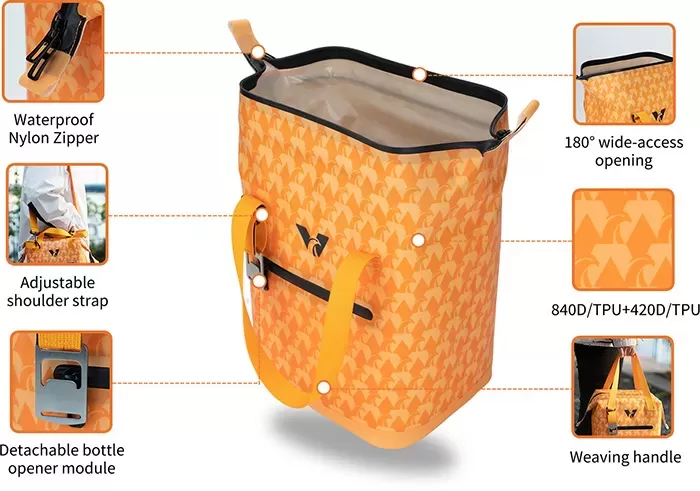
Partnering with a supplier experienced in waterproof dry bags and camping backpacks brings massive advantages to your product line. They can easily incorporate air-tight waterproof zippers, molded EVA bases, laser-cut MOLLE webbing, and ergonomic backpack harness systems into your cooler bags.
At Weierken, our experience across outdoor camping packs, dry bags, and soft coolers allows us to build hybrid products that command higher retail prices.
5. In-House Quality Control & Lab Testing Protocols
Never rely solely on verbal promises regarding cold retention or seam strength. Top-tier manufacturers operate dedicated in-house testing labs to validate performance before starting mass production.
Check if your prospective manufacturer conducts these essential factory tests:
Ice Retention Chamber Testing: Measuring internal temperature changes over 12, 24, and 48 hours using calibrated thermal sensors.
Hydrostatic Seam Testing: Pressurizing welded liners to confirm 100% leakproof seam integrity.
Load Pull & Handle Stress Testing: Testing stress points under heavy loads (15 kg to 30 kg) over thousands of vibration cycles.
Zipper Fatigue Testing: Reciprocating airtight or water-resistant zippers hundreds of times to ensure smooth operation.
3 Sourcing Red Flags to Avoid in 2026
Selecting the wrong partner can lead to delayed seasonal launches, defective inventory, and damaged brand reputation. Watch out for these three major warning signs when vetting suppliers:
1. Reliance on Verbal Thermal Claims: If a factory claims "24-hour cooling" without providing controlled lab test reports, their estimates are usually inaccurate.
2. Chemical Odors in Linings: Strong pungent smells coming from interior PEVA or PVC linings indicate low-grade plasticizers that fail international food-safety tests.
3. Vague Minimum Order Quantities (MOQs) & Hidden Costs: Suppliers that refuse to provide detailed BOM (Bill of Materials) breakdowns or hide custom mold fees will likely raise prices later in the project.
Why Weierken Is Your Preferred Thermal Bag ODM Partner
Finding a trusted partner who understands modern design aesthetics, strict technical specifications, and export compliance can be challenging. Weierken delivers end-to-end manufacturing solutions tailored for modern B2B brands.
Our operational strategy focuses on four key brand values:
Innovation: We adapt seamless high-frequency welding technology from technical dry bags directly into our soft cooler production lines, ensuring complete leakproof security.
Timeless & Simple Design: We avoid overly complicated patterns in favor of clean, functional aesthetics that resonate with outdoor enthusiasts, retail shoppers, and urban commuters.
Sustainability: We actively source GRS-certified rPET fabrics, non-toxic PEVA films, and PFC-free water-repellent exterior coatings to support your corporate ESG targets.
Business Empowerment: We work directly with your procurement and design teams to optimize target manufacturing costs, streamline shipping volumes, and maximize retail profit margins.
How to Initiate a Successful ODM Project
Starting a custom production run with a new factory requires clear preparation. Following a structured onboarding workflow ensures a smooth development process:
Define target performance metrics: Specify required cold retention hours, internal capacity (e.g., 12-can, 24-can, or 30-liter), and retail price targets.
Prepare a detailed tech pack: Include artwork vector files, logo placement dimensions, color swatches (Pantone codes), and functional pocket requirements.
Request raw material swatches: Inspect fabric samples, foam densities, zipper styles, and lining textures before approving physical prototypes.
Review pre-production samples thoroughly: Test zippers, load weight capacity, and real-world ice retention before granting mass production clearance.
Partner with an Experienced Thermal Bag ODM Leader
Choosing the right custom cooler bag manufacturer directly impacts your product quality, customer reviews, and market profitability. By focusing on heat-welding technology, food-grade compliance, sustainable sourcing, and lab testing, you secure a reliable supply chain for 2026 and beyond.
At Weierken, we turn technical design challenges into market-ready inventory. Whether you need lunch bags, soft coolers, or heavy-duty outdoor gear, our design and engineering teams are ready to bring your concept to life.
Planning your 2026 product line? Contact Weierken today to request an ODM custom thermal bag sample or get a free engineering review for your design project!
Frequently Asked Questions (FAQ)
1. How do I verify if a thermal bag ODM factory produces 100% leakproof linings?
Ask the factory whether they use high-frequency voltage welding (RF welding) or stitched seams for internal linings. RF welding uses heat and electrical energy to fuse PEVA or TPU films together without needle holes. You should also request an inverted water leak test report for physical prototype samples.
2. What food safety certifications should an insulated bag supplier hold?
Food-contact interior materials should meet FDA standards for the United States or LFGB requirements for the European Union. These certifications confirm that linings are non-toxic, odorless, and free from dangerous plasticizers, BPA, and heavy metals.
3. What is the typical development timeline for a custom thermal bag ODM project?
Concept review, CAD drawing, and material sourcing generally require 3 to 5 business days. Creating a physical pre-production prototype takes about 7 to 10 days. Once the sample is approved, mass production typically takes 30 to 45 days depending on order volume and material availability.
4. How does foam thickness and density impact temperature retention?
Thicker, higher-density foam provides better insulation by slowing down heat transfer. Standard lunch totes use 3mm to 5mm low-density EPE foam for short-term insulation (2 to 4 hours). High-performance soft coolers utilize 10mm to 20mm high-density NBR or closed-cell EVA foam to maintain ice retention for 24 hours or longer.
5. Can Weierken customize eco-friendly thermal bags using recycled materials?
Yes. Weierken offers comprehensive sustainable manufacturing options. We source GRS-certified rPET fabrics derived from recycled plastic bottles, eco-friendly TPU coatings, and biodegradable packaging materials to help your brand achieve its sustainability goals.
6. What exterior fabrics are best suited for rugged outdoor cooler bags?
Heavy-duty outdoor soft coolers perform best with 600D to 1680D TPU-coated polyester or high-tenacity nylon. These textiles offer exceptional resistance to tears, abrasions, UV exposure, and water penetration in harsh outdoor environments.