

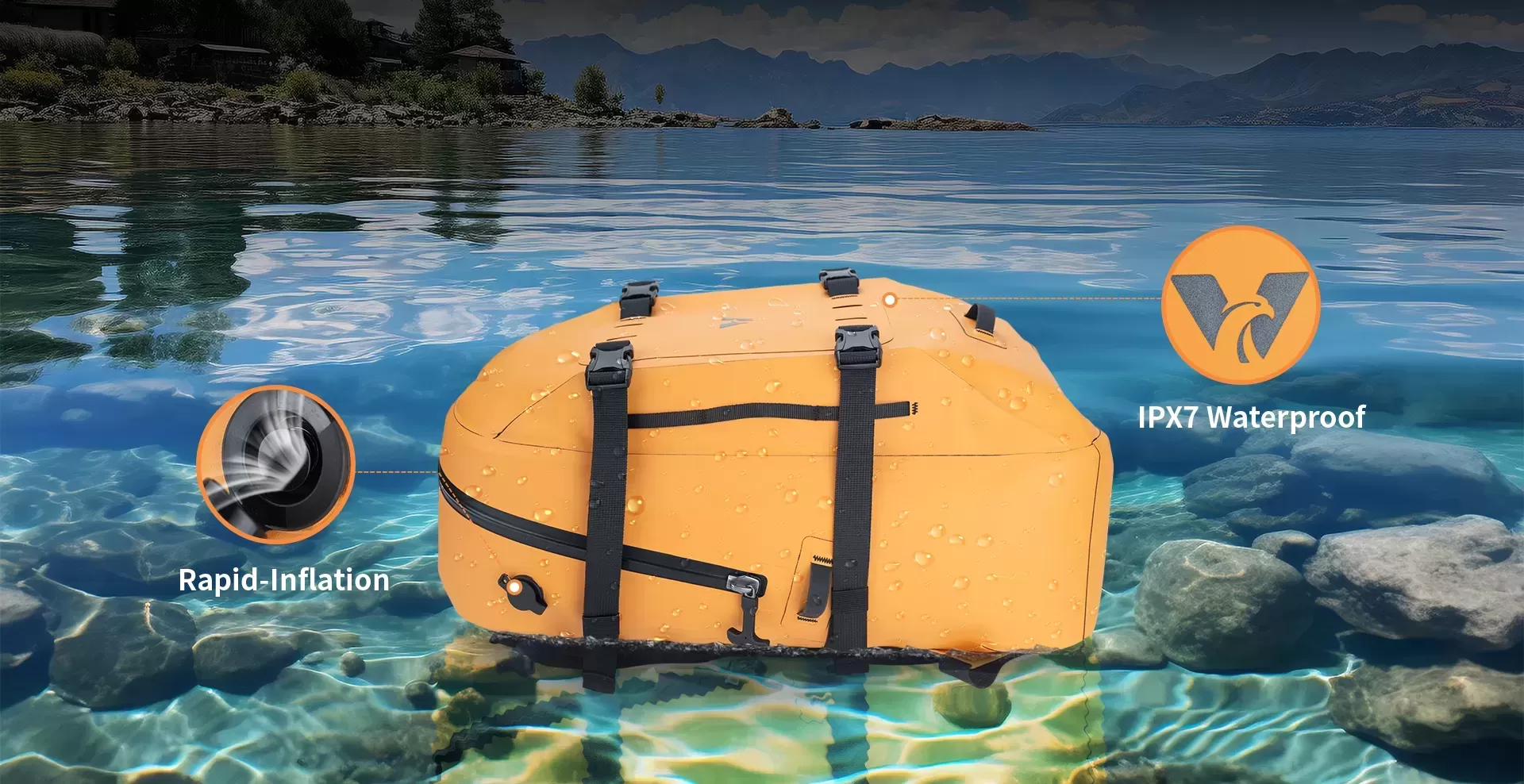
Outdoor gear takes a beating. Rock faces scratch gear bags, tree branches snag expedition packs, and heavy loads stress shoulder straps. When a bag rips during a remote trek, the customer loses trust in your brand. In fact, seam failures and fabric tears cause up to 20% of product returns for technical luggage brands.
Building a truly tear-resistant product requires more than purchasing thick canvas. It demands a systematic approach combining textile physics and mechanical construction. As an experienced tear proof bag odm manufacturer, Weierken helps outdoor brands and bag sellers design products that withstand extreme stress without adding unnecessary weight.
This guide explains how advanced ripstop fabrics, smart seam placement, and automated reinforcement turn raw materials into market-leading gear.
1. The Science of Ripstop Fabric: Preventing Tear Propagation
Standard woven fabrics fail easily once a tiny puncture starts. When tension hits a small hole, force concentrates on a single thread. That thread snaps, transferring the load to the next one, creating a rapid running tear across the panel.
Ripstop fabric solves this problem through a special structural grid. During weaving, heavy reinforcement yarns intertwine at regular intervals, typically 5mm to 8mm apart. This grid matrix stops small punctures from widening.
When choosing materials for a custom heavy duty bag ODM project, we help client teams select the right fiber composition based on environmental demands.
Nylon Ripstop (Polyamide)
Key Strength: Exceptional tensile strength and elasticity.
Best For: Outdoor backpacks, technical duffle bags, and heavy-load gear.
Performance: Nylon stretches slightly under load, distributing energy across surrounding threads rather than snapping instantly.
Polyester Ripstop
Key Strength: Excellent UV resistance and dimensional stability.
Best For: Daily carry bags, commercial cooler bags, and travel luggage exposed to sunlight.
Performance: Polyester resists water absorption better than raw nylon, maintaining its strength in wet environments.
UHMWPE Blend Ripstop (Dyneema / Spectra Blends)
Key Strength: Extreme cut and tear resistance at ultra-light weights.
Best For: High-end alpine packs and slash-resistant travel bags.
Performance: Ultra-High-Molecular-Weight Polyethylene offers up to 15 times the strength of steel per weight ratio.
2. Balancing Denier, Weight, and Performance Coatings
A common misconception in bag sourcing is that higher Denier (D) always means better quality. Denier measures thread weight, not structural toughness. A 210D High-Tenacity Nylon can outperform a low-quality 600D Polyester in tear resistance testing.
Selecting the optimal fabric for your tear proof bag odm line requires balancing fiber density with specialized surface coatings.
Polyurethane (PU) coatings add water resistance to the inner face of the fabric. However, thick PU coatings can reduce tear strength by locking fibers in place, preventing them from shifting to absorb tension. To counter this issue, Weierken utilizes silicone treatments on the outer surface. Silicone lubricates the fibers, allowing them to bundle together under stress and resist tearing.
For extreme waterproof applications, a TPU coated ripstop bag provides superior performance. Thermoplastic Polyurethane (TPU) laminations create a tough surface barrier that resists abrasion, oil, and sharp punctures while retaining flexible handling in sub-zero temperatures.
3. Beyond Fabric: Structural Engineering for Tear Resistance
The strongest fabric in the world will fail if the seams pull apart. Premium fabric is only half the solution. True durability relies on precise factory execution and structural engineering.
At Weierken, our engineering teams focus on three key structural areas to eliminate structural weakness in every tear proof bag odm project.
Automated Bartack Reinforcement
Shoulder strap anchors, haul handles, and Daisy chain webbing absorb intense kinetic force. Standard straight stitching cuts through technical fabrics under heavy loads. We implement computer-controlled bartacking machines at every stress point. These high-density stitch patterns spread load forces across a wider area, preventing fabric tension failures.
Bonded Nylon Thread & Anti-Tear Needle Selection
Thread quality determines seam lifespan. Standard polyester sewing thread degrades when exposed to friction and tension. We specify bonded nylon threads that resist fraying and unraveling under heavy dynamic strain. Furthermore, our production lines use specialized sharp-point needles sized precisely to thread thickness, preventing structural damage to delicate ripstop grid fibers during stitching.
High-Frequency Welding for Zero-Needle Designs
Every needle hole weakens a waterproof fabric. When developing airtight or fully submersible bags, we use High-Frequency (RF) welding and Hot-Air seam taping. RF welding fuses fabric panels together using radio waves and pressure, creating a seamless bond stronger than the surrounding material. This process eliminates needle punctures entirely, producing a clean, sleek finish.
4. Product Applications for Custom Heavy Duty ODM Production
Different product lines require distinct approaches to tear-proofing. As a experienced ripstop fabric bag manufacturer, Weierken adapts construction techniques to fit specific user scenarios.
Technical Outdoor & Camping Backpacks
Outdoor packs need high abrasion resistance on the bottom panel and flexible, lightweight panels on top. We combine 840D Ballistic Nylon bottom panels with 210D High-Tenacity Ripstop main bodies. This strategic material mapping keeps total bag weight low while protecting high-wear zones against sharp rocks and gravel.
Custom Durable Duffle Bags & Travel Luggage
Travel duffles encounter rough handling at airports and transport hubs. By applying TPU laminated polyester ripstop fabrics, these duffles withstand heavy friction and rough surface drags. Reinforced web handles encircle the entire bag body, shifting load strain away from side panel seams.
Heavy-Duty Commercial Cooler Bags
Commercial coolers carry heavy ice packs, glass bottles, and sharp food containers. Internal punctures can leak liquid into the insulation layer, destroying the bag. We utilize high-density tear-proof TPU liners paired with ripstop outer shells to contain spills and sustain long-term heavy load transport.
5. Why Partner with Weierken for Your Tear-Proof Bag Project?
Choosing the right manufacturing partner transforms complex technical requirements into market-ready products. Weierken brings together innovative design, technical expertise, and sustainable manufacturing practices.
Sustainable Ripstop Solutions: As a responsible sustainable ripstop bag supplier, we offer certified GRS (Global Recycled Standard) rPET fabrics made from recycled plastic bottles. These recycled ripstop materials match virgin nylon in tensile strength while supporting your brand's environmental targets.
Simple & Timeless Aesthetics: Rugged durability does not require a bulky appearance. We specialize in clean, modern designs that hide technical reinforcement inside sleek profiles suitable for both urban commutes and outdoor adventures.
In-House Laboratory Testing: Every batch of raw fabric undergoes rigorous physical testing before entering our production floor. We measure Elmendorf tear strength (ASTM D1424), tensile grab resistance, hydrostatic head pressure, and seam burst strength. You receive verifiable test data for every production run.
Ready to Develop Your Next Ultra-Durable Product Line?
Creating a reliable, tear-resistant bag requires material expertise, precise stitch engineering, and strict quality control. Whether you need a technical alpine pack, an indestructible travel duffle, or a high-performance commercial cooler line, Weierken provides full-service ODM support from initial concept to mass delivery.
Contact the engineering team at Weierken today to discuss your technical specifications, request material sample cards, or obtain a competitive quotation for your next tear proof bag odm project.
Frequently Asked Questions (FAQ)
1. What is the difference between puncture-proof and tear-proof fabrics?
Puncture resistance refers to a fabric's ability to stop sharp objects (like needles or nails) from piercing through the surface. Tear resistance refers to the material's ability to stop an existing puncture or cut from spreading when pulled under tension. Ripstop fabrics are engineered specifically to stop tear propagation.
2. Can Weierken source certified rPET materials for a tear proof bag odm order?
Yes. We offer a full range of Global Recycled Standard (GRS) certified rPET polyester and recycled nylon ripstop fabrics. These materials deliver identical tear strength and abrasion resistance compared to conventional virgin synthetic fibers.
3. How does a TPU coating affect the physical strength of ripstop fabric?
A TPU (Thermoplastic Polyurethane) coating increases abrasion resistance, puncture resistance, and water tightness. While thick coatings can slightly reduce fabric flexibility, our engineers select specialized low-viscosity TPU formulations that preserve high tear resistance while providing 100% waterproof protection.
4. What is the typical Minimum Order Quantity (MOQ) for custom heavy duty bag ODM projects?
Our standard MOQ generally starts at 500 to 1,000 units per style, depending on fabric custom color requirements, custom weave patterns, and technical construction methods. Contact our sales team for precise details based on your design specs.
5. How do you test seam strength and tear resistance before starting mass production?
We test fabric samples using Elmendorf Tear Testing apparatus and tensile test equipment according to ISO and ASTM international standards. During pre-production sampling, we also perform load drop tests and seam fatigue tests on finished prototypes to ensure seam engineering meets your exact specifications.