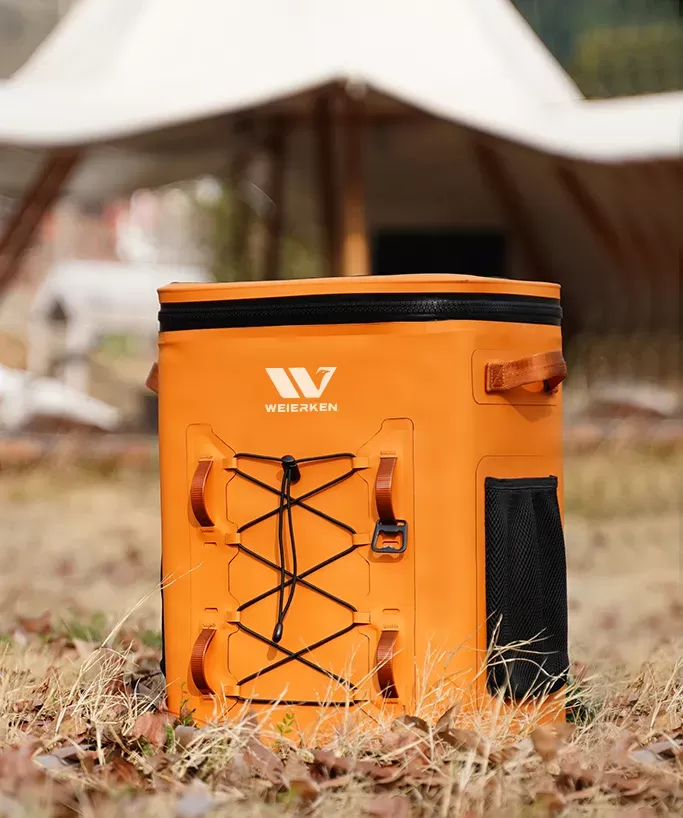

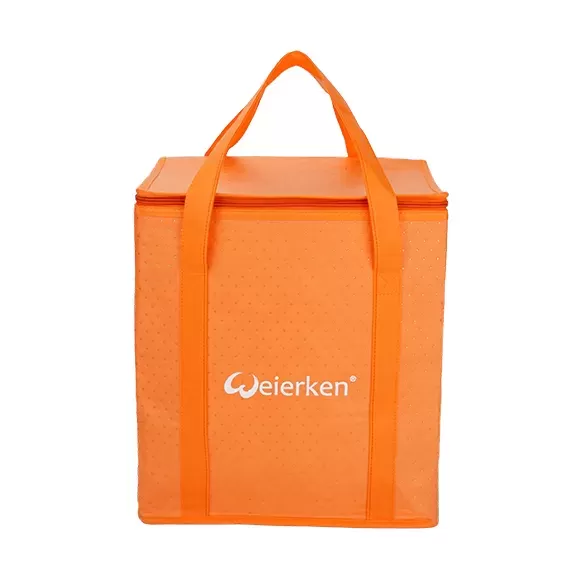
Cloud kitchens operate under fundamentally different logistics pressures than traditional dine-in restaurants. A single ghost kitchen facility regularly runs eight to fifteen virtual brands under one roof. Orders leaving the facility range from boiling noodle soups and wood-fired pizzas to delicate sushi rolls and chilled boba teas.
Courier traffic is continuous. Bags open and close hundreds of times per day. When operators deploy generic consumer-grade food carriers, operations break down quickly. Compartments buckle under mixed loads, cold drinks bleed heat into hot meals, and grease leaks saturate inner linings. These failures drive up packaging overhead and trigger immediate customer refunds.
In 2026, delivery bags serve as critical infrastructure within the quick-commerce fulfillment chain. Choosing a specialized cloud kitchen delivery bag manufacturer determines whether your fleet maintains strict temperature control or hemorrhages cash through compromised food orders. Manufacturers like Weierken build these bags as engineered logistics tools rather than simple stitched apparel.
This technical sourcing guide outlines the core engineering, materials, and compliance standards procurement teams must inspect when auditing an OEM commercial delivery bag factory.
1. Dynamic Multi-Brand Partitioning and Anti-Collapse Engineering
A cloud kitchen courier rarely picks up a single meal type. One delivery run may bundle steaming quesadillas with iced milk teas across two distinct virtual storefronts. Your bag supplier must provide physical and thermal separation inside a single footprint.
Instant Dynamic Chamber Adjustment
Static divider systems slow down fulfillment lines. Inspect the manufacturer’s internal partition mechanics:
Single-Handed Adjustment: Dividers should slide or unfasten instantly using industrial hook-and-loop tracks or slide channels to fit varying box dimensions.
Secure Vertical Isolation: Look for multi-tier shelf supports that suspend heavy beverage carriers above fragile paper food containers, preventing container crushed-lid damage.
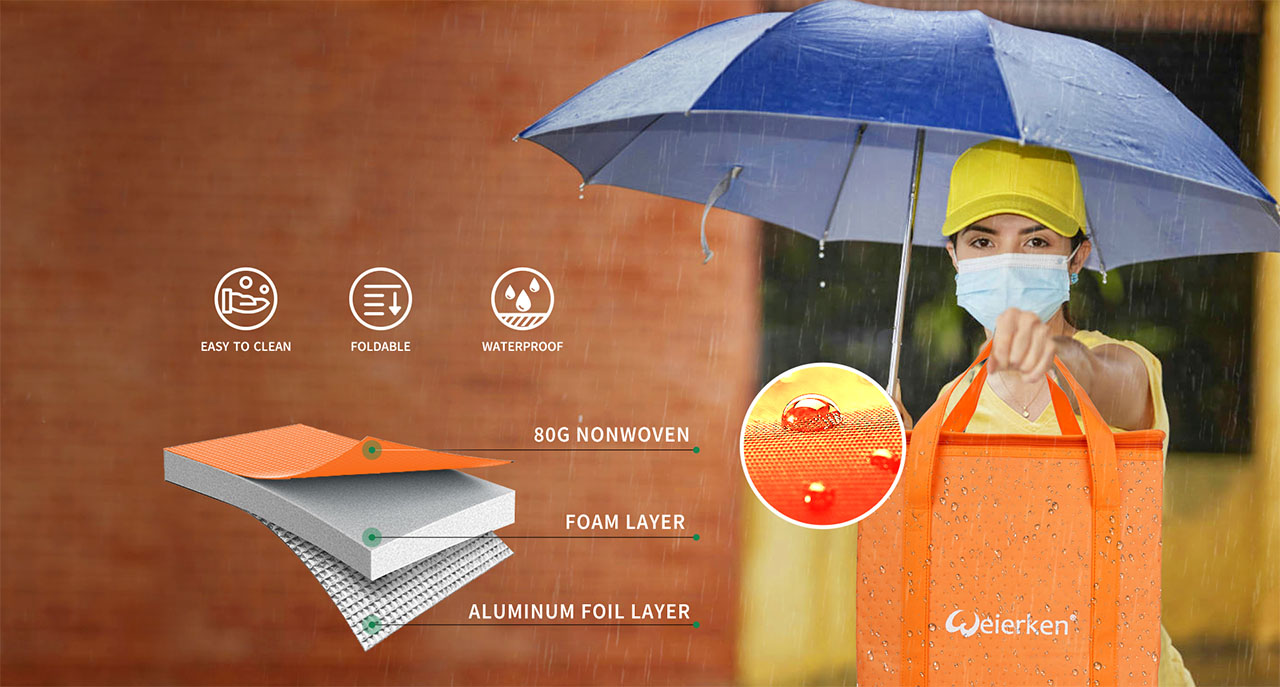
Zero Thermal Leaks: Ensure boundary walls use 8mm to 10mm high-density, closed-cell polyurethane (PU) foam with composite reflective film on both faces. This prevents conductive heat transfer between adjacent cold and hot chambers.
Anti-Collapse Skeletons for Dense Multi-Orders
Cloud kitchen orders are dense and heavy. Peak evening deliveries pack substantial weight into a compact bag. Without internal support, the outer walls bow outward and collapse inward when stacked.
Verify that the factory integrates lightweight structural skeletons. High-end builds use internal fluted polypropylene (PP) panels or snap-lock fiberglass framing. These frameworks withstand heavy downward pressure without adding unnecessary dead weight for motorcycle or bicycle couriers.
Fulfillment Pass-Rack Flow Optimization
Every second counts at the dispatch counter. Look for bags engineered with dual-entry access: top-loading and front-loading. Front-loading flaps allow couriers to slide meal trays directly out of kitchen pass racks or heated dispatch lockers without tilting or flipping the containers.
2. Smart IoT Integration: Heating Modules and Cold-Chain Tracking
By 2026, food quality control requires real-time data. Major dark kitchen thermal bag supplier networks now incorporate active heating elements and sensor-ready architecture to meet HACCP standards across extended suburban delivery routes.
Integrated Low-Voltage PTC Heating Elements
Passive insulation alone cannot maintain safe hot-holding temperatures (above 65°C / 149°F) on routes exceeding 45 minutes in cold weather. Modern smart insulated food delivery bags integrate built-in positive temperature coefficient (PTC) heating panels.
Power Delivery Protocols: Check if the manufacturer supports standard Type-C USB-PD connections, allowing couriers to power heating elements via commercial power banks or onboard motorcycle 12V outputs.
Self-Regulating Heat: PTC materials self-limit their peak temperature, eliminating the risk of melting food containers or scorching internal fabrics.
Detachable Wiring Looms: Heating panels and wiring must be easily removable so warehouse staff can wash the bag without damaging electrical components.
Dedicated RFID and Bluetooth Data Logger Pockets
Cloud kitchen networks face strict regulatory food-safety audits. Sourcing directors should look for built-in, radio-transparent TPU internal pouches designed to hold Bluetooth low energy (BLE) data loggers or RFID dispatch tags.
These pockets keep tracking sensors positioned directly in the food chamber. This design allows automated depot antennas to read real-time temperature histories the moment a courier returns to the hub, validating safe transit without manual logging.
3. Extreme-Duty Hardware and 30-Second Sanitation
Commercial ghost kitchens operate up to 24 hours a day. The continuous cycling of zip closures, buckles, and handles destroys standard luggage-grade components in weeks.
20,000-Cycle Hardware Specifications
Zippers remain the single most common failure point on delivery gear. Ask your manufacturer for machine fatigue test reports:
Industrial Zipper Gauges: Insist on #10 heavy-duty nylon coil zippers from proven suppliers like YKK or SBS. Smaller #5 zippers split quickly under side-load tension.
Reverse Waterproof Taping: Exterior zippers must feature reverse-coil construction sealed with a matte polyurethane (PU) waterproof tape to lock out heavy rainfall.
Oversized Pull Tabs: Large, textured hypalon or molded rubber pull cords let drivers open compartments quickly while wearing thick riding gloves.
Seamless High-Frequency (HF) Welded Basins
Never approve multi-brand delivery logistics bags assembled with stitched inner linings. Needles leave perforations that draw in spilled sauces, meat juices, and grease. Once absorbed by the inner foam, these trapped liquids mold and release persistent odors.
Industrial manufacturers like Weierken use radio-frequency (RF) heat welding to fuse thermoplastic interior liners (such as food-grade PEVA or TPU). The welded basin is completely seamless and waterproof. If a container spills soup, the liquid stays contained. Hub staff can clean the mess in thirty seconds using sanitizing wipes or a low-pressure spray hose.
Resilient Exterior Shells
The exterior must endure daily scuffs against asphalt, gravel, concrete counter ledges, and metal bike racks. Demand 900D to 1680D ballistic polyester coated with TPU, or commercial-grade 500D PVC tarpaulin. These fabrics resist oil stains, shed water instantly, and stop minor tears from spreading across the panel.
4. 2026 Environmental Standards and Material Compliance
Global environmental regulations have shifted rapidly. Procurement teams importing bags into European, North American, or Australasian markets must address chemical and sustainability compliance to avoid border detentions and regulatory fines.
Absolute PFAS-Free Fabric Finishes
Per- and polyfluoroalkyl substances (PFAS), historically used to make fabrics water- and grease-resistant, face sweeping bans across the European Union and multiple US states. Your manufacturer must provide verified, third-party lab documentation showing zero added PFAS across all exterior textiles, interior liners, and seam tapes.
Look for non-fluorinated durable water repellent (DWR) coatings and mechanical TPU laminate barriers that achieve total water resistance without chemical migration risks.
GRS-Certified Recycled Fabrics (RPET)
Major virtual brand aggregators must hit ambitious ESG benchmarks. Ask if the OEM commercial delivery bag factory can manufacture external shells and internal webbing from Global Recycled Standard (GRS) certified post-consumer recycled polyester (RPET).
A legitimate supplier must provide valid Transaction Certificates (TCs) for every production batch, proving that the raw yarn originates from documented recycled plastic bottles rather than virgin petrochemicals.
Food Contact Safety Approvals
Interior liners sit millimeters away from hot food containers. Condensation drips into food packages. As a result, internal liners must pass rigorous food-contact migration tests:
FDA 21 CFR 177.1520: Confirms zero toxic chemical or plasticizer migration under elevated temperatures.
EU LFGB: Satisfies strict European migration limits for heavy metals and volatile organic compounds (VOCs).
5. Space Efficiency: Knock-Down (K/D) Packaging and OEM Agility
Real estate inside ghost kitchen facilities is expensive and tightly allocated. Piling dozens of rigid, empty delivery bags in prep zones creates fire code hazards and blocks kitchen traffic.
Knock-Down (K/D) Flat-Fold Engineering
A capable manufacturer designs bags that fold completely flat when not in use. By engineering modular, removable rigid panels and flexible fold points, the bag collapses down to less than 25% of its expanded volume.
This design benefits your logistics balance sheet immediately:
Storage Footprint: Staff can slide collapsed bags under preparation counters or store them flat on high wire racks.
Freight Savings: Flat-packing shrinks ocean shipping volume (CBM) by 60% to 70%. You fit substantially more units into every 40-foot shipping container, drastically slashing landed freight costs per unit.
Prototyping Speed and Fleet Tooling
Ghost kitchen menus and packaging configurations iterate rapidly. Your supply partner should operate a dedicated sample room that translates 2D tech packs or 3D CAD models into functional prototypes within five to seven business days. They should also support flexible tiered production schedules, accommodating small regional test runs before scaling to high-volume manufacturing.
Commercial Factory vs. Standard Bag Maker
This side-by-side comparison outlines the technical differences between consumer luggage workshops and commercial delivery bag factories:
| Technical Metric | Industrial Manufacturer (e.g., Weierken) | Standard Bag Workshop |
|---|---|---|
| Interior Seams | High-frequency RF welded (zero leakage) | Stitched needle seams (leaks grease/liquids) |
| Zipper Life Test | #10 industrial coil rated for 20,000+ cycles | Generic #5 zipper rated for <3,000 cycles |
| PFAS Compliance | Certified 100% PFAS-free mechanical barriers | Treated with legacy chemical water repellents |
| Structural Skeleton | Built-in PP hollow boards or fiberglass battens | Unreinforced foam (collapses under heavy loads) |
| IoT Ready | Integrated PTC heat pockets and sensor sleeves | No electrical or digital sensor accommodations |
| Packaging Design | Patented K/D flat-pack (60-70% volume cut) | Bulky, unoptimized box packaging |
Frequently Asked Questions (FAQ)
Q1: How do smart insulated food delivery bags regulate heat during long delivery runs?
A1: Smart delivery bags use embedded positive temperature coefficient (PTC) heating panels paired with USB-PD power connectors. When connected to a driver’s power bank or vehicle power port, the element warms the chamber to a safe holding range (typically 65°C to 75°C / 149°F to 167°F) and automatically lowers power consumption once it hits target temperature, protecting food quality without manual controls.
Q2: Why must cloud kitchen operations avoid stitched inner bag liners?
A2: Stitched seams create needle holes that pull in liquids, oils, and moisture from hot food condensation. Once this fluid enters the inner insulation foam, it cannot be cleaned or disinfected. The trapped grease rots, breeding mold and severe odors that violate commercial kitchen hygiene inspections. RF-welded linings provide a seamless, continuous pan that locks out liquids completely.
Q3: What makes ghost kitchen food delivery bags different from standard consumer delivery bags?
A3: Standard bags feature a single open compartment meant for one restaurant pickup at a time. Ghost kitchen bags are multi-brand logistics systems. They use rigid anti-collapse frames, modular dividers that separate hot food from chilled items, fast dual-access loading flaps, and heavy-duty components built to handle round-the-clock commercial dispatching.
Q4: How does a Knock-Down (K/D) design cut international procurement costs?
A4: International ocean and air freight rates are billed on total cubic meters (CBM) rather than weight alone. Assembled delivery bags take up huge amounts of empty space. A K/D bag collapses flat by removing or folding the interior rigid boards, reducing carton volume by 60% to 70%. This lets procurement teams pack more units into each container, significantly lowering the landed cost per unit.
Q5: How do we confirm an overseas factory is truly producing PFAS-free materials?
A5: Demand current, traceable test certificates from accredited independent testing labs like SGS, TÜV, or Intertek. The test report must specify Total Fluorine (TF) screening or target-specific testing for perfluorinated compounds across all fabric swatches, surface treatments, zipper tapes, and interior liners, confirming levels fall below regional statutory thresholds.
Build Your Delivery Fleet on Industrial Engineering
In the highly competitive cloud kitchen space, your delivery bag is the last physical touchpoint before a customer opens their meal. A poorly insulated, dirty, or damaged bag ruins the customer experience, damages brand equity, and drives up refund rates across every virtual restaurant in your portfolio.
Choose an industrial manufacturing partner with proven expertise in RF-welding, heavy-duty hardware, IoT temperature integration, and verifiable environmental compliance. Factories like Weierken work directly with enterprise cloud kitchen operators and 3PL delivery networks to engineer purpose-built bags that maximize fulfillment efficiency and lower total lifecycle costs.
Ready to re-engineer your delivery fleet logistics for 2026?
Contact the engineering team at Weierken today to schedule a technical review, request material certification sheets, or order custom-engineered samples designed to your exact kitchen packaging dimensions.