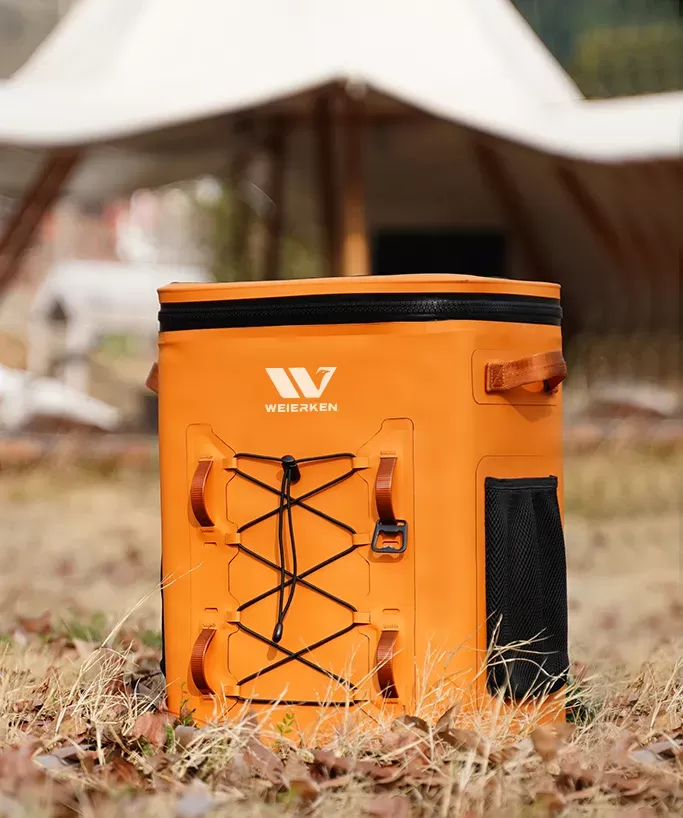

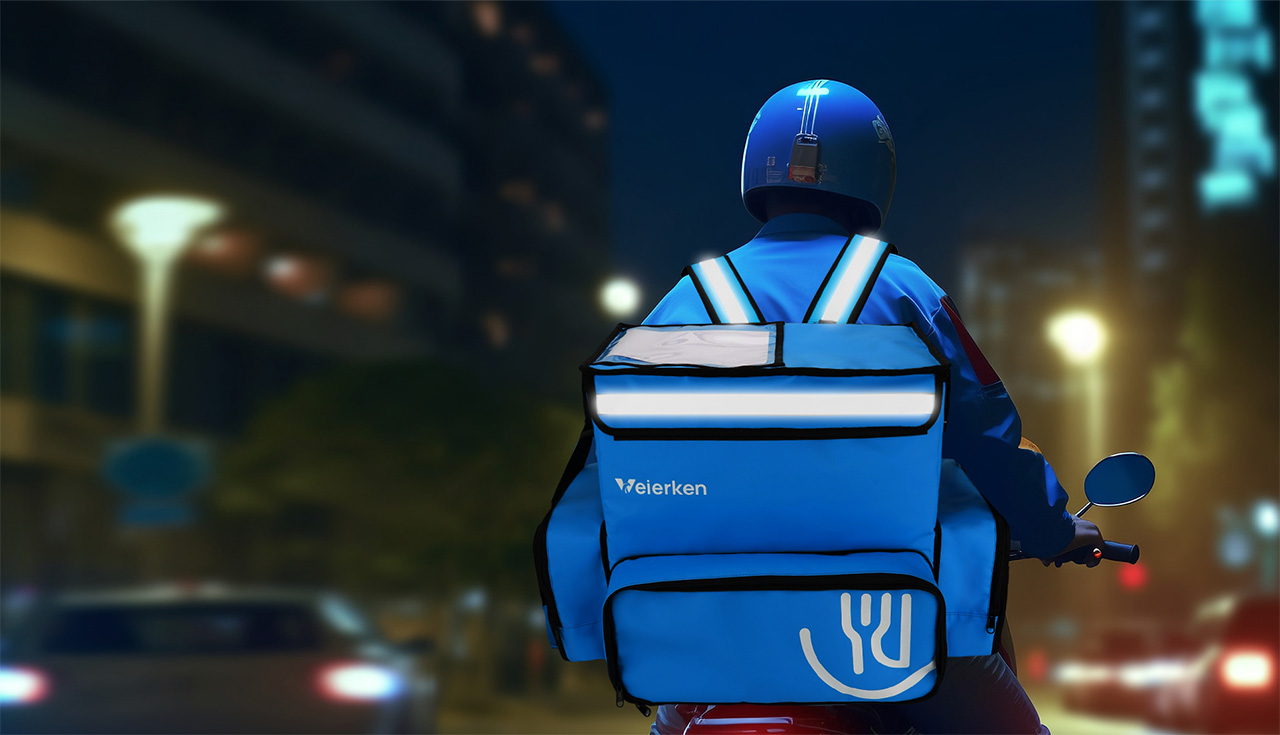
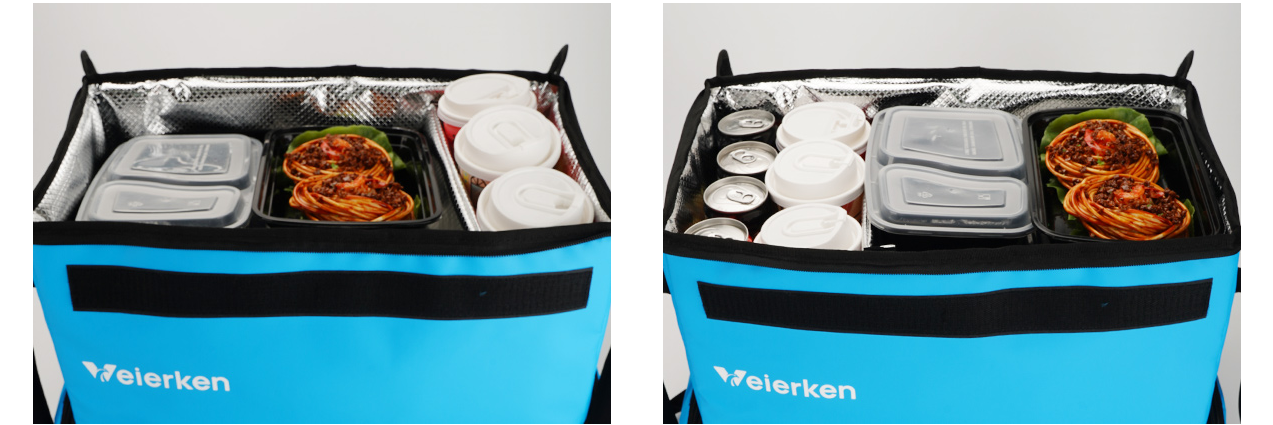
Single-cavity delivery bags simply keep contents warm for brief trips. In contrast, multi-compartment meal transport bags solve complex cold-chain logistics challenges: hot and cold temperature separation, dry and wet segregation, and strict category isolation within one carrier.
For procurement directors managing corporate catering, healthcare nutrition, and third-party logistics (3PL), off-the-shelf bags fail quickly under commercial use. Dividers collapse under the weight of meal prep trays. Heat radiates between compartments, spoiling salads and warming chilled beverages. Soups leak through internal stitched seams, creating foul odors and microbial growth inside the insulation layer.
Selecting the right factory requires auditing spatial engineering and thermodynamics, not basic cut-and-sew assembly. Technical manufacturers like Weierken approach multi-compartment systems as precision equipment designed to protect margins and uphold food safety standards.
1. True Dual-Temperature and Thermal Isolation Engineering
The core objective of multi-compartment meal transport bags is managing contrasting thermal zones inside a single outer shell. If your supplier treats internal dividers as mere fabric curtains, your cold chain will fail.
Eliminating the "Thermal Bridge" Effect
Heat flows toward cold areas via conduction, convection, and radiation. A commercial-grade carrier must maintain hot entrées above 65°C (149°F) on one side while keeping cold desserts or beverages below 4°C (39°F) on the other. Sourcing teams must verify how the factory prevents thermal bridging between neighboring chambers.
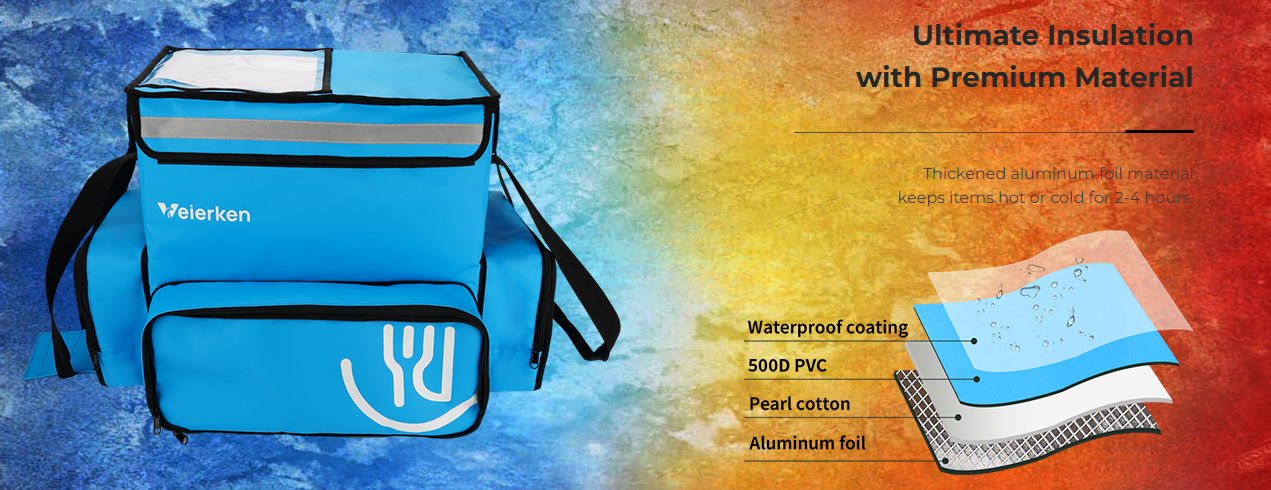
Core Divider Insulation: Avoid standard low-density open-cell sponge. Specify 8mm to 10mm high-density, closed-cell Polyurethane (PU) foam or chemically cross-linked polyethylene (XLPE) with a density rating of at least 32 kg/m³.
Radiant Barrier Foil: High-performance partitions must incorporate double-sided composite aluminum foil layers. These reflect radiant heat back into the hot chamber while deflecting ambient heat away from the cold zone.
Air-Convection Seals: Air slipping around divider edges ruins temperature stability. Look for internal thermal baffles, heavy-duty magnetic lips, or airtight zipper tracks that seal each compartment off completely.
2. Anti-Collapse Structural Engineering and Modular Partitions
Multi-compartment bags carry heavy payloads. When couriers pack twenty or thirty dense meal boxes, gravitational pull and vehicle vibration cause poorly built bags to bow outward, crushing the lower containers.
Rigid Skeletal Frameworks
Ask your manufacturer what internal structural support they embed into the walls and floor. Reliable production methods use:
Polypropylene (PP) Hollow Boards: Tough, lightweight, and moisture-resistant sheets integrated inside the perimeter walls to stop buckling under heavy vertical stacks.
Fiberglass Battens or Aluminum Rods: Corner-stay architecture that preserves the rectangular shape of the bag, allowing couriers to slide meal trays in and out smoothly.
Reinforced Load-Bearing Base: High-density composite baseboards that prevent floor sagging when the bag is lifted by its primary handles.
Modular Rail and Divider Systems
Delivery requirements change from one shift to the next. The interior space must adapt quickly to various container dimensions, compostable clamshells, or drink carriers.
Verify that the manufacturer uses commercial-grade hook-and-loop fasteners rated for thousands of peel cycles. Industrial nylon fasteners resist moisture and food oils, keeping divider walls firmly locked in place under aggressive road vibration.
Ergonomic Center-of-Gravity Distribution
Carrying uneven loads—such as heavy liquid soups on the left and lightweight salads on the right—creates ergonomic strain for couriers. Manufacturers like Weierken balance load profiles by reinforcing primary stress points with multi-axis automated bartack stitching and high-tensile nylon webbing.
3. Independent Leak-Proofing, Hygiene, and Odor Barriers
Liquid spills are inevitable during commercial food transport. The critical factor is whether a spill stays isolated to a single compartment or ruins the entire delivery.
High-Frequency Heat-Sealed Liners
Never accept stitched seams inside internal food chambers. Stitching creates thousands of needle punctures that pull oils and condensation straight into the foam core. Once trapped, liquids rot, causing bacterial contamination and permanent foul smells.
Insist on high-frequency (RF) welded or ultrasonic seamless liners. This manufacturing process uses electromagnetic energy and pressure to fuse thermoplastic materials (such as food-grade PEVA or TPU) into a continuous, water-tight pan. A spill in the top compartment stays trapped in that chamber without leaking into the compartments below.
Sanitary Compliance and Antimicrobial Surfaces
Fleet cleaning must be fast and thorough. Interior chamber liners must feature smooth, non-porous surfaces that warehouse teams can sanitize rapidly with disinfectant wipes or warm water spray-downs.
Liners must carry verified FDA 21 CFR 177.1520 or European LFGB compliance for direct and indirect food contact.
Surface coatings must resist oil and acidic food sauces, preventing long-term staining and material decay.
Odor-Barrier Partitions
Strong food aromas easily transfer between compartments if the barrier materials are porous. Steaming garlic pasta will ruin the flavor profile of cold, fresh fruit if air and odors migrate between chambers. Confirm that the factory uses non-porous film barriers on both faces of the interior divider walls to prevent flavor and aroma cross-contamination.
4. Hardware Durability and Fleet Customization
Because multi-compartment meal transport bags have multiple openings, they use two to three times more hardware than standard bags. Cheap components will leave your delivery gear out of commission within weeks.
Industrial Zipper Performance
Zippers represent the most frequent failure point on delivery gear. Look for heavy-duty #8 or #10 nylon coil zippers from recognized suppliers like YKK or SBS. For rainy climates, select reverse-coil zippers treated with a water-repellent polyurethane (PU) film to keep rainwater out of sensitive compartments.
Tear-Resistant Shell Fabrics
The exterior shell must withstand daily abrasion against concrete sidewalks, vehicle floors, and metallic delivery racks. Sourcing standards should prioritize:
1680D Ballistic Oxford Polyester: Offers exceptional tensile strength and puncture resistance, backed by a waterproof PVC or PU inner coating.
Heavy-Duty PVC Tarpaulin (500D-900D): Entirely waterproof, stain-resistant, and easily wiped clean after messy delivery shifts.
Fleet-Specific OEM Features
Commercial operators require distinct functional additions. Ensure the factory can engineer:
Clear, anti-fog PVC windows for order delivery slips and routing manifests.
High-visibility retroreflective strips (certified to EN ISO 20471 / ANSI 107) for night rider safety.
Secure strap anchors and reinforced D-rings to lock bags onto scooters, bikes, or vehicle cargo areas.
5. Supply Chain Economics: Knock-Down (K/D) Design and Tooling
A high-performance bag design is worthless if freight costs eliminate your operational margins. Procurement teams must look at landed cost, not just factory unit price.
Flat-Foldable Knock-Down (K/D) Engineering
Assembled multi-compartment bags take up significant volume. Shipping assembled units across ocean lanes means paying premium freight rates to transport trapped air. Skilled OEM manufacturers build their multi-compartment bags with a collapsible Knock-Down (K/D) design.
By engineering removable support panels and strategic fold paths, suppliers can pack these bags completely flat. This approach slashes the packaging volume (CBM) by up to 50%, letting you double the number of units packed inside a standard 40-foot container.
Sampling Agility and Flexible Production
Before launching a fleet-wide deployment, you must test the bag with your precise packaging dimensions. Your manufacturing partner should deliver CAD flat patterns and physical prototypes within 5 to 7 business days, followed by structured, tiered minimum order quantities (MOQ) for pilot trials.
Commercial Manufacturer vs. Low-End Workshop
This comparison table shows the differences between budget suppliers and specialized manufacturing partners:
| Engineering Feature | Industrial Manufacturer (e.g., Weierken) | Standard Cut-and-Sew Workshop |
|---|---|---|
| Thermal Boundary | Dual-sided foil + 10mm high-density PU closed foam | Single layer of cheap 3mm PE packing foam |
| Liner Construction | High-frequency RF welded (100% leak-proof) | Traditional needle stitching (leaks into foam) |
| Internal Stability | Integrated PP hollow boards / fiberglass support rods | No internal skeleton (collapses when loaded) |
| Odor & Vapor Isolation | Non-porous sealed film coatings | Permeable fabric lining (cross-contaminates) |
| Shipping Optimization | Collapsible K/D flat packing (reduces CBM up to 50%) | Shipped semi-assembled (wastes container volume) |
Frequently Asked Questions (FAQ)
Q1: Can multi-compartment meal transport bags hold hot and cold food simultaneously without temperature loss?
A1: Yes, provided the internal divider features true thermal isolation. This requires an 8mm to 10mm closed-cell foam core wrapped in reflective radiant barriers, along with airtight internal seals. When built correctly, hot items stay above 65°C and cold items remain below 4°C across standard 60-to-90-minute delivery routes.
Q2: Why do internal stitched seams fail food safety audits?
A2: Needle stitching creates tiny holes throughout the fabric. Liquid spills, steam, and condensation seep through these holes into the insulation foam. Because this trapped moisture cannot be washed out, it rots, breeds mold and bacteria, and fails standard commercial sanitation inspections. High-frequency heat-sealed liners eliminate this hazard by creating a smooth, watertight basin.
Q3: What makes a Knock-Down (K/D) delivery bag design so important?
A3: Multi-compartment delivery bags are rigid and hold significant interior volume. If shipped fully assembled, a shipping container fills up quickly with empty air, driving up your per-unit freight costs. A K/D design allows the structural boards to fold flat, cutting shipping volume by up to 50% and dramatically reducing ocean or air freight expenses.
Q4: Which exterior fabric best suits motorcycle and scooter delivery fleets?
A4: For motorized delivery fleets exposed to harsh weather and heavy road grime, 500D to 900D waterproof PVC tarpaulin offers the best durability. It provides high tear resistance, stands up to wet road spray, and lets drivers wipe off oil, mud, and food residue using a standard cloth and mild detergent.
Q5: How many opening cycles should heavy-duty catering zippers withstand?
A5: Commercial delivery zippers should be rated for a minimum of 10,000 opening and closing cycles under load. High-use delivery operations require #8 or #10 heavy-duty nylon coil zippers from proven brands like YKK or SBS. For wet-weather operations, specify reverse-coil zippers protected by a polyurethane water-resistant coating.
Conclusion: Invest in Logistics Protection, Not Just Fabric
Sourcing multi-compartment meal transport bags is not merely an equipment purchase; it directly protects your culinary quality, your regulatory compliance, and your brand's standing with customers. A cheap, under-engineered bag leads to crushed food packaging, broken cold-chain temperatures, and costly early product replacements.
Work with an experienced engineering partner that understands thermal dynamics, durable structural design, and flat-pack shipping economics. Specialized manufacturers like Weierken engineer custom delivery systems that withstand intense commercial shifts while keeping per-unit lifecycle costs low.
Ready to upgrade your catering delivery performance?
Contact the Weierken engineering team today to submit your meal container specifications, request certified compliance test records, or order a custom-engineered multi-compartment sample for fleet testing.