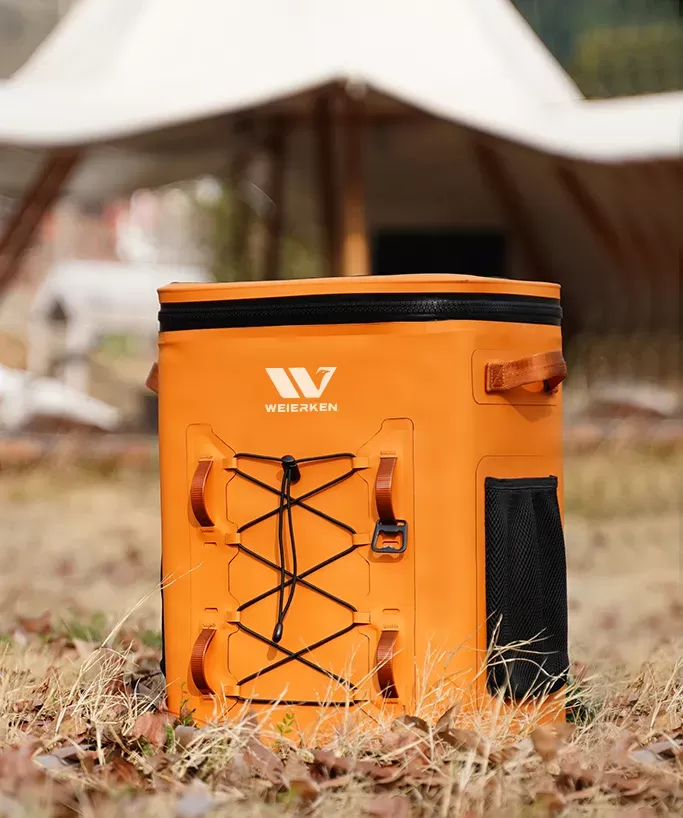

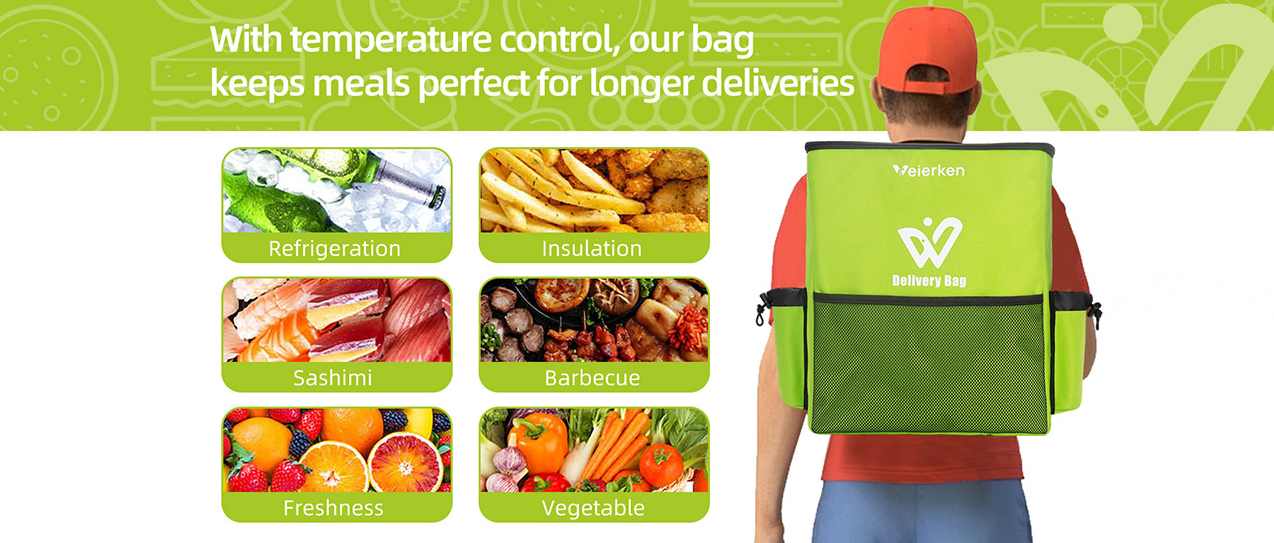
Iced beverage delivery is one of the fastest-growing segments in the food service sector. From iced specialty coffee and cold-pressed juices to bubble teas and chilled craft beers, consumers expect their drinks to arrive ice-cold and intact.
Yet, last-mile beverage delivery presents severe operational challenges. Ice cubes melt within fifteen minutes under summer sun, cold drinks separate into watery layers, and flimsy drink trays topple over inside courier backpacks. Every spilled cup leads to a refund, a lost customer, and a mess that puts a courier's gear out of commission.
For beverage chains, a generic off-the-shelf cooler will not solve these issues. Investing in tailored custom cold drink delivery bags with logo gives your business a dual advantage: you deploy a mobile cold-chain box that protects product quality while turning every courier into a walking billboard for your brand.
At Weierken, we have engineered professional insulated cooler bags and technical waterproof packs since 2006. Drawing from nearly two decades of factory-floor experience, this guide breaks down the critical engineering, structural, and branding decisions needed to manufacture commercial-grade delivery bags that perform under intense daily use.
1. Engineering Core: Thermal Retention and Leakproof Technology
A successful delivery bag begins with its thermal barrier. Unlike hot food that simply needs heat trapped inside, cold drinks fight against external ambient heat, radiant solar energy, and sloshing internal liquids.
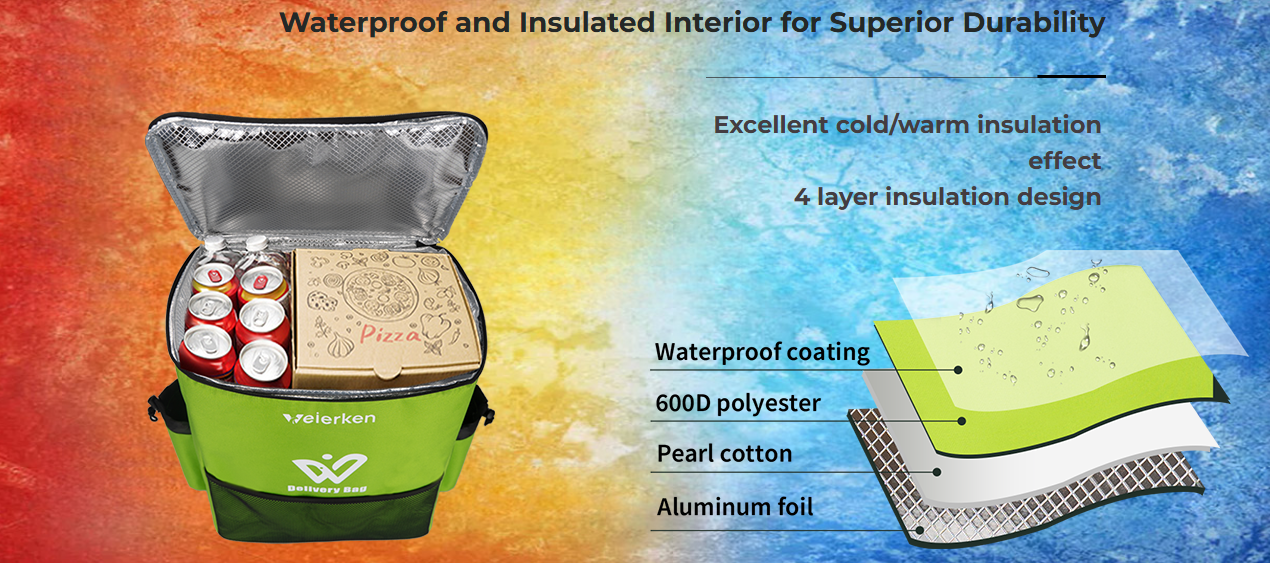
Achieving stable holding temperatures for 45 to 60 minutes requires an engineered sandwich construction:
Expanded Polyethylene (EPE) Pearl Cotton: The standard commercial choice. Specifying 8mm to 10mm thickness provides lightweight impact cushioning and dependable thermal insulation at an economical price point.
High-Density Closed-Cell EVA Foam: The premium option. EVA foam does not compress or deform under the weight of multiple heavy drink containers. It holds its structural rigidity over years of use and provides superior thermal resistance.
Polyurethane (PU) Rigid Foam Core: Often used on the bottom and sidewalls of large delivery backpacks to maintain a boxy, upright shape that never caves in on delicate cup lids.
Equally critical is the interior liner. Never accept stitched liners for beverage transit. Needle punctures guarantee leaks the moment condensation collects or a cup sweats.
Industrial manufacturing requires high-frequency (RF) welded interior tubs made from food-grade PEVA or TPU. High-frequency thermal welding fuses the material at the molecular level, creating a 100% seamless, watertight bucket. When condensation gathers or a drink spills, the liquid stays contained inside the liner, never touching the internal insulation foam.
For bag closures, you must balance thermal efficiency with courier speed. While airtight, water-resistant TPU zippers provide the best thermal barrier, couriers often find them slow to operate during peak rush hours. Many chains select oversized #10 nylon coil zippers covered by an insulated storm flap, or integrate heavy-duty magnetic snap lids that seal shut instantly when the courier drops the lid.
2. Beverage-Specific Structural Innovations
Standard delivery bags are designed for flat pizza boxes or food cartons. Placing tall, top-heavy drink cups into a generic square cavity leads to disaster. Designing high-performance custom cold drink delivery bags with logo requires dedicated internal geometry.
To eliminate spills and maintain load stability, include these mechanical features:
Modular Dividers with Hook-and-Loop Tracks: Removable, insulated foam dividers allow drivers to configure internal bays based on order size. Whether carrying a single 700ml boba tea or a six-pack of canned brews, the compartments adjust to hold the drinks snugly.
Die-Cut EVA Cup Inserts: Incorporate fold-down or removable dense EVA foam plates with precut cup holes. These grip the taper of disposable plastic and paper cups, holding them strictly vertical even during sharp bicycle turns.
Reinforced Solid PE Baseplate: Soft-bottom bags sag under fluid weight, causing cups to tilt toward the center. Inserting a removable, rigid Polyethylene (PE) sheet inside the floor keeps the platform flat and level.
Dedicated Ice Pack Sleeves: Placing ice packs directly against paper beverage cups causes condensation to soak through paper sleeves. Build integrated mesh sleeves into the bag roof and sidewalls so cold gel packs chill the air without making direct contact with cup walls.
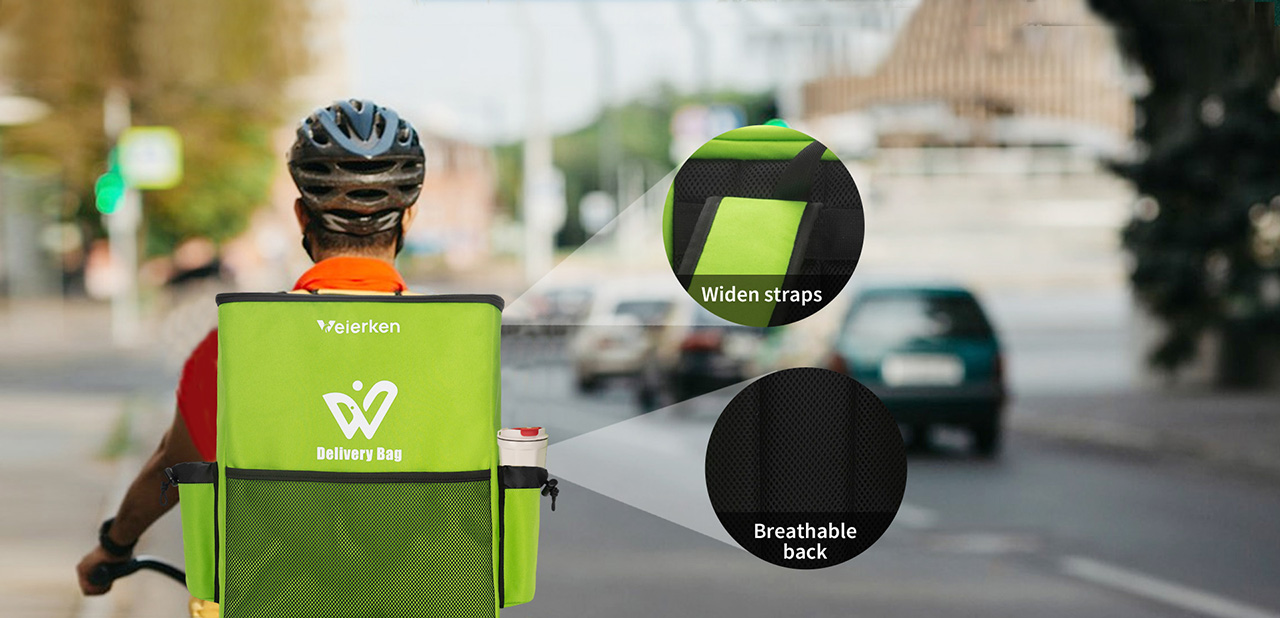
Courier comfort matters just as much as drink protection. When couriers deliver drinks on scooters or e-bikes, sudden stops cause fluid to shift violently. Adding bottom anchor D-rings allows couriers to lash the bag to motorcycle luggage racks. For backpack configurations, wide, ventilated air-mesh shoulder straps and a sternum buckle spread the load evenly across the courier's torso.
3. Branding: Custom Logo Techniques for High Visibility
Delivery fleets generate millions of visual impressions along busy city streets every day. Your bag's exterior is prime real estate. However, the graphics must withstand scorching sun, pouring rain, and constant abrasion against pavement and delivery counters.
Selecting the right branding method ensures your custom cold drink delivery bags with logo stay crisp and professional over months of heavy use:
Industrial Silk Screen Printing: Excellent for bold, high-contrast, single-color logos across large surfaces. When applied using cured polyurethane inks, screen prints bond securely with 600D and 900D Oxford fabrics without peeling or cracking.
Thermal Heat Transfer Printing: The preferred choice for intricate logos, photorealistic graphics, and complex multi-color gradients. Modern heat transfer films offer high flexibility, meaning the logo will not wrinkle when the bag folds.
Molded PVC / Silicone Rubber Patches: Delivers a clean, dimensional, premium finish. Molded rubber patches are completely waterproof, scratch-proof, and easy to wipe clean. They add tactile texture that communicates durable quality.
High-Visibility Reflective Printing: A crucial safety feature for night operations. Printing your logo or brand accents using micro-prismatic retroreflective ink increases rider safety under vehicle headlights while drawing eyes to your brand after dark.
At Weierken, our design philosophy balances clean visual balance with functional longevity. We ensure your brand markings sit precisely in high-visibility zones that stay unobstructed by courier straps, mounting buckles, or safety handles.
4. Sustainability Meets Commercial Durability
Consumer beverage chains face increasing pressure to adopt environmentally responsible practices. At the same time, delivery bags endure punishing daily abuse. Tossing a fragile "eco-bag" into commercial service results in shredded seams within weeks, creating more landfill waste than durable solutions.
True sustainability in commercial equipment means building bags that last for years instead of months. You can achieve this by pairing tough engineering with certified eco-friendly materials:
Recycled PET (RPET) Exterior Fabrics: High-density 600D or 900D Oxford cloth woven from certified post-consumer recycled plastic bottles. RPET matches the tensile strength and tear resistance of virgin polyester while drastically reducing raw petroleum use.
Non-Toxic, Phthalate-Free TPU Liners: Unlike traditional low-cost PVC, Thermoplastic Polyurethane (TPU) is fully recyclable, contains no hazardous plasticizers, and remains crack-resistant even in sub-zero freezer environments.
Water-Repellent Fluorocarbon-Free (PFC-Free) Coatings: Outer fabric treatments that repel rain using bio-based or silicone coatings rather than toxic, persistent chemicals.
Adopting RPET construction allows your marketing team to tell a compelling sustainability story, connecting corporate environmental targets directly with consumer-facing delivery packaging.
5. Why Partner with Weierken for OEM/ODM Manufacturing
Transforming a design concept into thousands of reliable, field-tested delivery bags requires a manufacturing partner with deep technical experience and flexible global production capacity.
Weierken provides a complete manufacturing platform for international beverage chains, delivery platforms, and specialized equipment distributors:
Dual-Country Manufacturing Footprint: We operate three owned manufacturing bases across China and Cambodia, covering over 80,000 square meters. Our Cambodian facilities allow global clients to optimize their supply chain and navigate tariff structures effectively.
Industrial Production Scale: With more than 3,000 skilled workers and automated cutting and sealing equipment, we deliver high-volume contract orders on dependable production schedules.
Decades of OEM/ODM Engineering: Having served over 2,000 international brands since 2006, our engineering department converts rough sketches into rapid physical prototypes and functional 3D mockups within 7 to 10 days.
Rigorous Lab Validation: We do not leave bag durability to chance. Every design undergoes cyclic zipper testing, handle pull-force testing, simulated rain chambers, drop tests with weighted drink canisters, and temperature retention logging.
Frequently Asked Questions
Q1: How long can these custom cold drink delivery bags with logo keep
beverages cold?
A1: With 8mm to 10mm high-density foam insulation
paired with internal gel ice packs, these bags maintain internal chamber
temperatures below 5 degrees Celsius (41 degrees Fahrenheit) for two to four
hours in outdoor summer heat, more than double the time needed for typical
delivery runs.
Q2: What is the minimum order quantity (MOQ) for custom-manufactured
bags?
A2: Standard factory MOQ for customized delivery bags starts
at 500 units for customized colorways, specialized logo branding, and bespoke
interior divider layouts. Full-custom structural builds using specialized fabric
dyes typically run best at 1,000 units or more.
Q3: How do seamless heat-welded liners prevent leaks better than
stitched seams?
A3: Stitched liners pierce thousands of needle holes
directly through the waterproof fabric. Liquid trapped inside naturally leaks
through those holes under movement. High-frequency heat-welded liners fuse
panels together using thermal energy, creating a seamless plastic tub that holds
standing water without leaking a drop.
Q4: Can our design team request custom exterior pantone colors to
match our brand?
A4: Yes. We can custom-dye exterior shell fabrics
(such as 600D RPET or 900D Oxford) to your exact brand Pantone numbers when
order volumes meet raw material dyeing minimums, ensuring total consistency with
your brand guidelines.
Q5: Can the internal dividers be washed if syrup or milk spills on
them?
A5: Absolutely. We build dividers using closed-cell EVA foam
wrapped in smooth PEVA or TPU fabric. Because the surfaces are non-porous and
water-resistant, store staff can wipe them clean with sanitizing cloths or wash
them with soapy water without soaking the internal foam.
Q6: How do your production facilities in Cambodia benefit
international procurement teams?
A6: Our modern facilities in
Cambodia give international buyers substantial trade benefits, including
duty-free or reduced-tariff import advantages into North American and European
markets, alongside diversified supply chain security.
Equip Your Beverage Fleet with Commercial-Grade Delivery Bags
In modern delivery operations, your packaging decisions directly drive customer satisfaction and repeat orders. Cheap, leaky bags result in spilled orders, frustrated couriers, and eroded brand credibility.
Investing in custom-engineered cold drink delivery bags stops spills, speeds up courier handoffs, and protects product temperatures from the counter to the customer. Done right, your fleet transforms into a fleet of mobile advertisements that reinforce your commitment to quality.
Partner with Weierken to build durable, high-performance cold chain gear customized for your brand. Contact our technical engineering team today to review material swatches, request 3D concept renderings, and receive an OEM manufacturing quote for your delivery operations.