

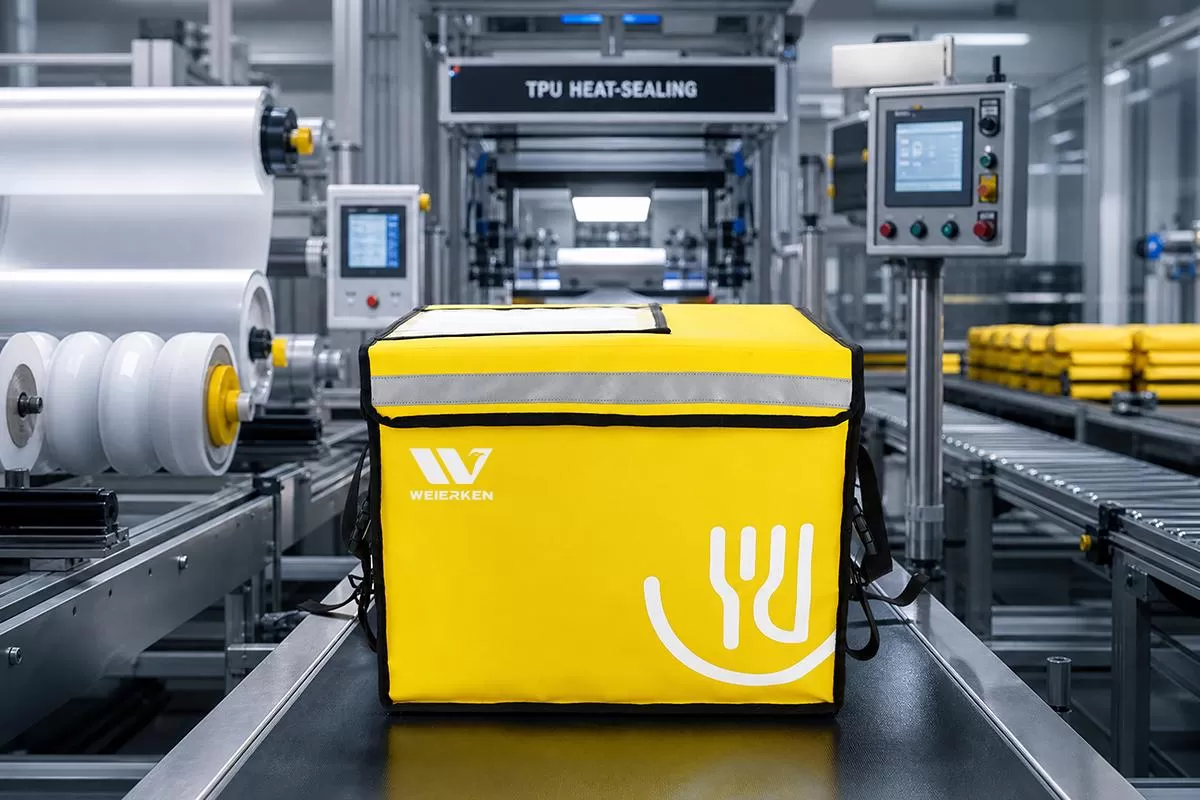
Introduction: Why the Right Supplier Matters More Than the Product
| Factor | Impact |
| Tariff Advantages | Lower import duties reduce overall procurement costs, freeing budget and increasing profit margins while maintaining product quality and delivery reliability. |
| Production Capacity | Determines ability to scale orders, handle seasonal spikes, and avoid stockouts. |
| Product Development Capability | Improves product usability, efficiency, and cost-effectiveness; enables practical optimizations beyond drawings. |
| Quality Control System | Ensures consistent product performance, reduces return rates, and maintains brand reputation. |
| Materials & Compliance | Guarantees non-toxic, safe, and environmentally friendly materials; meets regional regulations (REACH, LFGB). |
| Lead Time Stability | Maintains reliable delivery schedules, supports timely product launches, and reduces logistics risks. |
| Communication & Project Management | Facilitates smooth coordination across sampling, production, and logistics; can reduce costs and improve operational efficiency. |
Lower Overall Procurement Costs:Cambodia Factory with Tariff Advantages.
Direct reduction in import duties, lowering per-unit procurement costs
Freed-up capital can be reinvested into product development, marketing, or operational improvements
Increased overall profitability, strengthening long-term competitive positioning
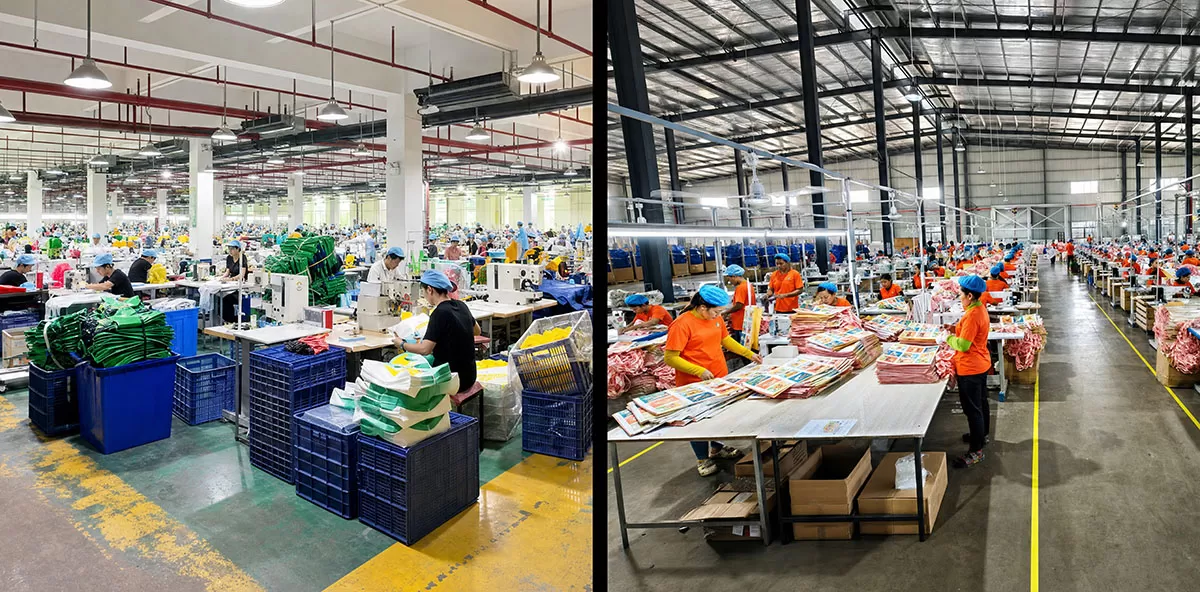
Production Capacity: Beyond Small Orders
Single factory vs. multi-location production setups
Ability to handle seasonal spikes or promotional surges
Flexibility to increase output rapidly without compromising quality
Multi-Factory Coordinated Production (China + Cambodia) to Diversify Risk – ensures smooth operations even if one facility faces disruptions.
Reliable Bulk Delivery, Minimizing Delays – our monthly production capacity exceeds 25 million units, fully capable of meeting peak season demand in Europe and North America.
Cambodia Factory with Tariff Advantages – optimized for lower import tariffs and logistics costs.
Lower Overall Procurement Costs, Increasing Profit Margins – coordinated production and multi-location setup help clients reduce overall sourcing costs while maintaining consistent quality.
Product Development: Practical Value Over “Custom” Claims
Optimizing insulation for energy efficiency
Enhancing usability through pocket or zipper design
Reducing overall weight without sacrificing durability
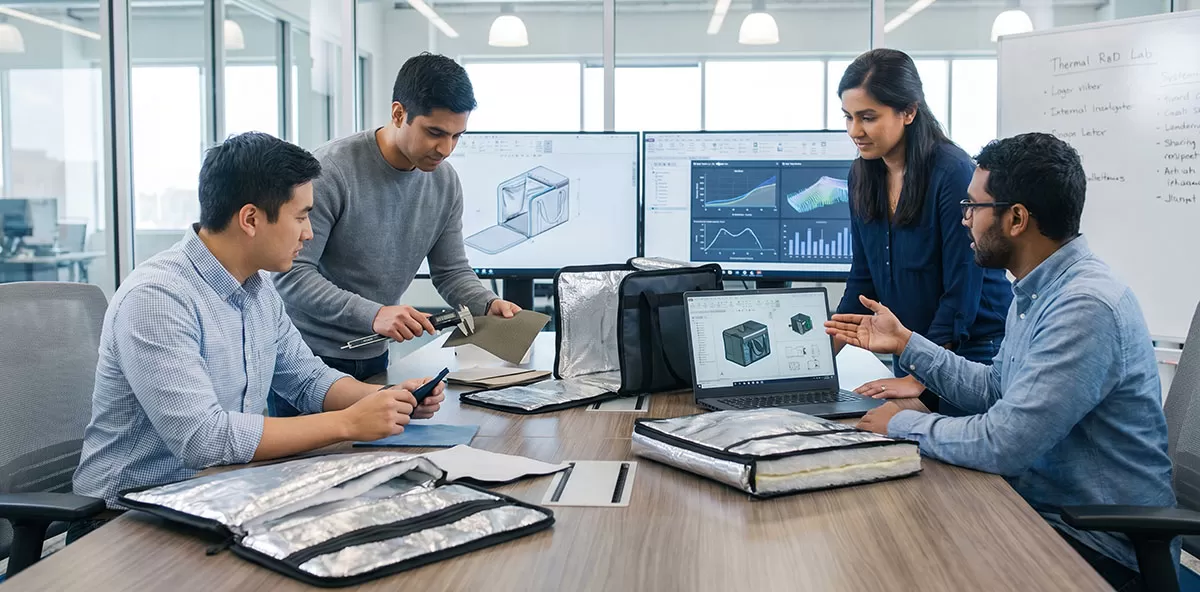
Own R&D Team – We develop products based on market insights – Our team continuously monitors end-market trends to launch products that align with business and user needs, offering expert recommendations throughout the project.
Internal Sample Room – Quick and precise prototyping – Our in-house boardroom reduces communication gaps and ensures samples faithfully reflect designs. Delivery bag samples: 3–7 days.
Solving Technical Challenges – From structure, materials, and accessories to production processes, we provide one-stop solutions for complex technical problems, ensuring feasible and efficient product improvements.
Case Insight:
One of our North American food delivery clients originally relied heavily on ice packs to maintain temperature. By leveraging Weierken’s R&D expertise, we redesigned the insulation structure and selected more efficient materials. The results:
Ice usage dropped by 40%, reducing operational costs
Simplified logistics and handling
Improved product usability and customer satisfaction
Quality Control: Consistency Is Built, Not Checked
Incoming Material Inspection – All raw materials are checked for compliance with specifications, safety standards, and environmental regulations before production begins.
In-line Inspections – Structured inspections are performed throughout the production process to catch issues early, preventing defects from propagating through the batch.
Final Pre-shipment Verification – Completed products undergo thorough checks, including dimensional accuracy, seam integrity, insulation efficiency, and waterproof performance.
Materials & Compliance: Prioritizing Safety and Sustainability
Compliance with REACH, LFGB, and other regional safety regulations
Use of non-toxic, food-safe, and environmentally friendly materials
Transparent sourcing to ensure consistent material quality
All our factories are BSCI and SEDEX certified, guaranteeing socially responsible operations.
ISO 9001 quality management systems are implemented across all production sites, ensuring consistent product quality and reliable performance.
We utilize GRS-certified and rPET materials where applicable, providing eco-friendly delivery bag options without compromising safety or durability.
Material sourcing is fully transparent, enabling traceability from raw materials to finished products, which helps clients meet compliance and sustainability requirements in Europe and North America.
Lead Time Stability: What Happens Under Pressure
On-time delivery consistency – Track record of meeting promised shipment dates across multiple orders.
Ability to handle disruptions – How suppliers respond to material shortages, labor fluctuations, or logistics challenges.
Backup production capacity – Availability of alternate production lines or facilities to ensure continuity if one site faces issues.
Communication & Project Management: Where Many Projects Succeed or Fail
Clear timelines and regular updates – Suppliers should provide transparent schedules, highlighting milestones for sampling, production, and shipment.
Fast, structured responses – Quick resolution of questions or issues prevents delays and miscommunication.
Cross-department coordination – Effective communication between design, production, QC, and logistics teams ensures consistency and avoids costly errors.
Proactive problem-solving – Suppliers who anticipate potential issues, such as packaging inefficiencies or shipment bottlenecks, add real value beyond mere manufacturing.
Dedicated Project Management Teams – Each client project is assigned a PM who coordinates all stages, from R&D to shipment, ensuring timelines and expectations are met.
Integrated Communication Systems – Real-time updates on sampling, production progress, and shipping status keep clients informed at every step.
Process Optimization Expertise – We proactively identify areas for efficiency improvements, such as packaging optimization, carton sizing, and palletization strategies, reducing per-unit shipping costs.
One-Stop Coordination – Our teams handle multi-factory coordination (China + Cambodia), QC, and logistics planning, providing clients a single point of contact for seamless execution.
Conclusion: A Reliable Supplier Looks Different in Practice
Meet international compliance standards – Certified suppliers (BSCI, SEDEX, ISO 9001, REACH, GRS, rPET) not only reduce regulatory risk but also enable clients to confidently expand into North American and European markets.
Offer scalable and flexible production – Multi-factory coordination, such as Weierken’s China + Cambodia setup with 25M+ monthly capacity, ensures clients can scale rapidly for major events like the Super Bowl or other high-demand surges.
Contribute to product and cost optimization – Suppliers with hands-on R&D, internal prototyping, and experience in logistics optimization help clients improve insulation efficiency, reduce ice pack usage, and optimize packaging, lowering total operational costs.
Maintain consistent quality – Process-driven QC systems, in-line inspections, and structured pre-shipment checks ensure end-to-end product consistency, reducing return rates and maintaining brand reputation.
Understand material requirements in global markets – Knowledge of regulatory standards, safe PVC alternatives, rPET options, and sustainable sourcing ensures products are compliant, safe, and environmentally responsible.
Deliver stable lead times – Advanced production planning, backup capacity, and multi-location production mitigate risks from unexpected spikes or disruptions, guaranteeing on-time deliveries even during peak events.
Communicate clearly across the entire process – Dedicated project management teams provide transparent timelines, fast responses, and proactive problem-solving, ensuring seamless coordination from sampling to delivery.
Why This Matters for Buyers:
For clients in the US, Canada, and Europe, choosing the right supplier can transform procurement from a transactional relationship into a strategic advantage. Reliable suppliers don’t just fulfill orders—they actively improve efficiency, reduce costs, mitigate risks, and support scalable growth. For example:
A North American food delivery client reduced operational costs by 40% by optimizing insulation materials and structure.
A European client cut logistics costs over 15% by improving packaging and palletization with proactive project management.
Multiple clients maintained sub-1% return rates across millions of units shipped during peak seasons, thanks to structured QC and multi-factory coordination.
Key Takeaway:
In practice, a truly reliable delivery bag manufacturer is a partner who anticipates challenges, adapts to market demands, and adds measurable value across the supply chain. Working with such a supplier—like Weierken—means clients can focus on growing their business with confidence, knowing their products are safe, high-quality, compliant, and delivered on time, every time.
FAQ
Q1: Can your factory reliably meet European and North American compliance standards?
| Aspect | Purpose | Why It Matters |
| Certifications (BSCI, SEDEX, ISO 9001, REACH, GRS, rPET) | Ensures products meet quality, safety, environmental, and ethical standards | Protects your business from regulatory risks, ensures safe products, and is mandatory for exports to Europe and North America |
| Production Capacity & Process Control | Ability to scale output and maintain consistent quality across large orders | Guarantees timely delivery without compromising product standards, even during peak seasons or promotional surges |
Q2: How can we be sure your quality management system is solid?
Documentation Review: Check incoming material inspections, in-line QC checks, and final pre-shipment reports.
Historical Performance: Request QC reports from previous shipments; look for return rates and defect trends.
Audit Options: Consider a factory audit or third-party inspection to validate processes.
Q3: Between TPU, PVC, PU, and PE, which material is better for our delivery bags?
| Material | Strengths | Considerations |
| PVC (PVC-coated fabrics) | Cost-effective, widely available, safe when REACH/LFGB compliant, durable enough for standard delivery bags | Less flexible than TPU/PU; lifespan suitable for standard commercial use |
| PU (Polyurethane-coated fabrics) | Lightweight, flexible, waterproof, non-toxic options available, good durability | Slightly higher cost than PVC; still widely practical for mid-range delivery bags |
| PE (Polyethylene-coated fabrics) | Non-toxic, lightweight, environmentally friendly, meets regulatory safety standards, often recyclable | Less premium feel, more suitable for disposable or short-term heavy-use bags |
| TPU (Thermoplastic Polyurethane) | Highly durable, flexible, premium feel, environmentally better than traditional PVC | Higher cost, rarely used in standard delivery bags; suitable for specialized or heavy-duty outdoor bags |
Most delivery bags in North America and Europe are made from PVC, PU, or PE alternatives to ensure safety, food compliance, and cost efficiency.
TPU is generally reserved for premium or specialized outdoor/insulated bags, not standard delivery applications.
Q5: How to reduce overall operational costs beyond production?
| Aspect | Approach | Impact |
| Product Design & R&D | Optimize insulation, reduce ice pack usage, improve usability | Lower operational costs for clients (e.g., less energy or handling required), increase customer satisfaction |
| Packaging & Palletization | Optimize carton size, pallet stacking, and packaging materials | Reduce shipping volume and freight costs, minimize damage during transport |
| Project Management & Coordination | Proactive planning across factories, QC, and logistics | Prevent delays, streamline operations, reduce emergency freight or rework costs |
Case Insight:
One North American food delivery client leveraged Weierken’s R&D and project management expertise to optimize bag insulation and redesign packaging. The results included:
10%~15% reduction in ice pack usage, lowering storage and handling costs
Over 10% reduction in logistics costs through optimized carton and palletization
Faster, smoother operations during peak seasons, maintaining timely deliveries