
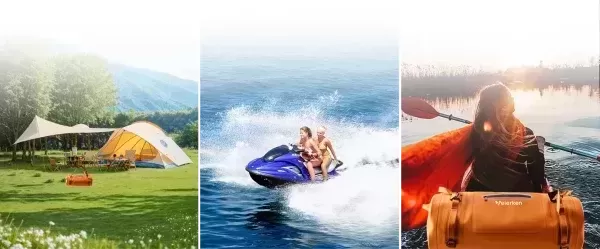
Partnering with a kayaking bag factory for an OEM project involves much more than simply placing a logo on a dry bag. These products operate in some of the most unforgiving environments on earth. Saltwater, intense UV radiation, and constant abrasion from sand and rocks will test the limits of any gear. At weierken, we understand that professional-grade kayaking equipment must deliver a 100% waterproof guarantee every single time.
Success in the outdoor gear market depends on reliability and technical precision. If you are a procurement manager or a brand owner, you need a partner who understands watertight engineering. This guide outlines the essential steps to navigate a partnership with a kayaking bag factory, from material selection to quality control protocols. Let’s look at how to turn your design concepts into rugged, market-ready products.
1. Defining Usage Scenarios and Waterproof Ratings
The first step in your collaboration is defining the Ingress Protection (IP) rating. A bag used for casual paddling has different requirements than one designed for multi-day expeditions. You must clarify whether the bag needs to resist heavy rain or full submersion. A professional kayaking bag factory should be fluent in these technical standards.
Most premium kayaking bags aim for at least IPX6 or IPX7 ratings. IPX6 protects against high-pressure water streams from any angle. IPX7, however, ensures the bag stays dry even when submerged in one meter of water for 30 minutes. Some specialized extreme-sports gear might even require IPX8 standards for prolonged underwater exposure.
Verification Methods: Ask the factory how they verify these ratings.
Inflation Testing: Do they inflate the bags and check for air leaks in a water tank?
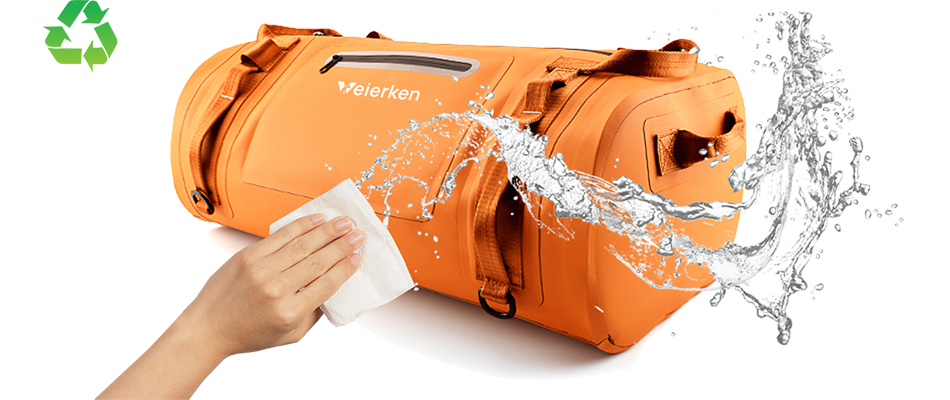
Paper Towel Test: This involves submerging a bag filled with dry paper for a set duration.
Visual Documentation: Request video proof of batch testing for every production run.
2. Core Material Selection: TPU vs. PVC vs. Composites
The choice of material dictates the bag’s weight, durability, and environmental footprint. A high-quality kayaking bag factory usually offers several options. Each has its own set of trade-offs regarding cost and performance. At weierken, we emphasize choosing materials that align with your brand’s target demographic and price point.
Thermoplastic Polyurethane (TPU) is the premium choice. It is eco-friendly, BPA-free, and remains incredibly flexible even in freezing temperatures. TPU also offers superior abrasion resistance and won't crack after repeated folding. While it costs more than other materials, it is the standard for high-end outdoor gear OEM projects.
Polyvinyl Chloride (PVC), specifically 500D or 1000D tarpaulin, is the most common choice for mid-range bags. It is highly waterproof and cost-effective. However, PVC can become stiff and brittle in cold weather and is generally less environmentally friendly. It works well for entry-level heavy-duty dry bags or rental equipment.
TPU-Coated Nylon or Polyester provides a balance between lightweight performance and strength. These composite fabrics are ideal for waterproof backpacks where weight is a concern. You must confirm the peel strength of the coating to ensure the waterproof layer doesn't separate from the base fabric under stress.
3. Sealing Technology: Roll-top vs. Waterproof Zippers
A bag is only as waterproof as its closure. The most common and reliable method is the roll-top closure system. By folding the top of the bag three or four times and securing it with buckles, you create a mechanical barrier against water. This design is simple, durable, and almost impossible to break.
For bags that require quick access, waterproof zippers (often called airtight zippers) are used. These are more complex and require high-precision manufacturing. Ask your kayaking bag factory about the brand of zippers they use. High-quality zippers should pass pressure cycle tests, ensuring they remain airtight even after hundreds of uses.
The seams themselves are the most critical point. Professional dry bag manufacturers use High-Frequency (RF) welding. This process uses electromagnetic energy to fuse the materials at a molecular level. Unlike sewing, RF welding creates a seamless waterproof bond that is actually stronger than the surrounding material. Avoid any factory that suggests "glued" seams for professional kayaking gear.
4. Hardware and Accessory Durability
When a bag fails in the wild, it is often a broken buckle or a snapped strap. Your kayaking bag factory should offer high-performance hardware. Look for brands like Duraflex, Woojin, or ITW. These buckles can withstand low-temperature impacts without shattering, which is vital for spring or autumn paddling.
The webbing should be made of Nylon 66 rather than cheap polyester. Nylon has better UV protection and won't degrade as quickly under the sun's harsh rays. During your audit, perform a tensile strength test on the handles and shoulder strap attachments. A professional bag should handle a 50kg load without the fabric tearing at the connection points.
Air-release Valves: These allow users to squeeze out excess air for compact storage.
D-rings and Lash Points: Essential for securing the bag to the deck of a kayak.
Reflective Accents: Improve visibility during low-light conditions or emergency situations.
5. Quality Control: Thermal Bonding and Inspection
Consistency is the biggest challenge in mass production for kayaking bags. A reliable kayaking bag factory must monitor the parameters of their RF welding machines constantly. Changes in ambient temperature or voltage can affect the quality of the seam. Ask if they record the temperature, pressure, and speed for every batch.
On-line detection is a hallmark of a top-tier supplier. Does the factory have a station for inflation pressure checks? Every single bag should be inflated and held for a specific period to ensure there are no microscopic pinholes. At weierken, we believe that 100% inspection of the waterproof barrier is the only way to prevent costly returns and brand damage.
Destructive sampling is also necessary. You should agree with the factory to take one or two bags from every batch and submerge them for an hour under high pressure. If the sample fails, the entire batch should be re-inspected. This Acceptable Quality Level (AQL) agreement protects your business from systematic manufacturing errors.
6. Essential OEM Documentation and Milestones
A successful partnership relies on clear communication and documentation. Before production begins, you must sign off on a Technical Specification Sheet. This document should detail every material, color code, logo placement, and welding seam width. This serves as the "source of truth" for the QC team.
The First Article Inspection (FAI) is the most important milestone. The factory produces a single, finished bag using the mass-production line. You or a third-party inspector must verify that this sample meets all waterproof standards and design requirements. Once the FAI is approved, the factory can move into full-scale manufacturing.
Finally, insist on batch traceability. Every bag should have a small tag or stamp indicating the production date and the raw material batch. If a customer reports a leak six months later, you can trace it back to a specific roll of fabric or a specific machine shift. This level of accountability is what B2B buyers expect from a modern kayaking bag factory.
7. Long-term Support and After-sales Kits
Even the toughest watertight gear can suffer punctures from sharp rocks or fishhooks. A forward-thinking kayaking bag factory will offer repair kits that you can include with your product. These kits usually contain color-matched fabric patches and specialized waterproof adhesive.
For B2B clients like kayak rental companies or adventure schools, durability is the number one priority. You might negotiate a durability warranty—for example, a guarantee that the seams will not fail under normal use for three years. This builds immense trust with your bulk buyers and positions your brand as a leader in professional kayaking accessories.
At weierken, we don't just deliver products; we provide long-term manufacturing solutions. We help our partners innovate with new features like integrated dry-pockets for phones or ergonomic harness systems for portaging. Innovation is the key to staying ahead in the competitive outdoor equipment market.
Reliability is the Ultimate Metric
Choosing a kayaking bag factory for your OEM project is a decision that affects your brand’s reputation for years. By focusing on RF welding technology, material science, and rigorous waterproof testing, you create a product that customers can trust with their most valuable gear. Reliability is the only metric that truly matters when you are miles away from the shore.
At weierken, we are committed to being a transparent and technically proficient manufacturing partner. We invite you to explore our OEM/ODM capabilities and see how our production standards set us apart in the kayaking bag factory landscape. Let’s build something that survives the elements.
Frequently Asked Questions (FAQ)
1. What is the difference between IPX6 and IPX7 for kayaking?
IPX6 means the bag can withstand heavy sprays of water, which is fine for deck storage in calm water. IPX7 means the bag can be fully submerged in one meter of water for 30 minutes without leaking. For white-water kayaking or situations where a capsize is likely, IPX7 is the industry standard.
2. Why do some dry bags feel "sticky" after a few months?
This is often a sign of hydrolysis, where the TPU or PVC coating begins to break down due to moisture and heat. A high-quality kayaking bag factory uses materials with hydrolysis resistance additives to ensure the bag remains smooth and functional for years, even in humid environments.
3. Can you print high-detail logos on TPU bags?
Yes. While TPU is a difficult material for some inks, we use specialized screen printing or heat transfer techniques that bond the ink to the surface. This ensures the logo won't peel or fade after exposure to saltwater and UV radiation.
4. How do I know if the factory is using real TPU or cheap PVC?
TPU is much more flexible and has a "softer" feel than PVC. You can also perform a "burn test" (in a lab) or check the low-temperature flexibility. PVC will become stiff and crack in a freezer, while TPU remains pliable. Always ask for material certification reports from your kayaking bag factory.
5. What is the standard lead time for a custom OEM order?
Typically, after the First Article Inspection (FAI) is approved, mass production takes between 35 to 45 days. This allows for material sourcing, RF welding, assembly, and 100% leakproof testing before the goods are packed for international shipping.
6. Do you support environmentally friendly packaging?
Yes. As a modern kayaking bag factory, we can provide plastic-free packaging options, such as recycled cardboard sleeves or biodegradable polybags, to align with your brand's sustainability values.
Ready to Launch Your Next Water-Sports Project?
Don't leave your product quality to chance. Work with a kayaking bag factory that understands the technical demands of the water. Whether you need custom dry bags, waterproof backpacks, or specialized kayak accessories, our team is here to provide a professional, reliable solution.
Contact weierken today to discuss your project requirements and request a technical quote or a physical sample.