

Finding the right manufacturing partner is a critical step for any food delivery platform, restaurant chain, or meal-kit brand. Fresh salads are highly sensitive to environmental changes. A minor temperature deviation during transit can quickly turn fresh, crisp lettuce into a limp, unappealing meal.
To protect your brand’s reputation, you need more than just a standard container. You need a highly engineered thermal transport system. Evaluating an OEM partner requires looking past a clean-looking sample and analyzing their factory's raw materials, technical construction, and testing protocols.
As an experienced salad insulated bag maker, weierken helps companies navigate the sourcing process. This guide outlines the essential performance standards, compliance certificates, and production metrics you must check before signing a manufacturing agreement.
By understanding these key evaluation areas, you can minimize sourcing risks, control costs, and ensure your salads arrive fresh and cold.
1. Food Safety, Materials, and Compliance
The materials used in your delivery bags do more than just insulate. They come into close contact with food packaging and sometimes directly with the food itself. This makes material safety, chemical compliance, and hygiene your top evaluation priorities.
Inner Lining Safety
The interior liner must feature a certified BPA-free food-grade liner. Many low-cost factories use cheap PVC linings that emit strong chemical odors or leach harmful plasticizers when exposed to warmth. Look for manufacturers that use high-grade, non-toxic PEVA or FDA-approved aluminum foil linings.
Eco-Friendly Alternatives
Modern consumers expect sustainable business practices. Ask your potential partner if they offer environmentally friendly fabrics, such as Recycled PET (RPET) made from recycled plastic bottles. Using sustainable fabrics helps reduce your carbon footprint while appealing to eco-conscious diners.
Factory and Material Certifications
A reliable insulated food delivery bag manufacturer must provide clear, third-party compliance reports. Do not take their word for it; ask to see official documentation before placing an order.
Product Testing: Request FDA, LFGB, and REACH compliance test reports to confirm the materials are safe for food contact.
Social Compliance: Verify if the factory holds valid BSCI or Sedex audit certificates, which ensure fair labor practices.
Quality Systems: Confirm the facility operates under an ISO9001 certified quality management system to guarantee consistent manufacturing quality.
2. Thermal Retention and Leak-Proof Technology
A delivery bag’s main job is to block external heat. At the same time, it must prevent liquid leaks from spilled salad dressings or melting ice packs. If dressings or water seep into the insulation layer, the bag will grow mold, smell bad, and become unusable.
Insulation Layer Performance
The insulation layer determines how long the bag can maintain cold temperatures. Most bags use Expanded Polyethylene (EPE) foam. While standard bags use 3mm foam, heavy-duty commercial bags require a density of 5mm to 8mm to keep food cold during longer delivery routes.
Seam Construction
Standard sewing needles create thousands of tiny puncture holes in the inner lining. Liquid spills and condensation easily leak through these holes and soak the internal foam. To prevent this, check if the factory uses heat-welded seamless tech.
High-frequency voltage welding melts and fuses the PEVA panels together. This creates a completely waterproof, seamless interior tub that holds water without leaking a single drop.
Airtight Closures
Zippers are common sources of heat leaks. A high-quality custom salad cooler bag should feature water-resistant nylon zippers with polyurethane covers. These zippers block warm air from entering and prevent cold air from escaping, extending your safe delivery window.
3. Customization, Design, and R&D Capabilities
Every food service business has unique delivery challenges. Your packaging might use round pulp bowls, square plastic trays, or large catering boxes. A generic bag will not fit these varied shapes securely.
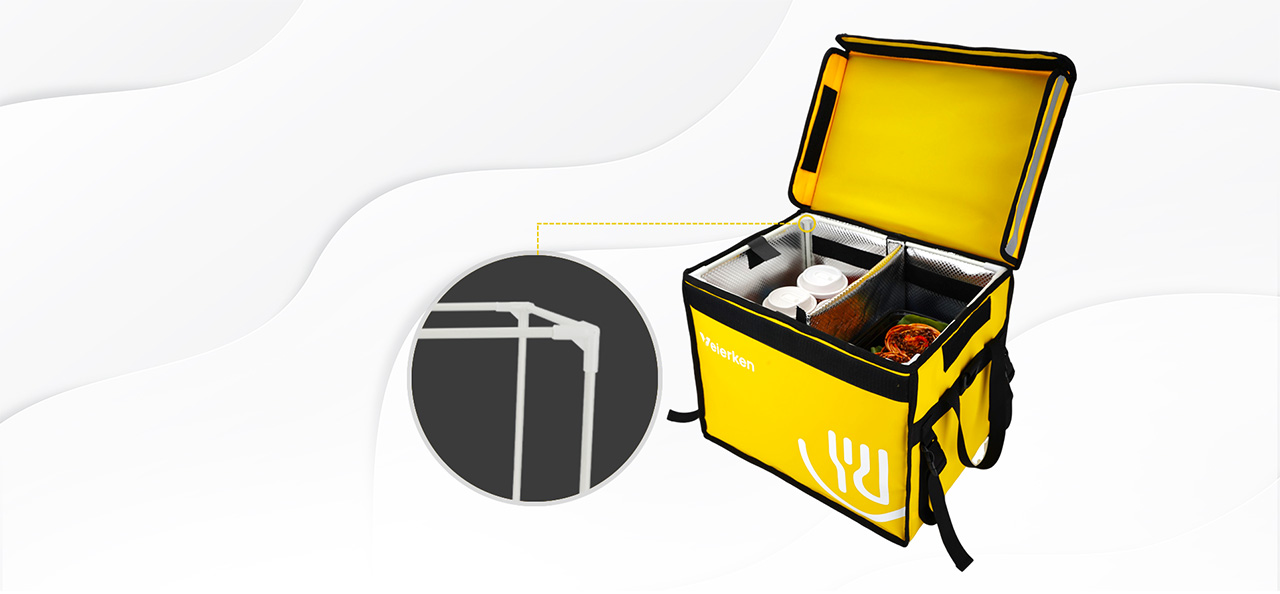
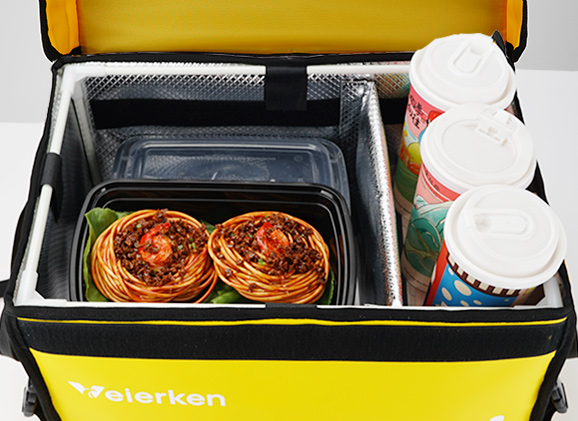
Working with an established salad insulated bag maker like weierken gives you access to professional design teams. A capable partner should help you optimize your bag's internal layout for better efficiency.
Look for a partner that designs custom pockets for ice packs to allow cold air to flow downward. They should also design dedicated slots for salad dressing cups, utensils, and paper napkins to keep them dry and organized.
You can also evaluate their technical skills by measuring their sampling lead time. A professional factory should turn your design drawings or reference bags into a working physical sample within 5 to 7 days.
A fast, accurate sampling process proves the factory understands your technical requirements and can handle custom design updates quickly.
Compartment Customization: Creates secure slots that match your specific food packaging shapes.
Ancillary Storage: Keeps dressings, dry napkins, and utensils separate from cold containers.
Rapid Prototyping: Delivers accurate physical samples quickly for real-world testing.
4. Production Capacity and Supply Chain Stability
Your delivery business depends on timely shipments. If your bag manufacturer fails to deliver your gear on time, your operations can stall, causing you to lose customers. You must evaluate the factory's production capacity and supply chain stability.
Ask about the factory's Minimum Order Quantity (MOQ). A flexible OEM thermal bag factory should offer reasonable MOQs for your initial test orders. This allows you to test the bags in the field before investing in a large production run.
You must also confirm their peak-season lead times. Demand for cold salads spikes during the summer, which is also the busiest production season for bag factories. Ensure your manufacturing partner has stable raw material suppliers to keep production running on time during these busy months.
A stable capacity & supply chain prevents unexpected production delays and protects your brand from sudden price increases in raw materials.
OEM Supplier Evaluation Checklist
Use this quick checklist when interviewing and evaluating potential manufacturing partners for your delivery fleet:
| Evaluation Area | Standard Requirement | Verification Method | |
|---|---|---|---|
| Material Safety | BPA-free, non-toxic PEVA or food-grade aluminum foil lining. | Request FDA/REACH compliance test reports. | |
| Leak Prevention | High-frequency heat-welded seams; no needle punctures. | Conduct a 24-hour water-fill test on samples. | |
| Thermal Insulation | High-density EPE/EVA foam (5mm thickness or higher). | Measure foam thickness and density on cut samples. | |
| Factory Audits | Fair labor and consistent quality management systems. | Verify valid BSCI, Sedex, or ISO9001 certificates. | |
| R&D Performance | Fast sampling turnaround with accurate design matching. | Verify prototype speed and design accuracy. |
Choosing a Partner for Your Brand
Choosing your delivery bag manufacturer is a key business decision. A cheap bag can lead to damaged food, higher replacement costs, and lost customers. Partnering with a professional manufacturer ensures your delivery gear keeps your food fresh and your brand looking professional.
At weierken, we focus on material safety, clean seamless construction, and reliable mass production. We work closely with our clients to design and deliver high-performance bags that protect your food on every delivery run.
Frequently Asked Questions
1. What certifications should I ask a salad insulated bag maker to provide?
You should request FDA, LFGB, or REACH compliance reports to confirm the food safety of the inner lining. For factory standards, look for BSCI, Sedex, or ISO9001 certificates to ensure fair working conditions and consistent quality control.
2. Why is heat-welded seamless technology better than traditional sewing?
Traditional sewing uses needles that leave tiny holes in the lining, allowing spilled liquids and condensation to leak into the insulation. Heat-welded seamless tech melts the lining panels together to create a completely waterproof, leak-proof barrier.
3. What is the standard sampling lead time for a custom bag?
A professional factory typically takes 5 to 7 business days to create a physical sample from your design drawings. This timeline can vary slightly depending on how quickly they can source custom fabrics or unique accessories.
4. Can we order delivery bags made from recycled or eco-friendly materials?
Yes. Many modern factories offer sustainable materials, such as Recycled PET (RPET) made from recycled plastic bottles, helping your brand meet its sustainability goals.
5. How does insulation thickness affect cold storage times?
Thicker foam provides better thermal resistance. While standard 3mm foam works well for short trips, professional deliveries lasting over 45 minutes require 5mm to 8mm of high-density EPE foam to keep salads fresh and cold.
Start Your Custom OEM Project
Are you looking to upgrade your delivery gear or launch a new custom bag program? Our design and engineering teams are ready to help. Send us your bag dimensions, insulation targets, and branding ideas, and we will provide a custom design concept and sample quote within 48 hours.
Contact weierken today to submit your inquiry and schedule a design consultation.