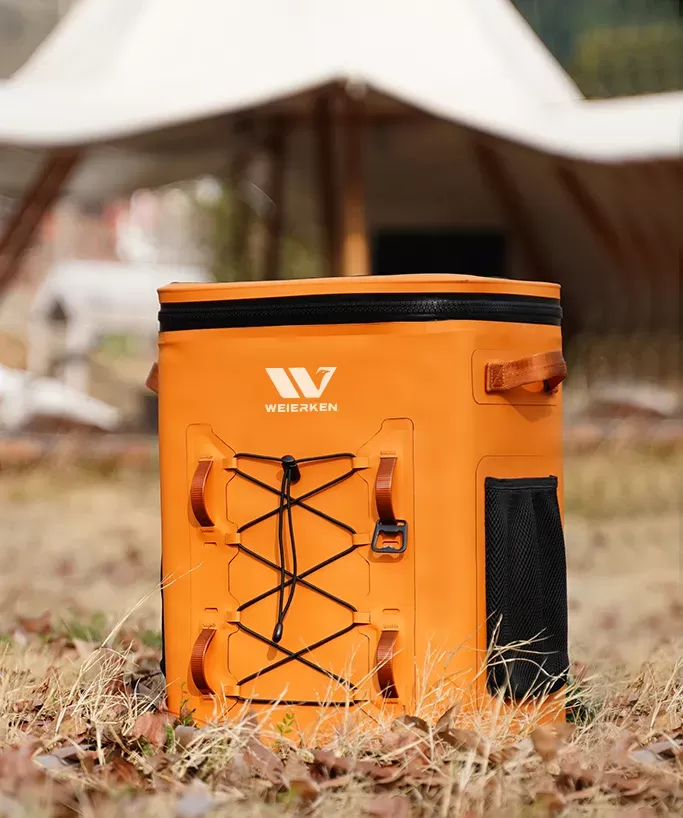

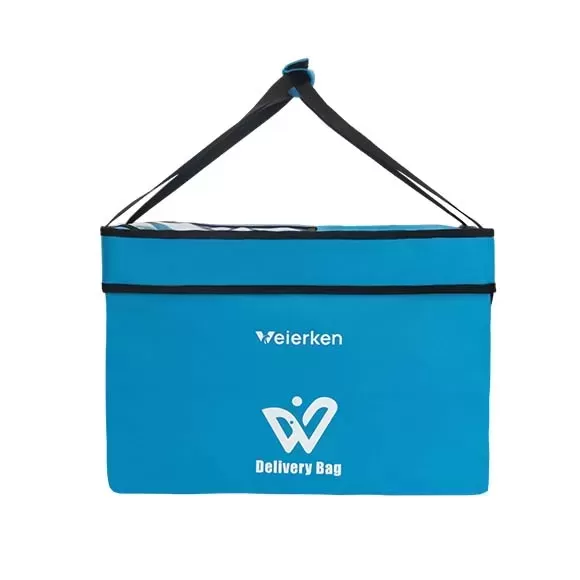
Direct-to-consumer (D2C) fresh-cooked pet meals and raw (BARF) diets represent the fastest-growing sector in modern pet care. Dog and cat owners want clean, human-grade nutrition without chemical preservatives. Delivering these fresh meals, however, exposes subscription brands to severe shipping vulnerabilities.
A standard ground delivery window takes 24 to 48 hours. When you add transit delays and the hours a parcel sits on a hot porch, thermal protection often collapses. A broken cold chain allows pathogenic bacteria like Salmonella and Listeria to multiply quickly. The result is pet illness, angry customer emails, and high subscription churn.
To scale a subscription model profitably, you must eliminate thermal failure. High-performance insulated bags for pet meal subscriptions provide the thermal barrier, leak resistance, and freight efficiency needed to protect fresh food through final delivery. Founded in 2006, Weierken designs and manufactures custom OEM thermal packaging to solve these exact logistical challenges.
The 48-Hour Cold Chain Challenge in Pet Meal Subscriptions
Shipping perishable pet nutrition differs fundamentally from human meal kits. Raw animal proteins degrade rapidly when temperatures fluctuate, making thermal management your most critical operational metric.
Temperature Thresholds for Fresh & Raw Diets
Fresh pet meal providers generally operate across two distinct temperature zones, each requiring a tailored thermal design:
Raw and Frozen Diets: Raw meat blends, ground bone, and organ mixes must remain completely frozen solid below -18°C (0°F) or at a firm sub-zero state throughout transit to stop microbial activity.
Gently Cooked & Fresh Formulations: Cooked whole-food recipes demand strict refrigerated conditions between 0°C and 4°C (32°F to 40°F). Any climb past 8°C triggers fast spoilage and ingredient separation.
The "Last-Mile Porch Test"
Logistics transit times only tell half the story. Courier vans lack climate-controlled cargo areas, where summer ambient temperatures routinely reach 45°C (113°F).
Once dropped off, parcels often sit under direct sunlight on concrete porches for 6 to 8 hours before pet owners bring them inside. Your packaging must resist this final thermal spike. Standard paper mailers and single-ply bubble liners fail this test every time.
The Hidden Costs of Thermal Packaging Failure
When an insulated pouch fails, the financial fallout goes far beyond the replacement cost of food:
Double Freight Charges: You pay expedited shipping rates twice for a single order cycle.
Customer Service Drain: Support agents spend hours handling complaints, tracking lost shipments, and issuing refunds.
Customer Churn: Pet parents will not feed compromised meals to their companions. A single thawed delivery often leads to immediate subscription cancellation.
The Anatomy of a 48-Hour Insulated Bag: Materials & Engineering
Achieving a verified 48-hour cold chain requires specialized material integration. Proper thermal engineering tackles heat transfer across all three mechanisms: conduction, convection, and radiation.
Multi-Layer Thermal Shielding
Commercial-grade insulated bags for pet meal subscriptions rely on a strategic multi-layer composite build:
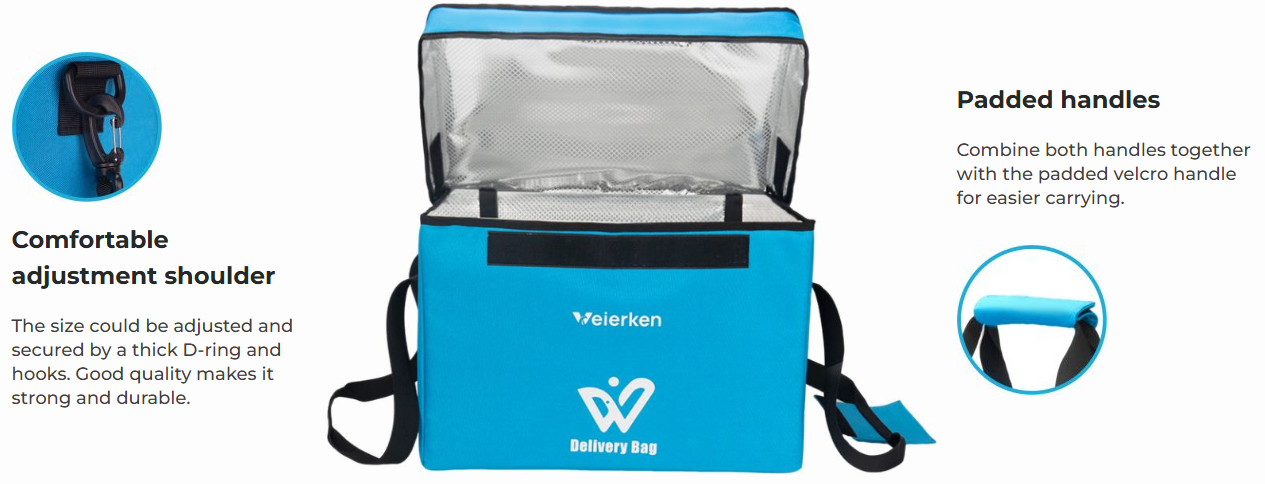
Protective Outer Shell: We use high-density 600D or 900D rPET polyester treated with a durable water-repellent (DWR) coating. This layer blocks ambient humidity, resists snags during sorting, and withstands rough handling.
Core Insulating Layer: Heavy-gauge closed-cell Expanded Polyethylene (EPE) or Nitrile Butadiene Rubber (NBR) foam creates structural air pockets that block conductive heat. For extreme 48- to 72-hour cross-country routes, we integrate thin Vacuum Insulation Panels (VIP) to maximize thermal resistance.
Radiation Shielding: High-purity reflective aluminum foil or metalized films bounce radiant heat back into the environment, preventing external infrared rays from penetrating the food compartment.
100% Leakproof & Hygienic Interiors
Condensation and thawing meat juices present serious hygiene hazards. Traditional sewn seams create thousands of needle perforations. Liquids seep into these holes, soak the foam core, develop rancid odors, and stain doorstep areas.
A capable manufacturer resolves this issue using high-frequency (HF) seamless radio welding. We fuse heavy-gauge PEVA or food-grade TPU liners into a solid, impenetrable tub. The smooth, non-porous interior contains melted moisture, wipes clean in seconds, and meets strict food-contact safety standards.
Coolant Optimization and Air Space Reduction
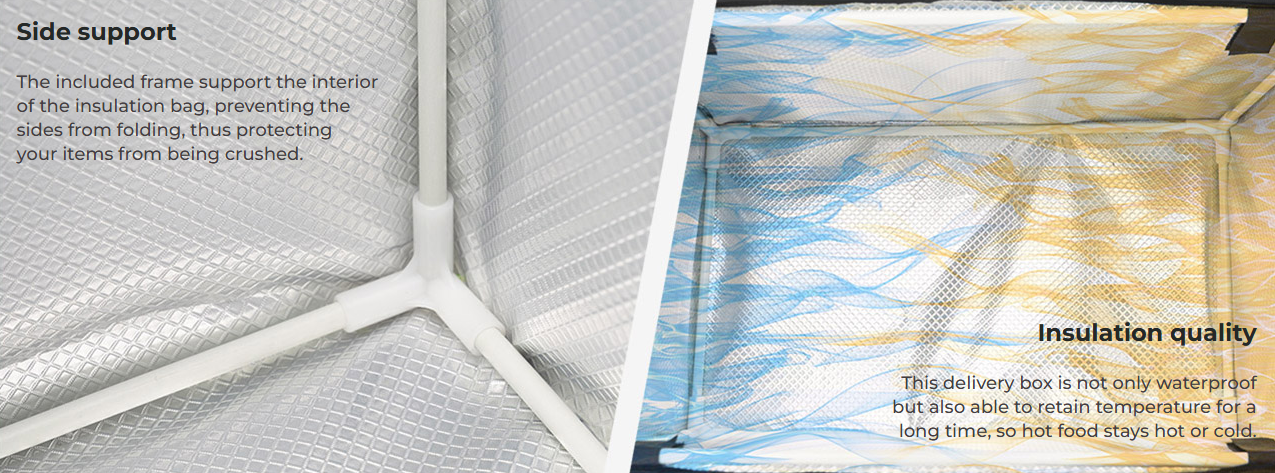
Dead air space inside a delivery bag accelerates coolant depletion. Air circulates, picks up ambient heat, and melts ice blocks faster. We design custom form factors that match your exact food pack configurations, whether you pack roll chubs, plastic tubs, or vacuum pouches.
We engineer dedicated interior sleeves that suspend gel packs or dry ice blocks directly above the pet food. Because cold air falls, this top-down placement creates efficient convection currents, keeping the core payload colder for longer.
Economics of Pet Subscriptions: Reusable Circular Bags vs. Single-Use Packaging
Subscription brands face a major strategic decision: continue packing in disposable boxes or transition to a closed-loop reusable carrier system.
The Problem with Expanded Polystyrene (EPS)
For decades, EPS foam coolers served as the default cold shipping container. Today, they present clear operational liabilities:
Excessive Dimensional Weight: Rigid EPS coolers do not compress. Brands pay massive volumetric surcharges on parcel delivery.
Fragility: EPS cracks under courier impact, venting the interior cold air instantly.
Environmental Backlash: Modern pet owners despise bulky foam boxes that clutter garages and overwhelm local landfills.
The Reusable Circular Model
Durable insulated bags for pet meal subscriptions unlock a closed-loop business model. Customers leave the empty bag on their porch during their next scheduled delivery cycle, and couriers collect it for return, sanitization, and repacking.
Lower Long-Term Unit Cost: A high-spec reusable cooler bag costs more upfront than a cardboard box. However, because it lasts 30 to 50 delivery cycles, the per-shipment packaging cost drops by over 40%.
Reduced Freight on Returns: We engineer collapsible sidewalls and hook-and-loop straps. Return carriers transport the bags flat, cutting reverse freight expenses.
Brand Equity: Reusable packaging directly matches the values of eco-conscious consumers, strengthening subscriber loyalty.
Custom OEM Features Designed Specifically for Pet Meal Brands
Off-the-shelf catalog coolers do not meet the operational demands of industrial meal distribution. Custom OEM manufacturing allows you to tailor every structural detail to your fulfillment line.
Modular Interior Compartments
Pet meal subscriptions often bundle distinct items, such as frozen raw patties alongside ambient shelf-stable supplements, freeze-dried treats, or bone broth pouches. We construct fold-down insulated partition walls that divide the bag into distinct thermal chambers, letting you ship ambient and frozen SKUs in one parcel.
Cold Chain Monitoring Ports
Subscription teams need visibility into transit temperatures to defend against customer chargebacks. We build low-profile transparent internal pockets designed to house data loggers, RFID tracking chips, or irreversible temperature indicator cards securely away from wet condensation.
Branded Unboxing Aesthetics
The unboxing experience sets the tone for your subscription service. Weierken applies precise industrial design to make your bag visually distinctive:
Crisp screen printing and high-density heat transfer logos that endure repeat washings.
Reflective safety piping that makes bags visible to delivery drivers during dawn and dusk drops.
Custom-molded zipper pullers and color-matched high-tensile handles that withstand 25 kg pull-force tests.
Why Choose Weierken as Your Insulated Bag Manufacturing Partner?
Scaling a pet food subscription requires a manufacturing partner with real production capacity, proven engineering skills, and predictable lead times.
20-Year Heritage in Technical Bags
Since 2006, Weierken has manufactured high-durability cooler bags, waterproof packs, and thermal gear. We understand how textiles, foams, and films interact under mechanical stress. That manufacturing background ensures your packaging holds up to rough transit conditions.
Dual-Country Production Capacity
Geopolitical tensions and fluctuating import tariffs threaten margin predictability. Weierken operates three owned, modern manufacturing facilities across China and Cambodia to shield your business from supply shocks:
80,000+ Square Meters: Extensive production floor space and high-volume raw material storage.
3,000+ Skilled Workers: Scalable manufacturing lines ready to support seasonal surges and rapid subscriber growth.
Cambodia Duty Savings: Importing goods from our Cambodia production base allows North American and European brands to avoid punitive tariffs, preserving margin.
In-House Thermal Testing Lab
We don't guess how long your bags will hold temperature; we prove it. Our facility includes dedicated environmental test chambers that simulate real seasonal heat waves. We test prototypes loaded with your actual food packs and coolants, generating precise 48-hour temperature decay curves before you commit to production.
Trusted by 2,000+ Global Brands
Over two decades, more than 2,000 international brands have relied on our OEM and ODM services. We enforce strict AQL 2.5 quality control standards across every production batch, ensuring consistent seam strength, clean printing, and thermal performance.
Step-by-Step OEM Sourcing Guide for Pet Meal Brands
Starting production on custom insulated packaging follows a direct, structured process:
Step 1: Fulfillment Route Analysis
Provide your key
operational metrics: target temperature range (-18°C or 4°C), maximum delivery
window (24, 36, or 48 hours), transit carrier profiles, and typical ambient
weather conditions.
Step 2: Structural Prototyping
Our patternmakers build
working samples in 7 to 10 days. We optimize internal dimensions around your
primary food containers to eliminate dead air space and balance coolant
volume.
Step 3: Laboratory Validation
We run the physical
prototype through environmental chamber trials. We measure temperature points
hourly and adjust foam densities, foil barriers, and zipper closures until your
48-hour requirement is met.
Step 4: Scaled Production & Delivery
Following
prototype sign-off, we launch high-volume manufacturing under strict QA
inspections. Our freight team coordinates international ocean or air transport,
clearing customs from our China or Cambodia ports directly to your fulfillment
centers.
Frequently Asked Questions
Q1: How do insulated bags for pet meal subscriptions maintain safe
temperatures for 48 hours without active power?
A1: These bags use
passive thermal management. High-density closed-cell foam blocks conductive
heat, high-frequency welded liners prevent convective air leaks, and reflective
foil barriers reflect radiant heat. When combined with calculated gel pack or
dry ice loads, the system traps the cold inside the bag for up to 48 hours.
Q2: What ratio of coolant to pet food do you recommend for standard
48-hour parcel shipping?
A2: For refrigerated meals (under 4°C), we
typically recommend a 1:2 or 1:3 coolant-to-product ratio by weight, depending
on seasonal ambient temperatures. Frozen raw food shipping often requires higher
ratios (up to 1:1) or a small dry ice charge paired with phase-change gel
packs.
Q3: How do returnable delivery bags handle cleaning and sanitization
in circular programs?
A3: We build our circular delivery bags using
commercial-grade, waterproof TPU or heavy PEVA interiors. These liners resist
chemical sanitizers, hot water sprays, and enzymatic cleaners, allowing
fulfillment teams to wipe down or wash bags quickly between uses without
degrading the material.
Q4: Can your bags prevent condensation and raw meat juices from
leaking during transit?
A4: Yes. We use high-frequency RF seamless
welding for the inner food tub. Unlike conventional sewing, RF welding melts the
edges together under pressure, creating a leakproof seal with zero needle holes.
All melting ice and condensation remain contained inside the bag.
Q5: What tariff benefits does Weierken's Cambodia facility offer
North American pet brands?
A5: Goods imported directly into the
United States from our Cambodia facility are exempt from Section 301 tariffs
applied to Chinese goods. This dual-country structure lets you access
competitive labor and production costs while avoiding heavy import duties.
Build Your 48-Hour Cold Chain with Weierken
In the direct-to-consumer fresh pet food market, reliable temperature management protects your business. High-performance insulated bags for pet meal subscriptions prevent spoilage, eliminate messy leaks, lower parcel freight expenses, and deliver a clean unboxing experience that keeps subscribers on board.
Partner with an OEM manufacturer with the technical materials, testing facilities, and global capacity to scale alongside your business. Contact Weierken's packaging engineering team today to review your cold-chain specifications, request material samples, and receive a comprehensive factory-direct quote.