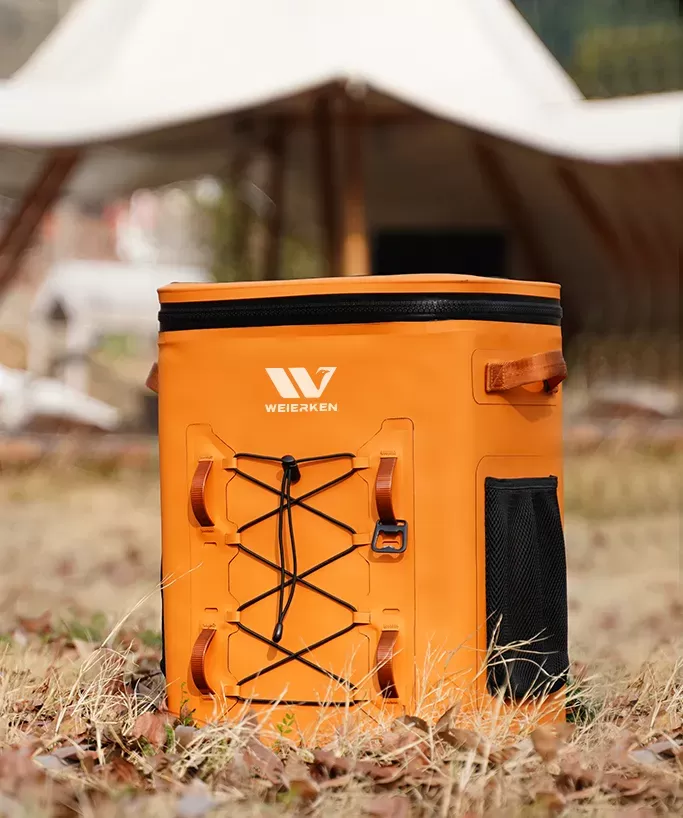


Bank fishing is tough on gear. Unlike boat anglers who store their tackle in carpeted lockers, shore anglers hike through dense brush, scramble over riprap, and drop their packs straight into wet grass and slick mud.
Too many outdoor brands make the mistake of sourcing from generic backpack factories. These suppliers take an everyday commuter daypack, stitch on a rod loop, and pitch it as a specialized mobile fishing solution. The end result? Anglers buy the pack, but seams tear on briars, treble hooks snag on standard nylon mesh, and soaked bases ruin expensive lure trays. Returns spike, and brand equity takes a hit.
To capture market share in the growing shore angling and urban fishing segments, you need an engineering partner that understands mobile fishing. A dedicated bank fishing bag supplier must merge field-tested utility, rugged materials, and a resilient production footprint. Technical bag makers like Weierken build custom tackle bags around the physical reality of life on the water's edge.
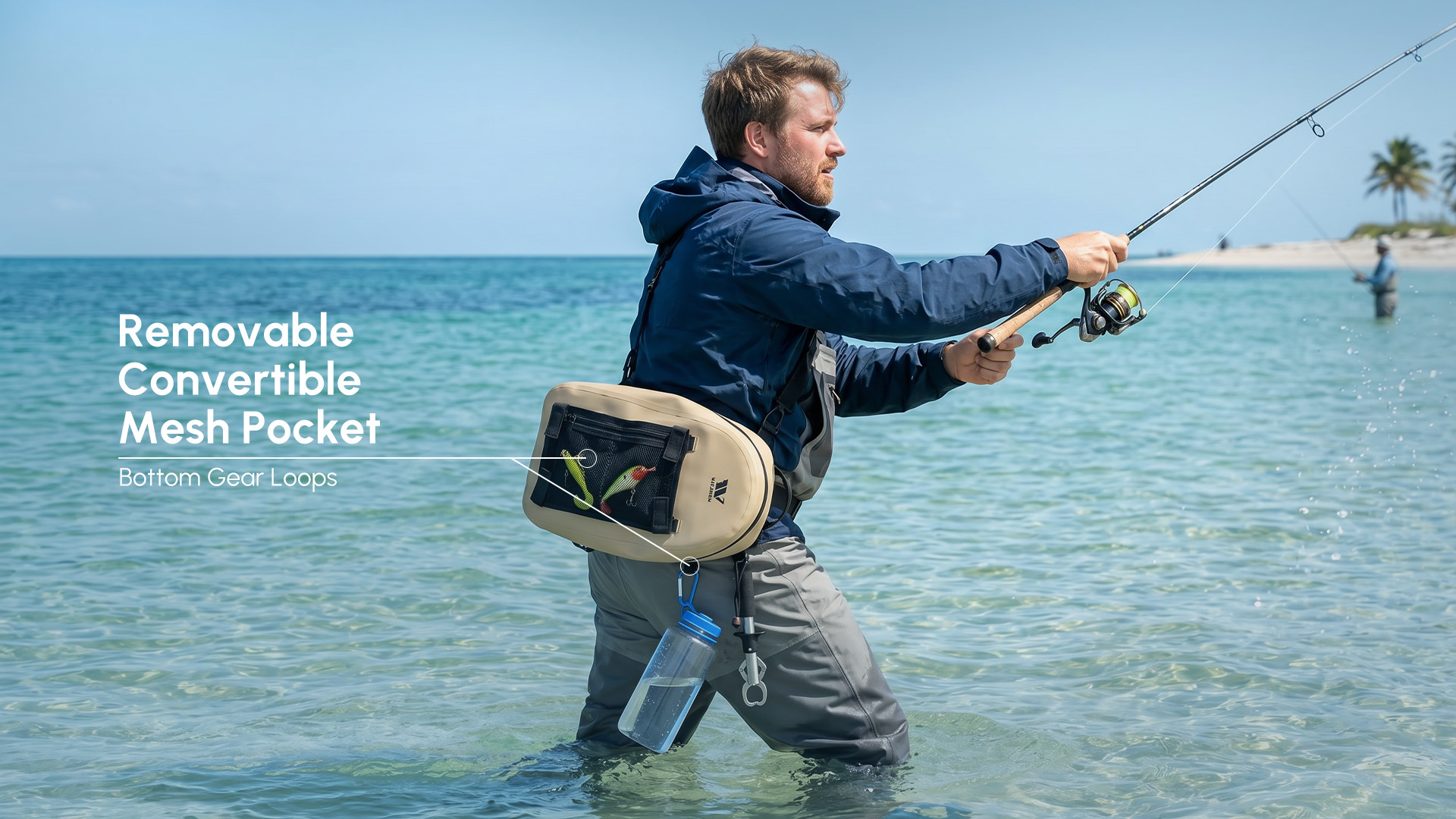
Core Capability 1: Terrain-Ready Structural Engineering
A bank angler’s pack serves as a mobile command center. Because shore anglers carry everything on foot, the bag must balance hands-free carrying, high-wear protection, and instant tackle access without requiring the user to set the bag down on dry ground.
Mud-Proof Molded Base Construction
Bank anglers rarely find a dry, flat bench. They drop their packs on wet grass, river mud, and jagged gravel while landing fish. A standard stitched fabric bottom absorbs water, gets filthy, and abrades quickly.
A capable OEM must offer advanced bottom-construction methods:
- Compression-Molded EVA Bases: High-density EVA foam thermoformed with deep tread patterns. This creates a waterproof barrier that stands upright on uneven ground and resists puncture from sharp stones.
- Seamless RF-Welded TPU Tubs: Heavy-gauge thermoplastic polyurethane welded directly to the main body fabric. This eliminates needle holes entirely, ensuring zero water ingress when the pack rests in standing puddle water.
- Wipe-Clean Finishes: Smooth-coated synthetic surfaces that let users wash off dried mud and lake slime with a simple garden hose without soaking through to interior tackle boxes.
One-Handed Utility and Drop-Down Workbenches
When standing knee-deep in mud or balancing on a steep slope, an angler cannot easily drop their pack to swap lures. An experienced bank fishing bag supplier builds bags that double as mobile workstations.
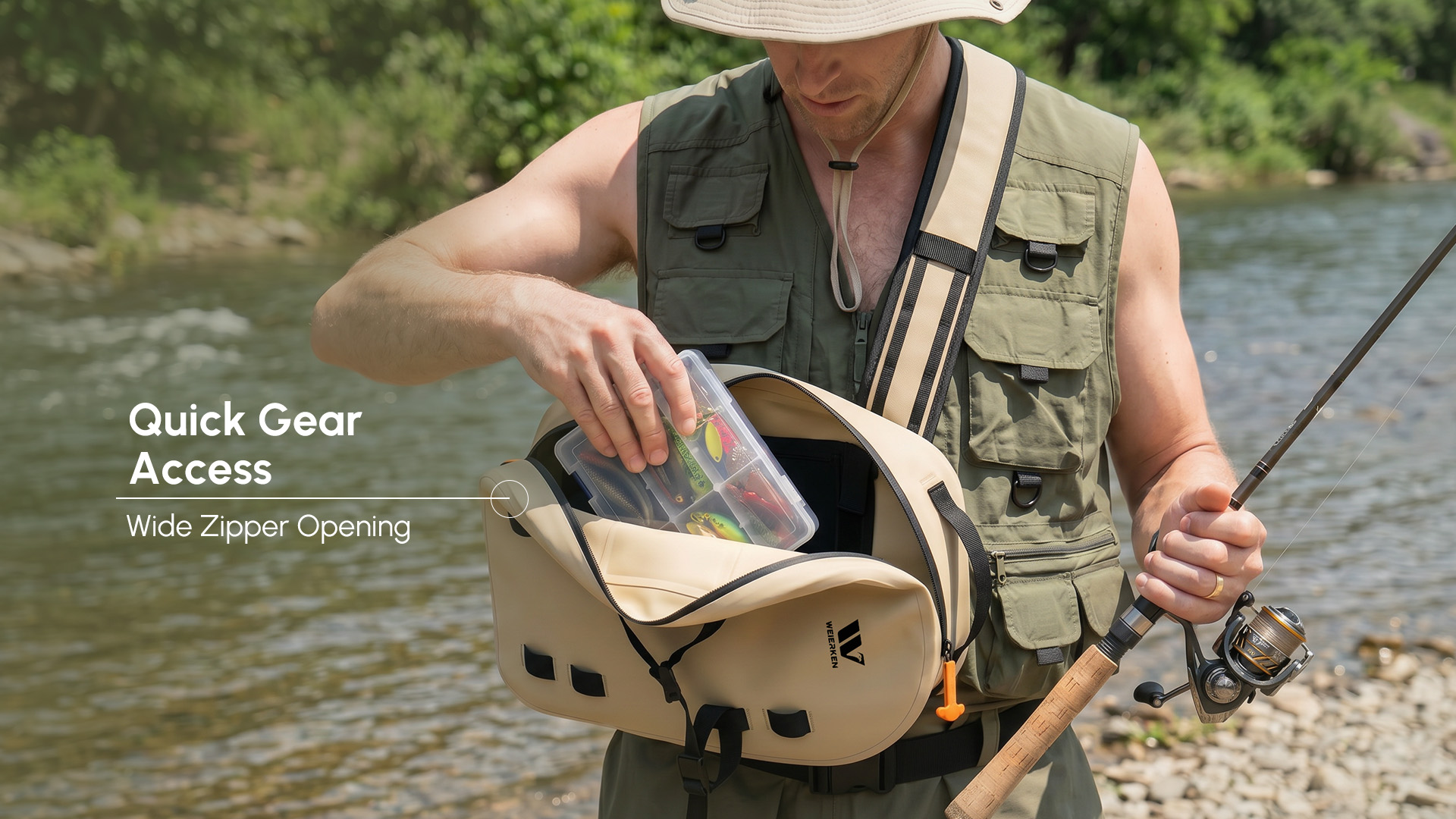
- 90-Degree Drop-Down Front Pockets: Front-access compartments engineered with internal cord stops or gussets. When unzipped, the pocket door lays flat at a ninety-degree angle, functioning as an instant, stable lure-rigging tray.
- Friction-Fit Plier Holsters: Exterior tool sheaths molded or reinforced with internal stiffeners. This allows an angler to pull out split-ring pliers with one hand and re-holster them smoothly without looking away from the fish.
- Magnetic Retention Ports: Built-in rare-earth magnets positioned beneath high-wear fabric zones to temporarily hold hooks, flies, and scissors securely in windy conditions during rig adjustments.
Casting Ergonomics and Rotational Sling Systems
Shore fishing requires non-stop movement and aggressive casting motions. Standard backpacks feature bulky shoulder straps that pinch the armpits, restrict overhead casts, and fatigue the trapezius muscles over an eight-hour session.
For sling designs, your manufacturer should incorporate an ergonomic pivot strap that rotates 180 degrees from back to chest in a single motion. For backpacks, look for contoured S-curve harness designs combined with non-water-absorbent EVA back panels that shed sweat and won't trap moisture during sudden downpours.
Core Capability 2: Multi-Material Fabrication Mastery
Bank fishing gear endures far more mechanical stress than typical camping gear. It scrapes against thorn bushes, brushes tree bark, and withstands constant friction from lure hooks and heavy sinkers. A premier bank fishing bag supplier must demonstrate technical mastery across specialized performance fabrics.
High-Tenacity Fabrics and Sustainable Substrates
A standard 300D polyester will tear open within weeks of bushwhacking. Professional OEM builders offer curated fabric packages matched to key stress areas:
- 500D to 1000D Cordura Nylon: Unrivaled abrasion and tear resistance for high-contact lower panels and side rod-retention zones.
- Diamond-Grid Ripstop: Lightweight strength for upper compartments, reducing total pack weight without sacrificing puncture security.
- GRS-Certified Recycled PET (rPET): Environmentally conscious brand clients demand sustainable fabrics. High-tensile rPET with double PU coatings delivers professional-grade durability while meeting corporate ESG standards.
Hook-Resistant Rubberized Mesh
Conventional polyester spacer mesh is a trap for bank anglers. A loose treble hook on a crankbait or jerkbait will instantly penetrate standard mesh fibers, causing frustrating snags and torn fabric.
A specialized OEM bypasses this flaw by sourcing and working with custom dip-coated rubber mesh. Hooks slide across the surface without tangling, and wet items like scents, leader spools, or damp towels dry quickly through open ventilation channels.
Corrosion-Resistant Hardware and Reinforced Zippers
Even freshwater bank anglers encounter brackish estuaries, road salt runoff, and heavy rain. Standard metal sliders corrode and lock up. Your manufacturing partner must integrate:
- Oversized nylon coil zippers with ergonomic T-pullers for rapid operation with cold or wet hands.
- UV-stabilized acetal or nylon-66 buckles that maintain tensile strength and flex in sub-zero winter bank fishing conditions.
- Reinforced box-X stitching on all load-bearing anchor points, ensuring grab handles withstand up to 40 pounds of deadweight load.
Core Capability 3: Market-Driven R&D and 12–30 Day Sampling
Fishing seasons are unforgiving. Missing the spring tackle-buying window can derail an entire fiscal year for a fishing brand. Yet, bank fishing bags are notoriously difficult to sample because they combine rigid molded parts, complex internal dividers, and structural harness webbing.
Generic trading companies often take 60 to 90 days just to deliver an initial prototype. That turnaround is simply too slow.
Weierken maintains dedicated in-house prototyping rooms capable of turning initial concept sketches and CAD files into complete, production-ready functional samples within 12 to 30 days.
This rapid turnaround allows your product managers to test prototypes in actual field conditions, check fit with standard tackle tray dimensions (such as 3600 or 3700 size boxes), and refine ergonomics before committing capital to production tooling.
Furthermore, an advanced factory provides Design for Manufacturability (DFM) input during the design stage. Instead of merely copying drawings, their engineers will advise on seam relocations, structural foam density, and optimal rod-holder geometry to reduce production cycle times and unit costs.
Core Capability 4: Dual-Hub Supply Chain and Tariff Strategy
Tariffs and volatile freight environments create serious margin risks for North American and European fishing brands. Sourcing entirely from a single region can expose your brand to punitive import duties or sudden supply disruptions.
The solution is a diversified, dual-hub manufacturing model:
- China Hub (R&D, Materials, and Complex Tooling): China offers an unmatched raw material ecosystem. Advanced textile coatings, custom-molded EVA bases, and specialized tooling are developed, tested, and piloted here for technical precision.
- Cambodia Hub (Duty-Advantaged Volume Manufacturing): High-volume, cut-and-sew assembly transfers smoothly to Southeast Asian facilities. Sourcing through Cambodia helps brands avoid steep Section 301 tariffs in the United States while benefiting from preferential duty treatment in several European jurisdictions.
Weierken operates manufacturing facilities across both China and Cambodia. This dual-hub framework gives outdoor brands flexibility: you gain access to high-end prototyping and technical material supply in China, paired with large-scale, tariff-advantaged production out of Cambodia.
This setup, supported by a 99.5% quality inspection yield rate and comprehensive door-to-door (DDP) logistics, protects profit margins while keeping your retail shelves reliably stocked.
Core Capability 5: International Compliance and Seamless Communication
Building a great product is only half the battle. If your supplier cannot pass routine social compliance and environmental audits, major outdoor retailers like Bass Pro Shops, Cabela’s, or Decathlon will refuse to stock your products.
Your bank fishing bag supplier must maintain certified operational standards:
- Social and Safety Compliance: Active BSCI and SEDEX audits guaranteeing ethical working conditions, fair pay, and safe manufacturing floors.
- Chemical and Material Safety: Strict adherence to REACH (EU) and Prop 65 (California) standards, ensuring that water-repellent treatments (DWR), PVC trims, and synthetic foams are free of harmful phthalates, PFAS, and heavy metals.
- Direct Technical Communication: A dedicated OEM account team must speak the technical language of industrial bag design. Working with project managers who understand terms like "tensile strength," "hydrostatic head rating," and "burst resistance" eliminates miscommunication and prevents costly revisions.
Professional Sourcing Checklist for Bank Fishing Bags
Use this evaluation matrix when auditing a potential bank fishing bag supplier:
| Feature / Capability | Generic Bag Factory | Specialized OEM Supplier (e.g., Weierken) |
|---|---|---|
| Base Construction | Stitched 600D polyester with standard PU coating; prone to soaking and abrasion. | Custom compression-molded EVA or seamless RF-welded TPU bottom tubs. |
| Lure Access | Standard vertical backpack zip; contents spill when unzipped standing up. | 90-degree fold-down workbench trays with magnetic hook docks. |
| Sampling Speed | 45 to 90 days; multiple revisions needed due to lack of fishing gear expertise. | 12 to 30 days for complete, field-testable functional samples. |
| Mesh Panels | Standard polyester mesh that tangles and tears on barbed hooks. | Rubber-dipped, anti-puncture mesh designed specifically for lure contact. |
| Manufacturing Base | Single-country footprint; full exposure to trade tariffs and supply shocks. | Dual-hub capacity (China + Cambodia) for duty savings and scaled assembly. |
| Retail Compliance | Basic business licenses; struggles with Western third-party factory audits. | Full compliance: BSCI, SEDEX, ISO 9001, REACH, and Prop 65 certified. |
Frequently Asked Questions (FAQ)
Q1: What is the ideal main fabric weight for an OEM bank fishing sling bag?
A1: For a balanced mobile sling bag, 500D to 600D high-density ripstop nylon or high-tenacity rPET provides the best performance. It offers sufficient tensile and tear resistance against dense brush while keeping the empty bag weight under 2.5 pounds. High-wear zones, like bottom corners and rod holder holsters, should be reinforced with 1000D Cordura or TPU laminates.
Q2: Can we use our own custom-molded EVA base tooling with your factory?
A2: Yes. A professional supplier can run production using your existing compression molds, or build new private-label molds directly from your CAD files. Custom molds allow you to integrate your brand logo, specific tackle box footings, and distinct structural ribbing into the base.
Q3: How does the Cambodia manufacturing facility help reduce our import costs?
A3: For brands importing into the United States, goods produced in China are subject to Section 301 tariffs, which add substantial extra duties to bags and backpacks. By completing final production and assembly in Cambodia, qualifying shipments bypass these punitive tariffs, noticeably improving gross margins on retail and wholesale orders.
Q4: How does a bank fishing pack differ structurally from a boat tackle bag?
A4: Boat bags prioritize sheer storage volume, top-loading access, and stackability; weight is rarely an issue because the boat deck carries the load. Bank fishing packs, by contrast, focus on low tare weight, dynamic load distribution, one-handed mobile access, and durable base protection against mud, rocks, and wet riverbanks.
Q5: What is the typical Minimum Order Quantity (MOQ) for custom technical tackle bags?
A5: Technical tackle packs requiring custom-molded components typically start at an MOQ of 500 to 1,000 units per colorway. This volume justifies the custom extrusion of specialized technical fabrics, hardware production, and dedicated assembly lines.
Q6: Are the materials used in your fishing bags compliant with California Proposition 65?
A6: Yes. All raw materials—from exterior shell fabrics to PVC/TPU coatings, webbings, and zipper pulls—can be sourced and verified free from regulated phthalates, lead, and toxic chemicals to ensure clean lab test reports for Prop 65 and REACH compliance.
Build Your Next Winning Shore Fishing Bag with Weierken
Bank fishing continues to expand as more anglers prioritize mobile, accessible fishing over costly boat ownership. Winning this market takes equipment built intentionally for the challenges of the shoreline.
Partnering with Weierken gives your brand direct access to over 20 years of technical outdoor gear manufacturing. You get agile 12–30 day sampling, field-tested structural engineering, and the commercial protection of a dual-hub China and Cambodia supply chain.
Ready to develop a technical bank fishing bag that earns rave reviews from serious anglers? Contact the engineering team at Weierken today to review your tech pack or request a comprehensive DFM evaluation.