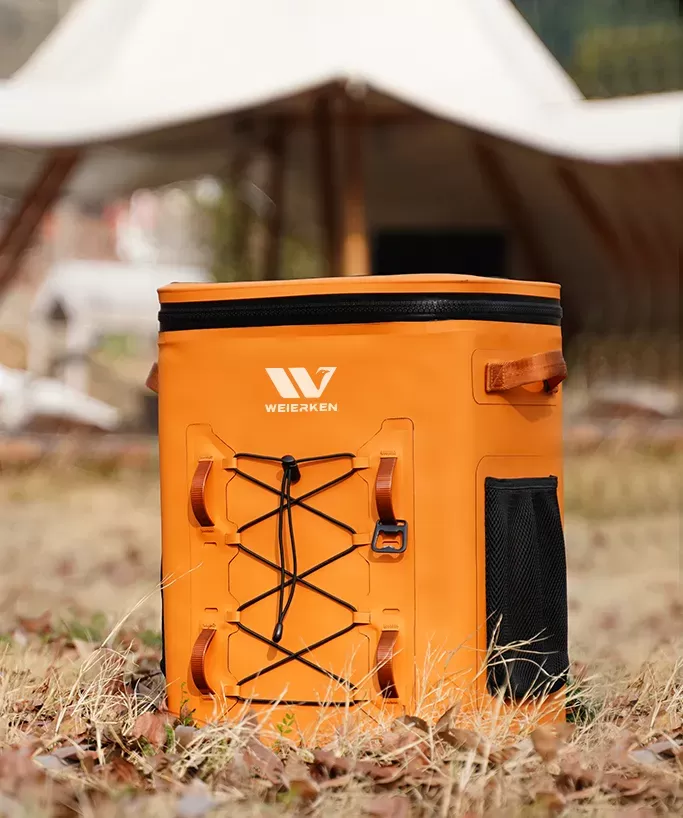

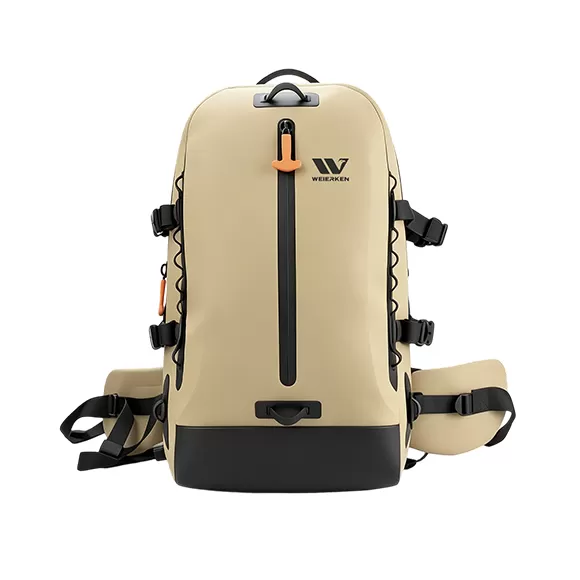
Angling is shifting fast. The boom in kayak fishing, coastal wading, and deep-water fly fishing has redefined bag performance. Anglers no longer accept basic stitched canvas bags that soak through in heavy rain or submerge their gear during deep river crossings.
Today's tackle bag is a technical gear fortress. Yet many traditional luggage factories claim they produce waterproof gear simply by adding coated fabrics. When their products hit the water, glued seams give out, saltwater ruins the zippers, and overloaded packs sag. Choosing the wrong contract manufacturer leads to returns, warranty claims, and brand damage.
Vetting an experienced waterproof tackle backpack OEM requires a deep engineering focus. Specialized manufacturers like Weierken build packs to withstand extreme water pressure, salt fog, and heavy cargo. Below are the five essential benchmarks sourcing teams must audit before signing their next production agreement.
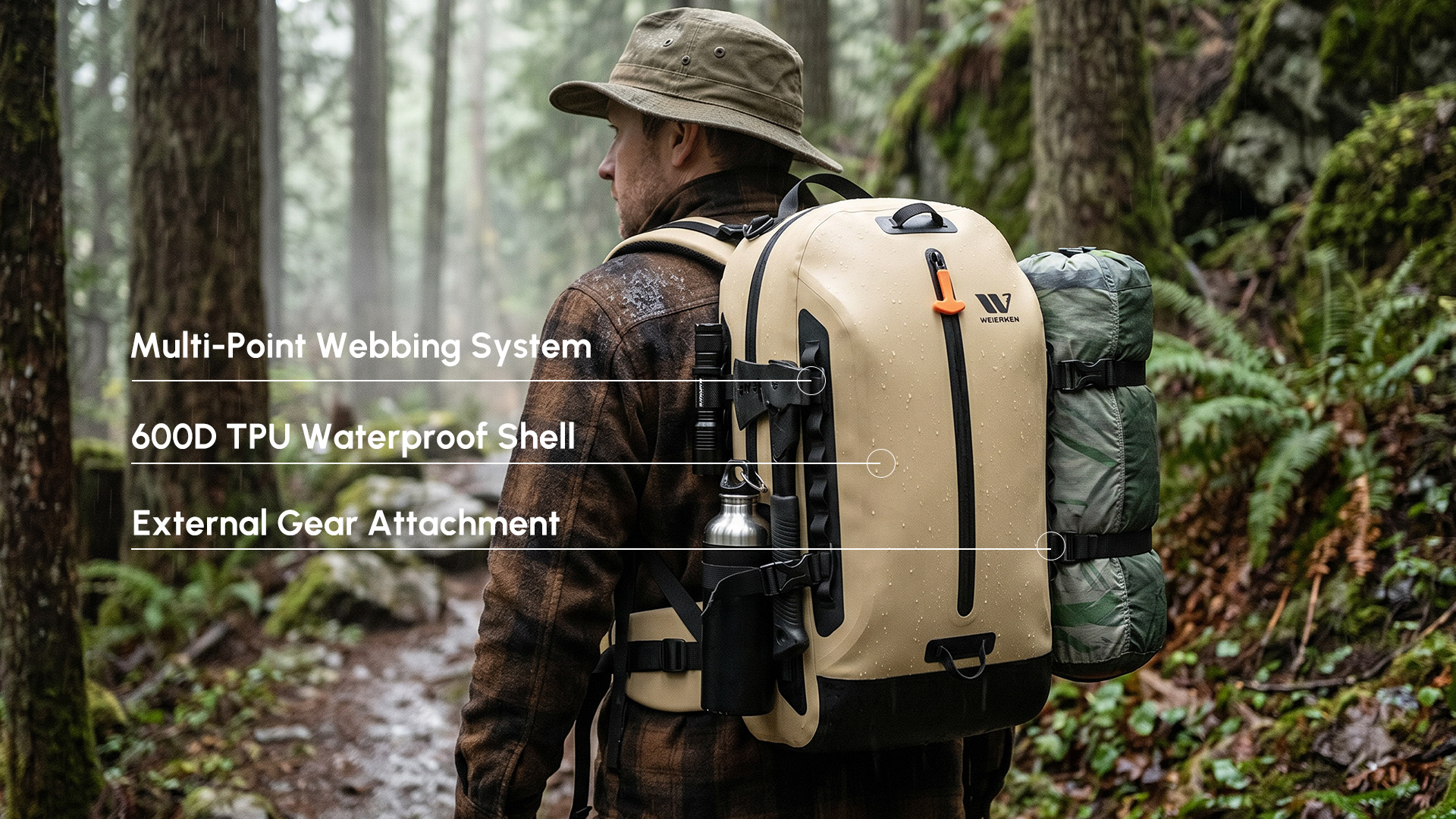
1. Extreme Waterproof Construction & Sealing Mastery
Sewing punch-holes directly through technical textiles destroys their water resistance. Liquid under hydrostatic pressure exploits these micro-punctures, and standard tape strips often degrade in humid conditions. A reliable OEM must build around true molecular welding.
Radio Frequency (RF) vs. Ultrasonic Welding
Top-tier factories use High-Frequency (HF/RF) welding or ultrasonic fusing. RF welding runs electromagnetic energy through polyurethane or coated textiles to fuse sheets into a single, seamless barrier. This airtight build protects against continuous submersion (IPX7 and IPX8).
For hybrid designs, the factory should know when to combine methods: pairing an outer, abrasion-resistant ballistic nylon shell with an RF-welded internal dry compartment.
Advanced Polymer Coatings: TPU vs. PVC
Polyvinyl chloride (PVC) is cheap, but it cracks in cold weather, adds excess weight, and carries toxic plasticizers. Technical tackle brands rely on dual-sided Thermoplastic Polyurethane (TPU). Look for an OEM that understands:
- Ether-based TPUs that resist microbial breakdown and mold.
- GRS-certified recycled polyester (rPET) bases that meet ESG mandates.
- UV-stabilized coatings that withstand direct sunlight without yellowing or softening.
Saltwater-Rated Submersible Zippers
Salt spray ruins standard zippers. True submersible tackle packs require airtight, gas-tight mechanical zippers. Your factory must install these without warping the adjacent fabric panels. The hardware must clear ASTM B117 salt spray testing for at least 72 hours with zero pitting on sliders, teeth, or cord pulls.
2. Tackle-Specific Structural & Ergonomic Engineering
Outdoor gear design requires real domain experience. Standard school-pack patterns fail under the weight of sinkers, terminal tackle, and lure trays. Your manufacturing partner must understand how anglers load and carry their gear.
Tackle Tray Modularity (Plano 3600 & 3700 Compatibility)
Anglers organize their lives around standardized utility boxes. An OEM must build internal compartments to fit Plano 3600 or 3700 tackle trays without wasted volume. The pack needs rigid internal dividers or lightweight composite sheets to prevent bulging against the wearer’s spine.
Fishing-Specific External Mounting
Every square inch of a high-performance pack should serve a purpose. Look for production lines that master detailed assembly requirements:
- Reinforced hypalon lash tabs for landing nets and carabiners.
- Molded, quick-draw plier sheaths with security bungees.
- Adjustable multi-point rod holder straps that secure two-piece travel blanks.
- Self-draining tool sleeves so trapped water runs out freely.
Hydrophobic Ergonomic Suspension
Wading anglers often submerge the lower third of their pack. If the back panel uses open-cell sponge mesh, it absorbs water and triples in weight. A qualified OEM installs thermoformed, closed-cell EVA back panels that channel airflow, cushion the spine, and shed water instantly.
3. Supply Chain Resilience & Tariff Mitigation
Sourcing tackle packs in 2026 requires smart geopolitical positioning. Factory labor rates mean nothing if unexpected border tariffs wipe out your product line margins.
Relying on a single manufacturing facility inside a high-duty zone leaves your landed costs exposed. Forward-thinking companies choose a dual-hub model to stay flexible.
Weierken runs a dual-hub setup that blends precision and scale:
- The China Development Center: Drives early R&D, rapid raw-material sourcing, toolmaking, and complex sample fabrication.
- The Cambodia Production Base: Handles mass-market assembly, cutting duties for North American and European imports under trade preference frameworks.
A full-service custom waterproof fishing bag factory should also offer door-to-door Delivered Duty Paid (DDP) logistics. When the factory oversees ocean freight, customs clearance, and terminal deliveries, you avoid surprise surcharges and port delays.
4. Rapid R&D, Precision Sampling & Technical Problem-Solving
Turning a digital concept into a sealed, load-bearing pack reveals real factory capabilities. Many suppliers stumble when stitching soft synthetics to rigid molded shells, stretching sample rounds into six-month delays.
Fast Sample Turnarounds (12 to 30 Days)
Complex tackle packs feature compression lids, waterproof pockets, and internal dividers. An experienced sample room should deliver a functional, factory-tested prototype in 12 to 30 days. Fast prototyping keeps your seasonal launch schedules on track.
Complex Multi-Material Joining
Modern tackle bags mix contrasting components. Factories must successfully bond:
- Compression-molded EVA protective top covers.
- 840D puncture-proof TPU chassis bodies.
- Injection-molded base tubs that let packs stand upright on wet boat decks.
An OEM with decades of field-testing anticipates structural stress points. They suggest practical design adjustments—like corner radius edits or gusset additions—before you open expensive injection and welding molds.
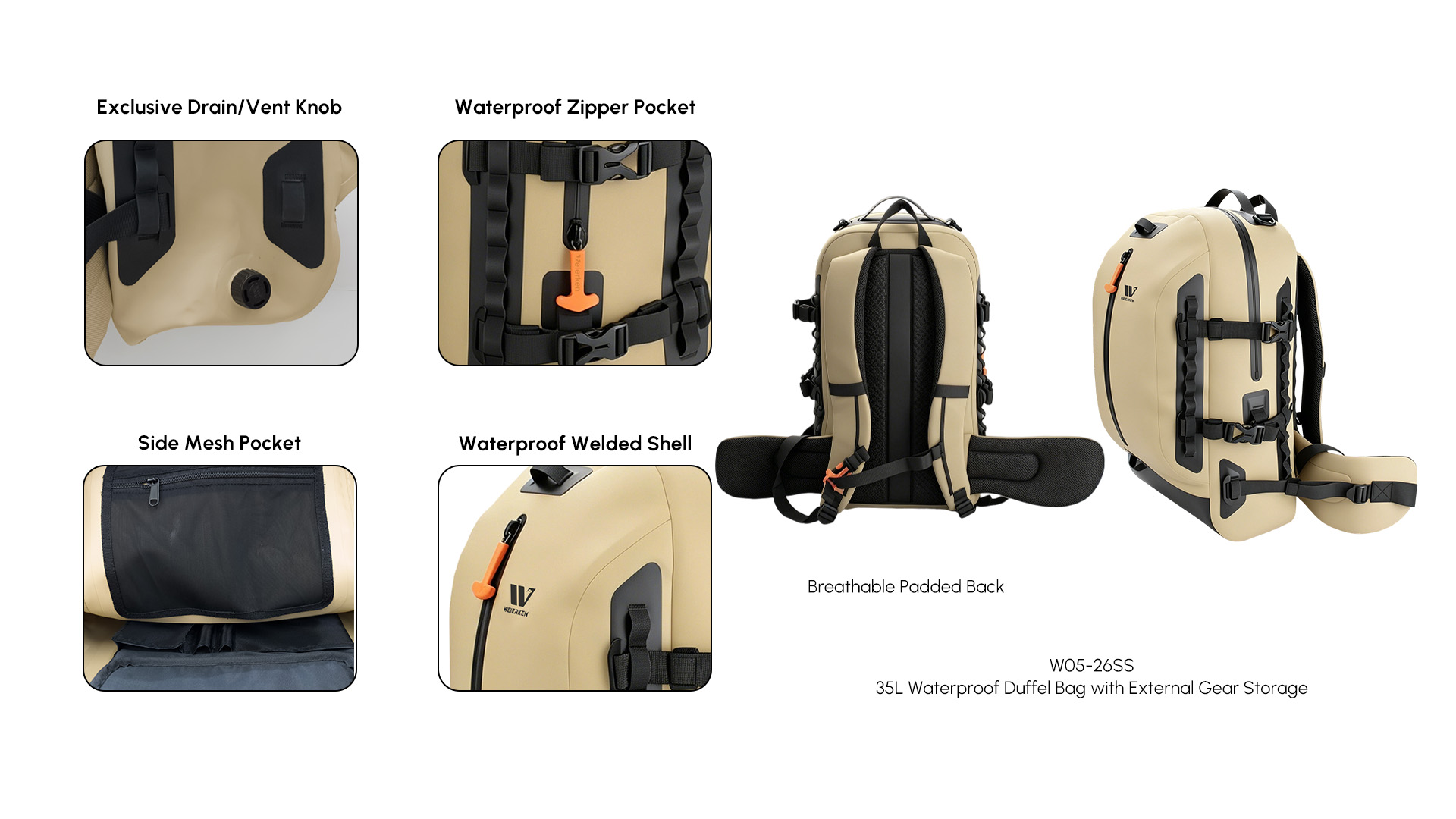
5. Quality Yield, Global Compliance & Seamless Communication
A waterproof bag that leaks even one drop isn't water-resistant—it's ruined. Low factory reject rates determine whether your brand prospers or gets buried in return freight costs.
The 99.5% First-Pass QC Yield
Do not accept standard sewing-line audits for technical gear. A legitimate submersible tackle bag supplier runs continuous, pressure-tested quality control:
- Air Retention Testing: Inflating welded bag chambers to a set PSI to confirm zero pressure drop over time.
- Submersion Tank Testing: Inspecting sealed bags in water tanks under vacuum to expose hidden pinholes.
- Stress-Load Pull Testing: Pulling handle anchors and strap points to structural failure limits.
Certified Social and Environmental Compliance
Enterprise retailers and modern consumers require full audit trails. Your OEM must hold updated certifications covering BSCI, REACH, SEDEX, GRS, and ISO 9001. These documents confirm clean, fair labor standards and toxic-free chemical handling across your entire supply chain.
Clear Project Management
Communication breakdowns kill production timelines. Work with OEMs that assign fluent, English-speaking technical project managers. A clear milestone-based tracker—freezing tech packs, sourcing materials, approving pre-production units, and validating mass inline testing—keeps cross-border runs on schedule.
OEM Vetting Scorecard
Use this evaluation matrix to score potential partners during factory audits and RFQ evaluations:
| Audit Module | Key Factory Checkpoint | Benchmark Standard |
|---|---|---|
| 1. Waterproofing | In-house RF welding and hot-air taping equipment | IPX7/IPX8 submersion capability |
| 2. Raw Materials | Pure TPU film composite sourcing & GRS rPET options | Ether-based TPU, zero PVC blending |
| 3. Hardware Reliability | Airtight waterproof zippers & POM clips | 72-hr ASTM B117 salt-spray passing |
| 4. Ergonomics | Non-absorbent thermoformed closed-cell EVA backs | Zero water absorption after soak |
| 5. Modularity | Compartments sized for standard tackle trays | Fits Plano 3600/3700 without pack sag |
| 6. Global Footprint | Dual-hub manufacturing footprint | China R&D + Southeast Asia production |
| 7. Shipping Services | International trade handling and door-to-door transit | Complete DDP logistics options |
| 8. Prototyping Speed | Dedicated technical pattern and sample team | First sample finished in 12–30 days |
| 9. Tooling Experience | In-house mold matching for EVA, TPU, and hard bases | Accurate multi-material joins |
| 10. Defect Target | Standardized first-pass inline acceptance rate | 99.5% QC pass rate or better |
| 11. Waterproof Audits | In-line air-pressure and water-tank vacuum checks | 100% full-check leak testing |
| 12. Social Standards | Up-to-date international social audits | BSCI and SEDEX compliance |
| 13. Eco Regulations | Hazardous chemical verification | REACH and RoHS passing records |
| 14. Project Tracking | Step-by-step milestone tracking & clear handoffs | PP sample sign-offs & milestone gates |
| 15. Sector Expertise | Deep track record in technical outdoor and fishing packs | Proven experience handling marine gear |
Frequently Asked Questions (FAQ)
Q1: What is the main difference between an IPX6 and an IPX7 rated tackle backpack?
A1: An IPX6 pack protects against driving rain, mud, and high-pressure waves, typically using roll-top closures or heavy-duty water-repellent zippers. An IPX7 pack can survive full underwater submersion down to one meter for 30 minutes, requiring RF-welded seams and an airtight, pressure-sealed zipper.
Q2: Why should our brand avoid PVC fabrics for low-temperature fishing bags?
A2: PVC relies on liquid plasticizers that migrate out of the material when temperatures drop. This makes the fabric stiff, brittle, and prone to cracking along stress folds. TPU remains flexible below freezing, resists punctures from fishhooks, and gives you a much longer operational life.
Q3: What makes dual-hub manufacturing better than single-country sourcing?
A3: It gives you both speed and tariff protection. Sourcing all materials and testing complex prototypes runs faster in China's established manufacturing supply web. Shifting the volume assembly run to Southeast Asia, such as Cambodia, lowers import duties into North America and Europe, helping protect your margins.
Q4: What are typical minimum order quantities (MOQs) for custom waterproof tackle bags?
A4: MOQs usually range from 500 to 1,000 units per style. This threshold is dictated by custom textile runs, specialized dye lots, and production setups for automated RF welding equipment.
Q5: How can a brand tell if an OEM can truly build submersible gear?
A5: Ask to see their in-house testing equipment. A qualified submersible bag manufacturer will show you pressure gauges, immersion water tanks, and salt-fog test chambers. They should easily explain their weld parameters, dwell times, and airtight zipper sealing methods.
Build Your Next Technical Tackle Bag with Weierken
Launching a reliable waterproof tackle pack requires an experienced, technically sound partner. Weierken pairs over 20 years of technical outdoor gear manufacturing with a resilient China-Cambodia footprint, 12–30 day sample development, and strict 99.5% quality thresholds.
Ready to build your next high-performance tackle pack? Contact Weierken’s technical team today to review your tech pack, schedule a DFM engineering audit, and start prototyping.