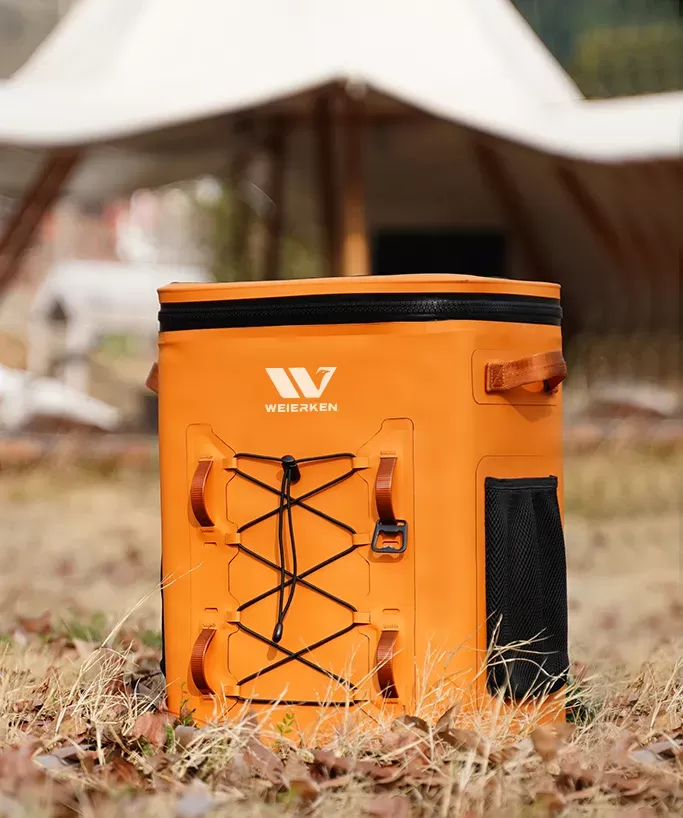

High-volume food delivery operations face intense operational friction. When a courier transports 8 to 15 multi-drop meals in a single route, standard retail thermal bags fail quickly. Seams split under 20 kilograms of deadweight, cheap zippers pull apart during rush hours, and thin foam lets core temperatures plummet below safety standards.
For ghost kitchen operators, meal-prep brands, and large logistics fleets, bag failure is not just an equipment issue. It directly drives up customer refund rates, ruins brand reputations, and forces continuous replacement spending. Choosing the right multi-meal delivery tote supplier requires looking past exterior styling and auditing the raw physical and thermal engineering of the product.
At Weierken, we design commercial thermal delivery systems built specifically to eliminate high failure rates and protect bottom-line delivery margins. This engineering guide outlines the exact hardware, textile, and insulation benchmarks fleet managers must demand from their manufacturing partners.
Thermal Engineering: Holding Safe Holding Temperatures
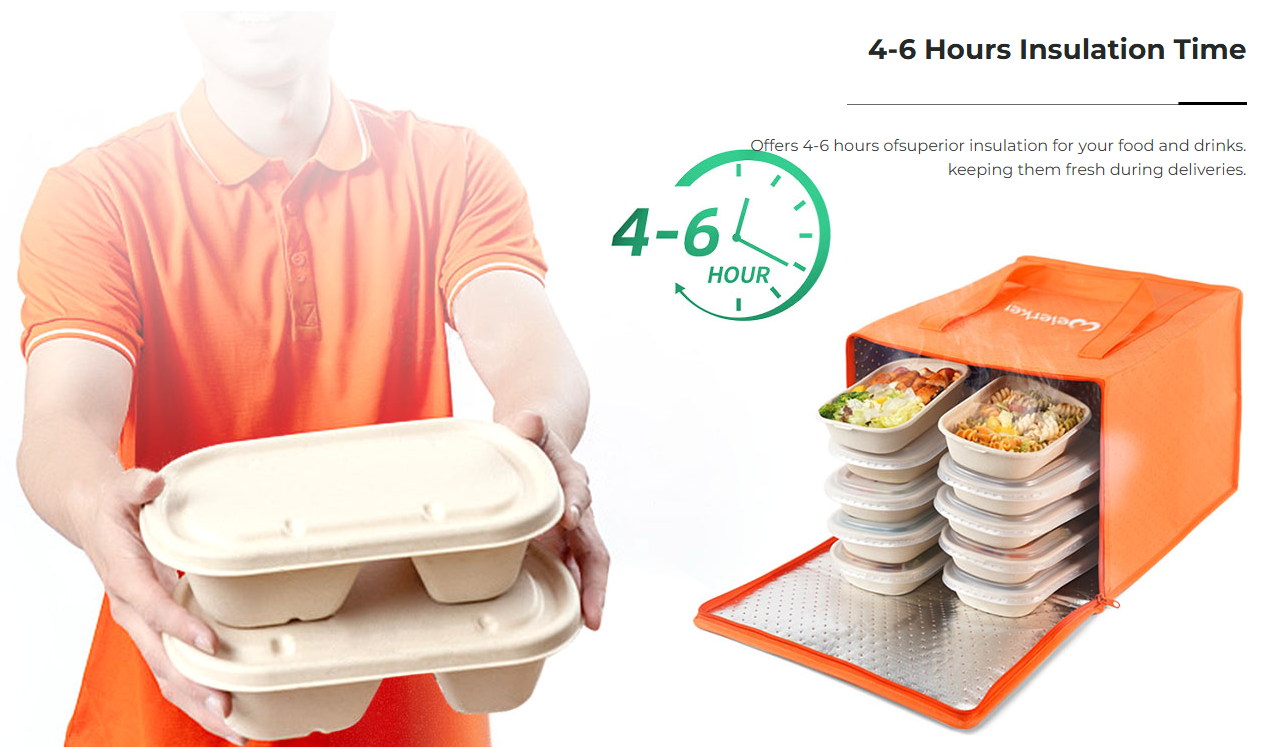
The primary job of any delivery tote is simple: keep hot food above 60°C (140°F) and cold food below 4°C (40°F). Delivering multi-meal orders complicates this task. Drivers open the main compartment repeatedly at every drop-off stop, which causes rapid thermal loss if the internal architecture is poorly designed.
Core Insulation Materials: EPE vs. EVA vs. PU Foam
The choice of core insulation governs both thermal resistance and long-term structural retention:
Expanded Polyethylene (EPE) Foam: A cost-efficient choice common in basic bags. While lightweight, standard 5mm to 8mm EPE foam crushes easily under pressure. Once compressed, its microscopic air pockets collapse permanently, degrading insulation capacity within weeks of heavy use.
Ethylene-Vinyl Acetate (EVA): Denser than EPE, EVA provides superior dimensional stability. It maintains its shape even when stacked with heavy catering pans. However, it can add unnecessary tare weight to couriers carrying loads on foot or bicycle.
High-Density Polyurethane (PU) Foam: The preferred standard for enterprise commercial insulated food delivery bags. High-resilience PU open-cell or closed-cell structures offer a superior balance of thermal conductivity (k-value) and shock resistance. A 15mm to 20mm PU foam core retains insulation performance over thousands of compression cycles.
Radiant Heat Barriers and Food-Grade Liners
Conductive insulation alone is not enough to stop heat transfer. High-performance totes deploy an interior radiant barrier to bounce infrared heat back toward the meal containers.
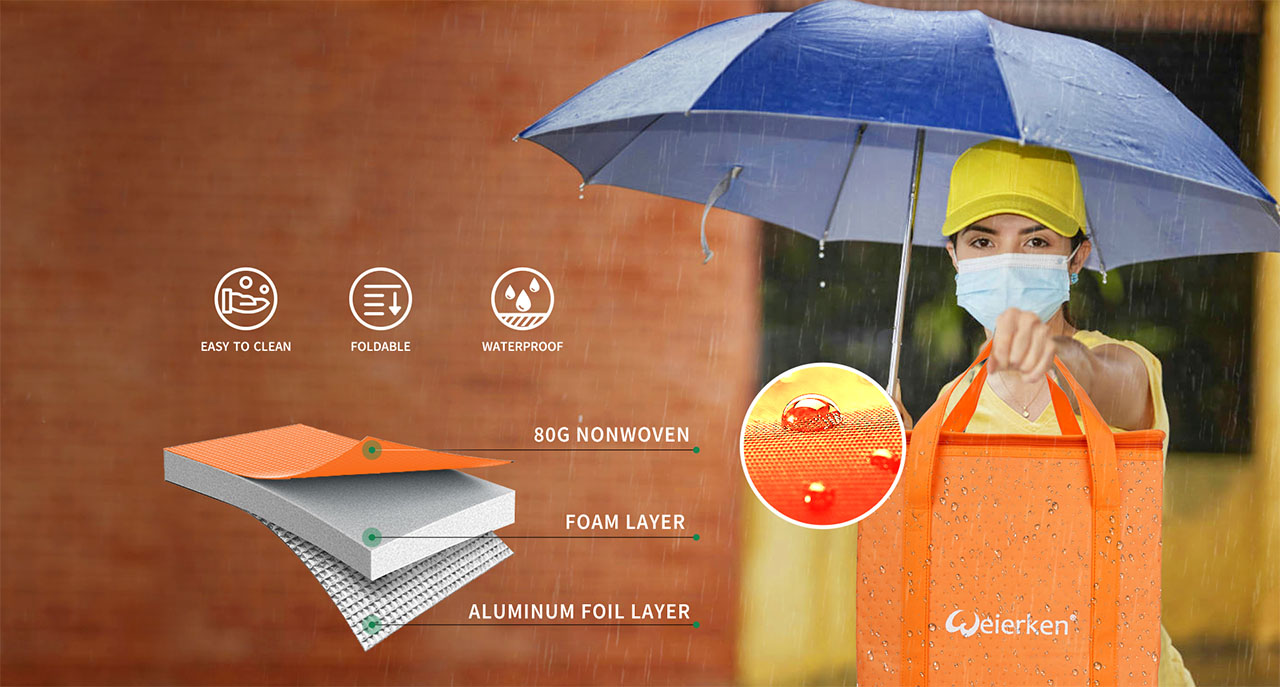
Commercial-grade bags use reinforced aluminum foil composite films or food-safe silver PEVA (Polyethylene Vinyl Acetate). Standard stitched aluminum foil punctures easily when exposed to hard plastic or aluminum container edges. High-performance builds use heat-sealed, leakproof PEVA backed with a reflective scrim. This design prevents leaked broth or sauce from soaking into the insulation foam, which eliminates bacterial growth and rancid odors.
Thermal Decay Metrics: The 2 to 4 Hour Target
Any reliable OEM delivery bag manufacturer must provide verifiable thermal retention test food delivery data. Testing should replicate real-world multi-drop environments, rather than static bench conditions.
In a standard benchmark test conducted at a 20°C (68°F) ambient warehouse temperature, a tote loaded with eight hot meal containers (initial baseline 85°C) must maintain internal food core temperatures above 65°C for at least 2.5 hours. Even when the top flap is opened for 30 seconds every 15 minutes, internal thermal drop should not exceed 3.5°C per cycle.
Dual-Zone Thermal Partitioning
Managing mixed menus requires robust internal compartment separation. Cold salads, sushi, or bottled beverages cannot share an open airspace with hot entrees without causing rapid condensation and unsafe temperature shifts.
Effective multi-meal totes rely on removable, hook-and-loop adjustable thermal divider walls. These dividers must contain an independent 10mm to 15mm foam core wrapped in reflective foil. High-density magnetic or friction-fit edge seals prevent radiant heat bleed between zones, letting a single courier execute split-menu deliveries safely.
Structural Durability: Shell Fabric and Hardware Specs
Courier operations are notoriously abrasive. Bags are dragged across asphalt, squeezed into scooter racks, shoved onto warehouse concrete, and exposed to torrential rain. Low-cost totes quickly wear through at the corners within two months of commercial deployment.
Fabric Architecture: 600D vs. 900D vs. 1680D TPU Oxford
Fabric strength comes down to yarn thickness (Denier) and the protective coating applied to the base weave:
600D Polyester with PVC Backing: Common in light-duty promotional totes. The PVC backing cracks over time from repeated folding and cold-weather exposure, which lets water seep through the fabric weave.
900D Oxford Polyester: A balanced option for standard courier fleets. It provides strong tensile resistance and moderate abrasion endurance when paired with a Polyurethane (PU) coating.
1680D Ballistic Nylon / TPU-Coated Oxford: The commercial gold standard. A double-weave 1680D exterior exhibits exceptional abrasion cycle resistance (tested past 25,000 cycles on the Martindale scale). Thermoplastic Polyurethane (TPU) laminated exteriors are completely waterproof, tear-resistant, and remain flexible in sub-zero delivery environments.
Waterproof Ratings and Wash-Down Protocols
Outer textiles must meet high waterproof delivery tote specs. Look for a hydrostatic head rating of at least 10,000mm. This level of water resistance ensures internal cargo stays dry even during prolonged rides through heavy downpours.
A smooth TPU outer surface also makes daily maintenance much easier. Fleet depots can wipe down exteriors with commercial sanitizing sprays or wash them with low-pressure sprayers without soaking the inner insulation panels.
Load-Bearing Engineering: Webbing and Bartack Stitching
When loading 12 to 16 prep containers, beverage quarts, and cooling packs, bag weights easily reach 20kg to 35kg. Standard single-line perimeter stitching tears through outer fabrics under this kind of dynamic stress.
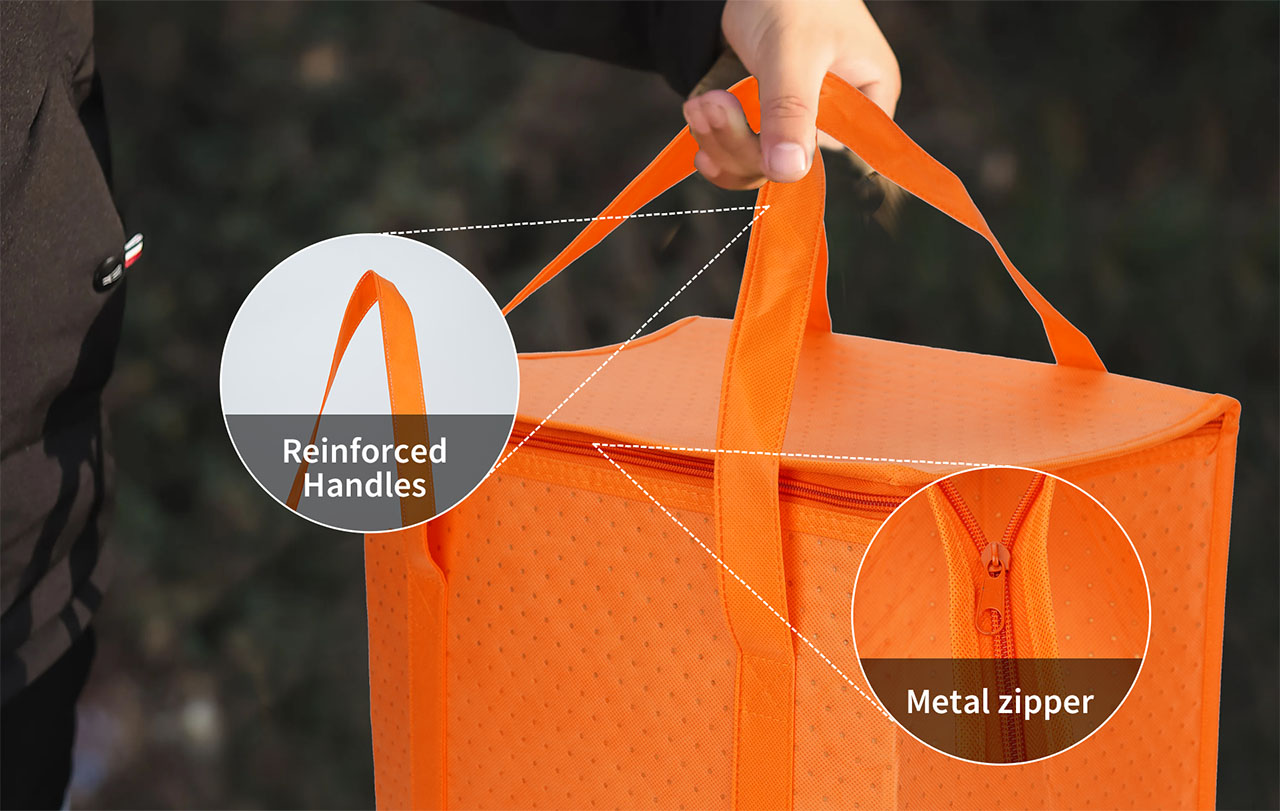
Industrial builds direct the load across a continuous loop of high-density polypropylene (PP) webbing that wraps completely under the base of the tote. Stress points—including handle junctions, shoulder strap anchor D-rings, and lid hinge points—must feature box-X and dense bartack stitching (typically 28 to 42 stitches per bartack). This distribution ensures dynamic shock loads are transferred through the webbing harness rather than the fabric shell.
Commercial Zipper Systems and Base Reinforcement
The zipper is the most common mechanical failure point on commercial food delivery bags. When a courier pulls a stuck zipper off its track during a drop-off, the bag is instantly out of service.
Zipper Gauges: Avoid #5 nylon coil zippers. Commercial delivery totes require heavy-duty #10 or #12 resin-tooth or waterproof reversed coil zippers from proven brands like YKK or SAB.
Cycle Testing: Commercial closures must survive lab tests exceeding 10,000 continuous open-close pull cycles under lateral tension.
Base Defense: The bottom panel takes the most abuse. It should feature a rigid interior PE board to prevent sagging under heavy meal loads, paired with high-durometer molded rubber feet or an exterior molded PVC skid plate. This keeps wet road grime away from the textile base.
Food Safety, Compliance, and Fleet Ergonomics
Procuring heavy-duty meal prep bags bulk for nationwide fleets demands strict adherence to consumer safety and driver ergonomics standards.
Food Contact Compliance and Antimicrobial Treatments
Internal linings must meet regional food contact regulations, including FDA (US) and LFGB (Europe) standards. Food-contact surfaces must remain completely free of bisphenol-A (BPA), phthalates, and lead.
Advanced commercial builds also incorporate zinc- or silver-ion antimicrobial additives directly into the inner liner material. This permanently inhibits mold, mildew, and bacterial growth caused by microscopic food residues, reducing bag sanitization overhead between runs.
Courier Efficiency: Magnetic Flaps and Visual Ergonomics
Seconds lost per stop directly degrade hourly fleet metrics. Traditional deep-recess zippers take several seconds to open and close at every delivery drop.
Modern delivery tote engineering combines industrial-strength neodymium magnetic top flaps with secondary perimeter zippers. Couriers can use the magnetic catch to grab orders in under two seconds during quick stops, and engage the heavy-duty zipper during longer travel legs on highways or in rainstorms. High-visibility retroreflective strips (meeting EN ISO 20471 standards) across all four profiles ensure driver safety during night operations.
OEM/ODM Capabilities: Customization for Enterprise Fleets
Fleet operators rarely achieve peak efficiency with off-the-shelf catalog gear. Partnering with a specialized multi-meal delivery tote supplier like Weierken allows companies to engineer custom delivery systems around their specific packaging dimensions.
When evaluating an OEM partner, assess these critical capabilities:
Structural Prototyping: Can the supplier rapidly create sample prototypes based on your specific primary meal containers, drink carriers, and courier vehicle dimensions?
Branding Durability: Silkscreen printing cracks and flakes off quickly. Enterprise manufacturers offer high-durability TPU weld badges, heat-transfer vinyl, or molded rubber badging that withstands UV exposure and commercial washing.
Internal Modularity: Custom internal rail-and-divider networks ensure meal prep trays, catering tins, and drink carriers do not slide or flip during abrupt turns and braking.
Reliable Production Scalability: Verify the supplier's automated cutting tables, ultrasonic welding equipment, and supply-chain auditing procedures to ensure consistent quality across thousands of bags.
Frequently Asked Questions
Q1: What thermal retention metrics should a multi-meal delivery tote meet?
A1: A commercial-grade tote should keep hot food above 65°C (149°F) for at least 2 to 3 hours in a 20°C ambient environment when fully packed. For cold distribution, it must keep chilled products below 4°C (40°F) for 3 to 4 hours when used with appropriate gel refrigerant packs.
Q2: How does 1680D TPU compare to standard 600D polyester for heavy-duty meal prep bags bulk?
A2: 1680D TPU-laminated fabric offers more than triple the tear and tensile strength of 600D polyester. It will not crack in freezing temperatures, is completely impervious to water penetration, and resists abrasion from road grit and rough handling far longer than lighter polyester.
Q3: Can these commercial insulated food delivery bags withstand industrial dishwashers or pressure washing?
A3: Totes built with fully welded, heat-sealed interior liners and TPU outer shells can be washed down using low-pressure sprayers and food-safe sanitizing chemicals. They should never go into commercial high-temperature dishwashers, as extreme rinse heat can break down structural adhesive layers and foam cores.
Q4: What is the typical MOQ for custom OEM delivery bag manufacturer projects?
A4: For bespoke OEM/ODM bags—involving custom patterns, specialized dimensions, and brand color matching—minimum order quantities generally start between 500 and 1,000 units. Off-the-shelf base designs with custom screen-printed logos can often be sourced in lower batches starting at 200 to 300 units.
Q5: How do dual-zone delivery totes prevent condensation and cross-temperature contamination?
A5: Dual-zone totes use dense, insulated, foil-backed divider panels sealed along the bag walls using heavy-duty hook-and-loop or track systems. This stops moist, warm air from migrating into the refrigerated zone, preventing soggy packaging and unwanted thermal exchange.
Q6: What stress tests verify the load capacity of heavy-duty meal prep bags?
A6: Reliable manufacturers conduct static hanging weight tests (suspending 35kg to 50kg for 24 hours), dynamic drop-jerk tests (dropping a weighted bag repeatedly by its handles to test bartack stitching), and Martindale abrasion tests on the base textile.
Equip Your Fleet with Engineered Delivery Hardware
Every failed delivery bag hurts your bottom line through spoiled meals, courier delays, and continuous replacement cycles. Protecting delivery quality requires durable materials, secure seams, and lab-tested thermal insulation.
Weierken engineers and manufactures industrial commercial insulated food delivery bags built to handle the daily demands of modern food fleets. Whether you are running a ghost kitchen network, a national meal-prep subscription service, or a last-mile delivery team, our engineering team can build customized equipment around your exact workflow.
Contact our technical sales team today to discuss your fleet requirements, review detailed lab test reports, or request a heavy-duty prototype for real-world field trials.