
Outdoor Bag Sourcing Strategy for Procurement & Supply Chain Teams
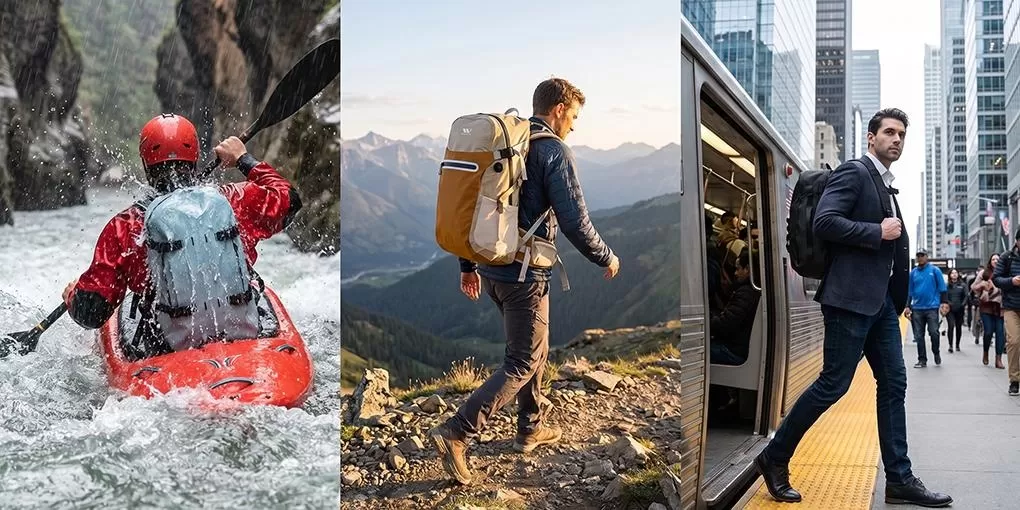
Scenario-Based Product Matching for Outdoor Bag
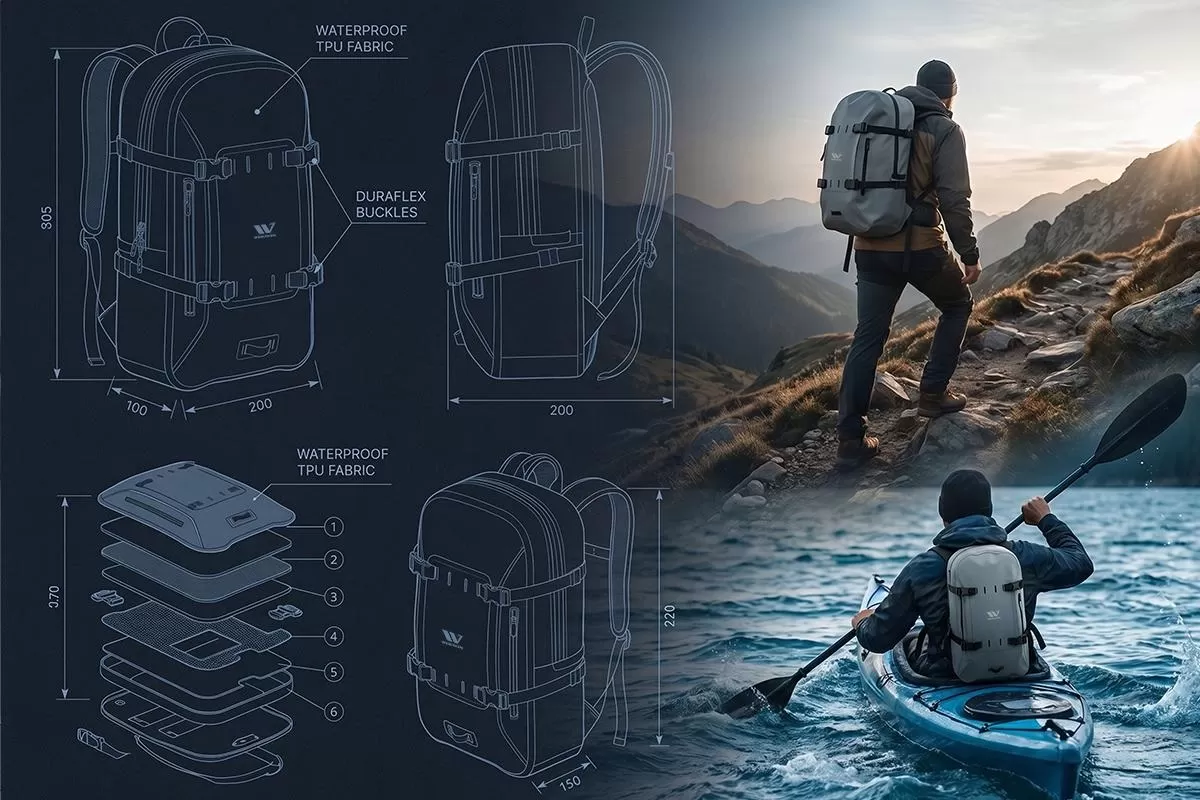
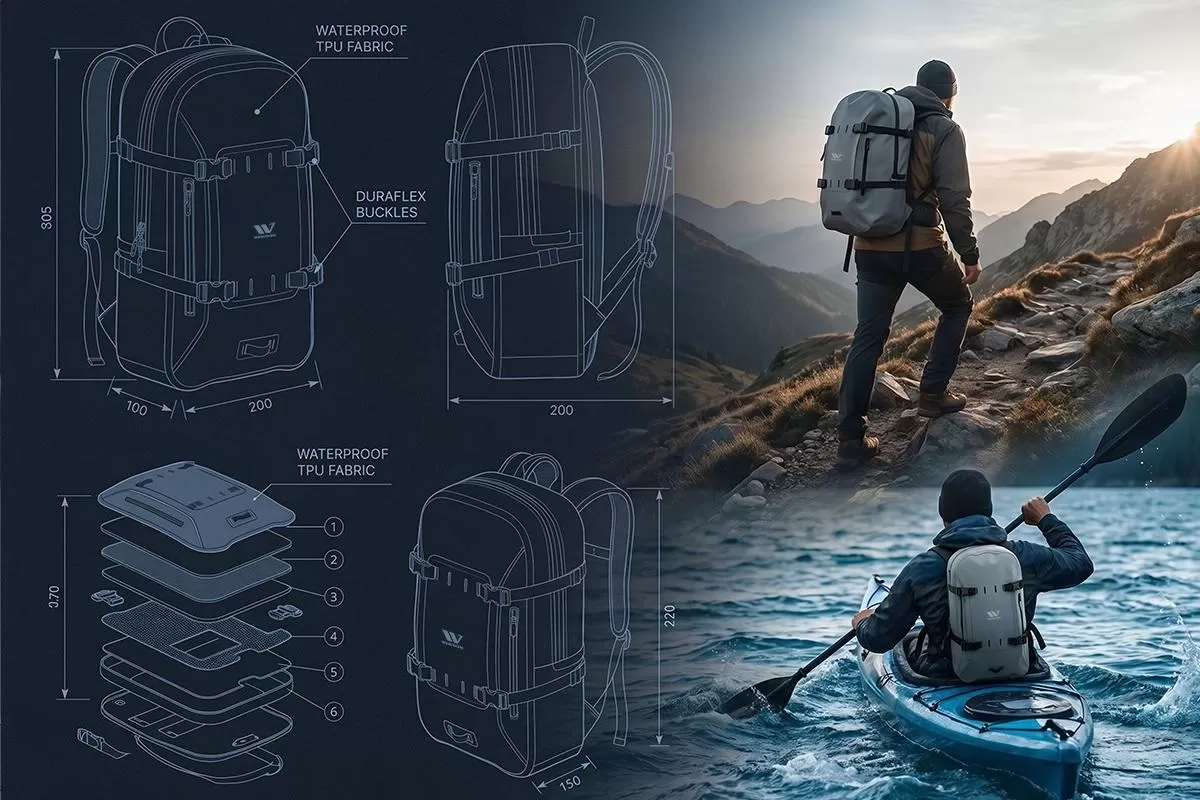
Water sports / marine environmentsWaterproof Bags (IPX6–IPX7) with welded TPU construction → Designed for heavy rain, splashing, and temporary submersion
Camping / hiking applicationsLoad-bearing systems (frame + ergonomic support) → Built for long-duration carrying and terrain adaptability
Urban travel / retail marketsLightweight, multifunctional hybrid designs → Optimized for portability, organization, and cost efficiency
Industry Shift Toward Scenario-Driven Product Development
hiking and camping
water sports
urban outdoor lifestyles
How Leading Outdoor Brands Define Product Strategy
scenario-based segmentation
environment-driven material selection
structure-led design development
Implications for Product Development and Sourcing Strategy
generic backpacks are becoming price-driven commodities
scenario-specific products offer stronger differentiation and margin potential
structural engineering has a greater impact on performance than feature additions
waterproof bags used in water sports
technical bags designed for trekking and long-distance hiking
hybrid bags targeting urban outdoor consumers
A Structured OEM/ODM Development Approach
materials are selected based on environmental exposure (e.g., TPU for waterproof performance)
structures are designed for actual usage (e.g., load distribution, compartmentalization)
manufacturing methods are matched to performance requirements (e.g., welded vs stitched construction)
From Product Concept to Market Positioning
more consistent performance in real environments
clearer product positioning across different market segments
improved competitiveness in both retail and wholesale channels
Waterproof Bag Manufacturer Guide: OEM Strategy for High-Performance Waterproof Bags
Why Waterproof Bags Fail in Real Use Scenarios
leakage through stitched seams
failure under heavy rain or pressure
weak sealing systems
higher return rates
poor user reviews
limited pricing power
What Defines a True Waterproof Bag
IPX Rating Determines Market Position
IPX4 Waterproof Bag → suitable for daily and light outdoor use
IPX6 Waterproof Bag → performs in heavy rain and marine environments
IPX7 Waterproof Bag → supports temporary submersion, ideal for kayaking and rafting
Closure Systems Define Waterproof Reliability
roll-top closures (flexible and cost-efficient)
TPU/PU waterproof zippers (higher sealing performance)
airtight sealing systems (for submersible applications)
Welded vs Stitched Construction
Welded Waterproof Bag constructioneliminates needle holes and ensures maximum sealing
thermo-bonded construction balances durability and production cost
stitched + coated construction reduces cost but increases leakage risk
Functional Structure for Outdoor Applications
wet/dry compartment separation
multi-layer storage systems
reinforced load-bearing areas
fishing gear storage
expedition backpacks
marine and technical outdoor use
Product Line Strategy for Waterproof Bag OEM
IPX7 Waterproof Bag (Extreme Segment)
whitewater kayaking
rafting expeditions
diving environments
TPU laminated materials
welded construction
airtight sealing system
Lightweight Waterproof Bag (IPX4–IPX6)
beach travel
casual outdoor use
lightweight coated fabric
roll-top closure
optimized cost-performance ratio
Waterproof Bag for Fishing & Utility
fishing gear organization
equipment-heavy outdoor use
compartmentalized storage
reinforced structure
modular attachments
This segment is growing due to demand for functional Waterproof Bags.
Case Study: IPX7 Waterproof Bag Development
continuous rain exposure
risk of full water immersion
protection of electronics
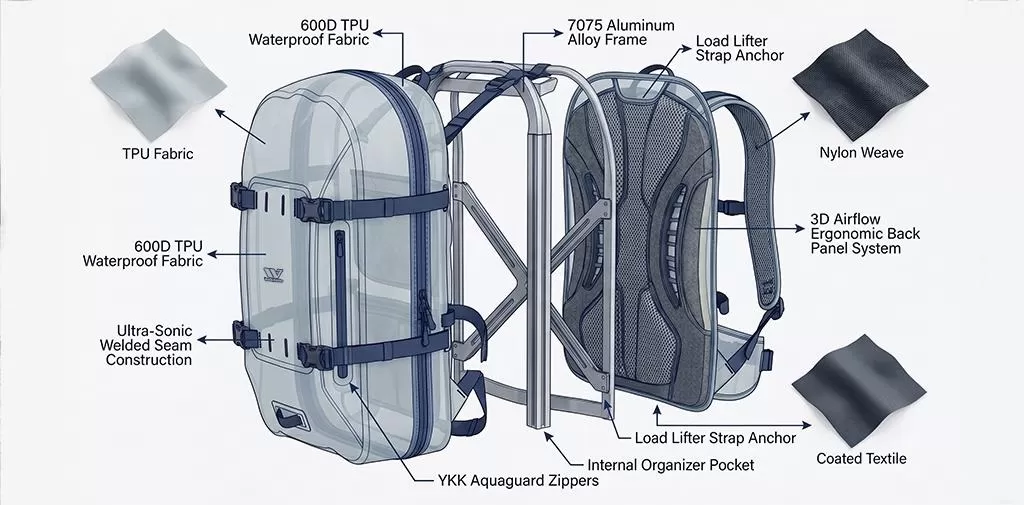
IPX7-rated TPU Waterproof Bag construction
fully welded seams
dual sealing system (roll-top + compression)
internal wet/dry compartments
How to Choose the Right Waterproof Bag Supplier
experience in IPX-rated product development
in-house welding and sealing capabilities
ability to support custom Waterproof Bag OEM projects
understanding of outdoor market segmentatio
Camping & Hiking Backpack Manufacturer Guide: OEM Strategy for Load-Bearing Performance
Why Camping & Hiking Backpacks Fail in Real Use
poor weight distribution leading to user fatigue
inadequate back support during long-distance use
weak frame systems causing deformation under load
reduced user satisfaction in long trips
limited differentiation in a highly competitive category
increased price sensitivity
What Defines a High-Performance Hiking Backpack
Load-Bearing System Determines Comfort
internal or external frame structures
ergonomic shoulder strap design
hip belt load transfer systems
Ventilation & Back Panel Structure
suspended mesh back panels
airflow channel structures
moisture-wicking padding systems
Material & Durability Strategy
abrasion resistance
weight control
tear strength
high-density nylon (e.g., 420D–840D)
reinforced base fabrics
lightweight composite materials for structure
Product Line Strategy for Camping & Hiking Backpacks
Technical Hiking Backpacks (High-Performance Segment)
multi-day trekking
mountain expeditions
technical outdoor environments
advanced frame systems
high load capacity
reinforced structure and materials
Lightweight Hiking Backpacks
day hikes
short outdoor trips
simplified frame or frameless design
lightweight materials
essential storage configuration
Camping Utility Backpacks
camping gear transport
outdoor leisure use
larger storage capacity
modular attachment systems
durable base structure
Urban Outdoor & Travel Backpack Manufacturer Guide: OEM Strategy for Hybrid Functionality
functionality
aesthetics
lightweight performance
Why Urban Outdoor Backpacks Fail in the Market
overbuilt designs that reduce usability in daily scenarios
lack of organization for modern carry needs (electronics, commuting items)
weak differentiation from standard backpacks
limited appeal in retail channels
difficulty justifying premium pricing
short product lifecycle
What Defines a Successful Urban Outdoor Backpack
Lightweight Structure with Functional Balance
reduced overall weight
flexible structure for daily use
compact yet expandable capacity
Smart Organization for Modern Use
laptop and electronics protection
multi-compartment organization
quick-access storage design
Material Strategy: Durability Meets Aesthetics
coated fabrics with clean surface finishes
lightweight TPU or hybrid materials
abrasion-resistant panels in high-wear areas
Product Line Strategy for Urban Outdoor Backpacks
Travel-Oriented bags
short-distance travel
business trips
luggage-compatible design
organized storage system
durable yet lightweight construction
Everyday Urban Outdoor Backpacks
commuting
daily carry
minimalist structure
lightweight materials
multi-functional compartments
Hybrid Outdoor-Urban Backpacks
light outdoor + city use
partial waterproof capability
reinforced structure
adaptable storage system
Industry Direction: Scenario-Based Design Is Becoming the Global Standard
Global Product Strategy Framework
| Scenario | Industry Requirement | Weierken Solution |
| Water Sports | Waterproof integrity | TPU welded Waterproof Bags |
| Camping | Load-bearing comfort | Frame-supported hiking systems |
| Urban Outdoor | Lightweight multifunction | Hybrid travel backpacks |
Why Global Brands Choose Weierken (OEM/ODM Partner)
Core capabilities:
20+ years manufacturing experience
Advanced TPU welding & waterproof technology
Thermal insulation engineering system
Full OEM / ODM customization support
Multi-category production: backpacks, coolers, delivery bags
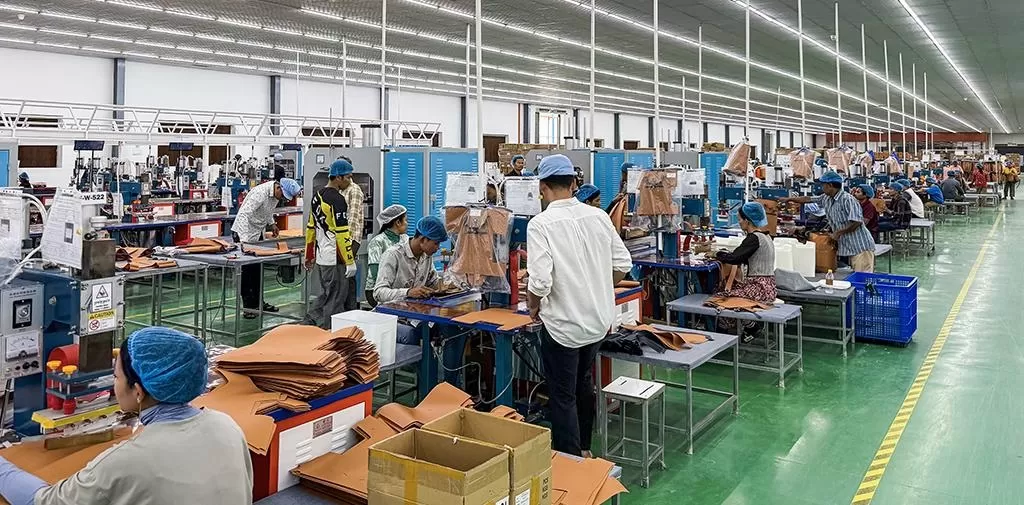
Strict QC + scalable global production capacity
Conclusion: The Future of Outdoor Gear Is Scenario Engineering
Water sports
Camping expeditions
Urban outdoor lifestyles
Commercial logistics systems
FAQ
Q1: How should procurement teams select the right outdoor bag for their product line?
| Application Scenario | Environment Conditions | Core Requirement | Recommended Bag Type |
| Water Sports | Wet / marine / high humidity | Waterproof integrity (IPX6+) | TPU Waterproof Bag / dry bag |
| Camping & Hiking | Long duration / heavy load | Load-bearing system & comfort | 40L–80L framed camping backpack |
| Urban Outdoor | Mixed city + outdoor | Lightweight + versatility | 15L–30L hybrid travel backpack |
| Delivery / Food | High frequency / weather exposure | Thermal insulation + durability | Insulated delivery backpack |
Q2: What is the difference between waterproof and water-resistant backpacks?
| Feature | Water-Resistant Backpack | Waterproof Bag |
| Protection Level | Light rain / splashes | Heavy rain / submersion |
| Material | Coated polyester/nylon | TPU laminated fabric |
| Construction | Stitched seams | High-frequency welded seams |
| Closure | Zippers (standard) | Roll-top / airtight seal |
| Industry Standard | Entry-level outdoor | Professional outdoor / water sports |
Q3: What backpack size is best for camping?
| Trip Duration | Recommended Capacity | Typical Use Case |
| 1 Day | 20L–30L | Light hiking / day trips |
| 2–3 Days | 30L–50L | Short camping trips |
| 3–5 Days | 50L–70L | Standard camping / trekking |
| 5+ Days | 70L–80L+ | Expedition / heavy load |
Q4: Does Weierken provide OEM/ODM customization?
| Category | Customization Options |
| Materials | TPU, polyester, nylon, insulation layers |
| Structure | Capacity, compartments, load system |
| Function | Waterproof, thermal insulation, modular systems |
| Branding | Logo, color, packaging |
| Application | Outdoor, water sports, delivery, lifestyle |
Concept / design input
Material selection & engineering validation
Prototype development
Testing (waterproof, durability, load-bearing)
Mass production
Q5: What industries does Weierken serve?
| Industry | Application Scenario | Product Type |
| Outdoor Brands | Camping, hiking, travel | Backpacks, daypacks |
| Water Sports | Kayaking, SUP, diving, beach activities | Waterproof Bags, dry bags |
| Food & Beverage | Outdoor events, picnics, beach leisure | Cooler backpacks, insulated bags |
| Lifestyle & Retail | Urban outdoor, commuting, travel | Hybrid travel backpacks |
| Beach & Leisure | Beach outings, resort travel, poolside use | Beach bags, waterproof tote bags |
| Automotive & Travel | Road trips, overlanding, family travel | Rooftop cargo bags, car storage bags |