

https://weierkenbag.com/about-us/#certification
Introduction: From “Material Selection” to “System Engineering”
-
Matches specific use scenarios (hiking, commuting, expedition)
-
Delivers long-term durability (reducing returns and after-sales costs)
-
Complies with environmental and regulatory requirements in target markets (especially the US and Europe)
-
Durable Fabric Selection: The Core of Product Lifecycle
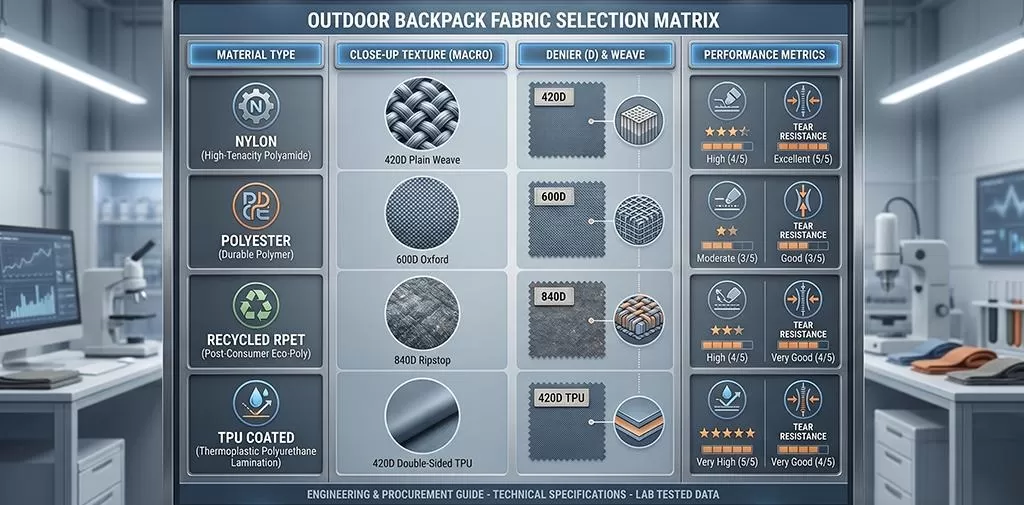
A.High-Strength Nylon (Polyamide)
-
Excellent tear resistance (especially with ripstop structures)
-
High abrasion resistance for intensive use
-
Better lightweight performance compared to polyester at similar strength levels
-
Mountaineering backpacks
-
Tactical packs
-
Professional outdoor gear
-
Premium product lines
Weierken Client Case Studies:
-
Reduced profit margins
-
Increasing competition in mid-range market
-
Product over-engineered for its use case
-
High material cost (840D nylon not necessary)
-
Single-country production limiting flexibility
-
Adjusted material to 600D polyester (based on real usage)
-
Re-optimized structure to reduce unnecessary components
-
Shifted part of production to Southeast Asia
-
Improved packaging efficiency
-
Total landed cost reduced by ~15%
-
Maintained product performance for target users
-
Improved pricing competitiveness
B. Polyester
-
Stable cost, suitable for large-scale production
-
Strong UV resistance (ideal for prolonged outdoor exposure)
-
Better printability and brand visual consistency
-
Daily outdoor backpacks
-
Commuter bags
-
E-commerce-driven product lines
-
Mid-range and high-volume markets
Key Performance Indicators (Critical for Procurement)
-
Denier (D) – determines thickness and durability
-
Tear Strength – resistance to tearing under stress
-
Abrasion Resistance – often measured by Martindale testing
-
Coating Adhesion – durability of waterproof coatings
2. Waterproofing vs Breathability: Balancing Performance and User Experience
Waterproof Material Solutions
Coating & Waterproof Systems: Where Performance Is Actually Built
Common Coating Technologies
| Coating | Characteristics | Typical Use |
| PU | Cost-effective, flexible | Mid-range backpacks |
| TPU | Durable, elastic, eco-friendly | High-performance waterproof packs |
| PVC Tarpaulin | Fully waterproof, heavy-duty | Water sports / dry bags |
-
TPU Coating
-
High elasticity and durability
-
More environmentally friendly (aligned with REACH standards)
-
Suitable for high-end Waterproof Bags
-
PVC Coating
-
Lower cost
-
Stable waterproof performance
-
Increasing environmental restrictions in Western markets
-
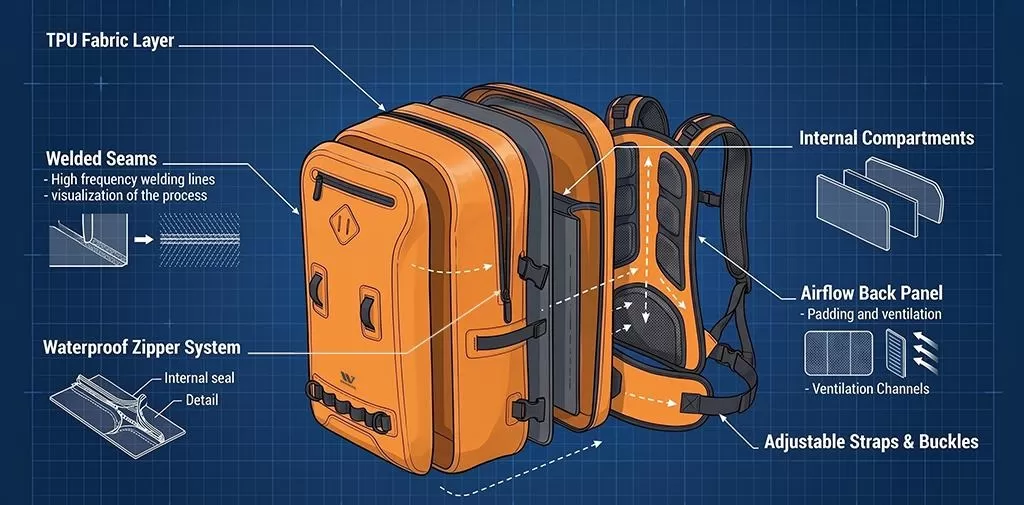
Waterproof zippers (airtight / sealed)
-
High-frequency welding (seamless construction)
Breathability Design
-
Breathable back panel systems (air mesh)
-
Microporous membranes (e.g., breathable TPU films)
-
Zoned construction (avoiding full enclosure)
B2B Decision Framework
| Application Scenario | Priority |
| Hiking / trekking | Breathability > full waterproofing |
| Urban commuting | Waterproofing > breathability |
| Water sports | Full waterproofing (IPX6 / IPX7) |
Client Case Studies:
-
Previous supplier delivered inconsistent seam sealing
-
Bulk production showed leakage issues
-
High return rate during testing
-
Switched to high-frequency welded seamsOptimized closure system (airtight roll-top)
-
Implemented stricter QC checkpoints during production Result:
-
Waterproof performance stabilized (near IPX6–IPX7 level)
-
Defect rate reduced significantly (<1%)<>
-
Product successfully launched in peak season
-
Sustainable Materials: From Differentiation to Market Entry Requirement
Mainstream Sustainable Materials
-
RPET (Recycled Polyester)Derived from recycled plastic bottles
-
Recycled Nylon
-
Bio-based materials
Key Certifications (Must-Have for Procurement)
Core Compliance & Sustainability (Essential)
-
Global Recycled Standard (GRS)Ensures traceability of recycled materials, widely required by sustainable and eco-focused brands
-
REACHEU regulation restricting hazardous substances in materials — mandatory for entering the European market
Quality & Management Systems (Factory Capability)
-
ISO 9001Ensures standardized production processes and consistent product quality
-
ISO 14001Demonstrates environmental management practices, increasingly important for global brands
Social Compliance (Brand Audit Requirements)
-
BSCIA common social compliance standard for European brands
-
SEDEXGlobal platform for ethical sourcing and labor condition audits
Procurement Insight: Reducing Risk Through Certified Supply Chains
-
Ensure smooth entry into regulated markets (EU / North America)
-
Pass brand and retailer audits more efficiently
-
Reduce risks related to labor compliance, environmental issues, and product safety
-
Build a supply chain that can withstand long-term scrutiny
-
Procurement Strategy: Matching Materials with Product Positioning
High-End Professional Outdoor Line
-
Material: 840D Nylon + TPU
-
Construction: Welded structure + waterproof zippers
-
Keywords: durability, extreme conditions, IPX rating
Mid-Range Outdoor & Urban Functional Backpacks
-
Material: 600D Polyester + PU coating
-
Keywords: cost-performance balance, lightweight, aesthetics
Sustainability-Focused Product Lines
-
Material: RPET + PVC-free solutions
-
Keywords: sustainability, ESG compliance, EU market readiness
Conclusion: Material Selection Defines Competitive Advantage
-
Choosing the right material reduces after-sales risk
-
Matching materials to applications improves user experience
-
Meeting environmental regulations enables market access
5.Coating & Waterproof Systems: Where Performance Is Actually Built
Common Coating Technologies
| Coating | Characteristics | Typical Use |
| PU | Cost-effective, flexible | Mid-range backpacks |
| TPU | Durable, elastic, eco-friendly | High-performance waterproof packs |
| PVC Tarpaulin | Fully waterproof, heavy-duty | Water sports / dry bags |
Real-World Product Example
-
30L Airtight Waterproof Bag (WBS2511)
-
840D TPU fabric
-
IPX7 waterproof level
-
Airtight structure
Weierken Client Case Studies
-
Previous supplier delivered inconsistent seam sealing
-
Bulk production showed leakage issues
-
High return rate during testing
-
Upgraded to 840D nylon with TPU coating
-
Switched to high-frequency welded seams
-
Optimized closure system (airtight roll-top)
-
Implemented stricter QC checkpoints during production
6.Construction Methods: The Hidden Determinant of Quality
Cut & Sew
-
Flexible design
-
Lower cost
-
Risk of leakage at seams
High-Frequency Welding
-
Seamless bonding
-
Higher waterproof reliability
-
Requires TPU-compatible materials
Real Product Application
-
Roll-top Waterproof Bags (20L / 25L)
-
High-frequency welded seams
-
PVC tarpaulin or TPU materials
-
Designed for water-intensive environments
Development Insight: From Construction Choice to Product Success
-
Material compatibility (e.g., TPU vs PVC)
-
Structural design (stress points, folding areas)
-
Manufacturing process control
Engineering & R&D Perspective
-
Market-driven product developmentAligning construction methods with real end-use scenarios rather than theoretical performance
-
In-house sampling capabilityEnabling rapid prototyping and accurate translation from design to physical product (typically 12–30 days for outdoor backpacks)
-
End-to-end technical problem solvingCovering structure, materials, components, and production processes
-
Accumulated industry experienceBuilt on long-term expertise in outdoor backpack development, leading to more reliable and proven solutions
Procurement Insight:
-
Translate design into manufacturable structure
-
Maintain consistency from sample to bulk
-
Solve technical challenges during development
7.Sustainability & Compliance: A Procurement Requirement
Common Materials
-
RPET (recycled polyester)
-
Recycled nylon
-
PVC-free TPU systems
Required Certifications
-
REACH (EU chemical compliance)
-
BSCI / SEDEX (social compliance)
-
GRS (recycled materials)
-
ISO9001 (quality system)
-
Pass audits
-
Reduce onboarding time
-
Lower compliance risk
8.Cost Engineering: Total Landed Cost Thinking
Key Factors
-
Production location
-
Tariffs
-
Yield and defect rate
-
Logistics
Industry Practice
-
Optimize cost structure
-
Reduce dependency on a single region
-
Improve flexibility under changing trade policies
-
Applied Sourcing Model (Weierken Example)
-
Stable Lead Time Through Multi-Factory Coordination
-
Production across China + Cambodia
-
Capacity balancing between locations
-
Reduced disruption risk
-
Tariff Optimization via Production Allocation
-
Cambodia-based production offers tariff advantages for certain markets
-
Flexible allocation based on destination country
-
Quality Control as a Cost Lever
-
Strict QC processes
-
~99.5% pass rate
-
Lower defect rate
-
Reduced returns and after-sales expenses
-
Less brand risk
-
Integrated Logistics (DDP Model)
-
Supplier manages shipping, customs clearance, and duties
-
Delivered directly to buyer’s destination
-
No need to manage cross-border logistics
-
Reduced operational complexity
-
Improved delivery predictability
-
Procurement Insight: Cost Optimization Is System Optimization
-
Production structure
-
Quality stability
-
Logistics efficiency
-
Risk control
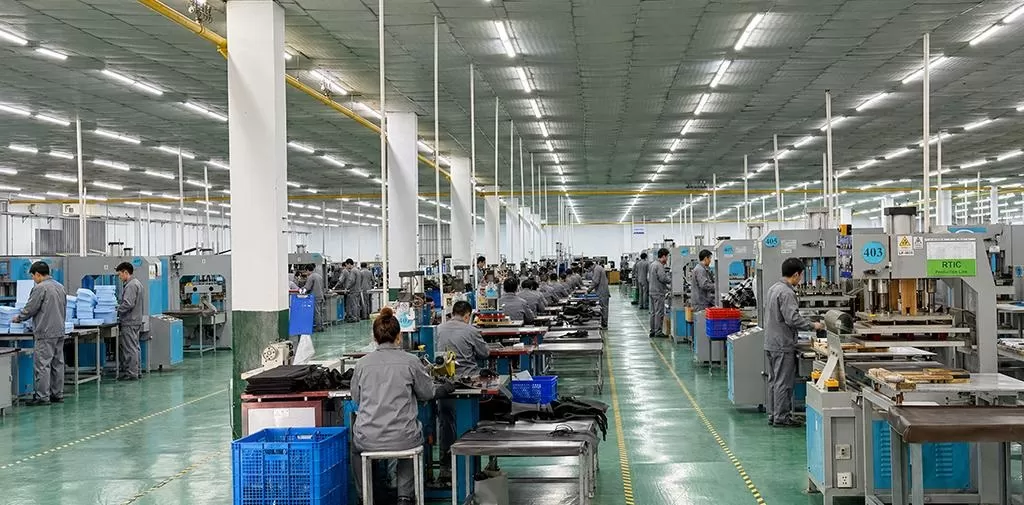
FAQ
Q1: What is the most important factor when selecting materials for outdoor backpacks?
-
Actual usage scenario (hiking, commuting, water sports)
-
Required durability level
-
Cost constraints
-
Compliance requirements
Q2: Is nylon always better than polyester for outdoor backpacks?
-
Nylon offers better strength-to-weight ratio and abrasion resistance
-
Polyester provides better cost stability, UV resistance, and scalability
-
Use nylon for high-performance or technical products
-
Use polyester for large-volume or cost-sensitive programs
Q3: How do I determine the right Denier (D) for my product?
-
210D–420D → lightweight applications
-
600D → general-purpose backpacks
-
840D+ → heavy-duty or technical use
Q4: Does a waterproof coating guarantee a Waterproof Bag?
-
Fabric coating (PU / TPU)
-
Seam construction (stitched vs welded)
-
Zippers and closures
Q5: What is the difference between PU and TPU coatings?
| Feature | PU | TPU |
| Cost | Lower | Higher |
| Durability | Moderate | High |
| Flexibility | Good | Excellent |
| Environmental impact | Moderate | More eco-friendly |
-
PU → mid-range products
-
TPU → high-performance or waterproof applications
Q6: What waterproof level do I actually need (IPX rating)?
-
IPX4 → splash-resistant (light rain)
-
IPX6 → heavy rain resistance
-
IPX7 → temporary submersion
Q7: How do I balance waterproofing and breathability?
-
Fully sealed structures improve waterproofing
-
Ventilated structures improve comfort
-
Use breathable back panel systems
-
Apply waterproof materials selectively
-
Avoid over-engineering full waterproof designs when unnecessary
Q8: What materials are best for different outdoor scenarios?
| Scenario | Recommended Materials |
| Hiking / trekking | 420D–600D Nylon |
| Urban outdoor | 600D Polyester |
| Water sports | TPU / Tarpaulin |
| Expedition | 840D+ Nylon + TPU |
Q9: Are sustainable materials like RPET reliable for outdoor backpacks?
-
Comparable durability to virgin polyester
-
Lower environmental impact
Q10: What certifications are required for US and EU markets?
-
REACH → chemical compliance
-
GRS → recycled material verification
-
BSCI / SEDEX → social compliance
Q11: Why do some backpacks perform well in samples but fail in bulk production?
-
Inconsistent material batches
-
Poor coating adhesion
-
Unstable manufacturing processes
-
Lack of standardized QC
Q12: How can I reduce development risk when selecting materials?
-
Validate materials under real-use conditions
-
Avoid over-complex designs
-
Align materials with manufacturing capabilities
-
Work with suppliers who provide technical input
Q13: Should I always choose the most durable material available?
-
Higher cost
-
Increased weight
-
Reduced competitiveness
Q14: How does material selection impact total cost beyond fabric price?
-
Manufacturing complexity
-
Defect rates
-
Logistics weight
-
Tariffs (depending on structure and origin)
Q15: What role does the supplier play in material selection?
-
Recommend materials based on use case
-
Evaluate manufacturability
-
Identify potential risks
-
Optimize structure and cost
Final Insight
-
Performs in real conditions
-
Can be produced consistently
-
Meets market and regulatory requirements
Looking for a reliable OEM/ODM partner for outdoor or delivery bags?
-
Multi-country production (China + Cambodia)
-
Certified & compliant (BSCI, REACH, GRS)
-
Fast sampling & stable bulk delivery
-
Full DDP support