


Thermal bags are the core equipment for catering chains, central kitchens, and food delivery platforms. Their performance directly affects meal temperature, taste, and overall food safety. As a B2B procurement professional, choosing a reliable food delivery bag fabricator is a critical operational decision. You need a partner who balances competitive pricing with strict quality standards.
Working with an experienced brand like weierken can simplify this procurement process. We understand that buyers often struggle to compare quotes from different suppliers. A cheaper quote does not always mean a better deal. It usually indicates a compromise in materials or craftsmanship.
To help you make an informed decision, we have broken down the core expenses into four main categories. Based on five essential B2B procurement suggestions, this breakdown will explain exactly what you are paying for. Understanding these details will help you find the right food delivery bag fabricator for your specific business needs.
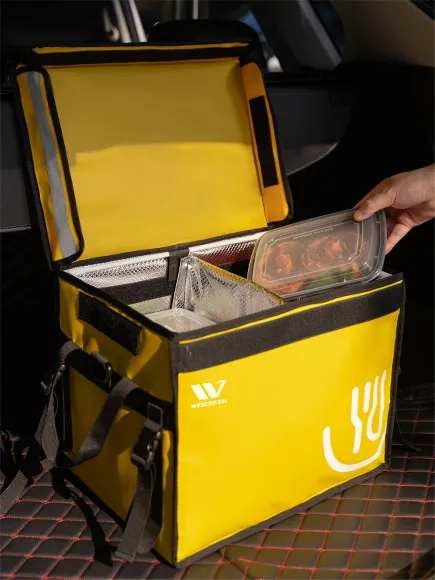
Cost Factor 1: Insulation Materials and Food Safety Standards
Insulation is the primary function of any delivery bag. A premium food delivery bag fabricator invests heavily in high-density thermal materials. These materials directly dictate the base cost of the product.
You must verify the insulation performance before making a bulk purchase. A professional food delivery bag fabricator should provide third-party testing reports based on ASTM D3103 or equivalent standards. These reports prove how long the bag maintains internal temperatures.
- Temperature Retention: Ask the food delivery bag fabricator for data showing the bag keeps hot food above 60℃.
- Ambient Conditions: Test reports should specify performance at room temperatures like 25℃ or 30℃.
- Material Density: Check the thickness of the PE cotton, EVA foam, or aluminum foil reflective layers. Thicker, denser materials cost more but perform better.
Material safety is another crucial cost driver. The inner lining of the bag will face high temperatures and steam from hot meals. Cheap materials can release toxic chemicals under heat.
A responsible food delivery bag fabricator uses linings that comply with food contact material standards. Look for certifications like FDA, LFGB, or GB 4806. You should explicitly require your food delivery bag fabricator to provide material test reports. This ensures no harmful substances migrate into the food during transport.
Cost Factor 2: Advanced Sealing and Leak-Proof Craftsmanship
Soup leakage during transit is a major source of customer complaints. Preventing these leaks requires specialized manufacturing techniques. The craftsmanship used by your food delivery bag fabricator significantly impacts the final price.
Traditional stitching leaves tiny needle holes where liquids can escape. To solve this, a high-end food delivery bag fabricator uses advanced sealing processes. These upgraded manufacturing methods require expensive machinery and skilled labor.
- High-Frequency Welding: This process melts materials together without needles. It completely eliminates pinhole leaks along the seams.
- Seamless Tape Sealing: Some bags use hot-pressed waterproof tape over standard seams to block moisture.
- Waterproof Components: The food delivery bag fabricator should equip bags with waterproof zippers or overlapping weather flaps.
- Reinforced Bottoms: A dedicated leak-proof layer at the base prevents spilled liquids from dripping onto the delivery rider.
You can easily verify these features during the sample phase. Ask your food delivery bag fabricator for a prototype and conduct physical tests. Fill the bag with containers of water and perform tilt, shake, and inversion tests.
Check all junction points to see if any liquid seeps through the exterior. Furthermore, the inner lining provided by the food delivery bag fabricator must be oil-proof and water-repellent. An easy-to-clean interior prevents stubborn stains and lingering odors after a long shift.

Cost Factor 3: Structural Durability and Hardware Quality
Delivery bags endure daily high-frequency use. They face rough handling, heavy loads, and harsh weather conditions. The durability engineered by your food delivery bag fabricator determines the product’s lifespan and replacement frequency.
Evaluate the structural strength of the samples provided by the food delivery bag fabricator. Pay close attention to high-stress areas like handles, shoulder strap attachments, and bottom panels. Proper reinforcement techniques take more time on the production line, which affects pricing.
- Bar-Tack Stitching: A reliable food delivery bag fabricator uses dense zigzag stitches (bar-tacks) at stress points to prevent tearing.
- Multi-Layer Sewing: Heavy-duty bags require multiple layers of reinforced backing fabric at load-bearing joints.
- Neat Craftsmanship: Inspect the seams for skipped stitches or loose threads. High-quality production lines maintain strict sewing standards.
- Corrosion-Resistant Hardware: Buckles, D-rings, and zipper pulls must resist rust, especially in humid or coastal environments.
Always request physical durability data from your food delivery bag fabricator. They should supply load-bearing test reports where bags filled to nominal weight are repeatedly lifted. Additionally, drop test reports simulating accidental falls will prove the structural integrity of the bag.
Cost Factor 4: Customization Capabilities and Supply Chain Reliability
B2B buyers rarely purchase blank off-the-shelf products. Brands need unique visual identities and custom features. The ability of a food delivery bag fabricator to deliver tailored solutions directly influences the overall project cost.
Confirm if the food delivery bag fabricator supports precise dimensional adjustments and Pantone color matching. Logo application methods like heat transfer, silk-screen printing, or embroidery carry different price tags.
For complex ODM projects, assess whether the food delivery bag fabricator has an in-house design team. A strong manufacturer like weierken can easily translate your rough concepts into functional physical samples.
- Special Features: Can they add specialized compartments like ice board pockets, adjustable dividers, or standalone cutlery pouches?
- Sample Efficiency: Ask the food delivery bag fabricator about their prototyping lead time and associated sample fees.
- Brand Differentiation: Fast and accurate customization helps your brand stand out and speeds up your market launch.
Beyond the product itself, stable supply and consistent quality are vital for long-term partnerships. You must audit the quality control systems of your chosen food delivery bag fabricator. Look for ISO 9001 certification to ensure standardized management.
Ask the food delivery bag fabricator if they execute strict inspection protocols. This includes Incoming Quality Control (IQC), In-Process Quality Control (IPQC), and Final Quality Control (FQC). Reliable factories maintain detailed quality records for every batch.
Finally, evaluate the operational capacity of the food delivery bag fabricator. Inquire about their monthly output, standard lead times, and ability to handle urgent orders. A trustworthy food delivery bag fabricator maintains a stable raw material supply chain with backup vendors. If necessary, conduct a video factory tour or an on-site visit to inspect their automated cutting machines and high-frequency welders.
Choosing the right food delivery bag fabricator requires looking far beyond the initial unit price. You must weigh the costs of insulation materials, sealing craftsmanship, structural durability, and supply chain reliability. Cutting corners on any of these factors will eventually lead to operational inefficiencies and customer dissatisfaction.
Partnering with an industry-leading food delivery bag fabricator like weierken protects your brand reputation. We provide fully certified, rigorously tested, and highly customizable thermal solutions tailored for the B2B market. Ensure your food arrives hot, fresh, and perfectly intact every single time.
Are you ready to source high-performance thermal delivery bags for your business? Send us an inquiry today to discuss your customized requirements and get a competitive B2B quote!
Frequently Asked Questions (FAQ)
1. What is the typical Minimum Order Quantity (MOQ) for a B2B food delivery bag fabricator?
The MOQ varies depending on the complexity of the design and the materials used. Most professional fabricators require an MOQ of 300 to 500 pieces for fully customized bags. However, some suppliers may offer lower MOQs for standard designs with basic logo printing.
2. How long does it take for a food delivery bag fabricator to produce a custom sample?
A well-equipped fabricator usually takes 5 to 7 working days to create a prototype. If your design requires custom molds for specific hardware or unique high-frequency welding patterns, the sample lead time may extend to 10 or 14 days.
3. Can a food delivery bag fabricator guarantee food will stay hot for 3 hours?
Temperature retention depends heavily on the ambient environment and the initial temperature of the food. A premium fabricator using thick EPE foam and aluminum foil can maintain temperatures above 60℃ for 2 to 3 hours. Always ask the supplier for an ASTM D3103 thermal test report to verify these claims.
4. How should delivery staff clean the bags provided by the fabricator?
High-quality delivery bags feature water-repellent and oil-proof interior linings like food-grade PVC or TPU. Delivery riders can simply wipe the inside with a damp cloth and mild detergent. You should explicitly ask your fabricator to avoid porous materials inside the bag to prevent odor buildup.
5. Why is high-frequency welding more expensive than standard sewing?
Standard sewing uses needles that puncture the fabric, creating tiny holes where soup and moisture can leak. High-frequency welding uses electromagnetic energy to fuse the materials together on a molecular level. This requires expensive machinery and specialized training, but it delivers a 100% waterproof and leak-proof seal.


