

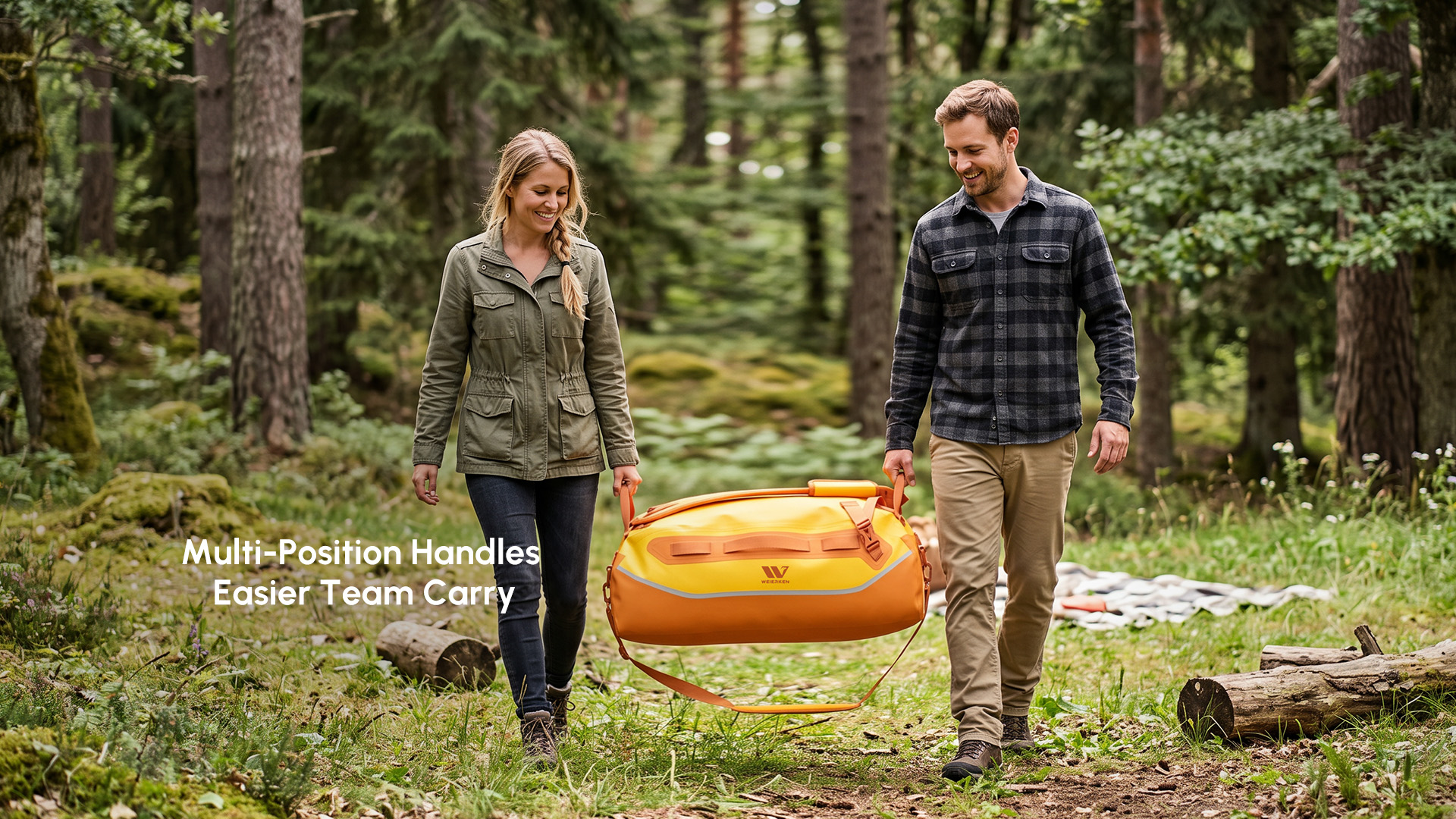
Travel gear expectations have shifted dramatically over the past two seasons. Outdoor enthusiasts, daily commuters, and global adventurers no longer settle for bulky, industrial-style dry sacks. Instead, they demand sleek, multifunctional travel packs that transition effortlessly from high-density urban transit to torrential backcountry trails without letting a single drop of moisture penetrate the interior.
For outdoor and lifestyle brands, capturing this expanding market requires more than aesthetic redesigns. It demands rigorous engineering, verified IPX water-resistance ratings, eco-compliant textiles, and a production partner capable of executing flawless welds. As a premier waterproof bag manufacturer, Weierken helps global brands engineer high-margin, market-ready private label waterproof travel bags that meet strict international standards.
This technical guide breaks down the essential IPX ratings, advanced thermal bonding methods, sustainable textile innovations, and dual-shore supply chain strategies you need to launch a successful collection in 2026.
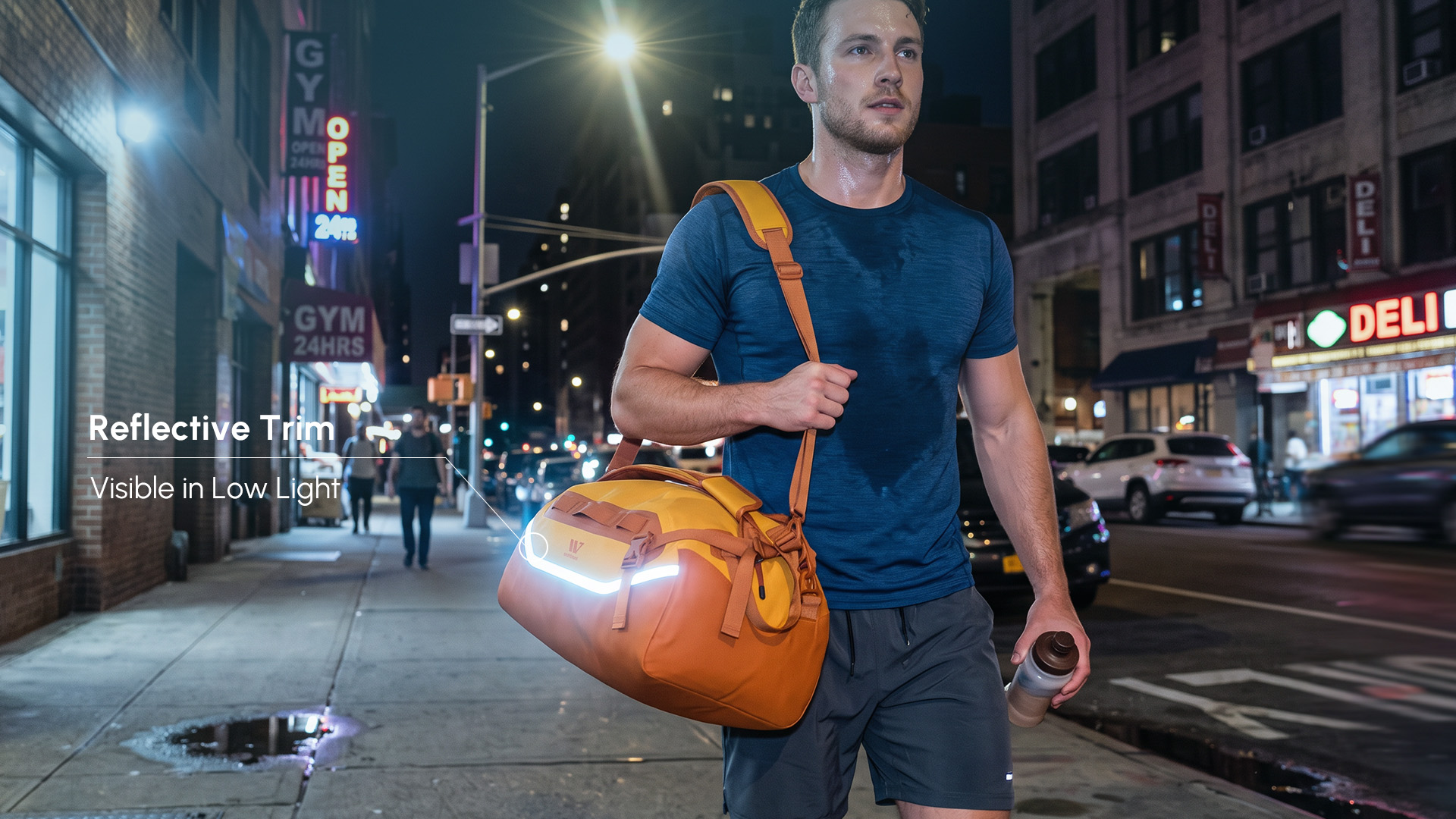
2026 Waterproof Tech & IPX Standard Engineering Breakdown
Understanding ingress protection (IPX) ratings is the foundation of technical product development. Over-engineering a bag inflates production costs unnecessarily, while under-engineering leads to field failures and damaged brand reputation. Aligning your target retail price with the proper construction method ensures commercial success.
IPX4 to IPX5: Urban Commute & Weather Resistance
Bags in this tier handle splashes, steady drizzles, and short exposure to rainfall. They are ideal for everyday carry (EDC) backpacks, tech briefcases, and lightweight weekender bags.
Construction Method: Precision stitch-and-sew combined with hot-air internal seam taping.
Zippers: Polyurethane-coated water-repellent zippers (reverse-coil design).
Fabrics: High-density Oxford nylon or recycled polyester treated with non-fluorinated Durable Water Repellent (DWR) coatings.
IPX6: Heavy Storm & Powerful Water Jet Protection
IPX6 gear withstands powerful water jets from any angle, rough ocean spray, and torrential downpours. This rating serves as the industry standard for marine duffles, motorcycle panniers, and off-grid expedition packs.
Construction Method: High-Frequency (RF) welding on primary structural seams to eliminate needle punctures entirely.
Closure Systems: Multi-fold roll-top systems with quick-release buckles or marine-grade storm flaps.
Fabrics: Double-sided TPU-laminated ripstop nylon or 600D recycled polyester with heavy thermoplastic backings.
IPX7 to IPX8: Full Submersion & Marine Exploration
Designed for extreme environments, IPX7 gear can withstand complete immersion in water up to 1 meter for 30 minutes. IPX8 extends this protection to deeper, prolonged submersions. These standards are critical for diving duffles, kayak deck bags, and expedition electronic cases.
Construction Method: 100% stitchless RF or ultrasonic welding creating molecular-level material bonds.
Zippers: Certified pressure-tested airtight and waterproof zippers (zipper teeth lock mechanical seals under pressure).
Quality Testing: 100% positive air pressure inflation tests applied to each production run before packaging.
Advanced Manufacturing Processes: Welding vs. Stitching
Traditional needle stitching punches thousands of microscopic entry points through coated fabrics. Even the highest-grade seam tape can degrade over time when exposed to heat and dynamic movement. Leading outdoor brands building an OEM/ODM dry bag line now rely on thermal fusion technologies.
High-Frequency (Radio Frequency) Welding
RF welding applies electromagnetic energy to polarize the molecules inside thermoplastic polyurethane (TPU) or PVC coatings. When pressed together under precise pneumatic pressure, the materials fuse at the molecular level, creating a continuous, leak-free joint that is just as strong as the virgin fabric itself.
Ultrasonic Seaming
Ultrasonic machines introduce high-frequency acoustic vibrations to generate localized friction heat. This technique excels at clean, low-profile seam construction on thinner technical laminates, eliminating seam bulk without compromising structural integrity.
2026 Material Shift: TPU and rPET Domination
The outdoor equipment industry is phasing out traditional PVC due to chemical volatility and cold-weather cracking. The forward-looking alternative is Thermoplastic Polyurethane (TPU) paired with Global Recycled Standard (GRS) certified base textiles.
TPU Films: Maintain extreme flexibility from -30°C to +70°C, offer superior abrasion resistance, and do not leach harmful plasticizers.
rPET (Recycled Polyethylene Terephthalate): Sourced from post-consumer plastic bottles, reducing virgin petroleum consumption while meeting corporate ESG targets.
Bluesign & REACH Compliance: Guarantees that chemical agents used in dyeing and water-repellent finishing remain free from hazardous toxins.
Market-Driven Product Development with Weierken
Launching a custom waterproof duffle bag or technical backpack requires translating initial 2D design concepts into functional, mass-producible gear. Weierken acts as your external engineering department, refining CAD patterns, mechanical tolerances, and material combinations to lower initial prototype failure rates.
Our dedicated technical team focuses on rapid sampling workflows:
Urban & Delivery Bags: Fully functional initial samples in 3 to 7 business days.
Technical Outdoor & Adventure Bags: Advanced welded prototypes with airtight closures in 12 to 30 business days.
Engineering Support: Direct assistance with zipper curve stress distribution, load-bearing stress welding, and ergonomic shoulder harness integration.
By identifying weak weld points and structural stress concentrations early in the prototyping phase, we save brands months of trial-and-error, speeding up market introduction.
A Resilient Global Supply Chain: China + Cambodia Dual Factories
Supply chain volatility, changing trade tariffs, and freight bottlenecks make single-region sourcing risky. To ensure continuous production and optimize landed costs, Weierken operates a coordinated dual-factory model across China and Cambodia.
China Facility: High-Tech R&D and Rapid Scaling
Our Chinese production base houses our core prototyping labs, automated laser cutting tables, RF welding centers, and primary raw material supply chains. It serves as the innovation hub for highly technical, intricate designs and low-to-medium volume production runs requiring fast turnarounds.
Cambodia Facility: Tariff Mitigation & Large-Scale OEM Runs
Our Cambodian manufacturing plant provides substantial competitive advantages for large-scale export orders targeting North American and European markets. Buyers can leverage preferential duty treatments and lower labor costs without sacrificing technical quality or build precision.
Uncompromising Quality Control (99.5% First-Pass Yield)
Every batch of private label waterproof travel bags undergoes rigorous testing protocols:
Hydrostatic head pressure testing on all bonded seams.
Cyclic tensile load testing on welded handles and anchor points.
Submersion leak testing for airtight expedition bags.
Abrasion and cold-crack verification on all incoming TPU rolls.
We provide full Delivered Duty Paid (DDP) logistics, managing ocean transport, customs clearance, and inland freight directly to your regional distribution centers.
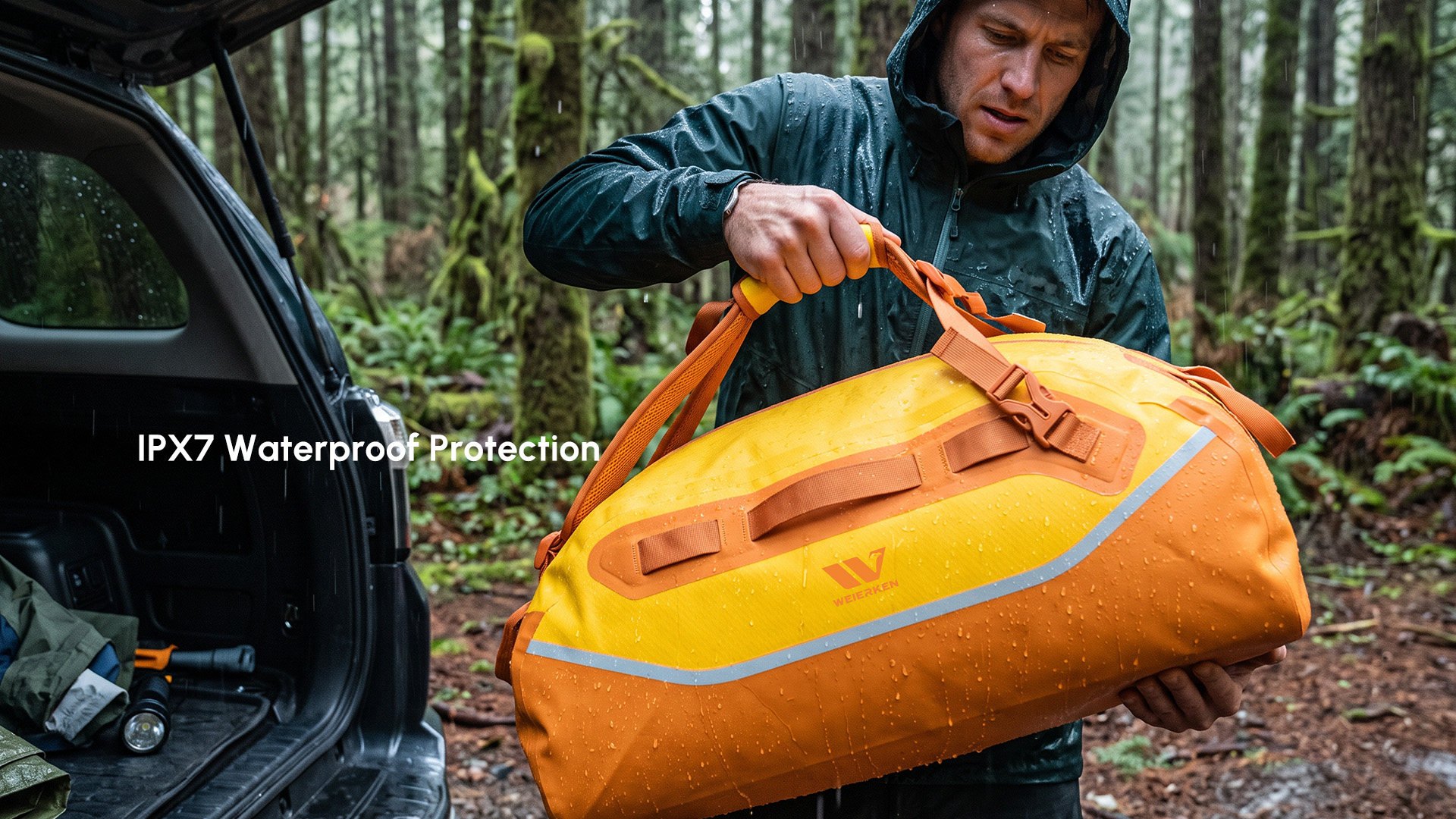
International Compliance and ESG Certifications
Modern consumers and retail channels demand total transparency. Building sustainable waterproof travel gear requires certified compliance across social responsibility, chemical safety, and environmental impact.
BSCI & SEDEX: Verified ethical working conditions, fair wages, and worker safety across all assembly floors.
GRS (Global Recycled Standard): Complete chain-of-custody tracking for recycled polyester and nylon textiles.
REACH & RoHS: Absolute compliance with European chemical restrictions, keeping gear free of phthalates, lead, and heavy metals.
ISO 9001: Standardized quality management systems ensuring consistent batch-to-batch output.
Frequently Asked Questions (FAQ)
Q1: What is the main structural difference between an IPX6 and an IPX7 travel bag?
A1: An IPX6 bag relies on mechanical roll-top closures or storm flaps over water-resistant zippers combined with welded seams. It handles intense water jets and rainstorms but cannot be submerged. An IPX7 bag uses a pressure-rated airtight zipper and hermetically welded seams, allowing full underwater submersion down to 1 meter for 30 minutes without interior leakage.
Q2: Why should our brand choose TPU instead of PVC for custom waterproof bags?
A2: TPU (Thermoplastic Polyurethane) is lighter, significantly more resistant to abrasion, and remains flexible in sub-zero temperatures where PVC cracks. Furthermore, TPU is more eco-friendly, contains no toxic plasticizers, bonds cleanly with recycled textiles, and aligns with European environmental compliance regulations.
Q3: What are the typical Minimum Order Quantities (MOQ) and lead times?
A3: MOQs vary based on fabric customization and hardware requirements, typically starting from 500 to 1,000 units per style/colorway. Prototyping takes 12–30 days for complex technical gear, while bulk mass production typically ranges from 45 to 60 days post-sample approval.
Q4: How does Weierken's dual-factory footprint reduce import costs?
A4: By manufacturing high-volume orders at our Cambodian facility, brands exporting to the United States and Europe can avoid specific punitive tariffs and take advantage of regional trade agreements. Our China facility manages technical prototyping, raw material sourcing, and specialized quick-turn runs.
Q5: Can you build custom waterproof travel bags using our recycled fabric specifications?
A5: Yes. We regularly source, develop, and laminate custom GRS-certified rPET fabrics, recycled nylons, and bio-based TPU films. We provide complete certification paperwork to support your brand's sustainability claims and retail packaging.
Scale Your Technical Travel Line with Weierken
Launching a competitive line of waterproof travel bags requires a balance between technical performance, aesthetic refinement, and cost-efficient manufacturing. As an experienced technical partner, Weierken delivers the engineering expertise, strict IPX testing, and tariff-smart dual-factory production your brand needs to gain a market edge in 2026.
Contact our engineering and sales team today to review your tech packs, request factory certifications, and receive a competitive quotation on your next private label production run.