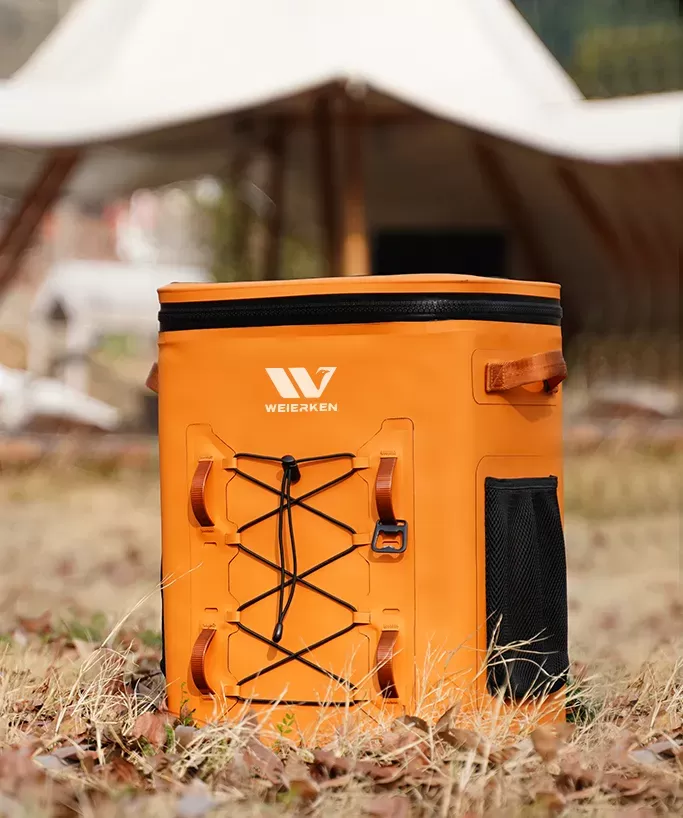

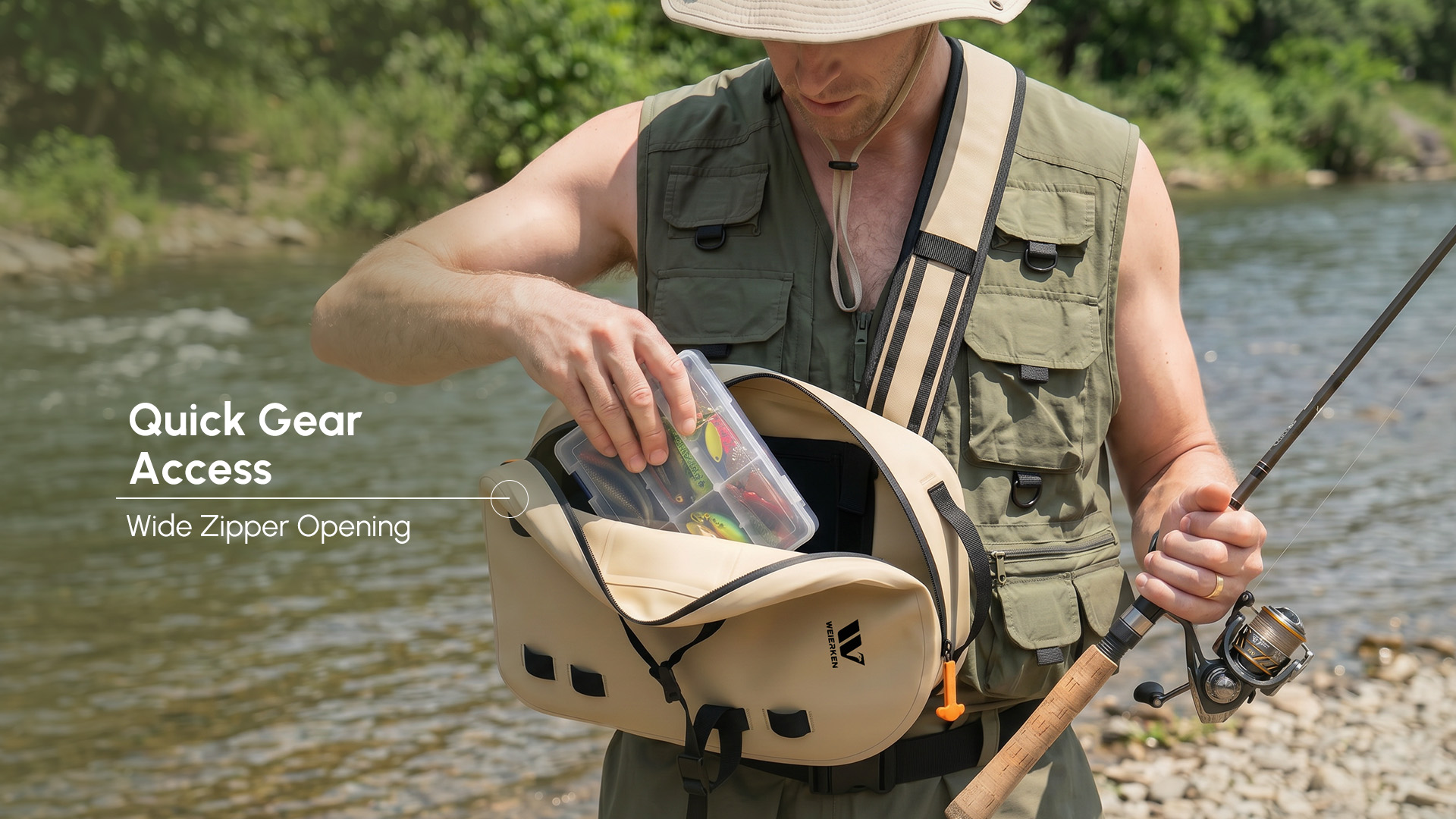
Fishing tackle brands face a ruthless testing ground: the water. Anglers expose their gear to pounding surf, relentless UV rays, and corrosive salt air. Inside the tackle bag, heavy metal jigs, weighted crankbaits, and razor-sharp treble hooks constantly scrape against seams and linings. When a low-grade tackle bag rips or a zipper corrodes shut after three trips, the angler blames your brand, not the subcontractor who stitched it.
Selecting a dedicated fishing lure storage bag OEM protects your profit margins and brand equity. Experienced manufacturers like Weierken understand that an effective lure bag is not generic luggage. It is technical gear engineered to organize, protect, and dry delicate tackle under brutal conditions. This technical guide outlines the core materials, hardware standards, and testing procedures required to manufacture dependable, market-ready lure bags.
1. Core Material Standards: Engineering Long-Lasting Lure Bags
The foundation of any rugged lure wrap, tackle binder, or bag lies in the textiles. Choosing the wrong denier or backing leads to premature fabric delamination, water infiltration, and seam blowouts.
1.1 Heavy-Duty Exterior Fabrics: Abrasion and Tear Resistance
Exterior shells need high tensile strength to withstand boat decks, rocky shorelines, and heavy loads. Professional manufacturers evaluate fabrics based on denier count, base polymer, and backing coatings:
- 600D Polyester (PVC or PU Backed): The industry baseline for entry-level to mid-tier tackle bags. Polyester provides decent abrasion resistance and cost efficiency. It requires a heavy polyurethane (PU) or polyvinyl chloride (PVC) backing to block moisture.
- 900D & 1000D Oxford Nylon: A step up in durability. Nylon has superior elasticity and shear strength compared to polyester. It flexes smoothly in sub-zero fishing conditions without cracking the outer weave.
- 1680D Ballistic Polyester / Nylon: The gold standard for heavy-duty lure wrap factory production. Originally developed for military body armor, this basket-weave construction yields exceptional tear strength and puncture resistance against dropped tools and sharp lure edges.
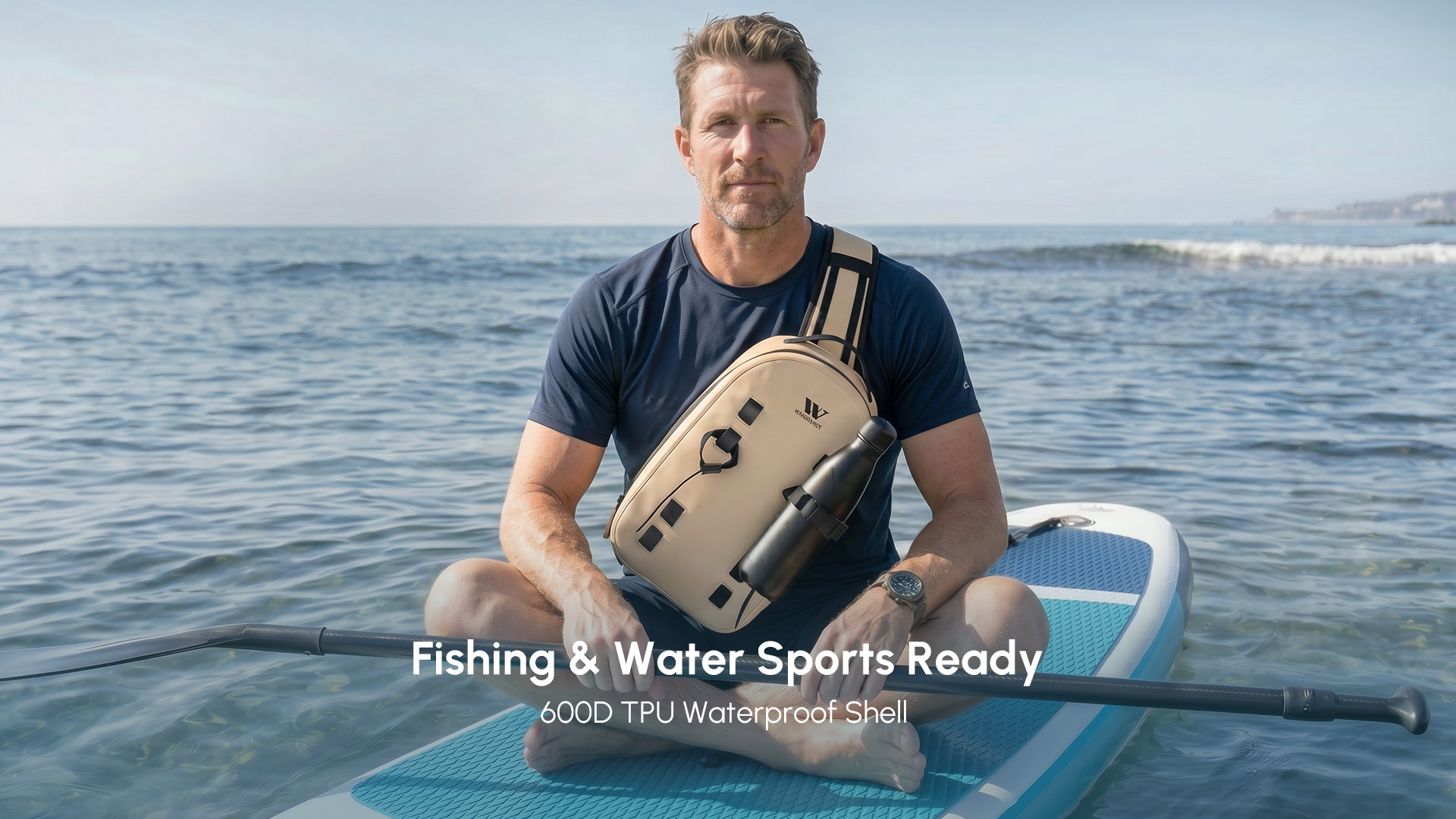
- TPU Laminates: Thermoplastic Polyurethane (TPU) laminated nylon creates true submersible, airtight, and waterproof lure binder OEM products. Unlike PVC, TPU does not degrade over time, emit toxic odors, or turn brittle in freezing weather.
1.2 Interior Linings and Compartments: Hook-Resistant Design
Lure bags fail most often from the inside out. Treble hooks catch standard woven fabrics, snagging threads and tearing pockets open. A competent fishing lure storage bag OEM solves this problem with hook-proof interior engineering.
- Thickened Clear PVC / EVA Film (0.3mm to 0.8mm): Essential for lure binders. Anglers must identify lures quickly without unzipping every pocket. High-clarity EVA and cold-crack-resistant PVC resist deep puncture wounds from #2 to #6 treble hooks while keeping hooks trapped inside flat sleeves.
- Rubberized Honeycomb Mesh: Standard nylon mesh snags barbs instantly. Rubber-dipped polyester mesh lets water drain away from wet lures while hook points slide right off the coated strands.
- Heavy-Gauge Tarpaulin Liners: Non-porous 500D PVC tarpaulin lines the bottom of tackle compartments, stopping sharp jig heads from punching through the base.
1.3 High-Tensile Stitching and Thread Integrity
Seams endure constant load-bearing stress when an angler lifts a tackle bag packed with lead weights. Standard apparel thread rots within months when exposed to salt water and sunlight.
Factories must utilize continuous filament, bonded nylon or polyester thread (sizes #69 to #138). These threads undergo specialized UV-resistant coatings to prevent degradation under intense sun. Critical stress points—such as handle mounts, shoulder strap anchors, and pocket seams—demand computerized box-X stitching and double-needle bar-tacking.
2. Hardware and Fasteners: The Key to Product Longevity
Hardware failures destroy product reviews faster than fabric wear. A single stuck zipper renders a $100 tackle bag completely useless.
2.1 Corrosion-Proof Zipper Systems
Metal zippers have no place in saltwater tackle storage. Salt crystals form inside the teeth, and galvanic corrosion locks the zinc-alloy slider to the track within weeks.
- Molded Plastic Teeth (Nylon Coil & Delrin): Use heavy-gauge #8 or #10 molded plastic/nylon tooth zippers (such as SBS or YKK). The wide tooth profile pushes aside dried salt residue, sand, and grit.
- Water-Repellent & Airtight Tracks: Reverse-tape PU-coated zippers shed rain and ocean spray. For fully submersible products, install airtight toothless TPU zippers.
- Plastic & Paracord Pull Tabs: Metal pullers snap under torsional force when salt-crusted. Replace them with molded plastic pullers tied with marine-grade nylon paracord.
2.2 Tactical-Grade Buckles and Industrial Velcro
Tackle bags bounce around truck beds and boat decks. Cheap polypropylene buckles snap when stepped on or when used in winter temperatures.
Specify industrial POM (Polyoxymethylene) buckles. POM combines high stiffness and dimensional stability with outstanding impact resistance down to -20°C. For fold-out lure wraps and tackle binders, integrate high-cycle marine-grade hook-and-loop fasteners. The loop fabric must resist fuzzing and loss of grip after hundreds of open-and-close cycles in wet environments.
2.3 Ventilation and Drainage Grommets
Trapped moisture rusts expensive tackle. A well-designed lure storage bag needs active drainage. OEM suppliers punch brass or marine-grade 316 stainless steel grommets into the base of lure pockets. These rustproof eyelets let trapped sea spray escape, allowing wet spoons, crankbaits, and soft plastics to dry naturally.
3. Rigorous Quality Control and Testing Protocols
Verifying technical claims requires disciplined lab and inline inspection. A qualified custom fishing tackle bag manufacturer operates dedicated test protocols before shipping bulk goods.
3.1 Salt Spray Testing for Marine Performance
All metal components—drainage grommets, D-rings, zipper sliders, snap hooks—must undergo salt spray chamber testing (ASTM B117 standards). Components sit inside a 5% sodium chloride fog chamber at 35°C for 48 to 72 continuous hours. Hardware must emerge with zero red rust or pitting to earn approval for saltwater resistant tackle storage product lines.
3.2 Treble Hook Puncture and Tear Resistance
Technicians use weighted rigs tipped with various hook sizes (carbon steel treble hooks) to perform drop-puncture and abrasion scrape tests on clear vinyl sleeves and rubberized mesh. The material must resist punctures without tearing along the stress line.
3.3 Seam Tensile Load and Handle Pull Testing
A loaded tackle bag can easily weigh 15 to 25 kilograms. Production samples are loaded with steel weights and subjected to drop-shock tests on vertical testing frames. Handles and shoulder straps must withstand repeated sudden drops (1,000+ cycles) without seam splitting or webbing deformation.
3.4 Chemical and Environmental Compliance
Global brands must comply with strict regional chemical safety regulations. Reliable OEM factories supply certified test reports confirming compliance with:
- California Proposition 65: Limits on lead, cadmium, and phthalates (such as DEHP, DBP, BBP) commonly found in soft vinyl and plastic coatings.
- EU REACH & RoHS: Restricts hazardous substances in
synthetic polymers, synthetic leather, and hardware plating.
4. OEM and ODM Customization: Scaling Your Private Label
Established brands like Weierken provide custom design pathways that translate napkin sketches into finished, market-ready merchandise. Working with an agile fishing lure storage bag OEM gives you access to custom engineering options.
4.1 Modular Layouts and Ergonomic Engineering
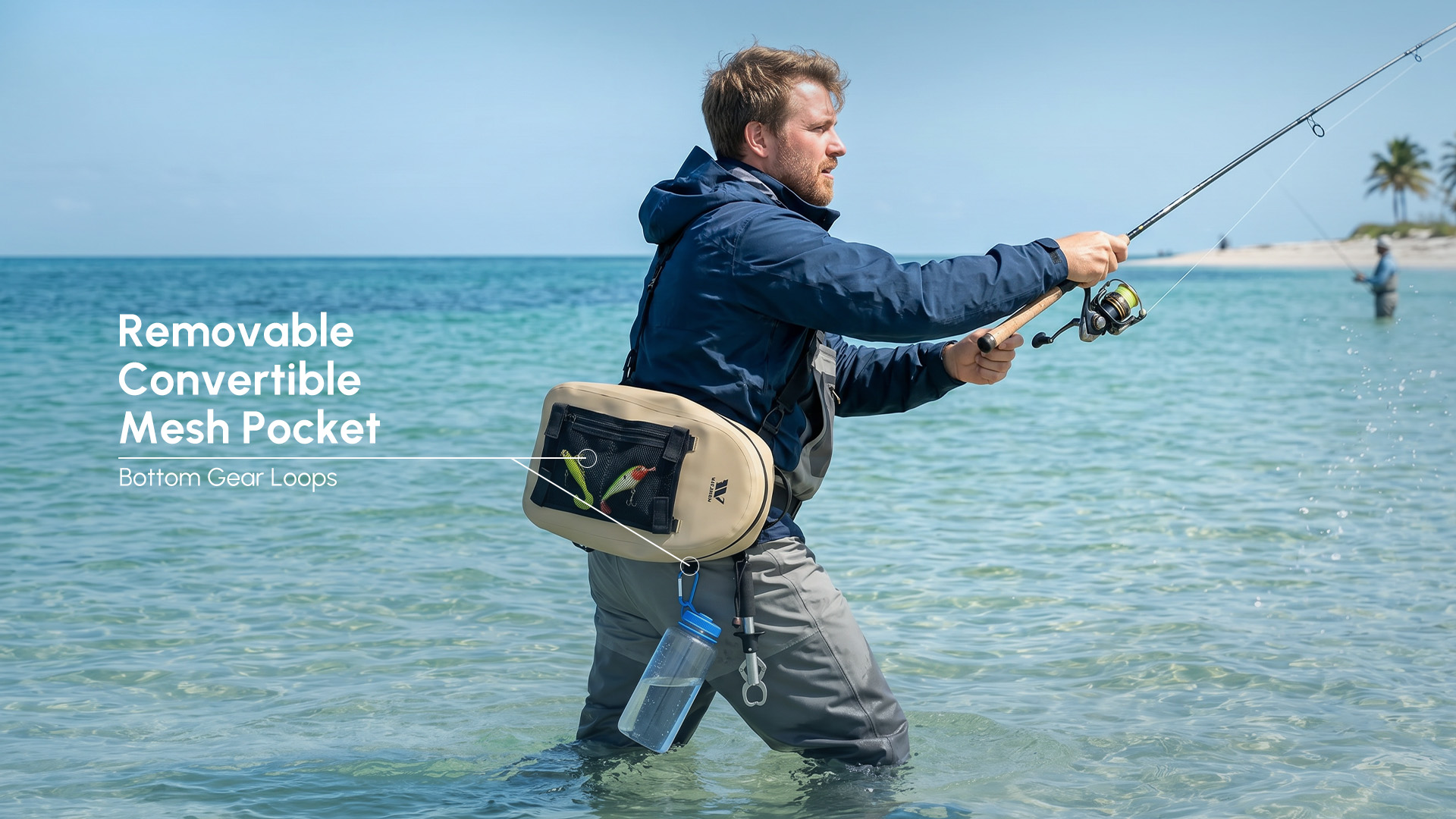
Anglers fish in different ways. Surf casters need slim, wearable lure wraps, while boat anglers prefer structured, heavy-duty tackle binders. OEM customization allows for:
- Removable Binder Sleeves: Heavy-duty hook-and-loop or plastic ring systems that let anglers swap lure pages depending on their target species.
- MOLLE Webbing Systems: Laser-cut or stitched PALS webbing on exterior panels to mount pliers, line cutters, and scent bottles.
- Drop-Down Workstations: Rigid EVA molded front panels that zip open to create a flat, waist-level tray for quick lure changes.
4.2 Private Label Branding Applications
Building equity in the outdoor market requires distinct, durable branding that withstands moisture and dirt:
- Molded 3D PVC/Rubber Patches: Highly durable, completely waterproof, and immune to color fading. Stitched directly into the outer shell.
- High-Density Screen Printing: Uses flexible silicone-based inks that do not crack when the fabric folds.
- Debossed or Embossed Molded EVA: Creates a premium, tactile look on protective tackle bag lids and bases.
- Custom Molded Hardware: Incorporates your brand logo into zipper pullers, buckles, and webbing keepers.
4.3 Rapid Prototyping and Production Flexibility
Time to market dictates sales success in the outdoor sector. An experienced manufacturing partner creates preliminary paper patterns, sources custom materials, and builds physical prototypes within 5 to 10 business days. They also offer tiered minimum order quantities (MOQs), allowing tackle brands to test new SKUs without overextending inventory budgets.
5. How to Select the Right Fishing Tackle Bag Manufacturer
Many cut-and-sew factories claim they can produce tackle gear. However, manufacturing a durable lure bag requires distinct operational expertise that standard backpack factories lack.
- Domain-Specific Experience: Choose a factory that actually understands recreational fishing. They should know why a spinnerbait pocket requires stiff backing, or why salt water damages cheap zinc sliders.
- Material Sourcing Power: Direct partnerships with top-tier textile mills ensure access to authentic Cordura nylon, YKK or SBS zippers, and certified low-phthalate PVC films.
- Transparent Quality Assurance: Your OEM should provide step-by-step inline QC documentation, including pre-production material inspection, mid-production seam audits, and final AQL 2.5 random checks.
- Intellectual Property Security: A reliable manufacturer signs comprehensive Non-Disclosure Agreements (NDAs) to safeguard your CAD files, mold tooling, and proprietary designs before prototyping begins.
Frequently Asked Questions (FAQ)
Q1: Which exterior fabric provides the best balance of cost and
durability for lure bags?
A1: For mid-range consumer tackle bags,
900D Oxford Polyester with a water-resistant PU coating offers the best mix of
price and performance. For premium, commercial-grade bags, specify 1680D
Ballistic Nylon or TPU-laminated fabric for superior puncture and tear
resistance.
Q2: How do you prevent sharp hooks from piercing lure binder
pages?
A2: We use cold-crack-resistant EVA or heavy-duty transparent
PVC sheeting ranging from 0.5mm to 0.8mm in thickness. These dense, flexible
plastics stop hook barbs from cutting through the transparent window during
transit.
Q3: What is the typical Minimum Order Quantity (MOQ) for custom lure
bags?
A3: Standard custom production runs generally start at 500 to
1,000 units per colorway. However, for specialized designs utilizing stock
fabrics, some OEM partners can support lower initial pilot runs.
Q4: Can an OEM produce completely waterproof tackle
bags?
A4: Yes. Achieving true waterproof performance requires
high-frequency RF (radio-frequency) welding rather than traditional needle
stitching. Combined with TPU-coated nylon fabrics and airtight waterproof
zippers, this creates a fully submersible bag.
Q5: How do factories verify that materials meet California
Proposition 65?
A5: Professional OEMs send raw material batches (PVC
sheets, mesh, coatings) to third-party testing labs like SGS, Intertek, or TÜV.
These labs run chemical assays to confirm lead and phthalate levels fall safely
below regulatory limits.
Partner with an Established Tackle Gear Manufacturer
Durability makes or breaks a tackle brand. Anglers demand gear that withstands baking heat, frozen rivers, and corroding salt water without falling apart. Sourcing through a reliable fishing lure storage bag OEM like Weierken ensures your products hit retail shelves with validated materials, clean stitching, and corrosion-proof hardware.
Are you developing a custom tackle binder, heavy-duty lure wrap, or private label tackle bag line? Contact our engineering team today to review material swatches, discuss technical requirements, and request a detailed production quote.