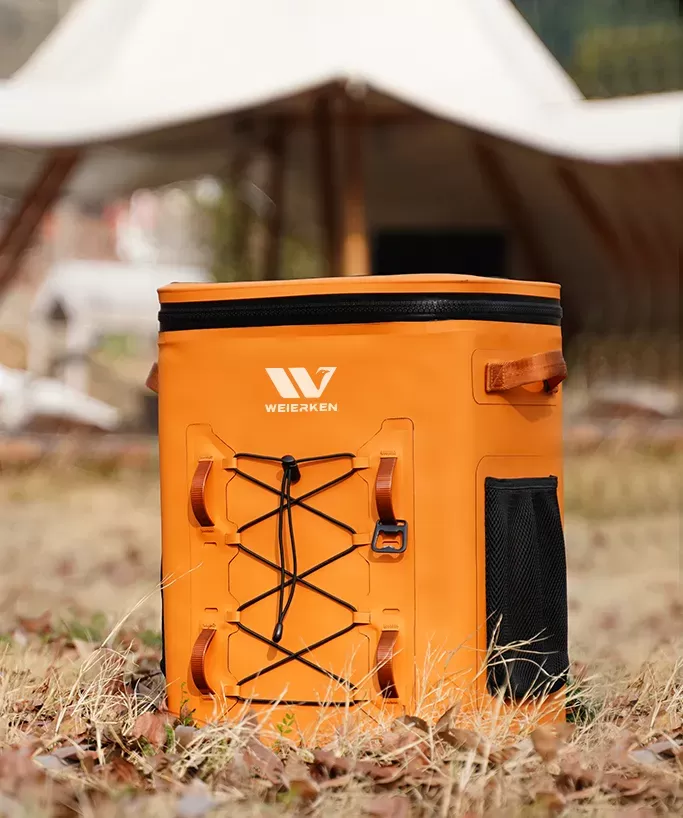

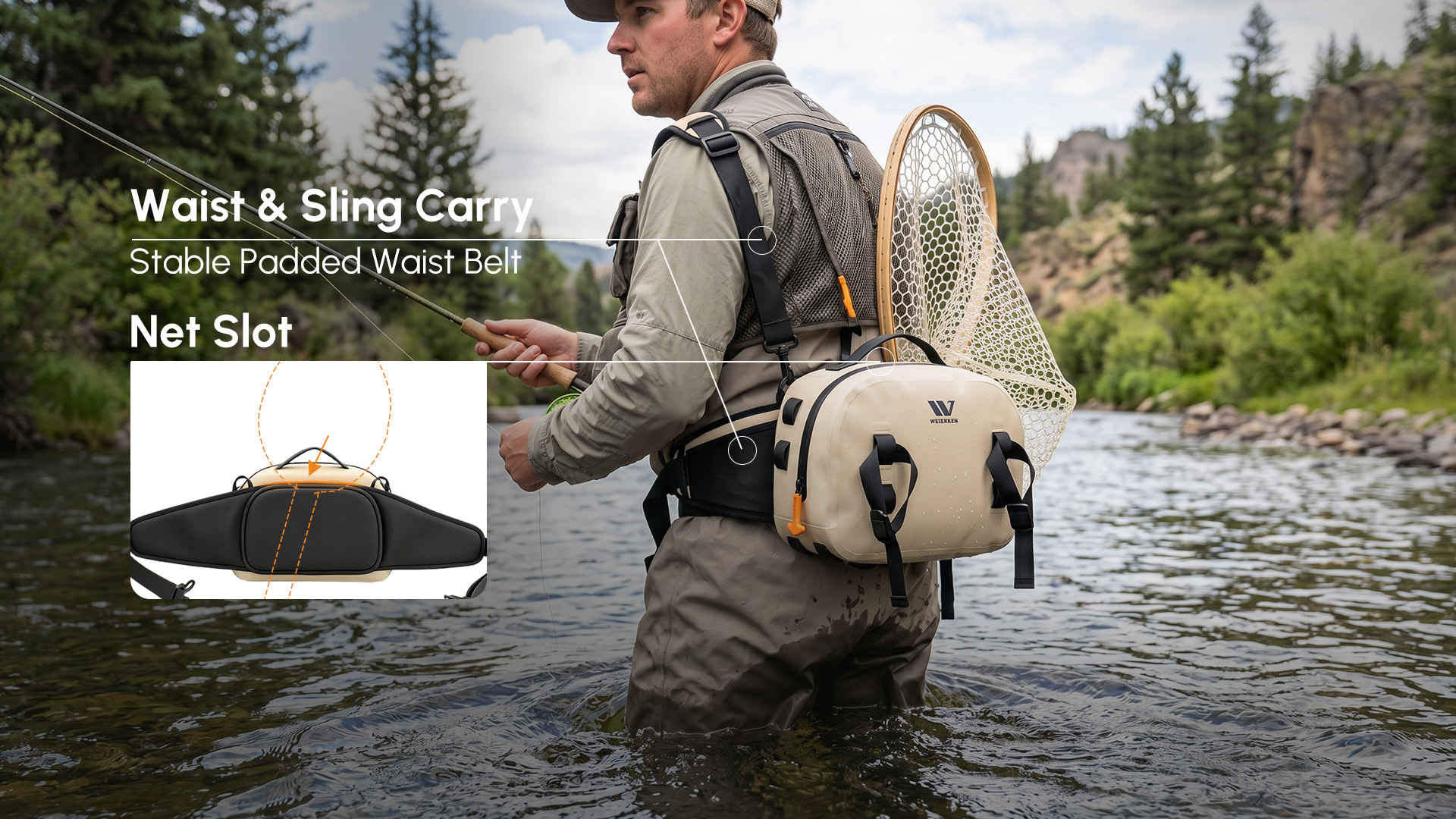
Fishing gear endures some of the harshest conditions on the planet. Saltwater spray, baking sun, sharp fish hooks, and heavy lead weights will quickly destroy poorly made gear. For outdoor brands, a single failed seam on a customer's boat can ruin a brand's reputation.
Top gear brands do not leave product lifespan to chance. They partner with an experienced custom tackle bag manufacturer like Weierken to ensure every component withstands punishing environments. Durability starts with science, deliberate engineering, and relentless mechanical testing long before an angler casts a line.
This behind-the-scenes look examines how an advanced factory subjects fabrics, hardware, and complete bag assemblies to extreme stress testing to guarantee field reliability.
Material Selection: The Foundation of Tough Gear
Building a rugged tackle bag begins with raw textiles. Sourcing agents and material engineers evaluate high-density fabrics based on their tear resistance, weight, and coating compatibility. A dedicated custom tackle bag manufacturer rarely relies on standard consumer-grade fabrics.
Factories primarily engineer tackle luggage using these materials:
- Ballistic Nylon (1680D to 2000D): Outstanding puncture and tear resistance for high-contact bag bottoms.
- Ripstop Polyester (600D to 1200D): Delivers balanced weight savings and structural support with cross-hatch reinforcement.
- Thermoplastic Polyurethane (TPU) Laminated Fabrics: Impervious to water and airtight when welded.
- Heavy-Duty PVC Tarpaulin: Chemical-resistant, easy to wash, and highly durable for commercial offshore use.
Engineers inspect every fabric lot before it enters the cutting room. A laboratory technician pulls swatches directly from raw fabric rolls to confirm yarn density, coating thickness, and weave consistency.
Raw Material Stress Testing: The Factory Lab
Before fabric pieces move to the stitching floor, technical technicians verify structural integrity. Modern outdoor equipment facilities house dedicated testing labs that run standardized quality checks.
Tensile and Tear Resistance Tests
Technicians cut sample strips along both the warp and weft directions of the textile. Then, an automated tensile testing machine clamps the fabric ends and pulls them in opposite directions until the material snaps.
This process measures two vital metrics:
- Tensile Strength: The maximum pull force a textile handles before stretching and breaking.
- Tear Propagation: The force required to rip an existing slit across the fabric.
A tackle bag often holds twenty to forty pounds of terminal tackle, heavy pliers, and plastic utility boxes. High tensile strength ensures the fabric will not burst at stress points when an angler hauls a loaded bag by its shoulder strap.
Martindale and Taber Abrasion Testing
Anglers slide their bags across fiberglass boat decks, aluminum gunwales, and jagged shoreline rocks. To simulate years of rough friction, the lab runs abrasive wear tests.
In Taber abrasion testing, rotating abrasive wheels grind against a secured sample of the fabric for thousands of cycles. Technicians count the cycles until fibers fray or coatings wear away. Any fabric failing to hit predefined resistance thresholds is rejected back to the textile mill.
Simulating Hostile Environments: Salt, Sun, and Water
Marine environments rapidly corrode metals and break down chemical polymers. An experienced custom tackle bag manufacturer must verify that raw materials survive these outdoor hazards.
Salt Spray Chamber Testing (ASTM B117)
Corrosion ruins zippers, clips, D-rings, and rivets. At the Weierken test facilities, technicians place metal hardware and zipper assemblies inside an ASTM B117 salt spray chamber. The machine fogs the chamber with a heated 5% saline solution around the clock.
Hardware must withstand continuous exposure without showing signs of red rust, pitting, or green oxidation:
- Standard grade hardware: 48 to 72 hours of exposure.
- Marine-grade components: 120 to 240+ continuous hours.
This rigorous test separates budget components from genuine marine-grade 316 stainless steel, treated brass, and specialized nylon plastics.
UV Aging and Weathering
Solar radiation breaks down unprotected nylon and polyester threads, making fabrics brittle and causing dark colors to fade. Factory technicians expose material swatches to intense ultraviolet radiation inside Xenon arc test chambers.
Technicians monitor fading with gray-scale color charts and test the post-exposure tensile strength. Thread fibers must retain at least 80% of their original strength after simulated year-long sunlight exposure.
Hydrostatic Head Waterproof Testing
Water resistance keeps tackle trays dry and prevents rusted hooks. Technicians clamp fabric over a water chamber and increase downward pressure using a hydrostatic head testing machine.
The rating measures how tall a column of water the fabric holds before droplets seep through:
- 1,500mm to 3,000mm: Resists light rain and splashing.
- 5,000mm to 10,000mm: Resists sustained torrential downpours.
- 15,000mm+ (Submersible): Used on fully waterproof, airtight bags constructed with radio-frequency welding.
Hardware and Seam Construction Tests
A tackle bag is only as strong as its weakest joint. Most real-world failures happen at zipper teeth, carrying handles, or seam junctions.
Cyclic Zipper Endurance Testing
Salt buildup and fine beach sand destroy moving zippers. Factory engineers test zipper chains using motorized reciprocating rigs. The mechanical arm pulls the zipper slider back and forth across thousands of cycles.
To simulate actual fishing conditions, technicians dust fine sand or saline solutions onto the zipper tracks during the test. Zippers must open and close smoothly without tooth separation, split sliders, or thread pulls along the zipper tape.
Handle and Strap Jolting Tests
When an angler jerks a heavy tackle bag off the ground, dynamic shock loads stress the handle anchor points. A reliable custom tackle bag manufacturer verifies these critical attachments using dynamic drop-jolt machines.
Technicians pack the tackle bag with solid steel weights matching twice its rated capacity. The machine hoists the bag by its main carry handle or shoulder strap and repeatedly drops it several inches, snapping the strap taut at the bottom of the drop.
The attachment must endure hundreds of drops without loose stitches or torn reinforcement patches. Factories reinforce these load areas using dense box-X stitching, bartack patterns, and internal backing webbing.
Testing the Complete Product
Component testing guarantees raw quality, but the finished bag must work harmoniously as a complete system. Before moving into full-scale mass production, prototype and production-run samples face full-assembly torture tests.
Submersion and Ingress Protection Testing
For IPX6 and IPX7 rated waterproof tackle bags, factories use pressurized immersion tanks. Technicians submerge the fully zipped bag underwater for 30 minutes at a depth of one meter.
After removal, workers dry the exterior and open the bag to inspect for moisture. Technicians place moisture-sensitive test strips inside vulnerable corners to catch even microscopic leaks along welded seams.
Drop Testing onto Solid Concrete
Anglers frequently drop their tackle bags out of truck beds or off slippery boat decks. Drop tests verify that molded plastic bases, corner bumpers, and internal tackle box dividers absorb these sudden impacts.
Technicians drop loaded bags from a height of four feet onto flat concrete at multiple angles:
- Flat on the bottom molded EVA or hard PVC base.
- Directly on the structural corners.
- Top-down on the main lid closure and carry handle.
The bag passes only if its shell, internal dividers, and structural bases show zero cracks, splits, or compromised seams.
Why Thorough Factory Testing Protects Outdoor Brands
Commercial fishing brands operate in a competitive market where online reviews dictate retail success. Choosing the right custom tackle bag manufacturer does more than secure dependable production; it shields your business from expensive operational pitfalls.
Working with a quality-focused factory provides distinct advantages:
- Lower Warranty Return Rates: Rigorous lab checks stop defective batches before products board shipping containers.
- Protection for Brand Equity: Anglers recommend gear that survives years of hard abuse without broken zippers or failed straps.
- Regulatory and Material Compliance: Professional factory labs verify that materials meet REACH, RoHS, and Prop 65 standards.
- Consistent Mass Production: Standardized quality control ensures the 10,000th unit off the assembly line matches the approved golden sample.
Weierken combines modern testing equipment with seasoned production craft to build tackle bags that conquer salt, sun, and heavy loads.
Frequently Asked Questions
Q1: What is the typical minimum order quantity (MOQ) when working
with a custom tackle bag manufacturer?
A1: Most professional OEM and
ODM manufacturers require a minimum order quantity between 500 and 1,000 units
per design. This volume justifies machine setup times, custom mold tooling, and
wholesale mill orders for specialized technical fabrics.
Q2: How does a factory confirm that tackle bag hardware is truly
rust-proof?
A2: Technicians run salt spray chamber tests according
to the ASTM B117 standard. They place zippers, D-rings, and swivel snaps in a 5%
saline fog chamber at elevated temperatures for 72 to 240 hours to verify the
hardware resists rust and pitting.
Q3: Which construction method is better for waterproof tackle bags:
stitching or RF welding?
A3: Stitching creates needle holes that
require liquid seam tape to stay waterproof. Radio-frequency (RF) welding fuses
TPU or PVC fabrics using electromagnetic energy, creating a seamless, airtight
bond that provides superior waterproofing for submersible tackle gear.
Q4: Can outdoor brands supply their own custom fabrics and zippers
for bag production?
A4: Yes. Experienced manufacturers can source
branded components like YKK zippers, Cordura nylon, and Duraflex buckles. The
factory will still run incoming quality control tests on these client-specified
materials to confirm they match production specifications.
Q5: What is the difference between water-resistant and fully
waterproof tackle bags?
A5: Water-resistant bags use coated fabrics
with standard stitched seams to shed light rain and splashes, but they leak if
dropped overboard. Fully waterproof bags feature welded seams, TPU/PVC
materials, and airtight zippers that keep gear bone-dry even during full
submersion.
Q6: How long does the prototype development and testing process
take?
A6: Developing a fully functional prototype usually takes two
to three weeks. Laboratory stress testing, waterproof checks, and design
revisions add another one to two weeks before the design is approved for mass
tooling and assembly.
Build Your Next Tackle Bag Line with Confidence
Durability is never an accident. It comes from demanding material standards, precision manufacturing, and strict laboratory testing. When your brand partners with Weierken, you work with an experienced team that understands the harsh reality of marine environments.
Whether you need heavy-duty offshore bags, technical fly-fishing packs, or submersible welded gear, our factory provides the engineering precision your brand deserves.
Contact our engineering team today to discuss your technical specifications, review testing protocols, and request a quote on your custom tackle bag manufacturing project.