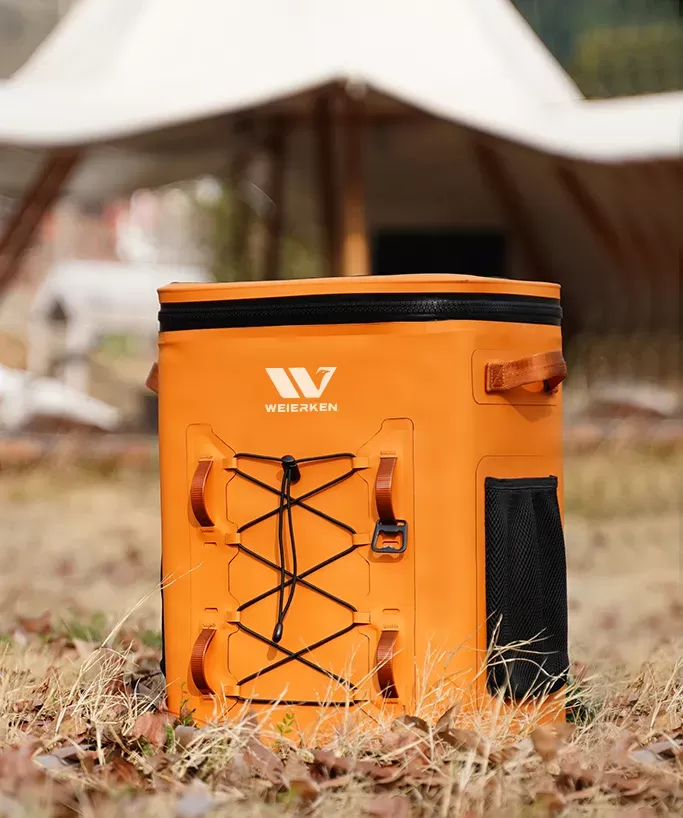

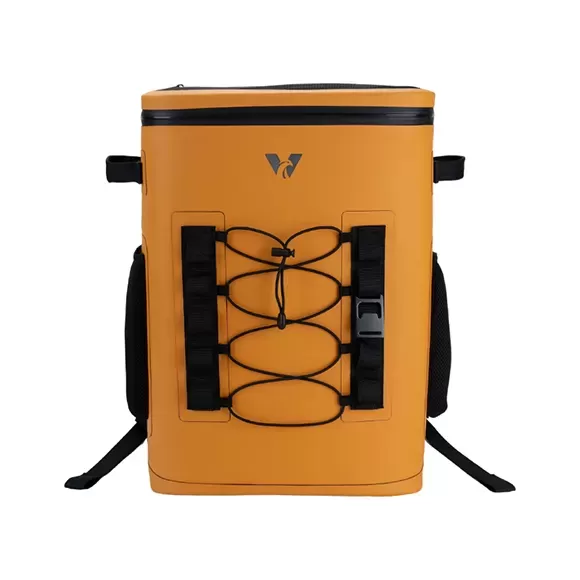
Traditional game bags serve one specific purpose: hanging meat in the backcountry to cool, breathe, and form a protective crust against dirt and insects. But once an elk quarter, wild boar, or deboned bear meat leaves the field, those breathable fabrics fail completely. Loading hundreds of pounds of bloody game meat into an SUV, bush plane, or pickup bed turns into a disaster if fluid leaks onto vehicle carpets and upholstery.
For hunting gear brands, leaking seams do more than ruin interiors. Biological leakage creates bacterial contamination risks, attracts predators, and triggers immediate customer returns. Many bags on the market still rely on basic cut-and-sew assembly with glued seam tape, which bursts under heavy field loads. Finding a specialized leakproof game transport bag OEM has become an urgent strategic initiative for technical hunting brands heading into the 2026 product cycles.
Outdoor companies need contract manufacturing partners that combine medical-grade seam welding, food-safe polymers, and heavy-duty load engineering. Weierken manufactures specialized containment systems that prevent fluid migration under extreme mechanical stress, helping outdoor brands build bags that endure the roughest pack-outs.
1. The Shift from Porous Meat Bags to Technical Containment Systems
The modern big-game hunter demands high-performance gear. The days of hauling quartered game wrapped in blue tarps or trash bags are over. Today’s hunters invest in purpose-built pack-out gear that keeps blood contained during long transit routes from trailheads to meat processors.
The Mess Problem: Meat juices seep through needle holes in stitched bags, staining vehicle trunks, truck seats, and pack frames with odors that never wash out.
Contamination Risks: Substandard PVC liners can leach phthalates into meat intended for family consumption, while unsealed seams harbor putrefying bacteria.
Mechanical Failure: Heavy bone-in meat quarters shift during transport. That kinetic energy easily shears standard sewn seams and blows open light-duty zippers.
To eliminate these issues, an experienced leakproof game transport bag OEM must abandon legacy sewing methods in favor of high-tenacity, food-contact coated fabrics and seamless thermal welding.
2. 2026 Material Standards: Food-Grade Polymers and Puncture Resistance
Regulatory updates and hunter expectations set a high bar for raw materials entering the 2026 season. Outdoor brands must ensure their manufacturing partners build bags from safe, durable textiles.
Food-Grade TPU vs. Cheap PVC
Low-end bags often rely on PVC (polyvinyl chloride) coatings to cut unit costs. However, PVC contains plasticizers and releases harsh chemical odors that can taint game meat. High-tier gear requires heavy-duty thermoplastic polyurethane (TPU).
Regulatory Safety: The interior lining must meet FDA 21 CFR 177.2600 and EU 10/2011 standards for direct contact with fatty, raw meats.
Clean Formulation: Zero BPA, zero phthalates, and no harmful plasticizers that could leach into food.
Antimicrobial Properties: The contact layer must resist microbial growth, mold, and odor retention during multi-day hunting trips.
Cold-Crack Resistance Down to -30°C
Late-season mountain hunting in Alaska, the Rocky Mountains, and Northern Europe exposes equipment to freezing temperatures. Standard materials turn brittle and snap when folded or dropped in freezing conditions.
A qualified leakproof game transport bag OEM validates material performance using cold-mandrel bend testing at -30°C to -40°C. High-performance dual-sided TPU coatings retain their elasticity and puncture resistance in sub-zero weather, preventing the micro-cracks that cause mystery leaks.
Bone Puncture and Tear Resistance
Freshly quartered elk and moose meat contains jagged bone edges. Transport bags must withstand internal puncture forces while being dropped into truck beds or dragged across rough ground.
Base Fabric Construction: Look for 420D to 840D high-tenacity nylon or polyester weave substrates.
Tear Strength Benchmark: Fabrics should deliver a minimum tear strength of ≥ 300N (Newton) in both warp and weft directions.
Puncture Resistance: Internal puncture resistance must exceed ≥ 150N under ASTM standards to block jagged bone fractures.
3. Construction Standards: High-Frequency Welding and Sealed Enclosures
Every needle hole is a leak waiting to happen. True fluid containment requires seamless, molecular-level bonding rather than stitched seams.
Radio-Frequency (RF) Seamless Welding
Mechanical stitching relies on threads that stretch, rot, and wick fluids through seam holes. A capable leakproof game transport bag OEM uses Radio-Frequency (RF) welding or hot-air fusion instead.
RF welding passes high-frequency electromagnetic energy through overlapping TPU-coated fabrics. This energy agitates the polymer molecules until they fuse into a single, continuous layer. The resulting welded joint delivers a shear strength of ≥ 150 psi—making the seam stronger than the surrounding base fabric.
Hermetic, Submersible Zipper Integration
The zipper is the most critical failure point on any meat transport bag. Traditional coil zippers leak blood the moment a bag shifts onto its side. High-performance gear requires pressure-tight submersible zippers.
Waterproof Rating: Zippers must maintain an IPX7 or IPX8 rating to guarantee zero fluid bypass under internal hydrostatic pressure.
Transverse Tension Strength: Cross-directional pull resistance must reach ≥ 450N to withstand the pressure of shifting 80-to-120-pound meat loads without teeth separating.
Welded Zipper Flanges: The zipper track must be RF-welded directly to the main bag body rather than stitched and taped.
Load-Bearing Reinforcements
Standard webbing handles pull free from coated fabrics under heavy loads. To handle dead weight without compromising the bag's waterproof hull, reputable factories like Weierken weld reinforced structural patches directly onto the bag body.
Using heavy-duty TPU or Hypalon anchor patches, the factory distributes lift stress across broad surface areas. This welded design allows single-point haul loops and carry handles to handle over 150 pounds of drop force without tearing the waterproof layer.
4. Environmental Compliance and Global Chemical Regulations
Sourcing teams must clear evolving regional chemical bans before landing shipments in Western markets. Overlooking these regulations leads to seized containers and heavy financial penalties.
Complete Elimination of PFAS (C0 DWR Treatments)
Stringent state-level legislation across the United States—including California AB 1817, New York, and Minnesota laws—bans intentionally added PFAS (per- and polyfluoroalkyl substances) in outdoor fabrics. The European Union is advancing similar restrictions under REACH.
A forward-thinking leakproof game transport bag OEM must provide verified third-party laboratory testing showing total fluorine content below 50 ppm. Factories must replace legacy C6 and C8 fluorinated finishes with certified C0 durable water-repellent (DWR) coatings.
Certified Recycled Substrates (GRS & rPET)
Modern consumers expect sustainable materials that do not compromise field performance. Leading manufacturers offer 100% Global Recycled Standard (GRS) certified rPET and recycled nylon yarns. These recycled base fabrics achieve the exact same tensile and burst ratings as virgin polymers, helping your brand hit corporate ESG targets.
5. Factory Testing Protocols: Verifying Leakproof Reliability
You cannot verify waterproof reliability by visual inspection alone. Professional manufacturing facilities run rigorous testing protocols on every production run.
Underwater Pressure Decay Testing: Factory technicians inflate finished bags to 0.2 to 0.3 bar of positive pressure and submerge them in water tanks. Any escaping air bubbles flag a defective weld or imperfect zipper closure.
48-Hour Inverted Static Liquid Test: Quality teams fill sample units to maximum capacity with an acidic fluid mixture that mimics animal blood, then leave the bags upside down for 48 hours. The test checks for fluid weeping, coating delamination, and seam failure.
Cleanability and Residue Wash-Down Testing: Technicians expose the interior lining to animal fats and dried fluids, then wash the bag with high-pressure water and standard disinfectants to confirm that no biological matter or odors stick to the liner.
6. Supply Chain Strategy: Tariff Mitigation and Dual-Hub Production
Sourcing technical pack-out bags involves high tooling and material costs. Balancing material quality against landing costs requires a flexible global supply footprint.
Working with a leakproof game transport bag OEM that runs a dual-hub production model provides clear operational advantages:
China Engineering Hub: Dedicated prototyping labs, rapid tooling development, and direct access to high-performance technical fabric mills speed up sample turnaround.
Southeast Asia Assembly (e.g., Cambodia): Shifting high-volume mass production to Southeast Asian facilities protects brands from volatile import tariffs, saving 15% to 25% in duty costs on US and European imports.
Delivered Duty Paid (DDP) Freight: Turnkey logistics services streamline customs entry, documentation, and inland transit, giving your operations team predictable landed costs without unexpected clearance delays.
Weierken coordinates advanced sample engineering in China with high-volume production lines in Cambodia, giving hunting brands premium welded products alongside tariff-advantaged shipping.
Frequently Asked Questions
Q1: Why is RF welding mandatory for a game transport bag?
A1: Sewing creates thousands of needle punctures along every seam line. Under the hydraulic weight of 100 pounds of game meat, blood and fluids easily leak through those holes. Radio-Frequency welding uses electromagnetic energy to melt TPU coatings together at the molecular level, creating a continuous, watertight bond that cannot leak.
Q2: What is the main advantage of food-grade TPU over traditional PVC?
A2: PVC contains chemical plasticizers and phthalates that can migrate into raw game meat. TPU is non-toxic, odorless, and certified for direct food contact under FDA 21 CFR 177.2600. TPU also maintains its flexibility down to -30°C, whereas PVC hardens, cracks, and delaminates in freezing conditions.
Q3: How does a brand ensure compliance with upcoming 2026 PFAS bans?
A3: Your leakproof game transport bag OEM must provide third-party lab test reports from accredited agencies like SGS or Intertek. These reports must verify that the fabric and water-repellent treatments use C0 chemistry and contain less than 50 ppm total fluorine, complying with California AB 1817 and EU REACH mandates.
Q4: Can heavy handles tear off a welded bag without stitched reinforcements?
A4: High-frequency welded anchor patches made from heavy-duty TPU or Hypalon distribute pulling stress across a wide surface area. When bonded correctly, these welded reinforcement points withstand drop and pull forces exceeding 150 pounds, easily outperforming traditional box-X stitching on coated fabrics.
Q5: How easy is it to clean blood and fat out of a welded meat transport bag?
A5: Because RF-welded bags lack needle holes, binding tapes, and thread fibers, blood cannot hide in seam crevices. The smooth, non-porous TPU interior allows hunters to hose out the bag with high-pressure water and mild soap, leaving zero residual bacteria or persistent odors.
Q6: What is the standard sample and mass-production lead time?
A6: Prototyping a custom welded bag with custom tooling fixtures takes roughly 15 to 25 business days. Once your team approves the pre-production sample, mass production typically runs 45 to 60 days, depending on material sourcing and order volume.
Build Your Next Pack-Out Bag with Weierken
The technical hunting community does not tolerate gear failures. A game transport bag that leaks blood onto a truck seat or tears open on a mountain trail damages your brand reputation. Sourcing for 2026 demands a manufacturing partner that understands food-contact safety, airtight RF welding, and international trade compliance.
Weierken provides turnkey OEM and ODM manufacturing services for world-class outdoor brands. With specialized RF welding machinery, food-safe TPU constructions, and a flexible dual-facility footprint across China and Cambodia, we deliver rugged, leakproof gear that performs in the most demanding environments.
Ready to develop your brand's next heavy-duty game transport bag? Contact the Weierken engineering team today to review your tech pack, request material swatches, and receive a comprehensive manufacturing quotation.