

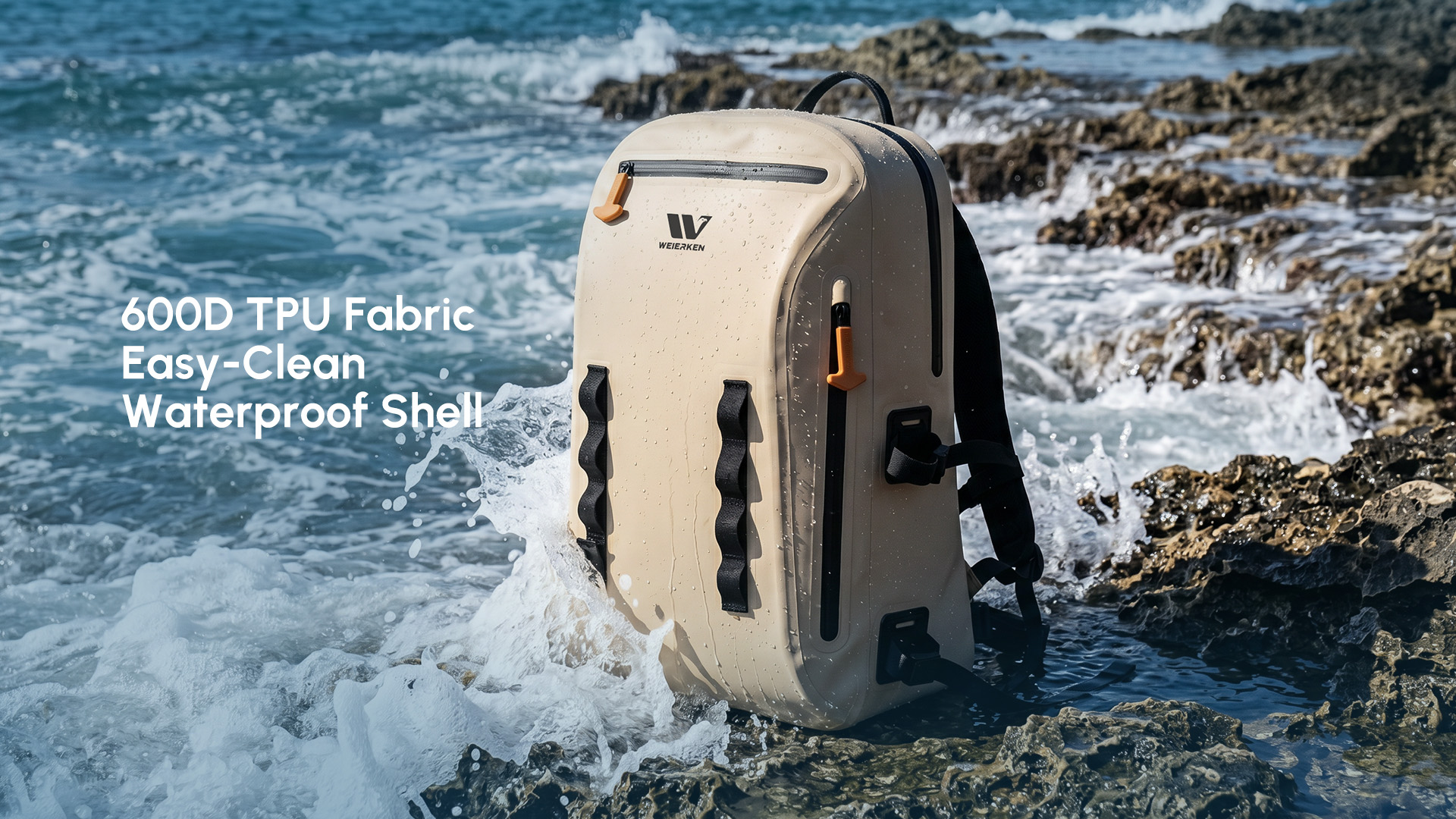
Rafting exposes gear to extreme water pressure, heavy friction, and unpredictable outdoor weather. A standard dry sack cannot handle these harsh conditions. When a bag leaks, gear gets ruined, safety gets compromised, and your brand reputation suffers.
Outdoor brands and equipment distributors need manufacturing partners who understand real water safety. At Weierken, we manufacture high-performance waterproof gear designed to survive extreme white-water environments. We build every bag to protect gear when failure is not an option.
Creating a market-leading commercial dry bag requires more than basic fabric assembly. It demands advanced technical welding, durable composite fabrics, and rigorous quality control. This guide breaks down the essential waterproof technologies and factory audit standards required to build a reliable ODM rafting bag line.
1. Waterproof Technology: The Engineering Behind Extreme Sealing
Traditional sewn seams create thousands of needle punctures in fabric. Even with basic seam tape, heavy hydraulic pressure during white-water rafting will push water through needle holes over time. High-performance manufacturing requires seam construction at the molecular level.
High-Frequency (HF) Welding vs. Hot Pressing
We use High-Frequency (HF) welding to manufacture every technical ODM rafting bag. HF welding applies electromagnetic energy to melt polymer coatings like TPU or PVC together under pressure. The process fuses two pieces of fabric into a single solid layer.
Molecular Bonding: HF welding eliminates needle holes entirely, creating an air-impermeable joint.
High Tear Resistance: Welded seams frequently offer stronger pull resistance than the raw base fabric itself.
Stress Distribution: Smooth weld lines distribute tension evenly across the seam during heavy impacts.
For complex curved sections or lightweight liner insertion, hot-press sealing machines supplement our HF welding lines to ensure uniform water resistance throughout the entire bag structure.
Material Selection: TPU vs. PVC for Rafting Bags
Selecting the right fabric compound impacts both product durability and brand positioning in the market. We guide our ODM clients through two primary heavy-duty fabric choices based on their target market:
Thermoplastic Polyurethane (TPU): TPU is the premier choice for premium outdoor brands. It retains high flexibility in freezing water down to -30°C, offers extreme abrasion resistance, and contains zero toxic plasticizers. It is light, durable, and environmentally friendly.
Heavy-Duty 500D/1000D PVC Tarpaulin: PVC provides high tensile strength and tear resistance at an economical cost. It resists puncture from sharp rocks and river debris, making it ideal for high-volume commercial outfitters and rental fleets.
Closure Systems and Ingress Protection (IP) Ratings
A waterproof fabric is only as secure as its opening mechanism. We implement two main entry systems depending on your target protection level:
Roll-top closure systems rely on stiffener bars inside the fold line. Rolling the top three to four times creates a physical barrier that stops water ingress under rapid splashes and short immersions (IPX6 rating).
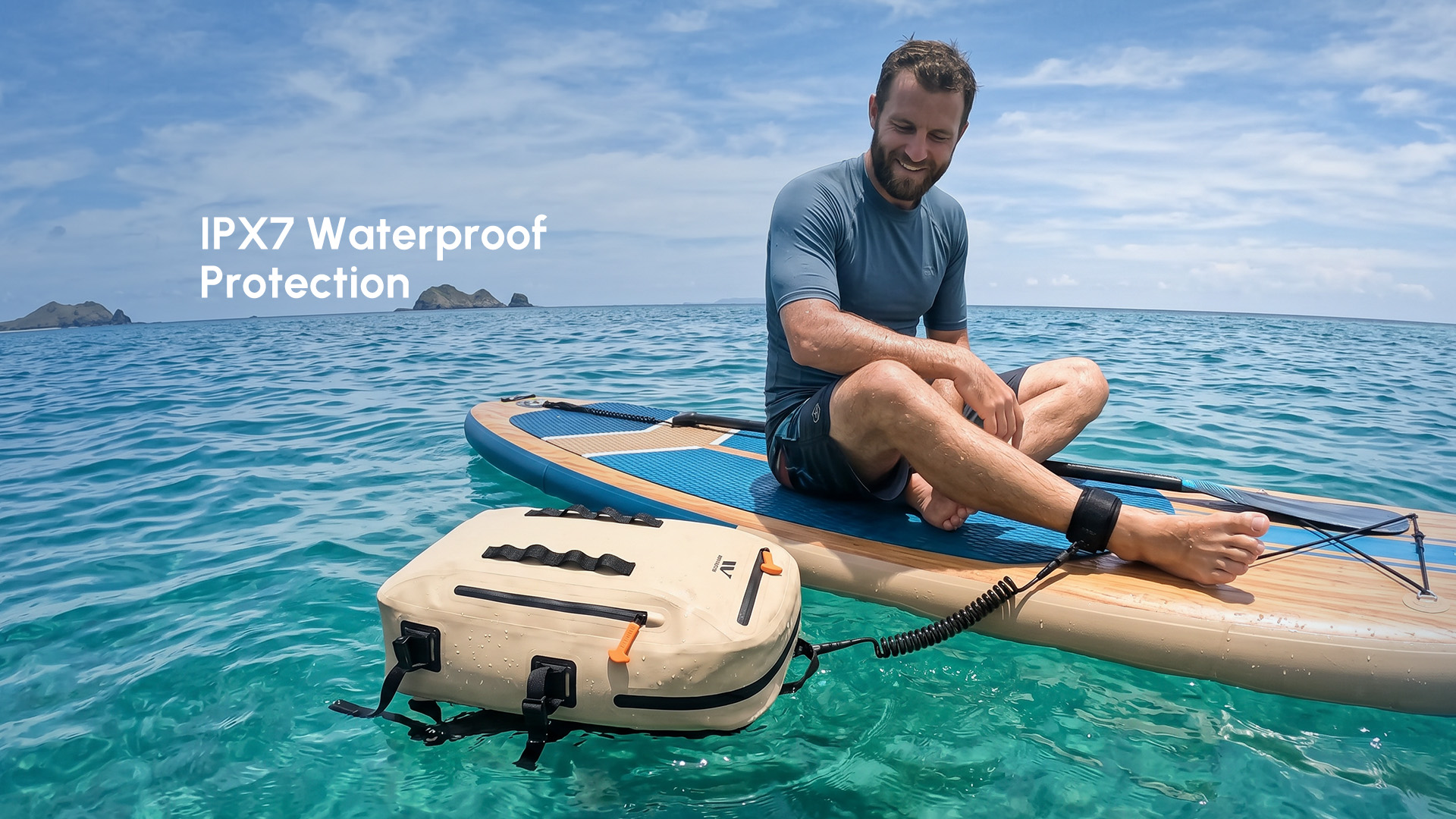
For complete submersions, such as flip scenarios in class IV rapids, we install airtight and gas-tight zippers. These specialized zippers create a pressure-proof seal capable of reaching IPX8 standards, keeping gear completely dry even when submerged underwater for hours.
2. Structural Engineering and Ergonomic Features
A reliable ODM rafting bag must handle heavy internal loads while strapped securely to a moving raft. Poor load engineering leads to torn shoulder straps and lost equipment.
Reinforcing Critical Stress Points
When an end-user packs a 50-liter dry bag full of heavy camping gear, lifting the bag by its handles creates massive localized stress. We apply secondary welded patches over every main attachment point.
Dual-Layer Weld Patches: We weld high-density TPU or PVC reinforcement patches behind every D-ring anchor and haul handle.
Box-X Box Stitching with Sealed Overlays: Where mechanical stitching is necessary on external padded straps, we seal the inner contact point with fully welded TPU patches to prevent leak paths.
Rafting-Specific Functional Hardware
Commercial rafters need features tailored specifically to river navigation. Weierken integrates specialized structural details directly into your customized ODM rafting bag designs:
Two-Way Air Release Valves: Users can twist the valve open to compress excess air out for compact storage, or blow air in to create buoyancy so the bag floats if dropped overboard.
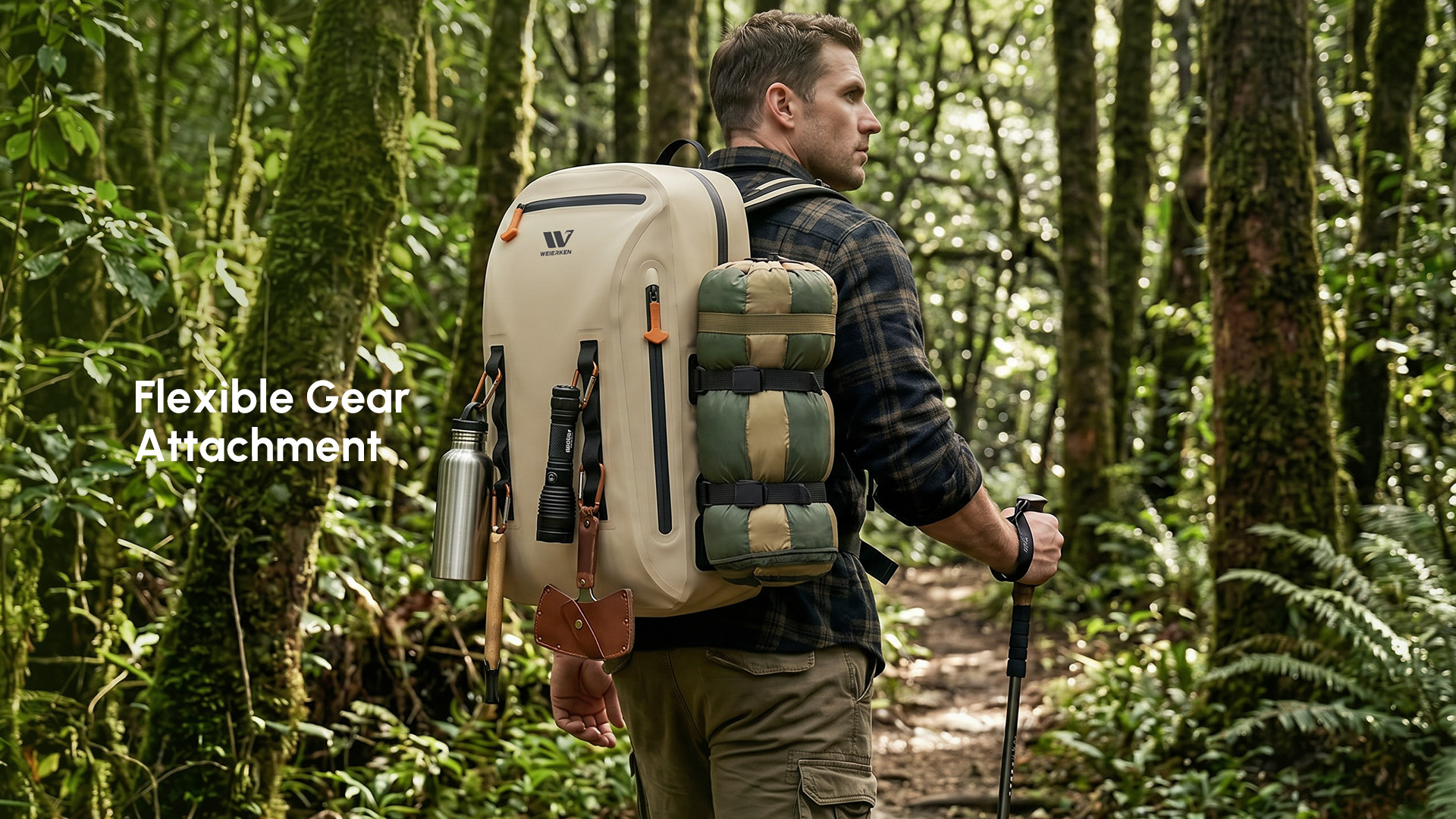
Marine-Grade Anchor Systems: Heavy-duty, UV-resistant D-rings and reinforced tie-down lash loops let users anchor bags firmly to raft frames using webbing straps.
Non-Absorbent Ergonomic Backpack Systems: We engineer shoulder straps and back panels using closed-cell EVA foam molded under high pressure. This foam provides cushioning without absorbing water, preventing the bag from gaining extra weight when wet.
3. Factory Auditing Guide: Evaluating an ODM Rafting Bag Manufacturer
Sourcing from an offshore supplier carries risk if you rely solely on product photos. Large gear brands and retail chains use strict factory auditing standards before placing production orders. Here is what gear buyers must verify when auditing an ODM rafting bag manufacturing plant.
Machinery and Infrastructure Audit
A qualified manufacturing plant must operate specialized equipment dedicated to technical airtight gear production. Standard garment sewing lines cannot produce reliable technical dry bags.
HF Welding Capacity: Verify the factory operates high-tonnage HF welding machinery capable of processing long seam lines in single continuous cycles.
Precision Tooling Department: Check if the factory creates custom copper and aluminum welding molds in-house to speed up prototype development.
Testing Equipment: Ensure the facility owns dedicated hydrostatic pressure testers, pull-strength tensile testers, and full-immersion testing tanks.
Quality Management System (QMS) and Leak Testing
Defects in waterproof gear destroy end-user trust rapidly. A top-tier factory must enforce clear, multi-stage Quality Assurance protocols during daily assembly.
At Weierken, every single ODM rafting bag unit undergoes a mandatory 100% air-tightness inspection. Our staff inflates each finished bag to a designated pressure rating and places it on a monitoring line for 24 hours. If any bag drops pressure due to micro-leakage along seams or air valves, the unit is removed and destroyed.
International Compliance and Auditing Standards
Global retail platforms and commercial distributors require compliance certifications to verify social responsibility and material safety. When auditing an ODM rafting bag facility, inspect these core certifications:
ISO9001: Confirms a standardized quality management system governs every step of production.
BSCI / SMETA / Sedex: Validates fair labor practices, safe workplace standards, and ethical operational policies across the production floor.
Chemical Compliance Reports: Verify materials comply with REACH, California Proposition 65, and PFAS-free standards to ensure end-user safety.
4. The ODM Journey: From Design Concept to Final Delivery
Building a custom product line requires structured execution. We streamline the product development workflow into four clear operational stages to ensure rapid turnarounds and zero engineering mistakes.
Step 1: Technical Specs and 3D Modeling
You provide your initial design ideas, Target Capacity (e.g., 30L, 50L, 80L), and required IPX rating. Our engineering team builds detailed 3D Tech Packs that define seam allowances, hardware placement, and material specs.
Step 2: Custom Tooling and Rapid Prototyping
Once you approve the tech pack, our tooling shop fabricates custom high-frequency welding molds. We build functional prototypes within 5 to 7 business days, giving you real physical samples to inspect and evaluate.
Step 3: Rigorous Environmental Testing
We test prototype samples under harsh stress conditions to locate structural weaknesses before mass production begins:
Tensile Drop Tests: Dropping loaded bags from set heights to test joint structural strength.
Hydrostatic Water Tests: Exposing seams to continuous water pressure to verify seal integrity.
Cold-Crack Resistance Tests: Flexing materials in freezing chambers to ensure zero brittleness or structural failure.
Step 4: Mass Production and Quality Inspection
After sample sign-off, mass production starts under strict In-Line Quality Control (IPQC). Independent inspectors examine the batch according to AQL 2.5 criteria before final packaging and shipping.
FAQ: ODM Rafting Bag Manufacturing
What is the typical Minimum Order Quantity (MOQ) for an ODM rafting bag project?
Our standard MOQ for a custom ODM rafting bag project starts at 500 to 1,000 units per design, depending on material color customization and specific hardware requirements. We offer flexible options for established outdoor brands launching new product ranges.
How do you ensure zero micro-leakage across large production runs?
We perform 100% inflation testing on every bag before packing. We inflate finished bags with compressed air and hold them under observation for 24 hours. Any bag showing a pressure drop fails inspection instantly, keeping defective units out of your shipment.
Which material is better for extreme cold water: TPU or PVC?
TPU performs significantly better in sub-zero and cold-water environments. While PVC can stiffen and crack in extreme cold, TPU remains flexible, durable, and highly crack-resistant down to -30°C.
Can Weierken customize hardware, logos, and color combinations on ODM designs?
Yes. We offer complete custom branding solutions. You can select custom fabric pantone colors, add screen-printed or reflective logos, and specify specialized hardware like ITW buckles, airtight zippers, and customized air valves.
How long does the tooling and sampling process take for a custom bag design?
Custom HF welding mold development and initial prototype fabrication take 5 to 7 business days once 3D tech specs are finalized. Full production orders typically ship within 35 to 45 days after sample approval.
Does Weierken hold global factory audit certificates for international retail distribution?
Yes. Our manufacturing facilities hold ISO9001 and BSCI compliance certifications. Our raw materials meet international REACH, California Prop 65, and PFAS-free environmental standards required by European and North American buyers.
Build Your Next High-Performance Rafting Bag Line
A successful waterproof product line requires reliable welding technical expertise, durable material selections, and dependable manufacturing standards. Partnering with an experienced factory ensures your gear performs flawlessly on every river expedition.
At Weierken, we help global outdoor brands convert complex gear concepts into market-ready products. Contact our engineering team today to discuss your project, request custom technical specs, or review our factory audit documentation.
Ready to start your custom project? Send us an inquiry today to receive a free Waterproof Tech Spec Guide and request a customized sample kit!