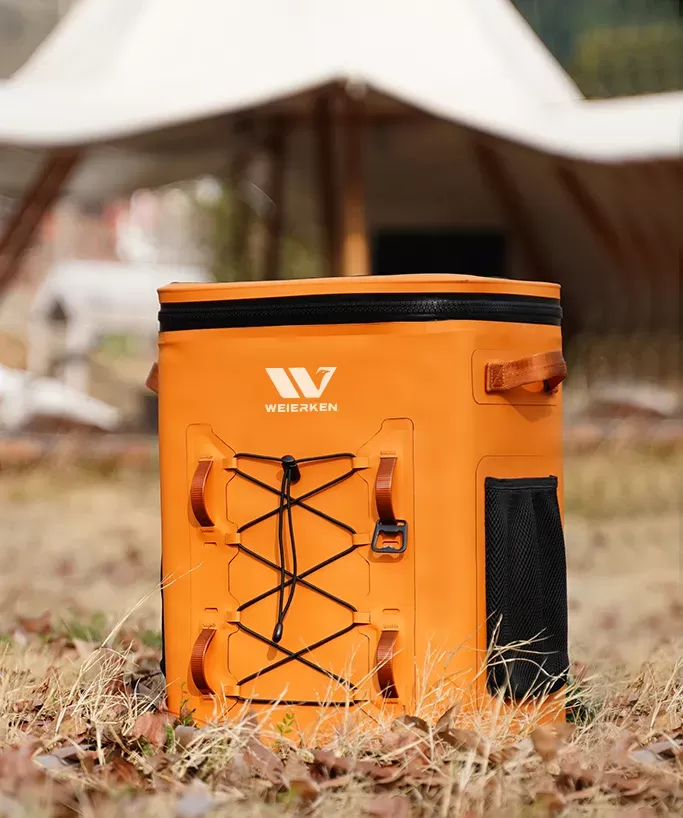

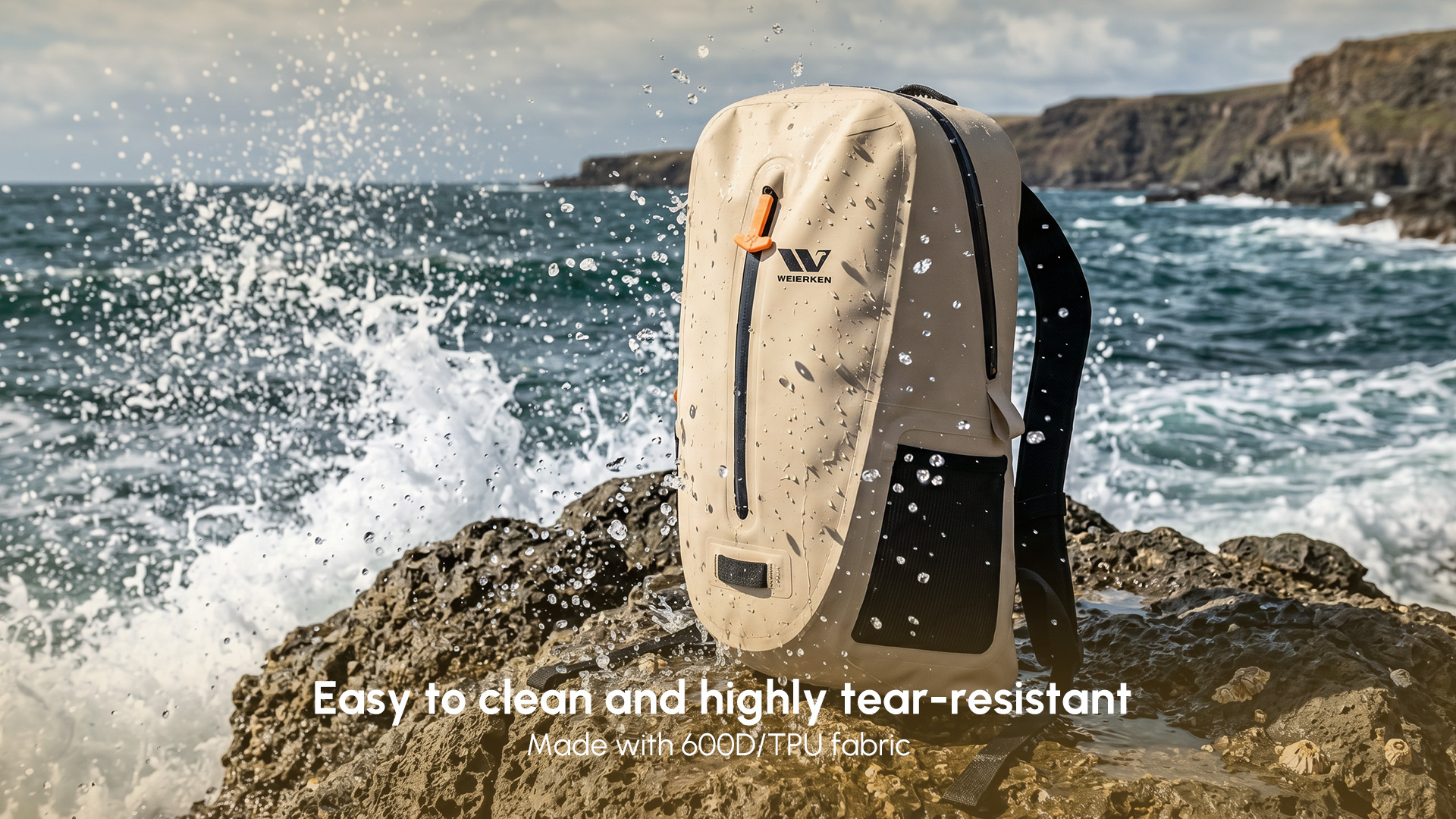
Global demand for kayaking and water sports gear keeps surging. Paddleboarders, kayak rental fleets, and DTC outdoor brands require durable waterproof storage that withstands harsh marine environments.
However, global procurement managers face mounting pressure. You contend with rising trade tariffs, volatile ocean freight costs, inconsistent factory quality control, and strict environmental regulations across Western markets.
Choosing the wrong factory leads to leaking seams, ocean delays, and eroded profit margins. Sourcing high-performance outdoor gear requires a structured approach.
This guide provides a practical framework for sourcing high-performance waterproof bags. We also examine how Weierken supports global brands through advanced engineering and a flexible dual-factory supply chain.
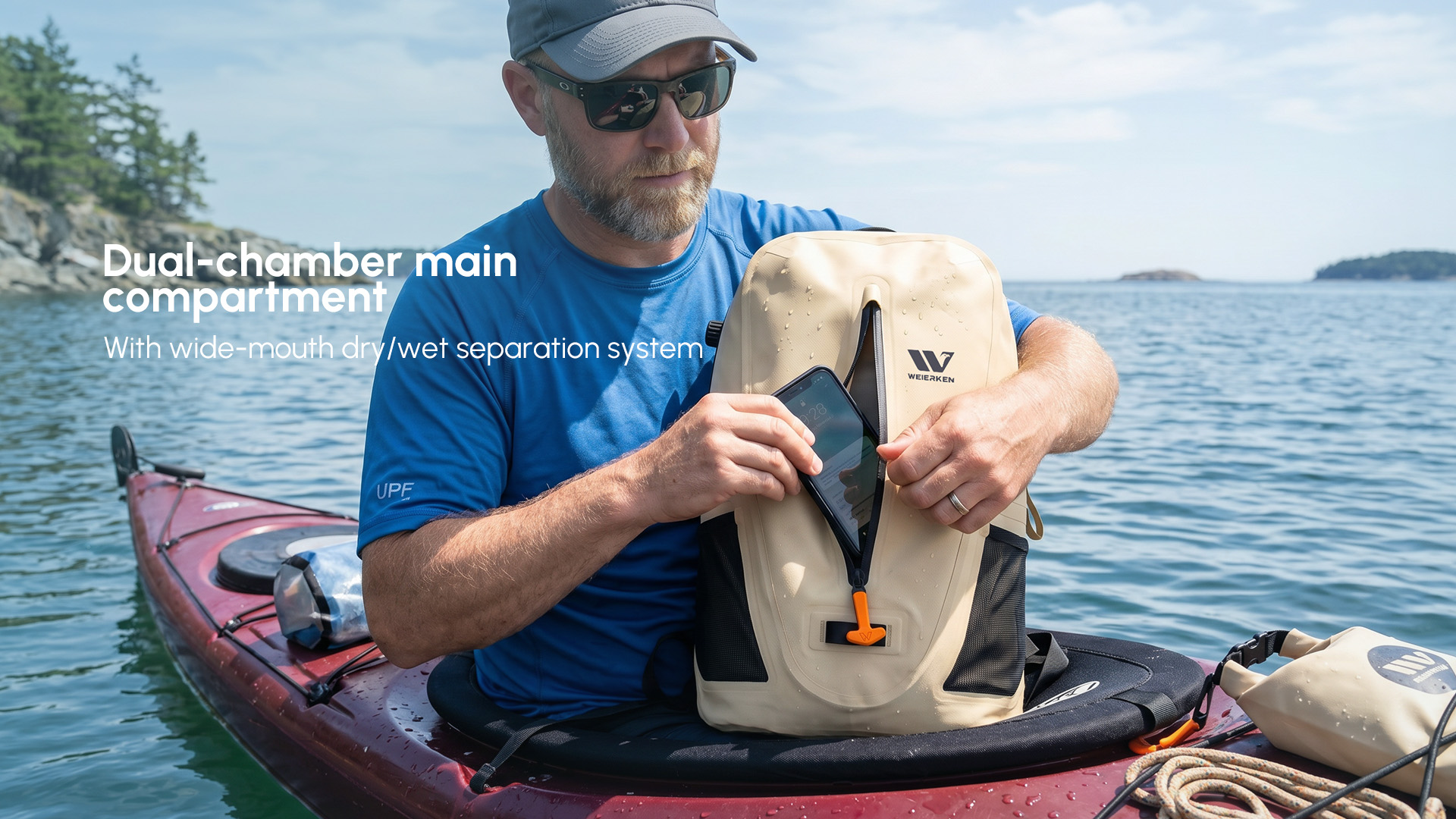
4 Core Criteria for Evaluating a Custom Kayak Dry Bag Manufacturer
To launch a successful product line in 2026, you must evaluate potential manufacturing partners beyond basic unit pricing. Focus on these four technical and operational benchmarks.
1. Advanced Waterproof Welding Technology and R&D Capabilities
Traditional stitched and taped seams fail under continuous water pressure. Kayaking gear demands full immersion protection (IPX7 or IPX8 standards) against white-water spray and deep submersion.
Your production partner must operate as a true high-frequency welded dry bags manufacturer. High-frequency (RF) welding fuses TPU (Thermoplastic Polyurethane) or PVC fabrics at the molecular level, creating permanent, air-tight bonds without needle holes.
At Weierken, our engineering team brings over 20 years of technical expertise to complex bag builds. We operate a dedicated prototyping workshop that delivers standard custom samples in 3 to 7 days and complex technical outdoor bags in 12 to 30 days.
This rapid prototyping capability allows your product development team to test, refine, and finalize functional waterproof bags before committing to full-scale production runs.
2. Dual-Base Manufacturing to Bypass Tariff Barriers
Relying on a single manufacturing origin creates massive risk for import-heavy businesses. US and European importers face fluctuating trade policies and heavy duty rates on outdoor goods produced in China.
To maintain competitive retail pricing and protect profit margins, top brands partner with an OEM/ODM kayak dry bag supplier operating across multiple trade zones.
Weierken solves trade uncertainty through our China + Cambodia dual-factory model:
China Factory: Acts as our core R&D hub, raw material sourcing center, and quick-turnaround production center.
Cambodia Factory: Offers lower tariff rates for US and European exports, helping outdoor brands lower landed costs legally and effectively.
Our Cambodia dry bag factory lower tariff structure gives your brand a major competitive edge in pricing while maintaining identical engineering and quality standards.
3. Stringent Quality Control and International Compliance
High warranty return rates destroy retail margins and damage brand trust. A single batch of leaking dry bags can ruin a brand's reputation online.
Your custom kayak dry bag manufacturer must enforce rigorous quality control at every stage of production. Weierken maintains a multi-tier QC system that consistently achieves a 99.5% First-Pass Yield Rate.
Environmental compliance is equally vital. Global buyers now demand verified eco-friendly materials and audited labor conditions.
Weierken maintains extensive international certifications to support your brand image:
BSCI & SEDEX: Verified ethical workplace standards and social responsibility.
ISO 9001: Standardized quality management systems.
REACH Compliance: Safe chemical and material standards for European markets.
GRS & rPET Options: Eco-friendly recycled fabric integration for sustainable gear lines.
4. End-to-End DDP Logistics Services
Managing ocean freight, customs clearance, port terminal handling, and import tax paperwork drains internal resources. Customs delays can cause you to miss seasonal retail windows entirely.
Working with a partner that offers DDP custom outdoor dry bags simplifies your supply chain operations dramatically.
Under DDP (Delivered Duty Paid) terms, Weierken manages the entire shipping workflow. We handle factory dispatch, ocean transport, customs filing, duty payment, and final truck delivery directly to your domestic distribution center.
Empowering Product Development and Market Execution
Top outdoor gear brands do not just buy factory capacity. They seek long-term technical partners capable of refining product functionality and streamlining communication.
Market-Driven Engineering and Innovation
A specialized custom waterproof bag factory for kayaking does more than copy client tech packs. They refine structural details based on real-world water sports usage.
Weierken actively tracks global kayak equipment trends. We help clients incorporate ergonomic carry systems, lightweight rPET materials, specialized valve placements, and heavy-duty deck-attachment straps.
Our engineering team reviews your initial CAD files or physical samples to identify potential failure points. By recommending structural improvements early, we save your brand thousands of dollars in tooling modifications.
Functioning as an Extension of Your Team
Time zone differences and language barriers often slow down overseas manufacturing projects. Sourcing managers need clear, rapid communication to stay on schedule.
Weierken acts as a direct extension of your product team. Our bilingual project leaders possess fluent English skills and over two decades of international project management experience.
We provide transparent project schedules, weekly video updates, and structured milestone tracking. This systematic management ensures your 2026 product launch stays on time and within budget.
5-Step Checklist for Sourcing Your Kayak Dry Bags
Follow this practical sourcing workflow when onboarding a new custom kayak dry bag manufacturer for your upcoming seasonal line.
Step 1: Technical & Tariff Alignment: Define waterproof specs (IPX6, IPX7, or IPX8), target volumes, and select your manufacturing base (China for rapid R&D or Cambodia for optimized tariff rates).
Step 2: Prototyping & Submersion Testing: Utilize specialized sample facilities to produce prototypes in 3 to 30 days. Conduct full immersion and pressure testing on welded seams.
Step 3: Contract & Compliance Sign-Off: Establish clear Quality Assurance (QA) standards, confirm BSCI or REACH requirements, and lock in DDP delivery timelines.
Step 4: Mass Production & 99.5% Quality Assurance: Execute raw material incoming checks, inline RF welding inspections, and 100% air-leak testing before packing.
Step 5: DDP Freight & Direct Warehouse Delivery: Receive fully cleared, custom-packaged dry bags delivered straight to your warehouse ready for retail distribution.
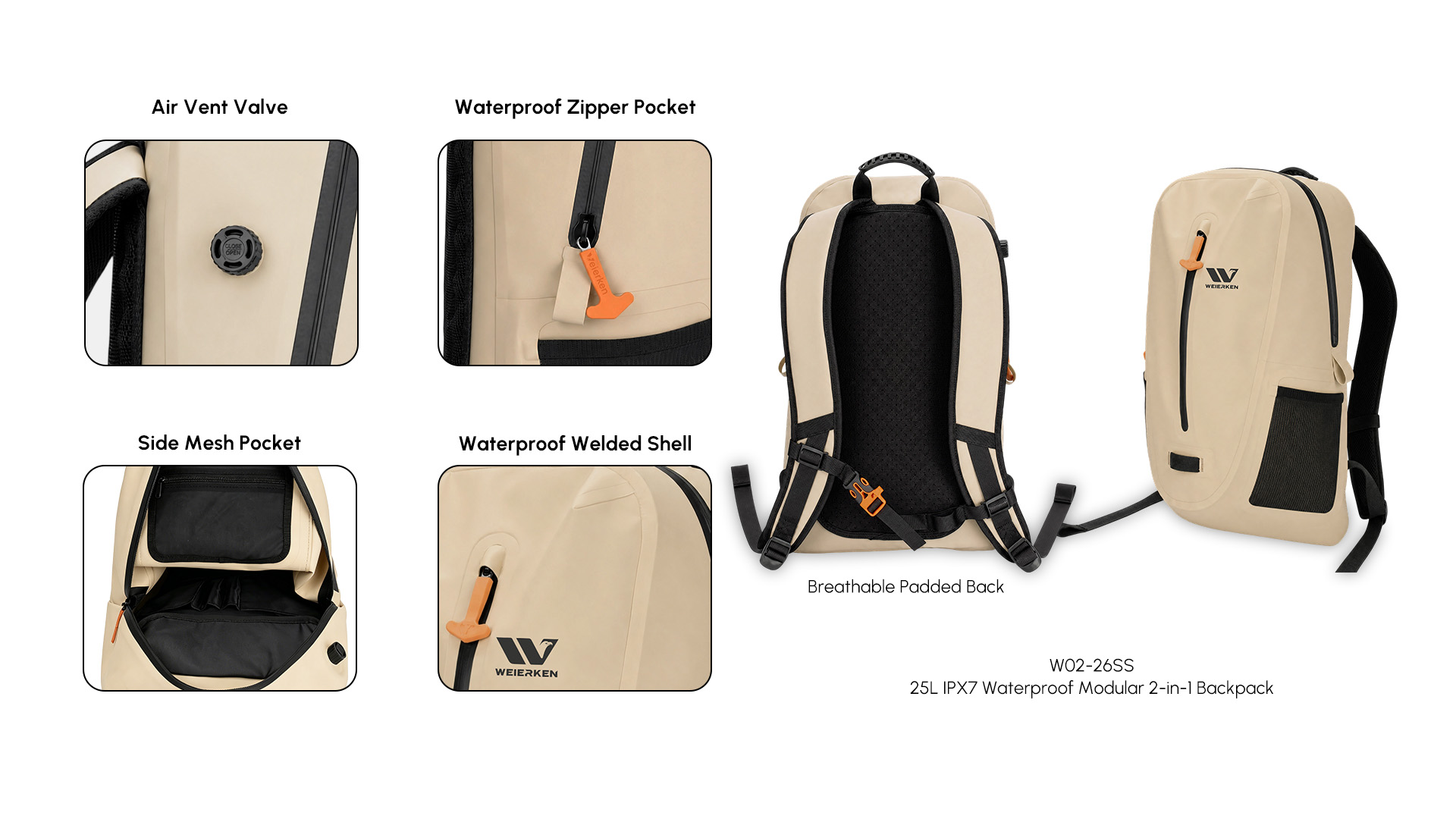
Partner with a Reliable Custom Kayak Dry Bag Manufacturer
Selecting your custom kayak dry bag manufacturer for 2026 is a critical strategic decision. You need a partner that reduces trade risks, ensures seam reliability, and delivers products reliably to market.
Weierken combines 20 years of specialized outdoor bag manufacturing with a dual-factory infrastructure designed to lower import duties and protect your bottom line.
Ready to upgrade your outdoor product line for 2026? Contact Weierken today to request a custom quote, schedule a sample evaluation, or discuss tariff-saving options from our Cambodia factory.
Frequently Asked Questions (FAQ)
1. Why is RF welding necessary for manufacturing custom kayak dry bags?
RF (Radio Frequency) welding uses electromagnetic energy to melt and fuse thermoplastic materials at a molecular level. Unlike standard stitching, which creates thousands of needle holes, RF welding creates seamless, airtight bonds. This technology is essential for kayak dry bags that must withstand continuous water splash and full submersion.
2. How does Weierken's Cambodia dry bag factory help reduce tariff costs?
Products manufactured in and exported from Cambodia enjoy preferential duty treatment under various trade agreements in major Western markets. By moving mass production to our Cambodia facility, brands importing into North America and Europe can lower tariff expenses compared to direct China exports.
3. What is the typical lead time for custom sample creation?
Weierken operates an agile prototyping room. Standard custom dry bags take between 3 and 7 days to complete. Complex technical bags featuring customized hardware, ergonomic harnesses, or special zipper integrations take between 12 and 30 days.
4. What eco-friendly materials can be used for custom kayak bags?
We offer full support for sustainable materials, including GRS-certified rPET (recycled polyester), biodegradable TPU coatings, and PVC-free fabrics. These materials meet strict REACH and environmental standards without sacrificing waterproof performance or durability.
5. Can Weierken develop custom dry bags from basic design concepts or sketches?
Yes. Our engineering team has 20 years of industry experience turning rough sketches, mood boards, or simple tech packs into fully functional prototypes. We assist with material selection, seam construction, attachment point engineering, and graphic application.
6. What are the advantages of choosing DDP shipping for B2B bag orders?
DDP (Delivered Duty Paid) shipping means Weierken manages the entire cross-border freight process. We handle export clearance, ocean freight, import duties, customs filings, and final delivery to your warehouse. This service eliminates unexpected fees and frees your logistics team from handling customs paperwork.
7. How does Weierken guarantee a 99.5% QC pass rate on waterproof bags?
We enforce rigorous quality checks at four stages: incoming material inspection, inline seam welding checks, 100% inflation/submersion testing on finished bags, and pre-packing random sampling. This multi-layered process prevents leaking bags from ever leaving our factory floor.