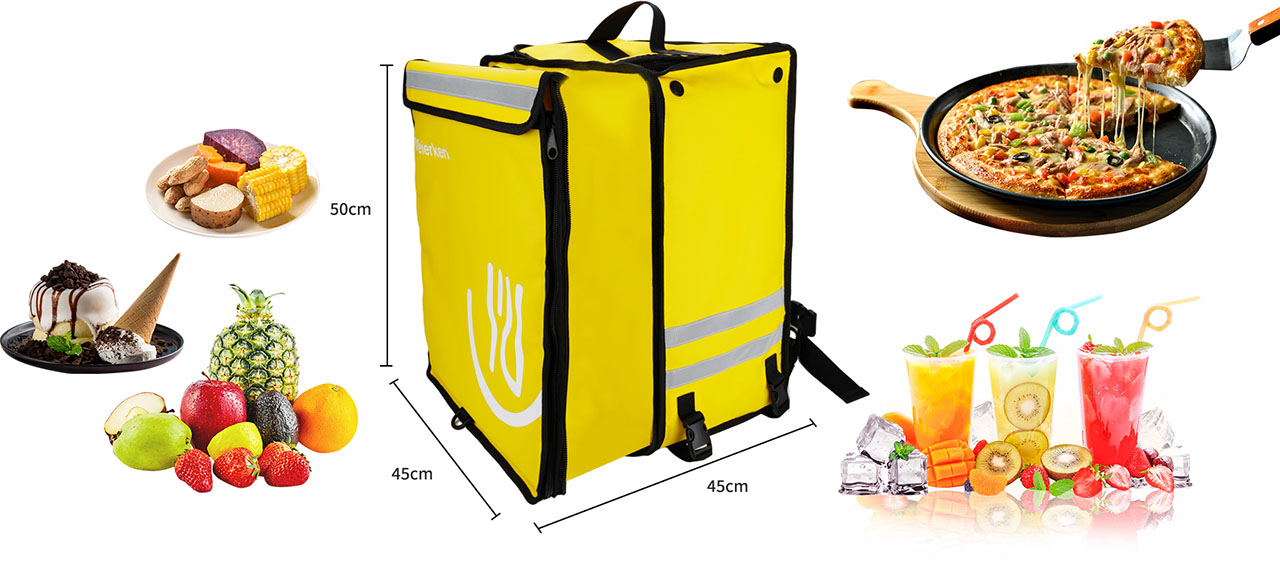
Imagine a perfectly crafted salad: crisp greens, vibrant vegetables, and delicate proteins. Now imagine it arriving at a customer’s door after a 30-minute journey in the back of a delivery vehicle. The difference between a delightful meal and a soggy, disappointing one often hinges on a single, critical component—the salad delivery bag.
This unsung hero of the fresh food logistics chain is more than just a container; it’s a mobile micro-environment. For businesses, the choice of a salad delivery bag distributor is a strategic decision impacting brand perception, operational efficiency, and sustainability goals. Companies like Weierken have evolved beyond mere suppliers, becoming essential partners who understand that in the race for freshness, the right packaging is the first and last line of defense.
The ecosystem supporting fresh food delivery is complex and interconnected. Within this system, a specialized distributor plays five pivotal, yet often overlooked, roles. Let’s explore how they empower each key player in the landscape.
For Restaurant Chains & Healthy Food Brands
For cafes and health-focused eateries, the delivery experience is a direct extension of the brand. The unboxing moment matters.
A generic, flimsy bag screams indifference. Conversely, a custom-insulated bag featuring a restaurant’s logo and colors turns every delivery person into a brand ambassador. It builds top-of-mind awareness in neighborhoods and on social media. Weierken, for instance, works with brands to transform standard packaging into a powerful marketing tool that reinforces premium quality before the container is even opened.
Performance is non-negotiable. The core battle is against temperature fluctuation and condensation. Distributors offer solutions ranging from basic foil-lined bags to advanced multi-layered insulated materials with non-toxic, reflective interiors. The key is balancing cost with performance. A high-grade, biodegradable insulated bag might have a higher unit cost but can reduce refunds for spoiled meals and enhance customer loyalty, improving the overall lifetime value of a client.
For Fresh Food E-commerce & Delivery Platforms
Platforms managing thousands of daily salad orders live and die by data, especially during the “last mile.”
Modern salad delivery bags are data-generation tools. Advanced designs maintain safe temperatures for precise windows—often 45-60 minutes for cold items. A reliable distributor provides not just bags, but performance metrics: how long a salad stays at or below 4°C (39°F) in summer heat. This data is crucial for platforms to optimize delivery routes and set realistic service promises, directly reducing waste and customer complaints.
Sustainability is a major platform differentiator. Distributors are now central to building circular supply models. This includes programs for reusable delivery bags that are collected, sanitized, and redistributed, or sourcing certified compostable bags that break down efficiently in commercial facilities. Partnering with a distributor like Weierken that prioritizes sustainable material sourcing helps platforms meet ambitious ESG targets and appeal to environmentally conscious consumers.
For Corporate Catering & Meal Prep Services
Delivering 500 salad bowls to an office park by noon is a logistical feat. Consistency and efficiency are everything.
Standardization of packaging is a silent efficiency driver. Using one optimized bag size that fits all meal-prep containers streamlines the packing process. A proficient salad delivery bag distributor assists in designing a streamlined packaging protocol—from kitchen pack station to transport trolley to delivery vehicle. This reduces handling time, minimizes errors, and ensures every meal looks and travels identically.
For caterers, food safety is paramount. The right bag employs passive temperature control technology, such as high-density insulation or phase-change materials (PCMs). These technologies work to keep food out of the “danger zone” (4°C – 60°C / 40°F – 140°F), preserving not just safety but also crucial textural elements like the crunch of lettuce or the firmness of boiled eggs. It’s a direct investment in quality assurance.
For Food Packaging & Logistics Suppliers
To broader suppliers, a salad delivery bag distributor acts as a crucial intermediary and innovator.
They are the middleman enabler, connecting material scientists with end-users. They don’t just sell a product; they translate real-world operational challenges from restaurants and platforms back to manufacturers. This feedback loop is vital for driving relevant innovation. Weierken exemplifies this role by curating a portfolio of solutions that match specific logistical needs, from high-density urban delivery to long-distance catering transport.
The frontier of packaging is intelligent. Trends point towards integrated smart labels that indicate temperature abuse, or bags with lightweight, sustainable aerogel insulation. A forward-thinking distributor actively scouts and tests these innovations, providing clients with access to next-generation technology that can offer a competitive edge in a crowded market.
For ESG & Sustainability Advocates
The impact of packaging choices extends far beyond the immediate delivery.
Every single-use plastic container avoided represents a reduction in carbon emissions from production and waste processing. High-performance insulated delivery bags directly combat food waste by ensuring more meals arrive in edible condition. A distributor focused on green solutions provides tangible tools to shrink the carbon footprint of the food delivery industry, one salad at a time.
Change is driven by collective action. When a major platform or restaurant chain, guided by its distributor, adopts a new compostable material or reusable system, it sets a new industry benchmark. This B2B collaboration creates scalable demand for sustainable materials, encouraging more manufacturers to enter the space, driving down costs, and making eco-friendly options the new norm. Weierken’s collaboration with large-scale clients demonstrates how distributor partnerships can accelerate industry-wide environmental progress.
In conclusion, the journey of a salad from kitchen to customer is a delicate ballet of temperature, time, and technology. The specialized salad delivery bag distributor is the choreographer behind the scenes, ensuring each participant in the ecosystem—from brand to end consumer—performs at their best. By providing tailored solutions that address branding, efficiency, safety, innovation, and sustainability, partners like Weierken prove that in the modern food economy, the bag is not just a commodity; it’s a critical strategic asset.
Frequently Asked Questions (FAQs)
Q1: What exactly does a salad delivery bag distributor do?
A1: A salad delivery bag distributor is a specialized intermediary that sources, supplies, and often co-designs insulated packaging solutions for the fresh and cold food delivery industry. They connect manufacturers with end-user businesses (like restaurants or meal-prep services), providing expertise on materials, cost-effective sourcing, customization, and performance metrics to ensure food arrives fresh and safe.
Q2: How can a distributor help control costs for my growing salad business?
A2: A knowledgeable distributor helps balance upfront unit cost with total cost of ownership. They can recommend the most cost-effective material (e.g., specific insulation thickness) for your average delivery duration, reducing waste from over-engineering. They also help minimize losses from food spoilage and customer refunds by ensuring reliable performance, and offer volume-based pricing models for scalable growth.
Q3: Are custom-branded delivery bags worth the investment?
A3: Absolutely. Custom-branded bags from your salad delivery bag distributor transform a utility item into a mobile marketing tool. They enhance brand recognition with every delivery, project a professional image, and can improve customer perception of quality and care. This investment directly contributes to customer retention and brand equity in a competitive market.
Q4: What should I look for when choosing a distributor for sustainable packaging?
A4: Look for a distributor with a clear, verified portfolio of sustainable options—such as bags made from recycled content, commercially compostable materials, or reusable system programs. Ask for certifications (like BPI, TUV) and tangible data on end-of-life options. A good distributor will help you navigate the trade-offs between different eco-friendly materials and their real-world performance.
Q5: Can a distributor provide solutions for both hot and cold salad components?
A5: Yes, a full-service salad delivery bag distributor often offers dual-compartment or multi-zone bags designed with separate insulating barriers. These allow you to keep cold ingredients (like greens) crisp and warm components (like grilled chicken or grains) at serving temperature in the same bag, solving a common challenge for complex salad and bowl deliveries.