
For logistics companies, restaurant chains, and delivery fleet operators, the equipment used to transport goods directly impacts customer satisfaction and operational efficiency. Securing high-performance, insulated delivery bags requires more than just finding a supplier; it requires partnering with a specialized food courier backpack factory capable of engineering reliable OEM solutions. This overview outlines the critical specifications, manufacturing processes, and quality control measures procurement managers must consider when sourcing commercial-grade delivery backpacks.
Why Partner Directly with a Specialized Manufacturing Facility?
The global surge in food delivery services has driven a corresponding need for specialized thermal transport solutions. A professional food courier backpack factory goes beyond basic assembly; it provides engineered solutions designed specifically for the rigorous demands of constant transport. Partnering directly with the manufacturer offers distinct B2B advantages:
Comprehensive OEM Services: Direct factory partnerships allow for complete structural and aesthetic customization, from exterior dimensions and insulation thickness to bespoke compartmentalization.
Scalable Production: Established facilities possess the infrastructure to handle fluctuating order volumes, ensuring that large-scale fleet rollouts are met with consistent supply.
Stringent Quality Control: Direct oversight of the manufacturing process ensures standardized material sourcing and consistent adherence to thermal performance metrics.
Critical Specifications for High-Performance Delivery Bags
When evaluating a food courier backpack factory, your technical requirements should focus on specifications that dictate field performance. A reliable manufacturer should easily meet the following non-negotiable standards:
1. Thermal Insulation Technology
The core function of any delivery backpack is temperature retention. Procurement guidelines should specify the exact insulation materials required:
EPE Foam (Expanded Polyethylene): A lightweight, highly durable insulator that prevents heat transfer effectively.
PEVA Lining: Often utilized as the interior layer, offering a food-safe, leak-proof, and easy-to-clean surface.
Performance Metrics: Commercial bags must reliably maintain hot temperatures above 60°C (140°F) and cold temperatures below 4°C (40°F) during standard transit windows.
2. Material Durability and Construction
Delivery gear faces continuous exposure to weather elements, abrasion, and heavy loads. The materials chosen must withstand commercial use:
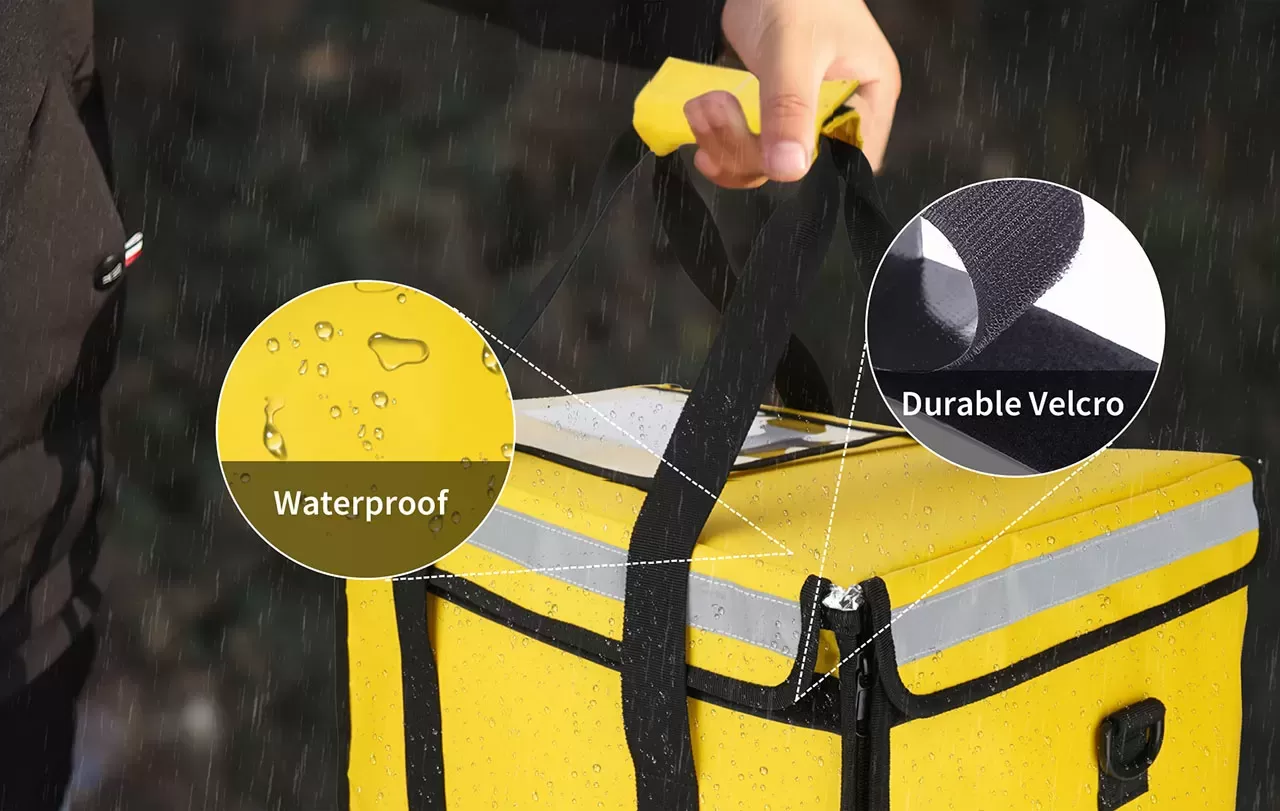
Outer Fabric: 600D Oxford fabric is an industry standard, favored for its high tear strength, abrasion resistance, and excellent water repellency.
Structural Reinforcement: High-stress points—such as shoulder strap anchor points, zippers, and base panels—must feature reinforced stitching and heavy-duty hardware to prevent premature failure.
3. Ergonomics and Fleet Efficiency
Rider fatigue directly impacts delivery times and safety. A capable food courier backpack factory engineers bags with the end-user in mind:
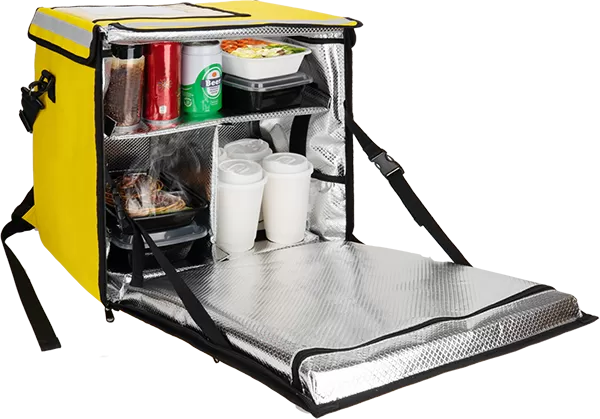
Internal Compartmentalization: Modular dividers to separate hot and cold items securely.
Ventilation Systems: Breathable mesh back panels and adjustable, padded ergonomic straps to support weight distribution for bicycle and motorcycle couriers.
Accessibility: Top and front-loading options with oversized zippers for rapid packing and unpacking.
Solving Supply Chain Pain Points with Weierken
Many B2B buyers face challenges with inconsistent batch quality, delayed production timelines, or lack of customization flexibility from generic suppliers. This is where specialized expertise becomes crucial.
At weierken, we operate as a dedicated food courier backpack factory, addressing these pain points through a meticulously structured OEM process. We understand that a delivery bag is an extension of your corporate brand. By maintaining strict oversight over material sourcing and employing robust in-line quality assurance protocols, weierken ensures that every unit—whether it is a small custom batch or a massive fleet deployment—meets exact technical specifications and branding guidelines.
The OEM Customization Process
Engaging in custom manufacturing requires a structured workflow to guarantee the final product aligns with operational needs. A standard OEM process includes:
Technical Consultation: Defining exact dimensions, fabric specifications, Pantone color matching, and logo application methods (printing or embroidery).
Rapid Prototyping: The food courier backpack factory produces physical samples to test structural integrity, fit, and thermal performance prior to mass production.
Material Approval: Final sign-off on the specific EPE foam thickness, zipper quality, and outer fabric durability.
Mass Production & QC: Rigorous inspections during the assembly phase to check stitching integrity and hardware alignment.
Future Trends in Delivery Bag Manufacturing
The manufacturing sector for delivery logistics continues to innovate. Forward-thinking procurement strategies should account for emerging features:
Sustainable Materials: A growing shift towards high-durability fabrics made from recycled plastics (rPET) to meet corporate sustainability goals.
Multi-Modal Adaptability: Modular strap systems that allow seamless transition from backpack wear to secure motorcycle rack mounting.
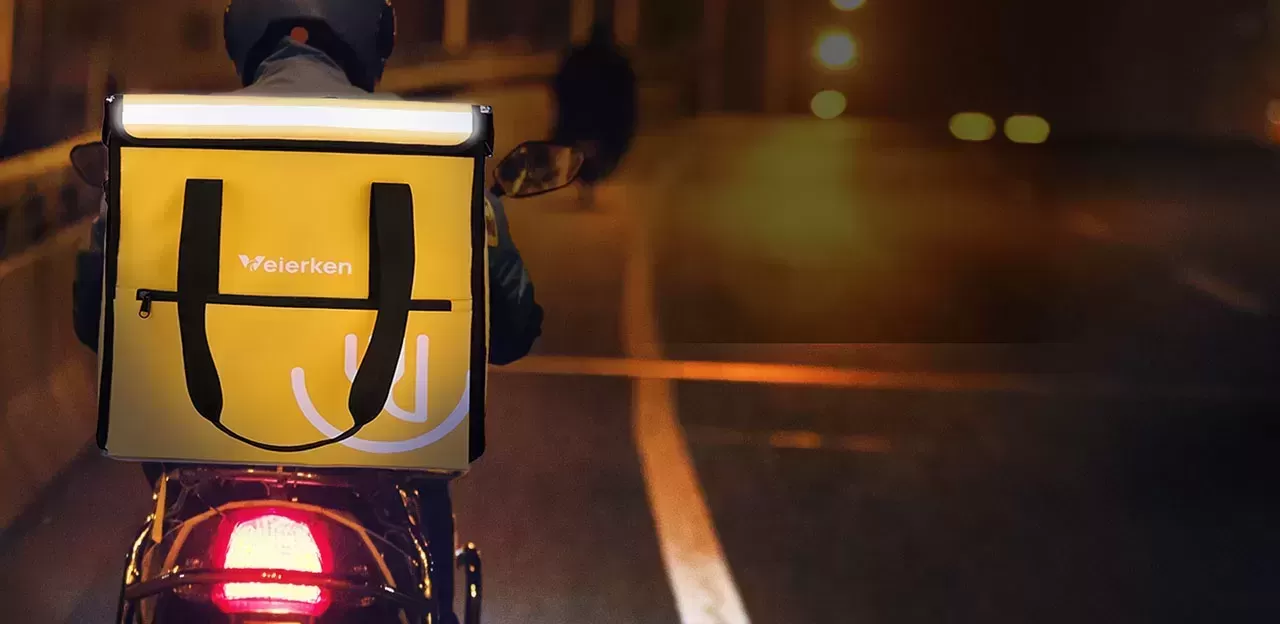
Enhanced Safety Features: Integration of high-visibility reflective panelling and LED attachment points for nighttime rider safety.
Frequently Asked Questions (FAQ)
Q1: What customization options can a professional food courier
backpack factory provide?
A1: A specialized factory
offers complete OEM customization. This includes external dimensions, specific
insulation thickness, fabric types (e.g., 600D Oxford), interior dividers, cup
holders, and precise brand logo printing or embroidery.
Q2: How long should a commercial delivery bag retain food
temperature?
A2: While it depends on the specified
insulation thickness (usually EPE foam) and ambient weather, a high-quality
commercial bag is engineered to maintain safe hot or cold temperatures for at
least 45 to 60 minutes of transit time.
Q3: How do we ensure consistent quality for large fleet
orders?
A3: Consistent quality is achieved by
partnering with a manufacturer like weierken that implements strict in-line
quality control (QC) protocols, utilizes standardized material sourcing, and
requires a rigorous sample-approval process before mass production begins.
Q4: Are these delivery backpacks fully
waterproof?
A4: Most commercial bags are highly
water-resistant rather than fully submersible. They utilize treated exterior
fabrics and water-resistant zippers to protect contents from heavy rain and
spills during standard delivery operations.
Q5: Can the factory accommodate different internal configurations for
diverse menus?
A5: Yes. Professional factories can
design bags with adjustable, insulated velcro dividers, allowing fleet operators
to reconfigure the internal space to securely hold pizza boxes, drink carriers,
or standard food pans simultaneously.
Ready to Upgrade Your Delivery Fleet?
Ensure your food arrives at the perfect temperature while promoting your brand with durable, custom-engineered equipment. Partner with a reliable manufacturer to streamline your supply chain and protect your product quality.
Send an inquiry to our manufacturing team today and request a custom quote for your fleet.