
Selecting the right manufacturing partner for temperature-sensitive logistics is a high-stakes decision. Fresh food items, including dairy, seafood, and organic produce, require precise thermal control to prevent spoilage. A professional fresh food thermal bag factory must offer more than just low prices; it must provide a rigorous quality framework. Companies like Weierken emphasize these standards to ensure every shipment maintains its integrity from the warehouse to the doorstep.
Auditing a factory requires a deep look into their technical capabilities and compliance history. You cannot rely on verbal promises when your brand reputation is on the line. This guide outlines seven non-negotiable standards to evaluate when vetting a potential cold chain packaging supplier.
Standard 1: Food Safety Compliance Systems
Fresh food comes into close proximity, and sometimes direct contact, with the interior lining of a thermal bag. Therefore, material safety is the most critical audit point. A reliable fresh food thermal bag factory must prove that its materials do not leach harmful chemicals into the food.
During your audit, confirm the following:
Certified Contact Materials: The factory should provide valid FDA, LFGB, EU 10/2011, or GB 4806 certificates for the inner lining (e.g., PEVA, aluminum foil, or TPU).
Chemical Migration Limits: Ensure the factory conducts regular testing for phthalates, lead, and cadmium.
Odor-Free Components: Verify that the factory uses low-VOC inks and food-safe adhesives. Any strong chemical smell indicates inferior raw materials.
Traceability: The supplier must maintain a white list of raw material providers and record batch numbers for every production run.
A transparent manufacturer will proactively display these documents. If a factory hesitates to show recent third-party test reports, they likely fail to meet international food-grade packaging requirements.
Standard 2: Thermal Performance Validation Capabilities
Thermal duration is the core value proposition of an insulated shipping bag. However, many suppliers "claim" performance without actual data. A top-tier fresh food thermal bag factory operates its own testing lab to verify insulation claims under various stressors.
Ask the factory to demonstrate their thermal testing protocols:
Environmental Simulation: Do they use constant temperature and humidity chambers? They should simulate 30°C summer peaks and -5°C cold chain vehicle environments.
Multi-Point Probing: Testing should involve digital temperature sensors placed at the top, center, and bottom of the bag to identify "thermal leaks."
Material Matrix: The factory should offer different insulation thicknesses (e.g., 3mm to 10mm EPE foam) based on the delivery window. For long-haul needs, they might suggest Vacuum Insulation Panels (VIP) or aerogel liners.
Batch Consistency: Request data from at least three different batches to ensure the R-value (thermal resistance) remains consistent across production.
Avoid factories that only provide "estimates." At Weierken, we provide thermal decay curves that show exactly how many hours a bag can maintain a sub-5°C environment with a specific number of ice packs.
Standard 3: Leak-proof and Sealing Craftsmanship
Fresh produce often releases moisture, and meat products may leak juices. A bag with simple needle-and-thread stitching will inevitably leak, leading to cross-contamination and messy deliveries. When auditing a fresh food thermal bag factory, look closely at their joining techniques.
Focus on these technical details:
High-Frequency Welding: For 100% leak-proof performance, the factory should use heat-sealing or ultrasonic welding for the inner liner instead of sewing.
Reinforced Bottoms: A 3D heat-pressed base distributes weight better than a flat-stitched seam, preventing stress fractures.
Water-Resistant Zippers: Check if they offer TPU-coated waterproof zippers or double-layered Velcro flaps to prevent thermal escape and liquid seepage.
On-Site Inversion Test: Randomly select a bag, fill it with two liters of water, and hang it upside down for five minutes. A quality bag will show zero droplets.
A professional insulated bag manufacturer integrates these leak tests into their standard Outbound Quality Control (OQC) process.
Standard 4: Physical Durability and Load-Bearing Life
Fresh food delivery is a high-frequency activity. Bags are tossed into vans, dragged across counters, and stuffed with heavy items. A fresh food thermal bag factory must ensure their products survive at least 100+ delivery cycles without structural failure.
Verify these mechanical stress tests:
Puncture Resistance: Use a standard needle probe to test the outer fabric’s toughness. It should withstand ≥20N to prevent tears from bone splinters or sharp packaging corners.
Dynamic Load Test: The bag should handle a 15kg load for 5,000 lifting cycles without seam slippage or handle detachment.
Drop Testing: Ensure a fully loaded bag can survive a 1-meter drop from six different angles without the thermal lining cracking.
Cold-Crack Resistance: The materials must remain flexible at -20°C. Brittle plastics will crack in a freezer, ruining the thermal barrier.
Ask for original test reports from the last six months. Weierken maintains a rigorous testing schedule to ensure our heavy-duty thermal bags withstand the rigors of professional logistics.
Standard 5: Quality Control and Traceability
A factory is only as good as its inspection process. When you visit a fresh food thermal bag factory, look for the Quality Management System (QMS) in action. It is not enough to have an ISO 9001 certificate on the wall; the floor must reflect it.
Key audit checkpoints include:
Incoming Quality Control (IQC): Do they test every roll of Oxford fabric and aluminum foil for thickness and color fastness?
In-Process Quality Control (IPQC): Look for Critical Control Points (CCP). For example, are technicians monitoring the temperature of the heat-sealing machines every hour?
AQL Sampling Standards: The factory should follow ANSI/ASQ Z1.4 or similar international standards for final inspections.
Social Accountability: Check for BSCI or Sedex audits. Ethical labor practices are often a leading indicator of consistent product quality.
A reliable supplier provides a traceability code on each bag. This allows you to track the product back to the specific operator, machine, and material batch if a defect occurs in the field.
Standard 6: ODM/OEM Customization Capability
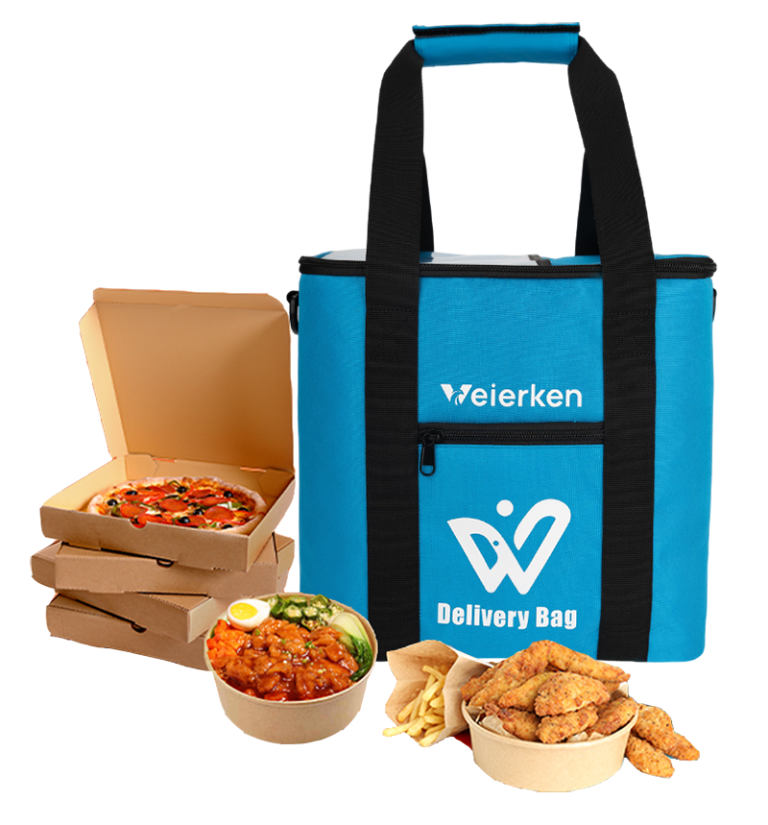
Every fresh food brand has unique needs. Whether it’s a specialized pizza delivery bag or a medical-grade cold chain box, the factory must demonstrate flexibility. A high-performing fresh food thermal bag factory acts as a design partner, not just a sewing shop.
Evaluate their product development speed:
Rapid Prototyping: Can they provide a technical drawing within 3 days and a physical sample within 7 days?
Material Diversity: Do they stock antimicrobial linings, recycled PET (RPET) fabrics, and high-density foam?
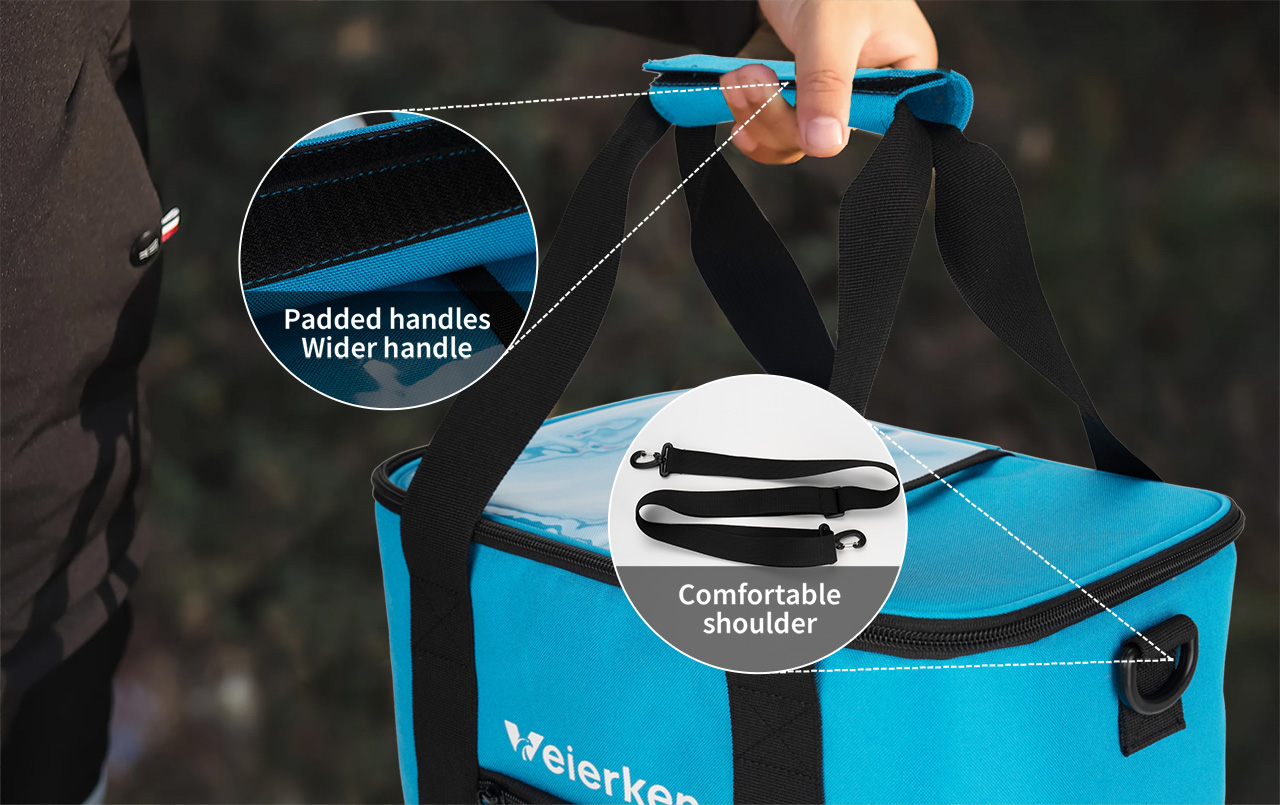
Functional Add-ons: Can they integrate external thermometer windows, removable dividers, or adjustable shoulder straps?
Flexible MOQ: Do they support low minimum order quantities for market testing (e.g., 500 units) while scaling to 50,000 units for mass rollout?
Review their portfolio of past work. A factory that has successfully delivered projects for global grocery chains or last-mile delivery startups is better equipped to handle your custom insulated bag requirements.
Standard 7: Delivery Guarantees and After-Sales Terms
Supply chain disruptions can be fatal for a fresh food business. Your fresh food thermal bag factory must guarantee on-time delivery and provide a clear safety net for quality issues. At Weierken, we believe the partnership begins after the goods are delivered.
Review these commercial terms carefully:
On-Time Delivery Rate: Request data from the past year. A rate of ≥97% is the industry benchmark for a reliable partner.
Peak Season Planning: How does the factory handle the surge in demand before holidays? Do they have backup production lines?
Transparency: Does the factory offer a production progress dashboard or weekly photo/video updates?
Warranty Policy: If a batch shows structural defects within 30-90 days, does the factory offer free replacements or credits?
Dispute Resolution: Ensure the contract specifies compensation for late deliveries and defines what constitutes a "major defect."
By putting these standards into your Sourcing Agreement, you move beyond "trust" and into a framework of accountability and performance.
In conclusion, auditing a fresh food thermal bag factory requires a holistic approach that balances food safety, thermal science, and manufacturing discipline. A partner like Weierken understands that in the fresh food industry, the bag is more than a container—it is a critical component of your product's quality.
Frequently Asked Questions (FAQ)
1. What is the best material for a fresh food thermal bag liner?
For direct food contact, PEVA and TPU are excellent choices because they are BPA-free, easy to clean, and can be heat-welded for leak-proof performance. Aluminum foil is great for heat radiation reflection but is usually laminated with a plastic layer for durability.
2. How long can a standard fresh food thermal bag keep items cold?
This depends on the insulation thickness and the use of refrigerants. A standard 5mm EPE foam bag can maintain 0-8°C for about 2-4 hours. High-end bags with thick foam and ice pack pockets can extend this to 12-24 hours. A professional fresh food thermal bag factory should provide specific thermal test reports for your configuration.
3. Does a factory need specific certifications to export to the US or EU?
Yes. For the US, materials must be FDA compliant. For the EU, LFGB or REACH certifications are standard. Additionally, many retailers require the factory to pass a social audit like BSCI or Sedex to ensure ethical manufacturing practices.
4. Can I customize the size and branding of the bags?
Absolutely. Most OEM thermal bag factories offer silk-screen printing, heat transfer, or embroidery for logos. They can also create custom molds or patterns to fit specific delivery containers or bento boxes.
5. How can I tell if a bag is truly leak-proof without testing every unit?
Look for welded seams instead of stitches. If you see needle holes in the inner lining, it is not leak-proof. High-quality factories use ultrasonic welding which fuses the plastic together, creating a 100% watertight seal.
Are you ready to secure your cold chain? Contact our experts at Weierken today to discuss your project. Whether you need bulk insulated bags or a custom thermal solution, our fresh food thermal bag factory is here to help. Inquiry now for a free consultation and sample kit!