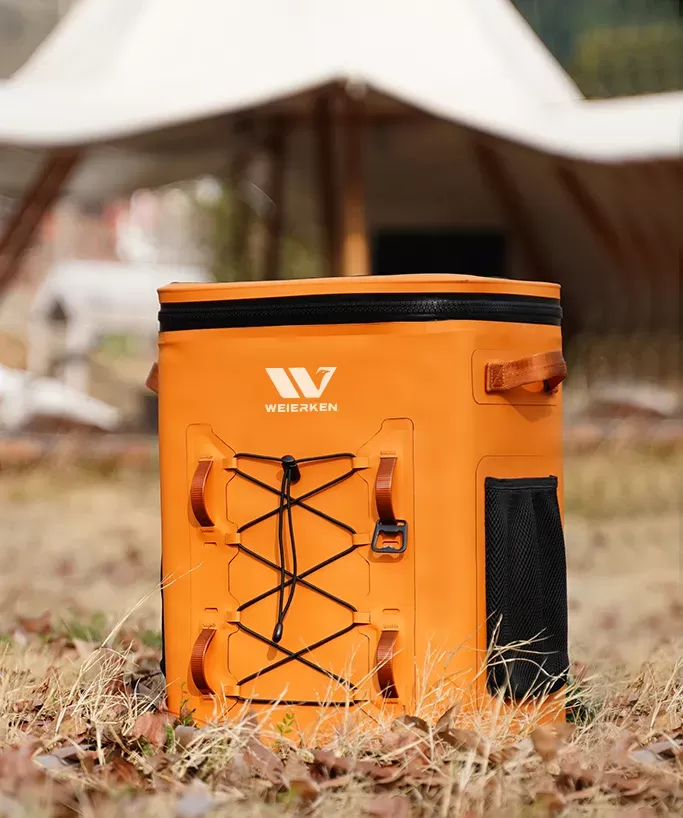

In sectors like deep-sea fishing, hunting, high-end grocery delivery, and pet food transport, standard cooler bags often fail. Ordinary cooler bags let odors escape through needle holes and zipper teeth. This causes issues during transport and leads to customer complaints.
True smell-proof performance requires complex manufacturing processes that go far beyond basic sewing. For B2B buyers, choosing a skilled odor locked cooler tote maker is a critical product development decision. A quality manufacturer ensures your products remain leakproof, scent-free, and highly durable.
As a specialized technical bag manufacturer, weierken helps brands develop high-performance insulation systems. In this sourcing guide, we examine the technical standards, raw materials, and testing protocols you should look for when selecting a production partner.
1. Air-Tightness and Zipper Systems: The Physical Foundation of Scent Barriers
Odor molecules travel through air and liquid leaks. If a bag can leak air or water, it will leak smell. To prevent this, your manufacturing partner must master two core structural elements.
High-Frequency Welding (RF Welding) over Stitching
Traditional sewing needles create thousands of tiny holes in fabric. Even if a manufacturer tape-seals the seams, those holes remain weak points. A professional airtight cooler bag manufacturer uses Radio Frequency (RF) welding instead of stitching.
This process uses electromagnetic energy to fuse the polymer chains of two fabric layers. It creates a solid, single piece of material. The resulting weld is completely seamless, waterproof, and impermeable to gas molecules.
Structural Integrity: Welded seams withstand heavy loads without stretching.
Permanent Sealing: Unlike glue, RF welds do not degrade in cold or humid conditions.
Zero Pinholes: Solid barrier walls contain odors inside the storage compartment.
Industrial-Grade Airtight Zippers
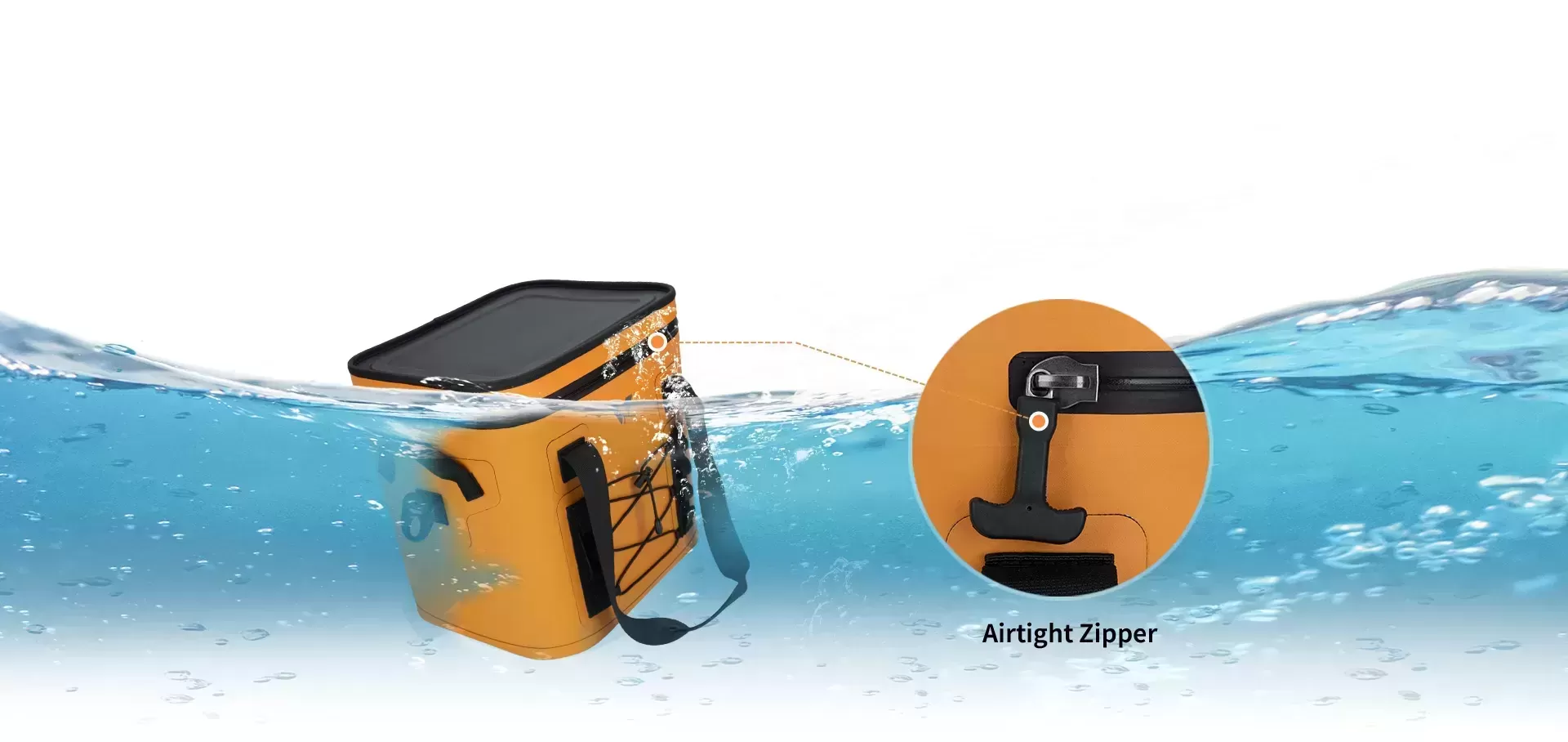
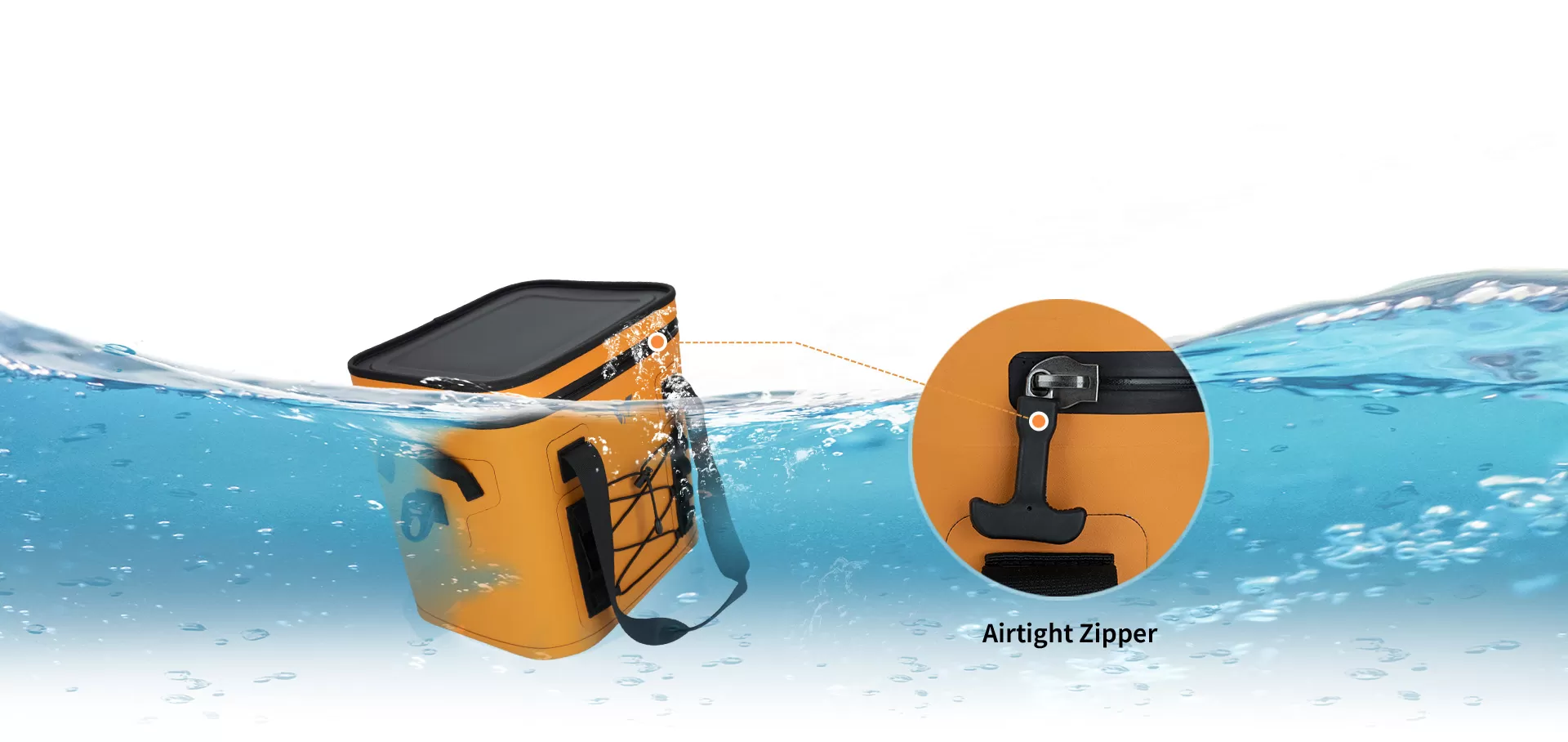
The zipper is the most challenging component of any smell-proof cooler. Standard zippers let air and moisture pass through easily. A qualified smell proof cooler bag supplier must have experience sourcing and assembling high-grade airtight zippers.
These zippers feature TPU-coated teeth that compress together to block airflow. The manufacturer must also install molded rubber sealing docks at the zipper ends. This prevents air from slipping out when the puller is fully closed.
2. Multi-Layer Material Construction and Anti-Mildew Liners
Raw material selection determines how long a cooler bag can keep odors contained. When storing raw fish, game, or moist foods, the interior liner can absorb odors if the materials are low quality.
A reliable heavy duty leakproof cooler factory will use a multi-layer composition to ensure thermal efficiency and long-lasting freshness.
At weierken, we carefully source and test our raw materials to ensure they meet international food safety and physical durability standards.
Food-Grade TPU Liners (FDA & LFGB Compliant)
The inner lining must feature a dual-sided TPU coating on a strong nylon backing. Unlike PVC, TPU is non-toxic, recyclable, and does not crack in freezing temperatures. It is also highly resistant to punctures from fish bones or ice corners. Crucially, high-grade TPU does not absorb food oils or organic odors.
Antimicrobial and Anti-Mildew Treatments
Moist environments inside a closed bag promote bacterial and mold growth. This growth causes secondary unpleasant odors. Ask your potential odor locked cooler tote maker if they can integrate antimicrobial agents directly into the TPU lining. This treatment prevents microbes from colonizing the interior surface.
Non-Absorbent Closed-Cell Foam Insulation
Cheaper bags use open-cell foam, which acts like a sponge. If the inner liner gets punctured, the open-cell foam absorbs contaminated water, making the bag permanently smelly. High-performance bags require closed-cell foam, such as NBR or EPE.
Closed-cell structure: Independent air pockets do not absorb liquid or odor.
High thermal density: Keeps ice solid for up to 48 to 72 hours.
Structural bounce-back: Keeps the bag's shape even under heavy pressure.
3. Factory Quality Control and Testing Protocols
Scent-proof bags require 100% inspection during production. A single imperfect weld or misaligned zipper dock destroys the bag's main selling point. When auditing a factory, look for the following verification steps on the production line.
Pressure Retaining Tests (Inflation Testing)
A leading airtight cooler bag manufacturer will run inflation tests on every batch. Workers inflate the cooler bag through a temporary valve and monitor the air pressure over 12 to 24 hours. A drop in pressure indicates a micro-leak in the welded seams or the zipper seal.
Water Submersion Verification
This test involves filling the bag with pressurized air and submerging it in a water tank. Quality control staff look for streams of bubbles. This instant feedback allows technicians to adjust RF welding parameters like temperature, dwell time, and pressure.
Tensile Strength and Handle Fatigue Testing
Heavy-duty coolers must carry significant weight. Handle attachment points should be reinforced with welded TPU patches before sewing or welding. The factory should use tensile testing machines to ensure the handles do not pull away when the bag is fully loaded with ice and beverages.
4. Supply Chain Compliance and OEM/ODM Experience
A professional sourcing process goes beyond technical specifications. You must also evaluate the factory's compliance, ethical standards, and engineering depth.
Regulatory Audits and Material Certifications
Your manufacturer must prove that their materials are safe for consumer contact. Ensure the factory provides verified test reports from independent testing bodies like SGS or TÜV. These reports should cover FDA, LFGB, REACH, and RoHS compliance.
Social Audits: Certifications like BSCI or SMETA show the factory maintains fair working conditions.
Quality Audits: ISO 9001 certification proves they use consistent quality control systems.
Traceability: The supplier must trace raw material batches to their original sources.
Customized R&D Capabilities
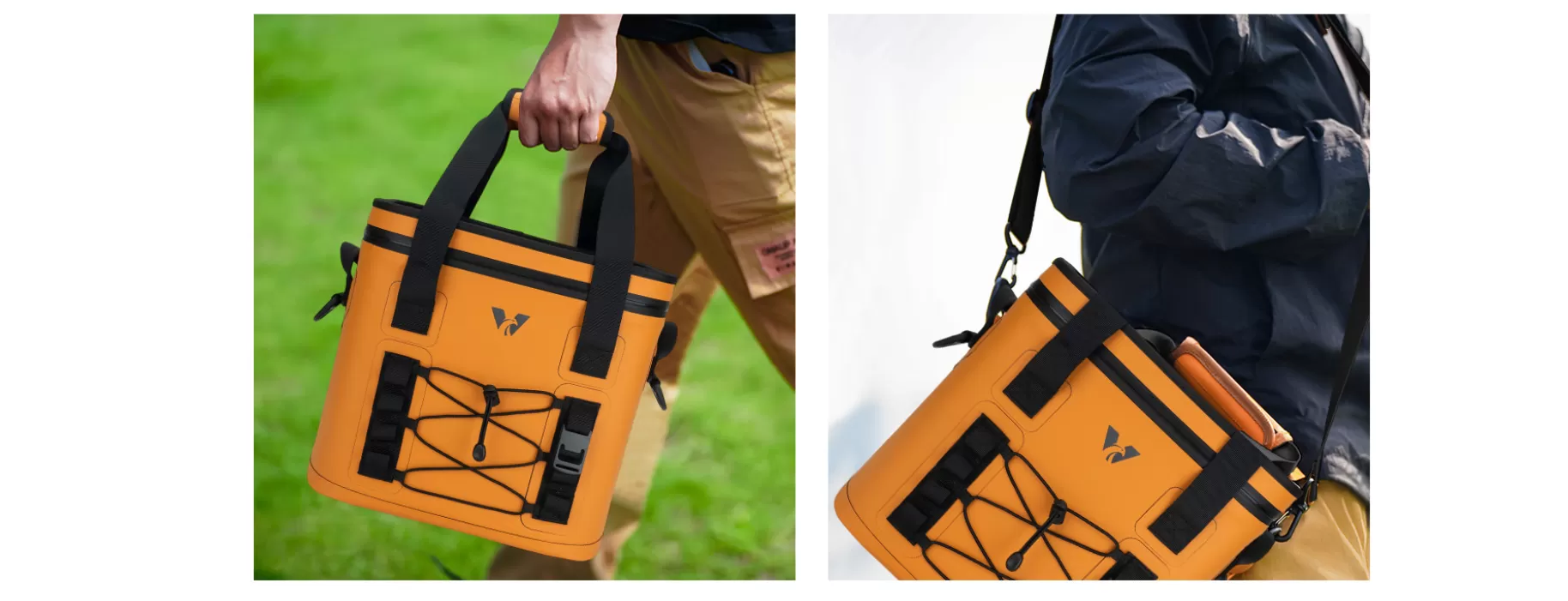
Every brand has unique design requirements. A capable smell proof cooler bag supplier should offer comprehensive design services. They should help you customize outer fabric colors, interior pocket layouts, shoulder strap ergonomics, and external accessories like MOLLE webbing webbing or pressure-release valves.
Build Long-Term Value with a Deep R&D Partner
High-performance scent-proof cooler bags are premium, high-value products. In a crowded market, generic coolers cannot compete with technically verified, durable gear. To protect your brand from product failures and customer returns, partner with a manufacturer that prioritizes engineering over low-cost compromises.
As you evaluate your options, consider weierken. We combine advanced RF welding technology, premium materials, and strict testing protocols to build reliable gear. We help you create high-performance products that earn customer trust season after season.
Are you ready to design or upgrade your next product line? Contact our sales engineering team at weierken to discuss your requirements, material options, and production timelines. We are here to help you bring your design concepts to life. Request a quote or sample today.
Frequently Asked Questions (FAQ)
1. Why is RF welding better than heat sealing for smell-proof coolers?
Standard heat sealing applies heat from the outside, which can melt fabrics unevenly and weaken the seams. RF welding uses high-frequency electromagnetic energy to excite the molecules within the plastic itself. This creates a uniform bond that is as strong as the original fabric, ensuring a permanent airtight and odor-proof seal.
2. How long can an odor locked cooler tote keep items cold?
Thermal performance depends on the thickness of the closed-cell foam insulation and the ice-to-contents ratio. A high-quality cooler with 20mm to 25mm of NBR closed-cell foam and a sealed airtight zipper can typically maintain ice for 48 to 72 hours, even in hot outdoor conditions.
3. Can we get custom colors and branding on the airtight zipper tape?
Yes. As an experienced odor locked cooler tote maker, we can customize the outer TPU coating of the zipper tape to match your brand's colors. We can also add custom molded logo pullers and specific color accents on the rubber zipper dock to create a cohesive brand appearance.
4. Are the materials used in these coolers safe for direct food contact?
Yes, we use food-grade, BPA-free TPU for our interior liners. This material meets FDA and LFGB food safety standards. It does not release harmful chemical fumes or off-gass, making it safe for raw seafood, meats, fruits, and beverages.
5. What is the standard sample lead time for a custom cooler bag?
Creating a custom sample typically takes 7 to 15 business days. This timeline depends on the availability of specific fabric colors, zipper lengths, and the complexity of the pattern. Once we finish the sample, we run preliminary inflation tests to verify its airtight performance before shipping it to you for evaluation.