

Last-mile food delivery networks face complex thermal challenges. Imagine carrying sub-zero ice cream next to hot, fresh pasta in the same delivery container. If hot and cold zones are not properly isolated, heat transfers quickly. This ruins food quality and compromises consumer safety.
For catering brands, third-party logistics (3PL) providers, and grocery delivery platforms, selecting a qualified multi zone thermal tote maker is a critical engineering decision. You must find a partner who understands thermodynamics, not just basic sewing.
As a technical bag manufacturer, weierken acts as a reliable partner, developing robust multi-temperature delivery solutions. This guide outlines five essential sourcing tips to help you evaluate potential manufacturing partners and secure durable gear.
1. Assess the Thermal Barrier and Edge Sealing Performance
Heat naturally moves from hot zones to cold zones through thermal bridging. To prevent this, the internal dividers must provide high thermal resistance. When auditing a dual temperature delivery bag manufacturer, look closely at their divider construction.
A weak divider allows temperature bleeding, which ruins food quality. A professional manufacturer will use specific materials and sealing methods to stop this heat exchange.
High R-value materials: The divider core should use high-density extruded polystyrene (XPS) or dense polyurethane (PU) foam. It should measure at least 15mm thick to resist heat transfer.
Airtight physical seals: The edges of the divider must fit snugly against the inner walls of the bag. Look for heavy-duty, wear-resistant industrial hook-and-loop fasteners or slide-in track systems.
Zero-clearance fit: Even a tiny gap allows convective air currents to flow. This rapidly balances the temperature between the compartments, ruining the multi-zone function.
2. Focus on Sanitary, Easy-to-Clean Interior Linings
Spills are inevitable during high-frequency food delivery. If sauces, grease, or liquids seep into the seams, bacteria will grow. This creates unpleasant odors and cross-contamination risks over time.
Your chosen multi compartment insulated bag OEM must prioritize hygiene in their material selection and assembly processes. Standard PVC linings are often insufficient for commercial food contact.
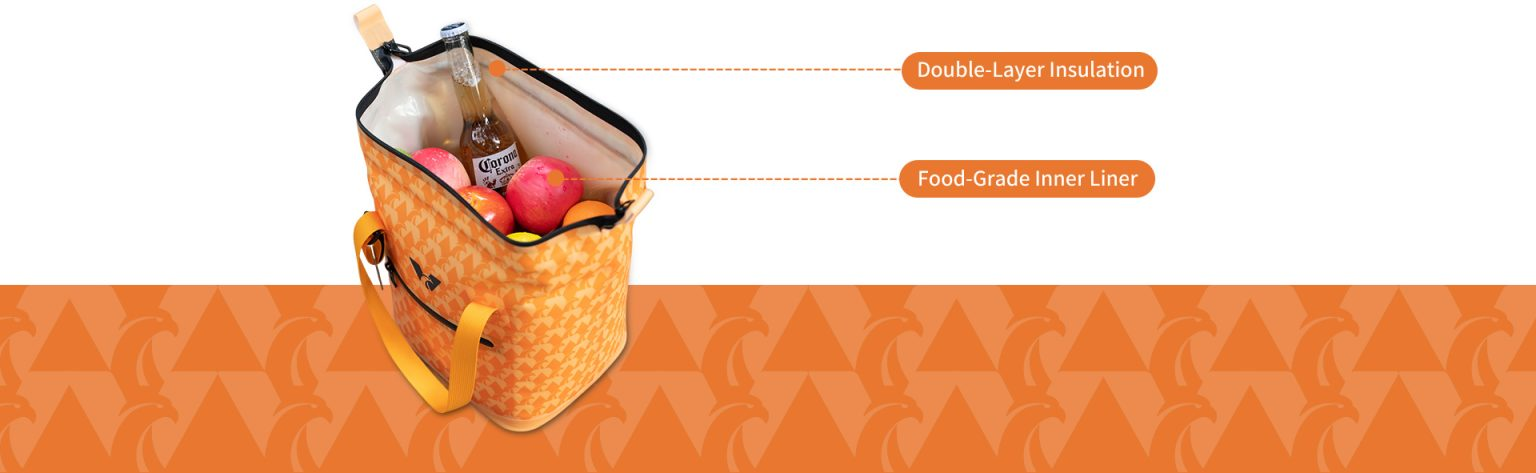
Food-grade materials: Ensure the factory uses FDA-compliant or LFGB-certified liners, such as thick PEVA, aluminum foil laminate, or TPU.
Wipe-clean surfaces: The interior surface must be smooth and non-porous. This allows delivery drivers to sanitize the compartments with a simple disinfectant wipe between shifts.
Antimicrobial coatings: Ask the factory if they can apply food-safe antimicrobial treatments to the liners. This stops mold and mildew from growing in warm, humid compartments.
3. Evaluate Modular Space Allocation and Adjustability
Delivery order ratios change constantly. A driver might have a 70% cold order on one run, and a 90% hot order on the next. Fixed-size compartments lead to wasted space and poor temperature retention because empty air pockets lose temperature quickly.
As a versatile multi zone thermal tote maker, weierken solves this issue by integrating adjustable rail systems into our custom designs. This flexibility improves space utility and delivery efficiency.
Multi-position tracks: Internal walls should have multiple attachment strips. This lets drivers move the insulated dividers to fit the exact dimensions of the day's orders.
Collapsible designs: When not in use, the entire bag should fold flat. This saves valuable space in delivery vehicles or during off-peak warehouse storage.
Secure locking mechanisms: Make sure the dividers remain firmly in place during transit, even when the vehicle travels over bumpy roads or makes sudden stops.
4. Inspect Structural Durability under High-Frequency Use
Delivery gear experiences intense wear and tear. Zippers are pulled hundreds of times a day, bags are dropped on rough concrete, and straps are constantly tensioned. The physical construction determines the lifetime cost of your delivery fleet.
A professional cold chain thermal tote factory should emphasize structural reinforcement over cheap materials. Cutting corners on seams or hardware leads to early failure.
High-denier outer fabrics: Look for 1680D double-thread Oxford cloth or heavy-duty TPU tarpaulin. These fabrics offer superior puncture, water, and tear resistance.
Industrial zippers: The main opening should feature heavy-duty nylon coil zippers (such as YKK or customized equivalents) with reinforced pull tabs.
Reinforced stitching: Stress points on handles and shoulder straps must use heavy-duty box stitching or Bartack reinforcement to prevent tearing under heavy loads.
5. Ask for Empirical Heat Loss Curves and Lab Test Reports
Do not rely solely on written specifications or sales promises. A competent multi zone thermal tote maker must provide verified performance data. This testing ensures the bags perform well under real-world conditions.
Without empirical data, you run the risk of food spoilage during long delivery routes. Always ask for documentation of their internal quality control and thermal validation testing.
Environmental chamber testing: Ask if the factory tests their bags in simulated environmental chambers. This testing monitors how long temperatures remain stable under extreme outside temperatures (e.g., 35°C heat or sub-zero winter cold).
Dual-temperature verification: The manufacturer should provide sensor logs showing temperatures in both zones simultaneously over a 4-hour period.
R-value certification: Verify the thermal resistance values of the foam sheets through official material datasheets.
Partnering for Reliable Logistics Solutions
Sourcing a multi-zone thermal bag is an investment in your delivery operations. By focusing on thermal barriers, hygiene, adjustability, durability, and testing, you can find a reliable partner. A well-built thermal bag lowers replacement costs and protects your delivery quality.
At weierken, we focus on engineering reliable thermal containment systems. We work closely with our B2B clients to customize bags that lower operational costs and improve delivery success. We test our designs to ensure they meet strict temperature standards.
Are you planning to develop or upgrade your fleet of multi-temperature delivery bags? Contact our technical sales team at weierken today to discuss your project specifications, material requirements, and testing parameters. Let us build a reliable thermal solution for your delivery network. Request a quote or sample today.
Frequently Asked Questions (FAQ)
1. How does a multi zone thermal tote maintain two different temperatures?
It uses a thick, high-density insulated divider wall to block heat transfer. This divider creates two sealed compartments. Each compartment uses closed-cell insulation foam to retain its specific temperature, preventing warm air from heating up the cold side.
2. Can we customize the sizes of the individual zones?
Yes. As an experienced multi zone thermal tote maker, we design our bags with adjustable track systems. This allows delivery drivers to shift the divider walls manually, changing the size of the cold and hot compartments based on daily order volumes.
3. What materials are safest for food delivery liners?
We recommend using food-grade TPU, thick PEVA, or heavy-duty aluminum foil laminates. These materials meet international food safety standards (such as FDA or LFGB). They are non-toxic, do not release chemical odors, and are easy to clean with disinfectant wipes.
4. What is the typical lifespan of a professional delivery bag?
Under high-frequency daily use, a professional-grade delivery bag made with 1680D Oxford fabric and YKK zippers typically lasts between 12 to 18 months. Regular cleaning and proper zip lubrication can extend this lifespan significantly.
5. How do you test the thermal performance of your bags?
We place our thermal bags inside specialized environmental test chambers to simulate hot summer or cold winter conditions. We place digital temperature sensors inside both the hot and cold compartments to record real-time temperature changes over a 4 to 8-hour period.