
Demand for marine recreational equipment is surging across global markets. As we head into 2026, private label brands, marine distributors, and product managers are revising their supply chain strategies. Consumers expect rugged, highly functional equipment that survives harsh ocean environments without failing.
Sourcing high-performance OEM boating gear bags involves navigating strict technical standards, fluctuating international tariffs, and rising environmental regulations. A simple dry bag is no longer enough. Modern buyers want multi-functional, eco-conscious, and salt-resistant gear built for heavy outdoor usage.
At Weierken, we have spent two decades manufacturing specialized outdoor and marine bag solutions. This guide breaks down the technical material trends, quality evaluation standards, and sourcing strategies you need to build a resilient product line for 2026.
Design and Material Trends for 2026 OEM Boating Gear Bags
Marine environments are unforgiving. Sun exposure, constant salt spray, heavy weight loads, and rough deck surfaces quickly wear down inferior gear. Incorporating modern materials and construction techniques into your OEM manufacturing plan is essential to prevent product returns and protect your brand reputation.
1. Marine-Grade Waterproofing and Extreme Durability
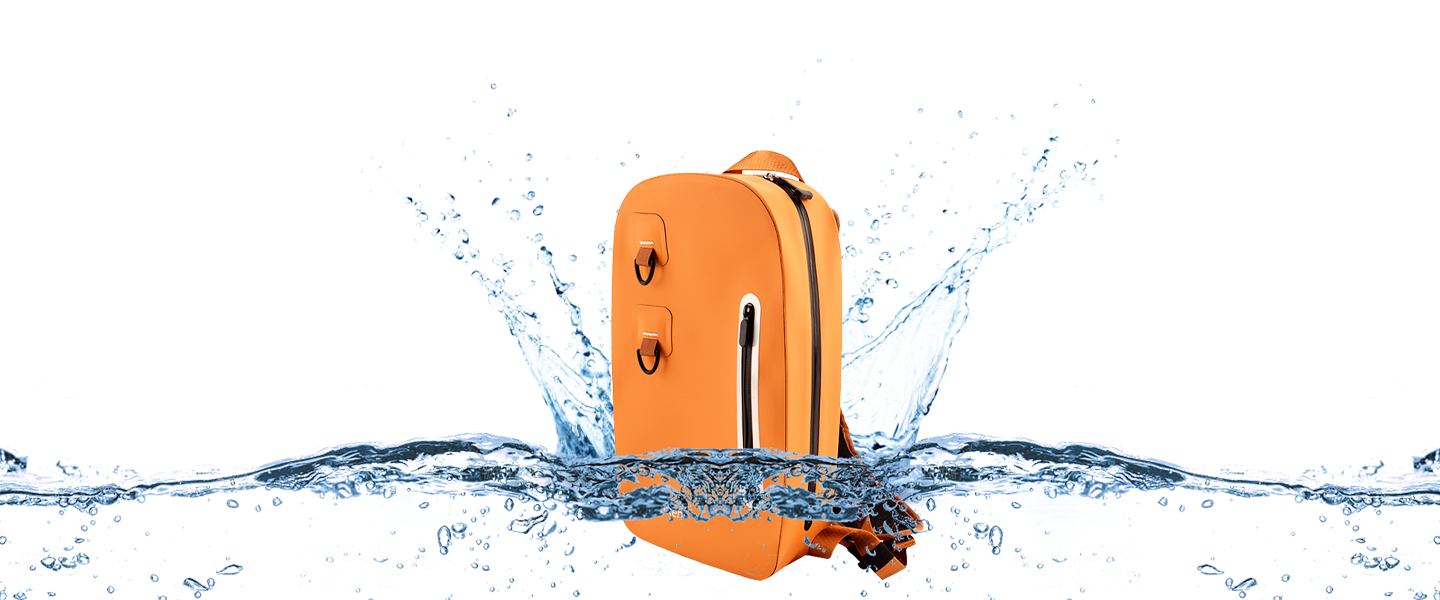
Traditional stitching creates needle holes that leak under water pressure. High-performance boating gear relies on seamless high-frequency (HF) welding or hot-air TPU laminating technology. This creates an airtight and watertight bond along every seam.
TPU and Heavy-Duty PVC Laminates: Thermoplastic Polyurethane (TPU) provides exceptional cold-crack resistance, UV stability, and flexibility compared to standard vinyl.
Corrosion-Proof Hardware: Marine bags require molded YKK plastic-steel zippers, airtight waterproof zippers, and 316 stainless steel or heavy-duty acetal hardware that will not rust in salt air.
Reinforced Stress Points: Heavy deck bags require box-stitched webbing anchor points and reinforced base panels to handle heavy loads without tearing.
2. Sustainable Materials for Eco-Conscious Buyers
Environmental social governance (ESG) policies are reshaping procurement requirements worldwide. Ocean enthusiasts care deeply about ocean health, driving strong demand for eco-friendly gear choices.
Replacing legacy PVC with non-toxic TPU or recycled polyester (RPET) allows brands to market sustainable products. Weierken integrates eco-friendly TPU materials derived from post-consumer recycled plastics, giving your products a distinct market advantage while reducing environmental impact.
3. Modular and Multi-Functional Features
Boaters want gear that adapts to changing conditions on the water. Multi-functional features increase product value and appeal directly to serious outdoor enthusiasts.
Integrated Cooling Chambers: Hybrid designs combine airtight waterproof gear storage with thick closed-cell foam insulation for keep-cool capability on long boat trips.
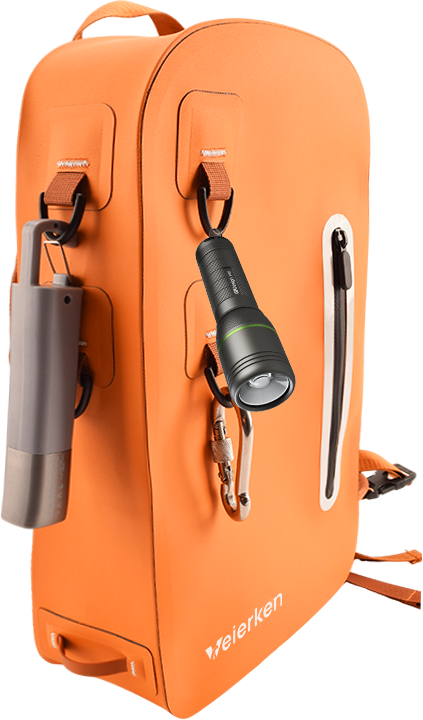
Deck Securement Systems: Integrated MOLLE webbing systems, non-marking anti-slip rubber bases, and multiple D-ring anchor points allow boaters to tie bags securely to deck cleats or kayak rigging.
High-Visibility Details: Reflective striping and bright colorways improve safety in low-light conditions or unexpected emergency sea situations.
4 Critical Benchmarks to Evaluate an OEM Boating Bag Manufacturer
Finding a factory is easy. Finding a qualified manufacturing partner that executes complex marine-grade specifications consistently requires strict vetting.
1. Rapid R&D and Customization Support
A reliable factory must translate your technical CAD drawings or rough concepts into functional 3D prototypes quickly. Look for partners with dedicated sample-making departments that understand seam-welding tolerances and ergonomic load distribution.
Weierken maintains an internal team of product designers and pattern makers who deliver physical prototypes fast, refining your product concept long before mass production begins.
2. Rigorous In-House Lab Testing
Do not rely solely on visual inspections. Professional marine gear factories must maintain dedicated testing labs to verify technical performance standards before shipment.
Hydrostatic Pressure Testing: Measures exact water column resistance (measured in PSI or millimeters of water head) to verify seam integrity under submersion.
Salt Spray Testing: Exposes metal and plastic hardware to continuous salt fog according to ASTM B117 standards to confirm corrosion resistance.
Tensile and Drop Testing: Tests handle tear strength and strap integrity under maximum weight limits.
3. Scalable Production Capacity
Your factory must handle demand surges without compromising build quality or pushing back delivery dates. Facilities spanning over 80,000 square meters equipped with automated high-frequency welding machines maintain precise quality controls across massive production runs.
4. International Compliance and Audits
Global retailers require verifiable compliance. Ensure your factory partner holds active certifications such as ISO9001 for quality control, alongside BSCI or SEDEX social compliance audits.
Mitigating Supply Chain Risks: The Dual-Base Advantage
Geopolitical friction and fluctuating import tariffs pose financial threats to outdoor brands. Relying entirely on a single manufacturing origin creates operational vulnerabilities that can eliminate profit margins overnight.
Smart procurement managers are adopting a dual-factory sourcing model to protect their supply chains heading into 2026.
How the China + Cambodia Model Protects Your Margins
Weierken operates an integrated dual-production strategy across two strategic regions, giving B2B buyers complete control over cost, quality, and delivery stability.
China Base (R&D & Advanced Manufacturing): Our primary facility focuses on intricate product designs, high-tech airtight cooler bags, initial sampling, and advanced material sourcing. China offers an unmatched raw material supply network.
Cambodia Base (Competitive Mass Production): Our fully-owned Cambodian facility handles high-volume orders for standard dry bags, marine backpacks, and gear duffels. Buyers benefit from favorable trade terms, duty-free exemptions, or reduced tariffs when importing to the US and Europe.
This dual-base setup allows you to leverage China's technical expertise for complex product development while shifting mass manufacturing to Cambodia to keep land costs and tariff overhead low.
Why Leading Outdoor Brands Partner with Weierken
Since 2006, Weierken has built a reputation as a trusted manufacturing partner for high-performance outdoor and waterproof bag solutions. Over two decades of focused manufacturing experience allows us to serve more than 2,000 global brands and private labels.
Our complete product catalog covers every category of marine gear protection:
Heavy-duty waterproof deck duffels and roll-top dry bags
Insulated marine boat cooler bags with leakproof zippers
Submersible waterproof backpacks for kayaking and sailing
UV-resistant shore totes and splash-proof mesh equipment bags
We build every product around four fundamental principles: Innovation, Timelessness, Simplicity, and Sustainability. From custom material sourcing to final container loading, Weierken delivers reliable manufacturing support that helps your business grow.
Ready to Scale Your Marine Line for 2026?
Sourcing high-performance OEM boating gear bags requires a balance of advanced technical manufacturing, eco-friendly materials, and smart supply chain positioning. Partnering with an experienced manufacturer protects your business against shipping delays, tariff spikes, and quality failures.
Work with an industry leader to design, build, and deliver your next generation of marine equipment. Contact the engineering team at Weierken today to request a custom quote, order product samples, or schedule a virtual tour of our dual production facilities.
Contact Weierken Today: Submit your project specifications and initial order requirements through our direct B2B inquiry team to get a detailed production quote within 24 hours.
Frequently Asked Questions (FAQ)
1. What is the standard minimum order quantity (MOQ) for OEM boating gear bags?
Our standard MOQ typically starts at 500 to 1,000 pieces per style, depending on the specific material choices, custom colorway requirements, and welding techniques involved. Contact our team to discuss customized low-volume trials for specialized product lines.
2. What waterproofing technology is best for deck-bound gear bags?
For complete submersion protection, high-frequency (HF) welded TPU fabric with an airtight waterproof zipper provides the best performance. For general splash resistance, heavy-duty TPU fabric with roll-top closures and welded seams offers reliable durability at a lower cost.
3. How does Weierken protect zippers and buckles against saltwater corrosion?
We use marine-grade molded plastic zippers, specialized airtight zippers with coated teeth, and high-impact acetal hardware designed specifically for ocean environments. Metal components utilize high-grade stainless steel that resists oxidation under continuous salt spray exposure.
4. What are the typical lead times for sample development and mass production?
Initial CAD-to-sample development takes roughly 7 to 10 days. Once you approve the pre-production sample, standard mass production lead times range between 35 and 50 days, depending on whether order execution takes place in our China or Cambodia facility.
5. Can we request eco-friendly or recycled materials for our custom marine bags?
Yes. We offer a full range of sustainable options, including GRS-certified RPET fabrics, non-toxic TPU films, and PVC-free coatings that meet strict global regulatory requirements like REACH and RoHS.
6. How does your Cambodia factory help lower import tariffs for US and European buyers?
Cambodia benefits from preferential trade arrangements and lower baseline tariff rates with many Western nations compared to direct exports from China. Producing high-volume runs at our Cambodian facility allows buyers to reduce duty expenses while keeping build quality consistent under Weierken's management.