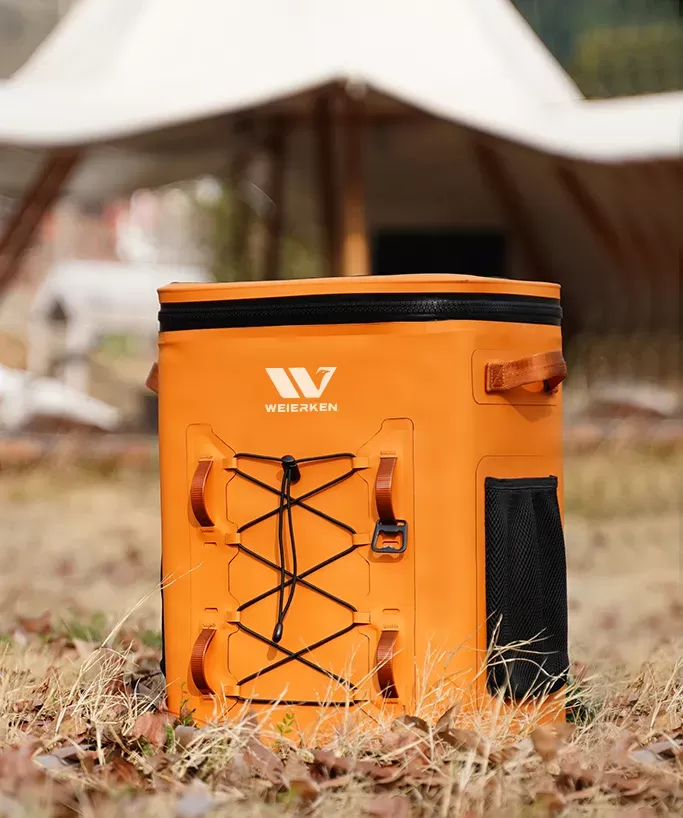

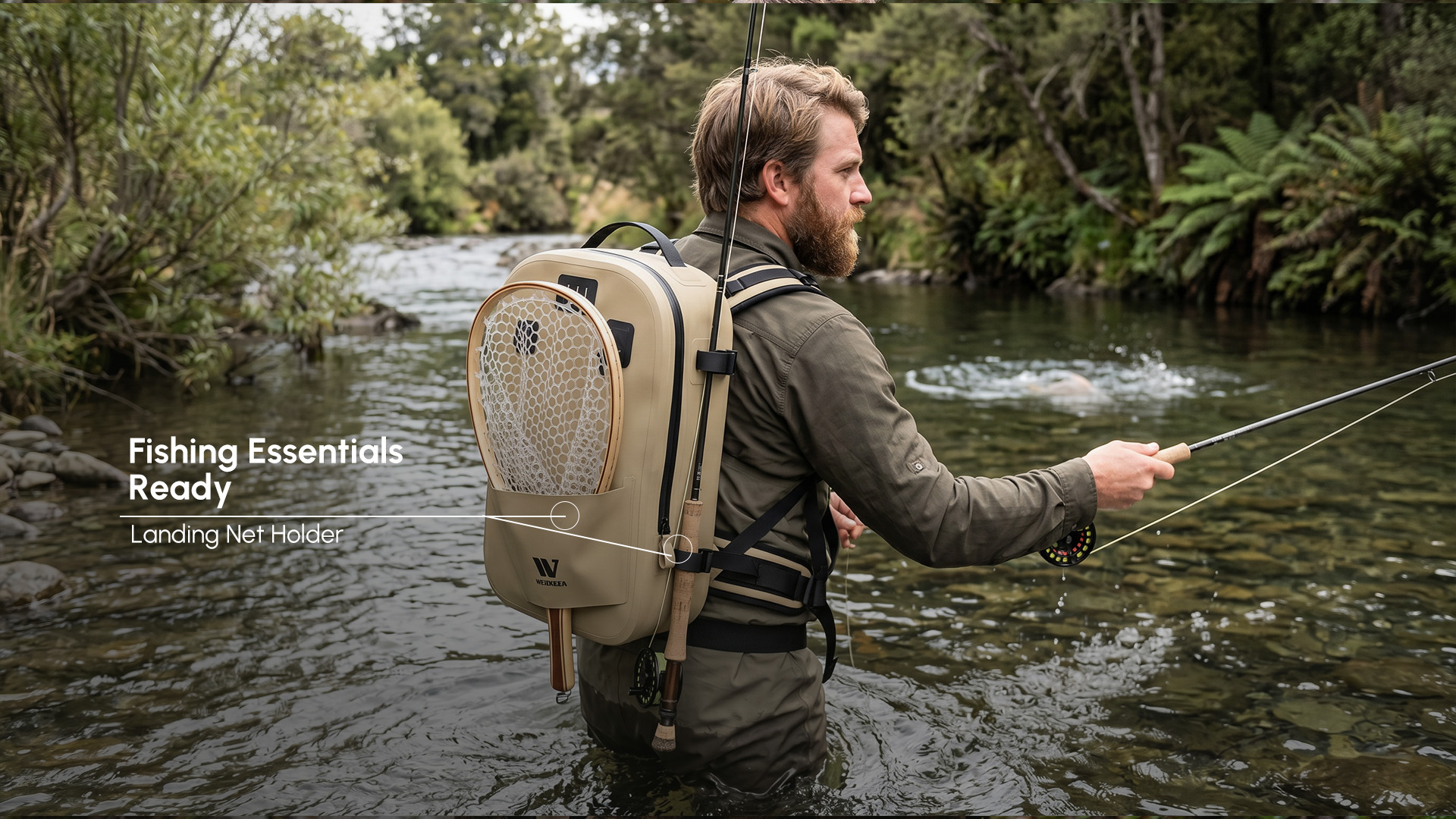
Building a successful marine gear lineup demands uncompromising reliability. Open water exposes equipment to punishing salt spray, intense UV radiation, and total submersion. For outdoor brand managers and equipment distributors, choosing the right manufacturer for your private label marine dry bags determines whether your product thrives on deck or fails at sea.
At Weierken, we bring over 20 years of specialization in technical bag manufacturing. We help global outdoor brands translate complex technical requirements into market-ready OEM boating gear bags. Below are the seven crucial technical specifications every brand manager must evaluate before starting mass production.
1. Base Fabric Selection and Eco-Compliance
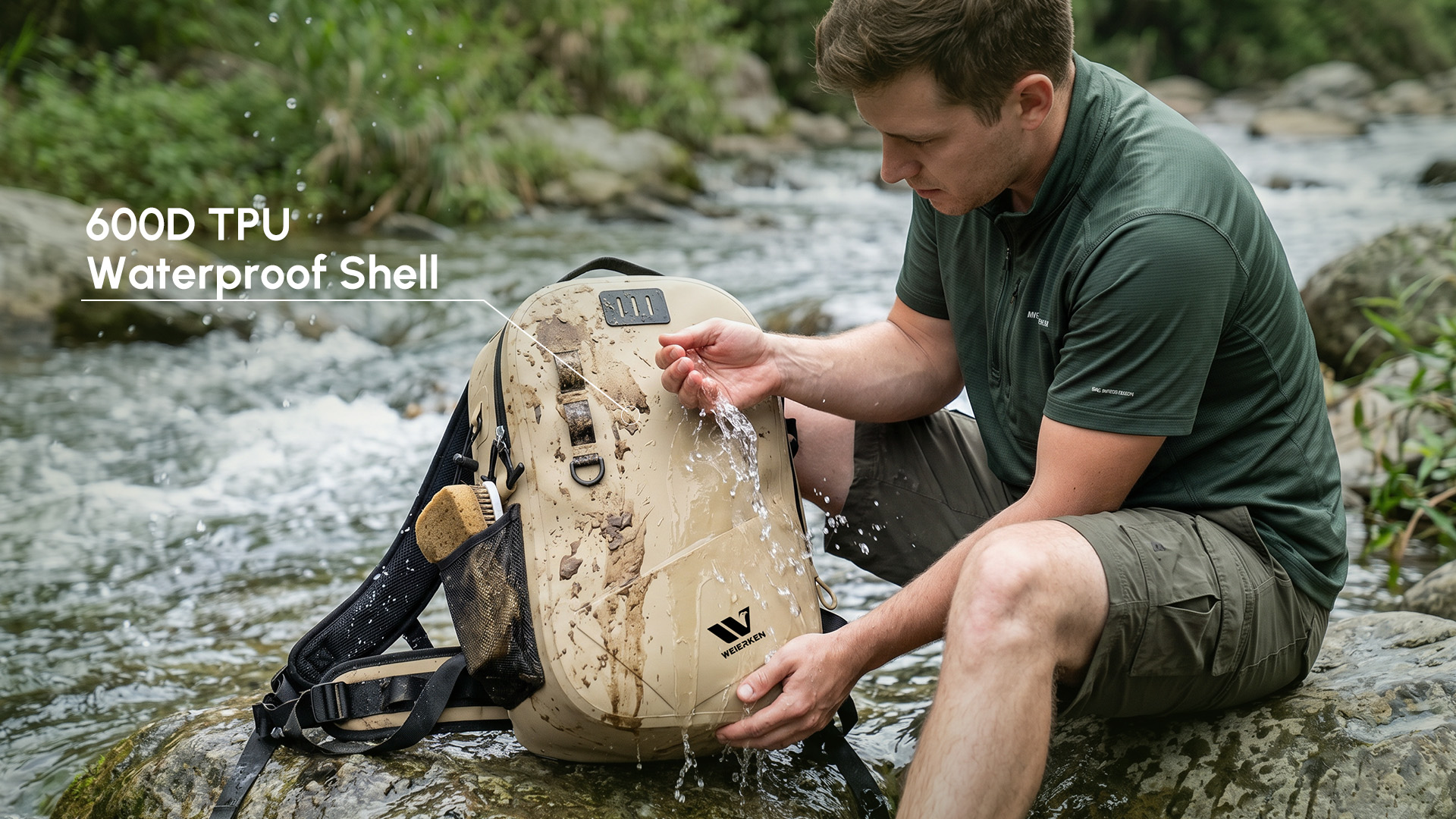
The foundation of any heavy-duty marine bag is its base material. Standard nylon or polyester fabrics cannot handle prolonged exposure to moisture without peeling or breaking down. Marine-grade dry bags rely primarily on Thermoplastic Polyurethane (TPU) or Polyvinyl Chloride (PVC) laminated onto high-density synthetic backings like 420D, 840D, or 1000D nylon.
TPU has become the industry benchmark for premium marine bags. It remains flexible in freezing temperatures, offers superior abrasion resistance, and contains zero toxic phthalates. PVC remains a cost-effective option for industrial gear, though environmental regulations increasingly favor TPU alternatives.
At Weierken, our raw materials strictly comply with REACH, GRS, and rPET certifications, allowing your marine brand to enter EU and US markets with zero environmental compliance risk. Using recycled post-consumer plastics (rPET) bonded with eco-friendly TPU coatings gives your line a clear competitive edge among eco-conscious boaters.
420D to 840D Nylon/Polyester: Ideal balance between structural strength and total bag weight.
TPU Coating: High resistance to oils, grease, cold cracking, and UV degradation.
Global Eco-Standards: Fully certified under GRS (Global Recycled Standard) and REACH regulations.
2. High-Frequency Welding Integrity and Seam Construction
Traditional needle stitching creates thousands of micro-perforations across fabric seams. Under pressure or heavy rain, water inevitably seeps through stitched seams. True waterproof performance requires molecular bonding through High-Frequency (HF) welding or Radio Frequency (RF) welding.
HF welding applies electromagnetic energy and mechanical pressure simultaneously. This process melts the TPU or PVC coatings together at the joint, fusing two fabric panels into a single, seamless barrier. The resulting seam is often stronger than the base fabric itself.
Achieving 100% waterproof integrity requires strict QC. Weierken maintains a 99.5% first-pass yield rate through rigorous high-frequency welding protocols. Every welded stress point undergoes strict tension tests to prevent dynamic load failures when bags carry heavy boating equipment like anchors, ropes, or dive gear.
3. Waterproof Ingress Protection (IPX Rating Standards)
Not all waterproof claims offer equal protection. Clear technical benchmarks ensure your private label marine dry bags match their intended end-use environment. Ingress Protection (IPX) ratings provide an international standard for clear consumer messaging.
A quality marine dry bag meant for deck storage or kayak deck rigging should achieve an IPX7 or IPX8 rating:
IPX6: Protects against high-pressure water jets from any direction (heavy deck spray and rainstorms).
IPX7: Withstands temporary submersion in water up to 1 meter deep for 30 minutes.
IPX8: Protects against continuous submersion under specific hydrostatic pressure deeper than 1 meter.
Manufacturers test these standards using hydrostatic head pressure units. Premium boating bags should easily withstand water pressure exceeding 15,000mm to 20,000mm H2O without a single drop penetrating internal chambers.
4. Marine-Grade Hardware and Closure Systems
Hardware failure on open water renders a bag completely useless. Standard metallic sliders and budget plastic buckles corrode quickly when exposed to salt air and ocean water. OEM boating gear bags require customized, marine-tested hardware components built for saltwater endurance.
Key hardware parameters include:
Airtight and Watertight Zippers: Precision teeth coated with TPU combined with airtight seal lips (such as German TIZIP or specialized custom zippers) to contain internal air pressure.
Corrosion-Proof D-Rings and Clips: 316 marine-grade stainless steel or engineered polyacetal (POM) plastics that resist salt corrosion and heavy impact.
Heavy-Duty Buckles: Branded hardware like Duraflex or UTX-Flex designed to remain functional under extreme tension and dynamic wave movement.
5. Abrasion, UV, and Saltwater Corrosion Resistance
Deck surfaces, sharp tackle boxes, metal cleats, and constant sun exposure quickly degrade cheap fabrics. To ensure long-term customer satisfaction, materials must undergo rigorous lab testing before full-scale manufacturing begins.
Your production specification checklist should include three specific material tests:
Taber Abrasion Testing (ASTM D3884): Measures fabric resistance against rough boat decks and non-skid surfaces.
UV Degradation Testing (ISO 4892-2): Ensures colors do not fade and TPU coatings do not turn brittle after hundreds of hours under direct sunlight.
Salt Spray Corrosion Resistance (ISO 9227): Tests all metal parts and zipper tracks in a continuous salt-fog chamber for 72 to 120 hours to verify zero oxidation.
6. Structural Ergonomic Design and Prototyping
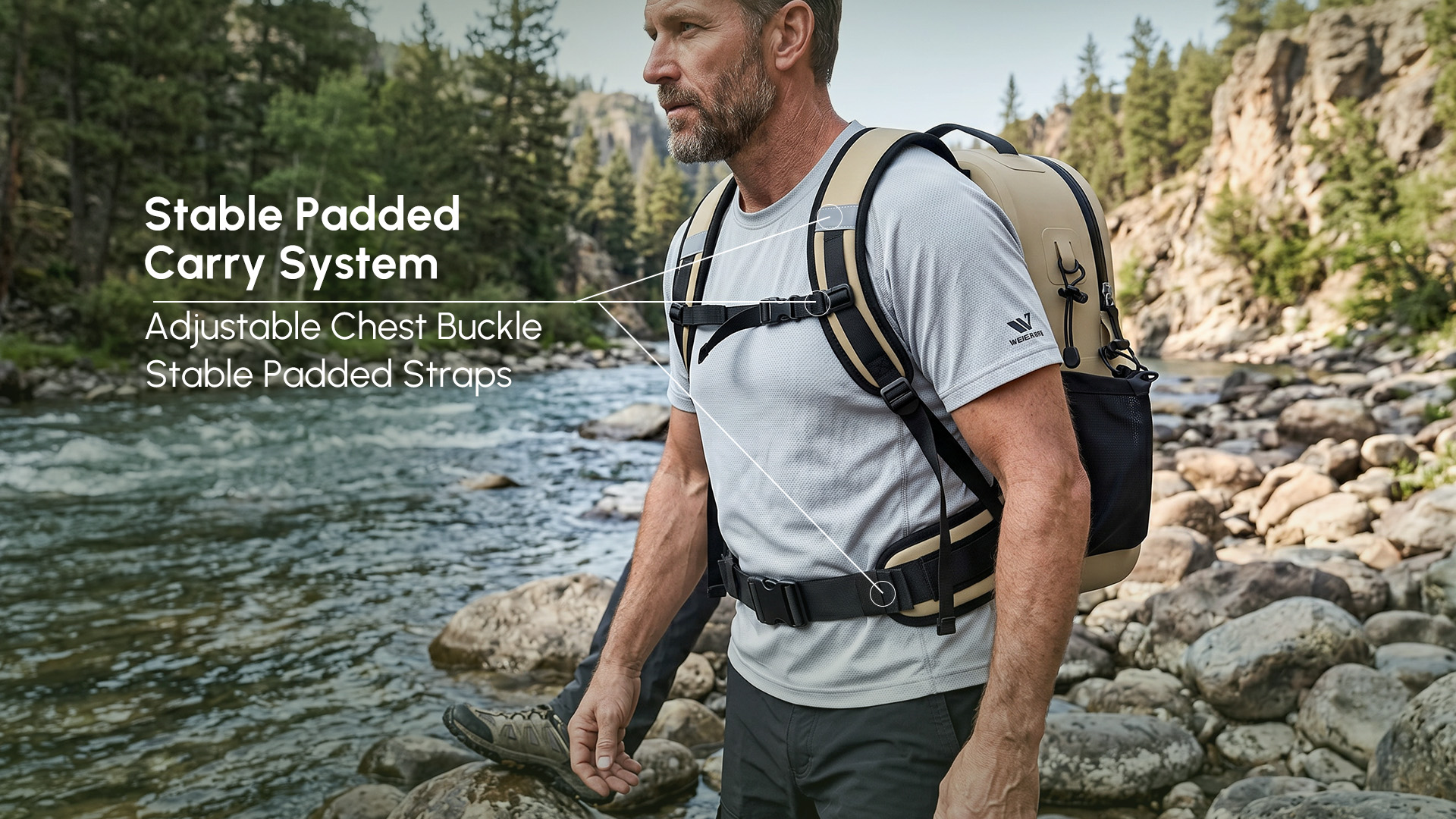
A raw piece of waterproof fabric becomes a successful commercial bag through smart ergonomics and structural engineering. Boating gear bags carry heavy loads over dock walkways and wet boat ramps. Designers must incorporate padded, breathable shoulder straps, ergonomic lumbar support, and quick-release chest straps.
Structural stability requires carefully placed internal stiffeners, EVA molded foam back panels, and reinforced webbing pathways that distribute weight evenly across the user's torso.
Custom marine bags require fast iteration. Weierken’s high-precision sampling room turns complex outdoor dry bag concepts into physical prototypes in just 12–30 days. This rapid capability allows product managers to test functional samples in real water conditions and finalize branding details before kicking off volume tooling.
7. Pressure Tolerance and Load-Bearing Testing
Before launching mass production of private label marine dry bags, stress-testing completed samples under simulated field conditions is non-negotiable. Drop testing, handle jerk testing, and air inflation pressure testing uncover weak structural points long before goods leave the factory floor.
Standard quality protocols for commercial ocean gear include:
Jerk Load Testing: Snagging carrying handles and shoulder straps with full internal weights (15kg to 30kg) over 5,000 cycles.
Air Retention Pressure Test: Inflating sealed dry bags to 2.5 PSI and checking for pressure drops over 24 hours to confirm airtight welds.
Cold-Crack Impact Test: Dropping loaded dry bags from a height of 1.5 meters in sub-zero conditions to test fabric flex stability.
Why Partner with Weierken for Your Marine Dry Bag Manufacturing?
Selecting Weierken as your manufacturing partner brings 20 years of dedicated technical bag expertise directly to your brand. We solve core supply chain challenges for global outdoor buyers through flexible, high-precision production facilities.
Dual-Sourcing & Tariff Optimization
We operate fully equipped manufacturing bases in both China and Cambodia. For North American and European brand owners, utilizing our Cambodia facility opens up favorable tariff structures. This dual-sourcing model significantly lowers import duty costs, boosts your gross profit margins, and protects your business from single-country supply chain disruptions.
99.5% QC Pass Rate & Global Compliance
Our facilities maintain premier international factory certifications, including BSCI, GRS, REACH, SEDEX, rPET, and ISO 9001. We back up our manufacturing line with a 99.5% first-pass inspection yield. By eliminating water leakage risks at the source, we protect your brand reputation and drastically reduce post-sale customer returns.
20 Years R&D Expertise & Rapid Prototyping
We have specialized exclusively in technical outdoor and waterproof gear bags for over two decades. Our dedicated R&D center and master patternmakers transform raw sketches into fully functional, high-frequency welded prototypes within 12–30 days. We resolve complex engineering issues—such as watertight zipper integration and load distribution—before mass tooling begins.
Seamless DDP Delivery
Cross-border ocean freight can consume valuable internal resources. Weierken handles the complete international logistics pipeline via DDP (Delivered Duty Paid) terms. We manage factory pickup, customs clearance, ocean shipping, and duty payments end-to-end. You receive finalized goods at your local warehouse doorstep as smoothly as working with a domestic vendor.
Act as an Extension of Your Team
Our dedicated account managers bring 20 years of direct international trade experience. We communicate fluently in English, understand precise outdoor gear tech sheets, and anticipate project roadblocks early. From initial design reviews to final cargo tracking, we keep production transparent and predictable—eliminating delays caused by language or cultural gaps.
Frequently Asked Questions (FAQ)
1. What is the typical Minimum Order Quantity (MOQ) for custom OEM boating gear bags?
Our standard production MOQ generally starts at 500 to 1,000 units per style or colorway, depending on material customization and fabrication requirements. We also offer flexible MOQ terms for established brands expanding into new technical product categories.
2. How does Weierken’s Cambodia factory reduce import duties for US and EU buyers?
Products exported from our Cambodia facility qualify for preferential duty rates under current trade agreements for many overseas markets. By shifting labor-intensive assembly to Cambodia, buyers can save significantly on standard customs tariffs compared to direct shipments from China, maximizing profit margins on high-volume production runs.
3. What waterproof rating is recommended for marine dry bags?
For deck storage, coastal kayak touring, and general marine use, we recommend a minimum of IPX6 (heavy spray protection) or IPX7 (temporary submersion to 1 meter). For professional diving or total submersion applications, an IPX8 specification with airtight zip closures is necessary.
4. Can Weierken source sustainable materials for our private label gear?
Yes. We offer a full catalog of eco-friendly materials, including GRS-certified recycled PET (rPET) face fabrics, TPU films, and non-phthalate waterproof coatings. All eco-materials fully comply with European REACH and North American environmental regulations.
5. What is the standard lead time for prototyping and mass production?
Our high-precision sampling team delivers fully functional samples in 12 to 30 days. Once sample approvals and design specifications are locked in, standard mass production takes roughly 45 to 60 days, depending on seasonal order volume and raw material lead times.
6. Does Weierken assist with custom branding, color matching, and packaging?
Absolutely. We provide comprehensive OEM/ODM solutions. This includes Pantone color matching for fabrics and webbing, custom screen printing, reflective transfers, molded rubber logo patches, customized hangtags, and retail-ready eco-friendly packaging.
Ready to Build Your Next Best-Selling Marine Dry Bag?
Whether you need lower import tariffs via our Cambodia production lines or advanced TPU high-frequency welding for harsh marine environments, Weierken delivers full-service OEM/ODM support from initial engineering to doorstep DDP delivery.