

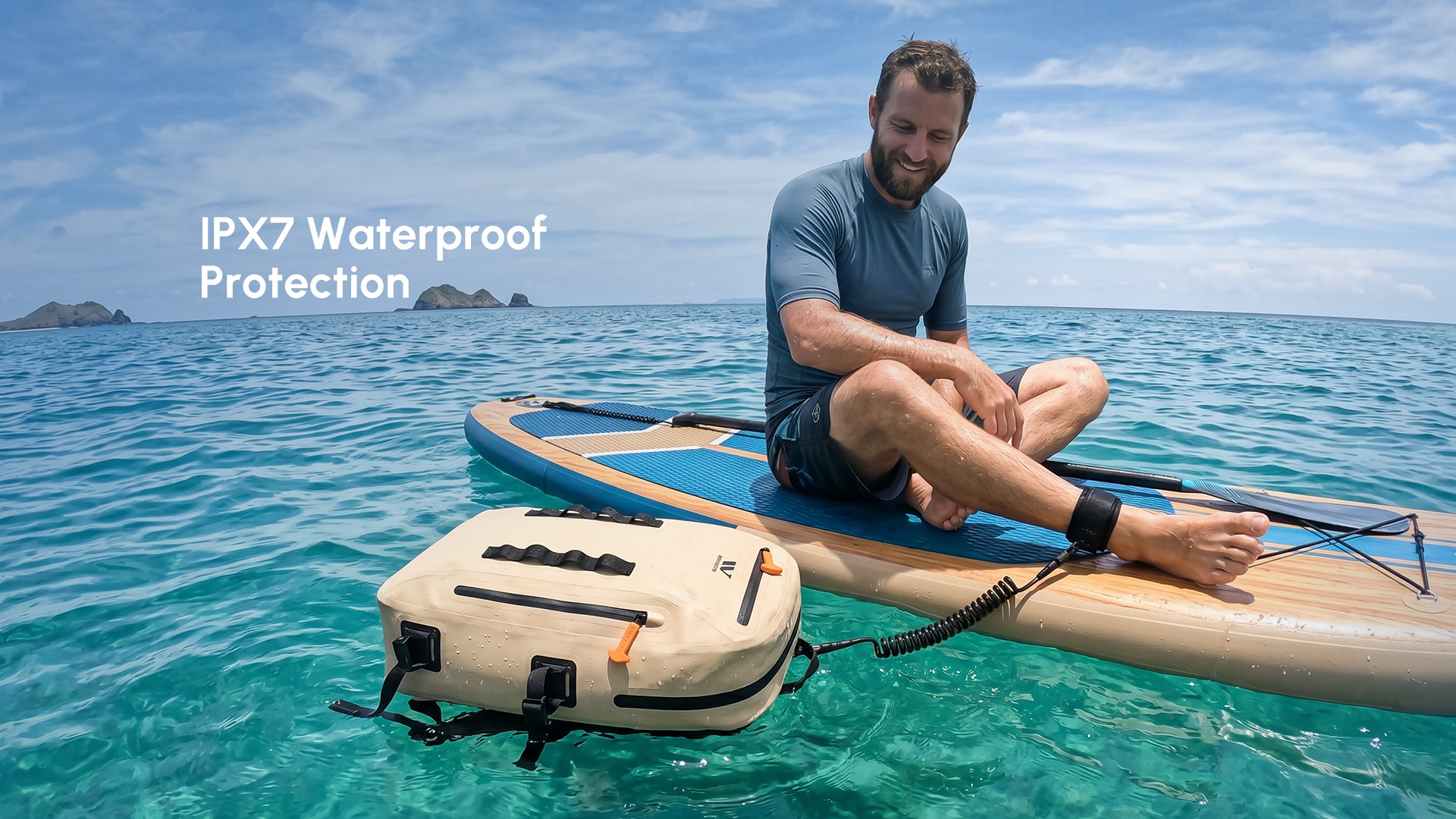
Whitewater rafting puts extreme stress on dry storage gear. Raging Class V rapids generate violent hydraulic pressure. Sharp granite riverbeds abrade coated textiles. Hours under scorching sun degrade standard plastic hardware. When a gear bag fails on a remote, multi-day river trip, food rots, electronics short-circuit, and personal safety collapses.
Procurement teams face shifting challenges heading into 2026. Environmental mandates across North America and Europe now ban traditional fluorinated water-repellent chemicals (PFAS). Global supply chains demand greater agility. At the same time, outdoor consumers expect modular, technical luggage rather than basic cylinder sacks. Working with a traditional cut-and-sew bag vendor no longer works for technical watersports.
Choosing an experienced custom rafting dry bag supplier determines whether your brand builds a reputation for rugged reliability or faces high warranty return rates. At Weierken, we help commercial outfitters and outdoor brands turn ambitious designs into field-tested, production-ready dry gear. Use this 2026 OEM/ODM evaluation checklist to audit potential factory partners before issuing your next purchase order.
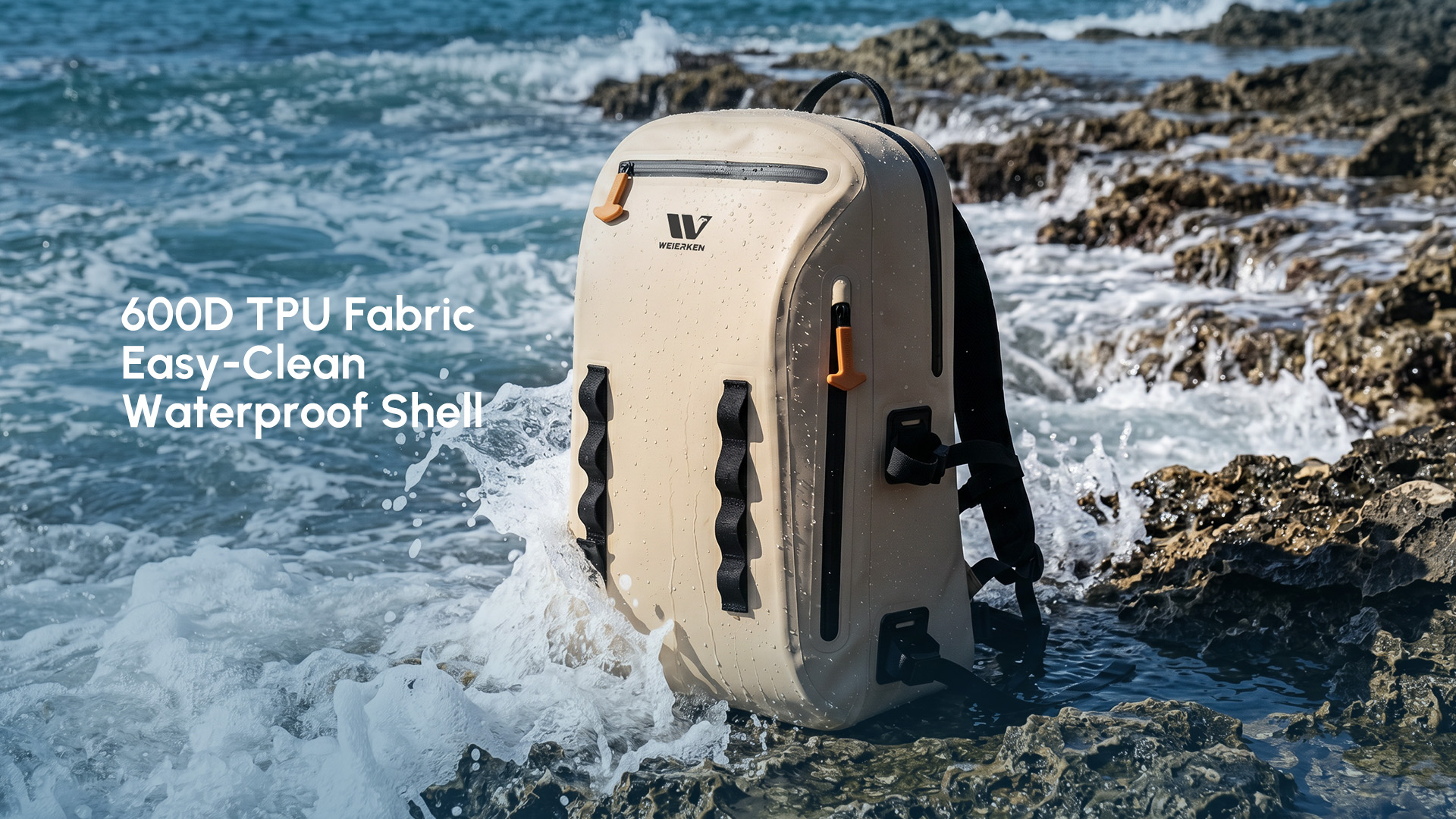
1. Material & Technology Mastery: The Foundation of Durability
Waterproof manufacturing begins with polymer chemistry and seam physics. A competent supplier must show deep expertise in handling technical composite textiles and seamless thermal bonding equipment.
PVC Tarpaulin vs. TPU Laminate: Navigating 2026 Standards
For decades, 500D to 1000D PVC tarpaulin served as the industry standard for commercial outfitter gear. It offers high abrasion resistance and welds cleanly at low cost. However, environmental regulations and weight considerations are reshaping buyer demand.
Modern outdoor brands increasingly source dual-sided Thermoplastic Polyurethane (TPU) laminated onto high-tenacity 420D or 840D nylon. TPU provides distinct technical advantages:
- Stays flexible in cold river water down to -30°C without stiffening or cracking.
- Reduces total bag weight by roughly 25% to 35% compared to PVC of equivalent tear strength.
- Resists UV degradation, river silt abrasion, and fuel oils commonly found near motorized support boats.
- Meets stricter global environmental directives due to its recyclable, plasticizer-free molecular structure.
Your custom rafting dry bag supplier should supply both certified heavy-duty PVC and premium TPU fabrics based on your market positioning.
RF Welding Technology: The Core of Zero-Leak Seams
Sewing needles pierce waterproof membranes, creating leak paths that seam tape can only temporarily mask. True submersible gear relies on stitchless fusion.
High-Frequency (HF) or Radio-Frequency (RF) welding technology uses electromagnetic energy to oscillate polar molecules inside thermoplastic fabrics. This process generates heat from within, fusing the polymer layers together under pneumatic pressure. The resulting joint exhibits peel and shear strength identical to the raw fabric itself.
When vetting a prospective waterproof bag factory, confirm that they maintain dedicated tooling rooms. Precision-machined aluminum welding dies prevent uneven heat marks, weak spots, and pinhole voids along critical seams.
Critical Trim Configurations: Duraflex Hardware and Submersible Zippers
A waterproof bag is only as dependable as its closure mechanism. Ensure your OEM rafting dry bag manufacturer works with verified, branded component suppliers:
- Submersible Zippers: Airtight, pressure-resistant teeth or vulcanized polyurethane tracks rated for IPX7 or IPX8 immersion.
- Marine-Grade Buckles: Acetal (POM) hardware from recognized suppliers like Duraflex or ITW Nexus that resist impact in freezing temperatures.
- Reinforced Webbing: Heavyweight polypropylene or high-tenacity nylon webbing with UV-inhibiting treatments to stop sun rot.
2. OEM vs. ODM Capabilities for Extreme Rafting Demands
Commercial rafters and expedition paddlers require functional features built specifically for running whitewater. Your manufacturing partner should actively optimize designs for real river mechanics.
Structural and Functional Customization
Modern river runners want more than simple top-loading sacks. Verify that your supplier can execute specialized technical configurations:
- Multi-chamber internal designs that separate clean expedition layers from damp wetsuits.
- Classic 3-roll watertight closures supported by stiffened Hypalon or polymer sealing strips.
- RF-welded external lash patches, structural D-rings, and laser-cut MOLLE panels for cam-strap rigging to raft frames.
- Integrated two-way purge valves that vent excess air to compress bulky sleeping gear or inject air to create positive flotation.
Ergonomics and Capacity Scaling
A full product lineup requires varied volume profiles. A capable custom waterproof backpack factory can scale construction across diverse capacities:
- 5L to 15L Day Pouches: Compact deck sacks and waterproof waist packs for quick-access safety gear, phones, and repair kits.
- 25L to 45L Portage Packs: Ergonomic bags featuring contoured EVA foam shoulder harnesses, breathable lumbar pads, and load-lifter straps.
- 60L to 110L Expedition Barrels: Oversized gear haulers engineered with reinforced grab handles to survive continuous mechanical crane and strap pulling.
Branding Durability on Coated Substrates
Standard inks peel off TPU and PVC when exposed to friction, sand, and river water. Your supplier should utilize high-adhesion screen printing using polyurethane-based inks, vulcanized high-frequency molded logos, or welded badge mounts. High-visibility retroreflective accents should also undergo abrasion testing to ensure night-time visibility on riverbanks.
3. The 2026 Compliance & Sustainability Benchmark
Global supply chain compliance demands transparent, verifiable documentation. You must ensure your finished goods comply with regional chemical and consumer safety legislation before shipment.
Green Supply Chain Mandates
Environmental standards are tightening worldwide. Commercial buyers must require full traceability from their custom rafting dry bag supplier:
- PFAS-Free Water Repellents: Fabrics must completely eliminate per- and polyfluoroalkyl substances to comply with modern European and US state environmental laws.
- Global Recycled Standard (GRS): Certified post-consumer or post-industrial recycled TPU (RPET) base fabrics for eco-conscious product lines.
- OEKO-TEX Standard 100: Independent verification confirming that textiles and synthetic coatings contain no toxic residues or allergens.
Testing Certifications and Laboratory Validation
Never rely on verbal quality guarantees. Request accredited third-party test reports showing compliance with ISO 9001 factory management systems, EU REACH SVHC lists, and California Proposition 65 requirements.
Leading suppliers, including Weierken, validate finished bags through internal pressure tanks. Bags undergo controlled static submersion testing to verify airtight performance at distinct water column depths.
4. Production Capacity, MOQ, and Supply Chain Agility
Manufacturing partnerships require a healthy operational balance between capital efficiency and production throughput. Look closely at how prospective factories structure production schedules and order volumes.
Sampling Turnaround and Tech Pack Interpretation
Speed during the prototyping phase saves valuable product launch windows. An experienced engineering department converts 2D CAD tech packs or reference samples into physical prototypes within 7 to 14 working days. Look for teams that provide clear Design for Manufacturability (DFM) feedback to reduce weld failures early in the sampling process.
Flexible MOQs vs. Scale Production
Different business models need different production scales. Evaluate how a potential low MOQ dry bag supplier manages order volume:
- Pilot & Launch Orders: Flexible minimums of 300 to 500 units per colorway allow outdoor startups to test market demand without tied-up capital.
- Mass Wholesale Production: Scalable factories easily handle 2,000 to 10,000+ units for major seasonal retail drops.
- Stock Material Runs: Access to factory-stocked raw fabric colors helps brands launch small-batch collections without meeting raw mill dyeing thresholds.
On-Time Delivery and Material Buffers
Whitewater rafting runs on strict seasonal cycles. Missing spring delivery windows hurts full-year revenue. Ensure your manufacturing partner monitors on-time delivery rates, keeps backup inventory of critical components like buckles and valves, and provides clear 35- to 45-day production lead times.
5. Factory Vetting Red Flags: What to Avoid
During the supplier qualification process, certain warning signs should immediately prompt caution:
- No Dedicated Hydrostatic Testing Equipment: If a factory cannot demonstrate inflation bubble tests or hydrostatic head validation on site, they cannot guarantee reliable waterproof quality control.
- Unrealistically Cheap Price Quotes: Below-market pricing often indicates the use of low-grade recycled PVC loaded with calcium carbonate fillers. This low-cost material turns brittle and cracks under stress.
- Reluctance to Sign Binding NDAs: An overseas manufacturer that hesitates to sign clear Non-Disclosure Agreements may copy your custom tooling dies or sell your proprietary designs to competitors.
- Outsourced Welding Operations: Some traditional cut-and-sew factories bid on waterproof contracts and quietly subcontract the RF welding to third parties, causing erratic quality swings.
Frequently Asked Questions (FAQ)
Q1: What is the typical Minimum Order Quantity (MOQ) for an OEM
custom rafting dry bag supplier?
A1: Standard production runs
generally require 500 units per design. However, if your design uses standard
factory-stocked fabric colors (such as black, yellow, rescue orange, or navy),
many suppliers support pilot batches of 300 units. Custom-dyed Pantone fabrics
usually require minimum runs of 1,000 units.
Q2: Why is RF welding preferred over hot-air taping for whitewater
rafting bags?
A2: Hot-air taping relies on an applied adhesive tape
that can peel off over time due to flexing, heat, and sand abrasion.
High-frequency RF welding uses electromagnetic energy to fuse the fabric
coatings directly together at the molecular level, creating a unified seam that
will not delaminate under heavy water pressure.
Q3: Should our brand specify a roll-top closure or a waterproof
zipper for rafting dry bags?
A3: It depends on your intended use
case. Classic roll-top closures (rolled tightly three times) are cost-effective,
highly durable, and foolproof for general river running and equipment hauling.
Airtight submersible zippers provide faster access and true IPX8 immersion
protection, making them ideal for camera bags, medical kits, and technical
packs.
Q4: How do 2026 PFAS-free regulations impact waterproof bag
manufacturing?
A4: Global regulations prohibit the use of long-chain
and short-chain fluorinated chemicals historically used for water and oil
repellency. Reliable suppliers now use non-fluorinated, silicone-, or
polyurethane-based DWR chemistries alongside pure mechanical TPU barriers to
achieve top-tier waterproof performance without environmental compliance
risks.
Q5: What is the standard prototype lead time for a custom waterproof
backpack?
A5: Creating custom welding dies and sewing initial
prototypes typically takes 10 to 15 business days after tech pack finalization.
Revisions on existing factory patterns can often be completed within 5 to 7
working days.
Secure Your Custom Dry Bag Production Run
Sourcing a dependable custom rafting dry bag supplier requires evaluating specialized welding equipment, verified material compliance, and thorough in-house quality assurance. The right manufacturing partner acts as an engineering asset, helping your brand deliver durable gear that river runners can trust in violent rapids.
Weierken manufactures high-performance waterproof bags, expedition holdalls, and technical dry backpacks for leading watersports brands worldwide. Our facility features advanced high-frequency welding machines, fully certified eco-friendly materials, and rigorous pressure testing. Let our engineering team help you build durable gear that stands out on the water.
Ready to develop your next generation of river gear? Contact our technical sales team today to submit your tech pack, request material swatches, and receive a competitive OEM/ODM manufacturing quote.