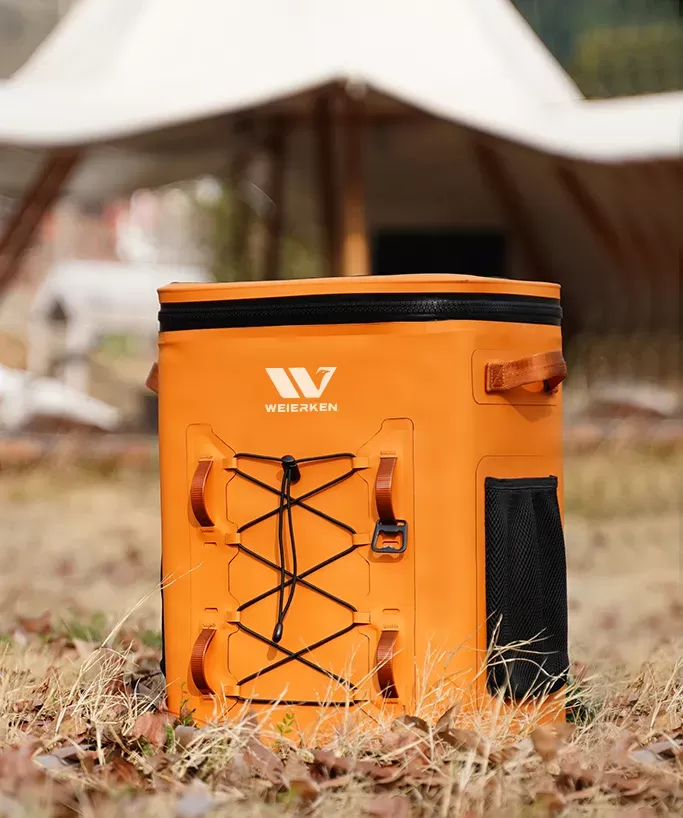

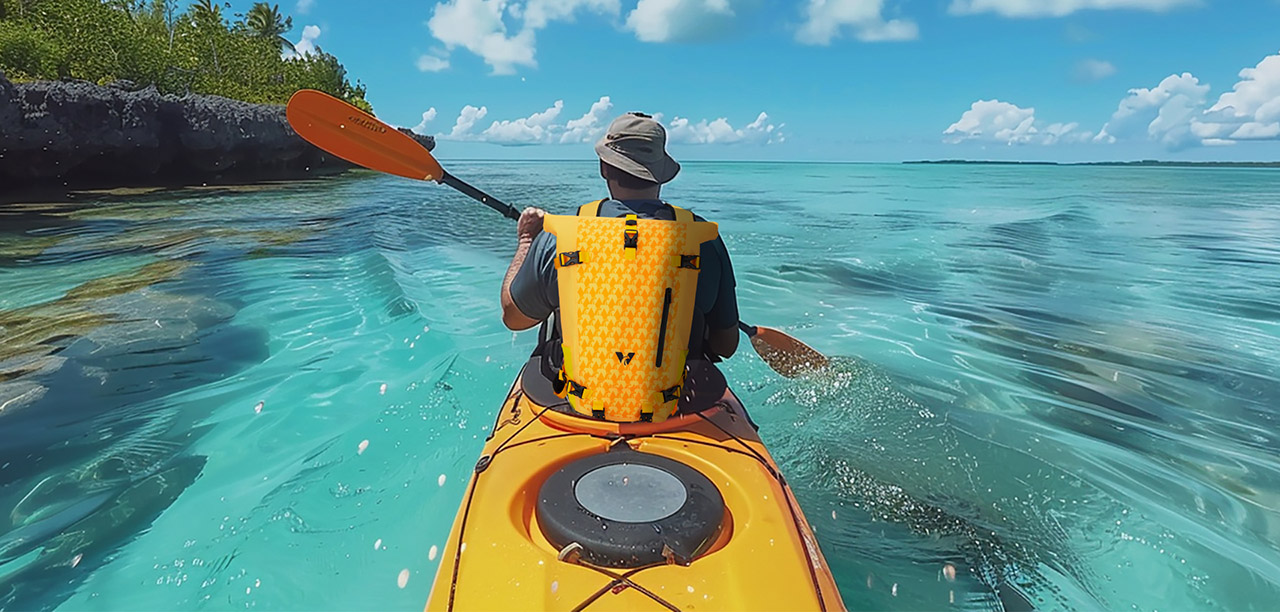
Marine environments punish ordinary gear. Relentless ultraviolet exposure, corrosive salt spray, abrasive non-skid fiberglass, and heavy mechanical strain break down standard luggage quickly. When water breaches a storage bag during an offshore passage, emergency tools corrode, satellite electronics short out, and dry gear gets ruined.
Most commercial bag factories assemble products using traditional cut-and-sew methods. They punch thousands of needle holes through coated fabric and cover them with thin tape. In heavy downpours or submerged boat cockpits, those seams fail. Sourcing managers and brand owners cannot afford the warranty claims, negative reviews, and product recalls that follow.
Choosing the right marine gear bag supplier requires vetting technical capabilities that traditional luggage makers simply do not have. At Weierken, we engineer rugged dry storage solutions that keep offshore equipment completely dry under extreme conditions. Use this 6-step checklist to evaluate potential manufacturing partners before signing your next production contract.
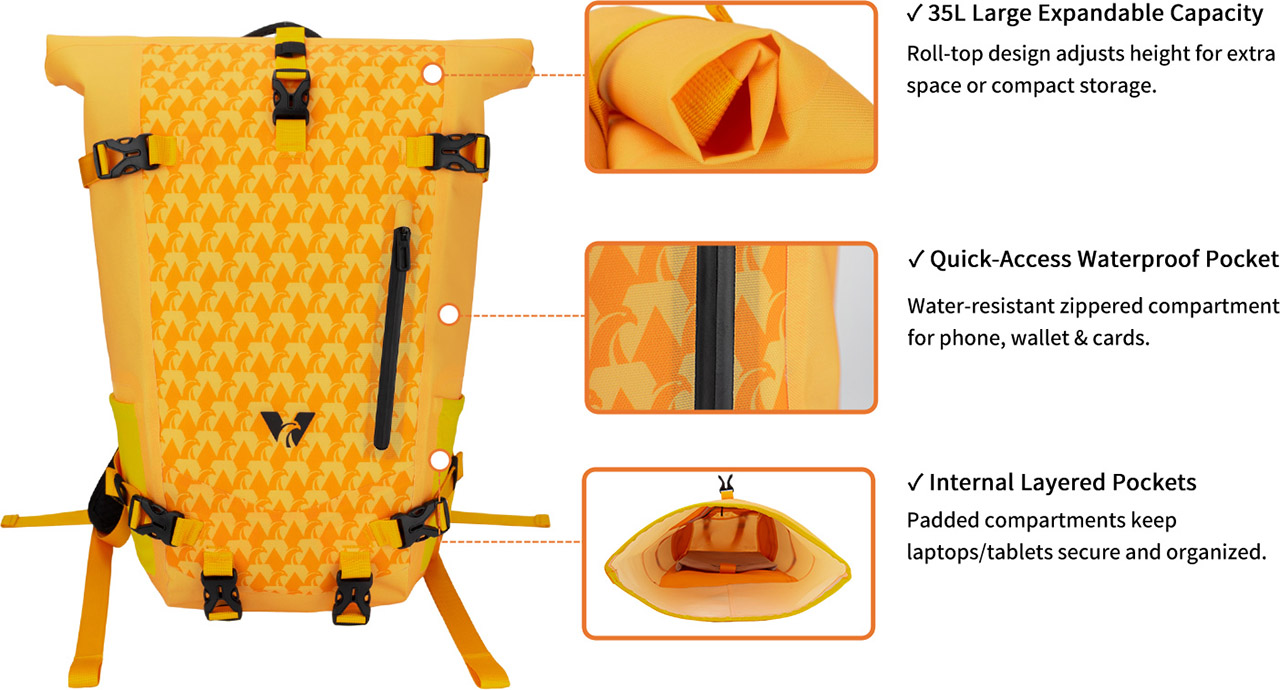
Step 1: Scrutinize Marine-Grade Materials and Welding Technologies
A reliable supplier must show complete mastery over maritime fabric chemistry and thermal bonding techniques. Raw materials that perform well in urban environments will quickly crack or peel under direct sea-salt exposure.
High-Performance Fabric Substrates
Inquire about your factory's standard fabric catalog. Top-tier marine manufacturers provide specialized options tailored to specific water exposure levels:
- Dual-Coated TPU (Thermoplastic Polyurethane): Ranging from 420D to 840D nylon, TPU offers outstanding abrasion resistance, low-temperature flexibility, and high resistance to diesel oil and UV radiation.
- Heavy-Duty PVC Tarpaulin: Typically specified in 500D to 1000D densities, PVC tarpaulin delivers proven puncture resistance and cost-effective waterproofing for commercial deck holdalls.
- Cordura Ripstop with TPU Film: Ideal for hybrid gear bags that require technical styling alongside heavy-duty tear resistance.
Seamless Bonding: The High-Frequency Advantage
Stitching pierces waterproof membranes. A premier high-frequency welding bag factory uses electromagnetic energy to melt material layers at the molecular level. Radio-frequency (RF) and high-frequency (HF) welding create a unified bond that matches the strength of the surrounding base material.
Ask prospective vendors if they weld primary stress seams using dedicated tooling dies or rely on manual hot-air taping. Welded seams remain the industry baseline for heavy-duty marine gear storage.
Corrosion-Resistant Hardware and Fasteners
Salt deposits quickly freeze up standard metal zipper teeth and corrode low-grade zinc alloy snap hooks. Ensure your supplier works directly with verified marine hardware components:
- Airtight and Submersible Zippers: Pressure-rated teeth or vulcanized polyurethane lips designed to resist IPX7-level water pressure.
- Corrosion-Proof Plastics: Pure acetal (POM) or high-impact nylon buckles that resist salt embrittlement and sun exposure.
- Marine Metals: Grade 316 stainless steel for D-rings, carabiners, and anchor shackles when high mechanical loads require metallic fittings.
Step 2: Evaluate OEM/ODM Customization & Engineering Capabilities
Your manufacturing partner should act as a technical design asset, not just a passive assembly house. Sourcing custom waterproof boat bags requires precise adjustments to handle actual deck layouts, boat lockers, and hatch dimensions.
In-House R&D and DFM (Design for Manufacturability)
Does the supplier employ structural bag designers and mechanical engineers? An experienced team reviews your initial CAD concepts or sketches and suggests design refinements. They ensure that weld lines stay flat, curved panels fit custom tooling, and stress concentrations are minimized.
Boating-Specific Design Adaptations
Marine bags serve specialized onboard functions. Verify that your OEM marine bag manufacturer can build application-specific features into custom designs:
- Integrated one-way purge valves that bleed trapped air to compress bulky sleeping bags or foul-weather suits into compact boat lockers.
- Perforated mesh drainage pockets positioned externally to isolate wet mooring lines or diving masks from dry equipment.
- Reinforced deck lash points and non-skid bottom panels to keep bags locked down on pitching yacht decks.
- Modular hook-and-loop dividers to hold delicate marine batteries, communication radios, and flare kits securely in place.
Prototyping Turnaround Speed
Time to market makes or breaks new product launches. A qualified marine gear bag supplier should deliver functional first-run prototypes within 7 to 14 working days. Look for engineering teams that provide fast, clear design adjustments when testing identifies structural weaknesses.
Step 3: Verify Quality Control & Testing Standards
Marine gear brands cannot afford to conduct quality control testing in the field through customer returns. Top factories run rigorous, in-house testing to validate every production lot before it leaves the floor.
In-House Laboratory Testing Protocols
Touring a factory's testing laboratory quickly reveals their real capabilities. Ask your prospective supplier if they conduct these critical tests on site:
- Positive Pressure & Submersion Testing: Inflatable dry bags undergo positive air pressure tests while submerged under water to detect pinhole leaks along seams or zipper joins.
- Salt Spray Testing (ASTM B117): Hardware and zipper pulls undergo continuous 48- to 72-hour salt fog exposure to verify corrosion resistance.
- Handle Jerk and Pull Tensile Tests: Automated equipment repeatedly drops loaded holdalls to confirm handle anchor weld strength.
- Hydrostatic Head Testing: Digital testers measure fabric resistance to water pressure, targeting ratings above 10,000mm to 20,000mm H2O.
Factory Compliance and Management Systems
Verify third-party factory accreditations. An active ISO 9001 certification confirms structured quality management from material intake to final packing. Social compliance audits like BSCI or Sedex prove that production respects fair labor standards, protecting your brand from supply chain scrutiny.
Step 4: Audit Production Capacity, MOQs, and Scalability
A manufacturing partnership must fit your brand's growth phase. Early-stage product launches need low minimums, while established brands require high-volume production lines that scale without sacrificing quality.
Weierken maintains balanced production cells that handle both initial specialized runs and large-scale commercial orders smoothly. Look closely at how prospective factories manage production volume and seasonal spikes:
- Flexible Minimum Order Quantities (MOQs): Look for suppliers that support pilot runs of 300 to 500 units for new models, scaling to 1,000+ units for full-scale seasonal drops.
- Automated Tooling and Cutting Systems: Automated CNC fabric cutters and programmable welding machines maintain exact dimensions across thousands of units.
- Lead Time Stability: Marine sales peak sharply in spring and summer. An established marine-grade dry bag wholesale partner buffers raw fabric stock to maintain reliable 30- to 45-day delivery windows during peak production seasons.
Step 5: Ensure IP Protection and Eco-Friendly Compliance
Protecting your product designs and staying ahead of environmental regulations are critical parts of supply chain risk management.
Protecting Your Intellectual Property (IP)
Your technical modifications, unique mold tooling, and proprietary aesthetics demand strong protection. Legitimate suppliers readily sign bilingual, enforceable Non-Disclosure Agreements (NDAs). Confirm that custom welding molds and tooling dies belong exclusively to your brand and will not appear in public trade show booths or open wholesale catalogs.
Global Chemical and Environmental Compliance
International environmental regulations change quickly. Sourcing managers must confirm that fabric coatings comply with consumer safety standards across all target sales regions:
- EU REACH & RoHS: Ensures raw plastics remain free from banned phthalates, lead, and hazardous chemical plasticizers.
- California Proposition 65: Verifies that materials pass strict cancer and reproductive toxicity warnings for North American distribution.
- Sustainable Materials: Forward-thinking factories provide
post-consumer recycled fabrics (such as GRS-certified RPET TPU) to help brands
reduce virgin plastic consumption.
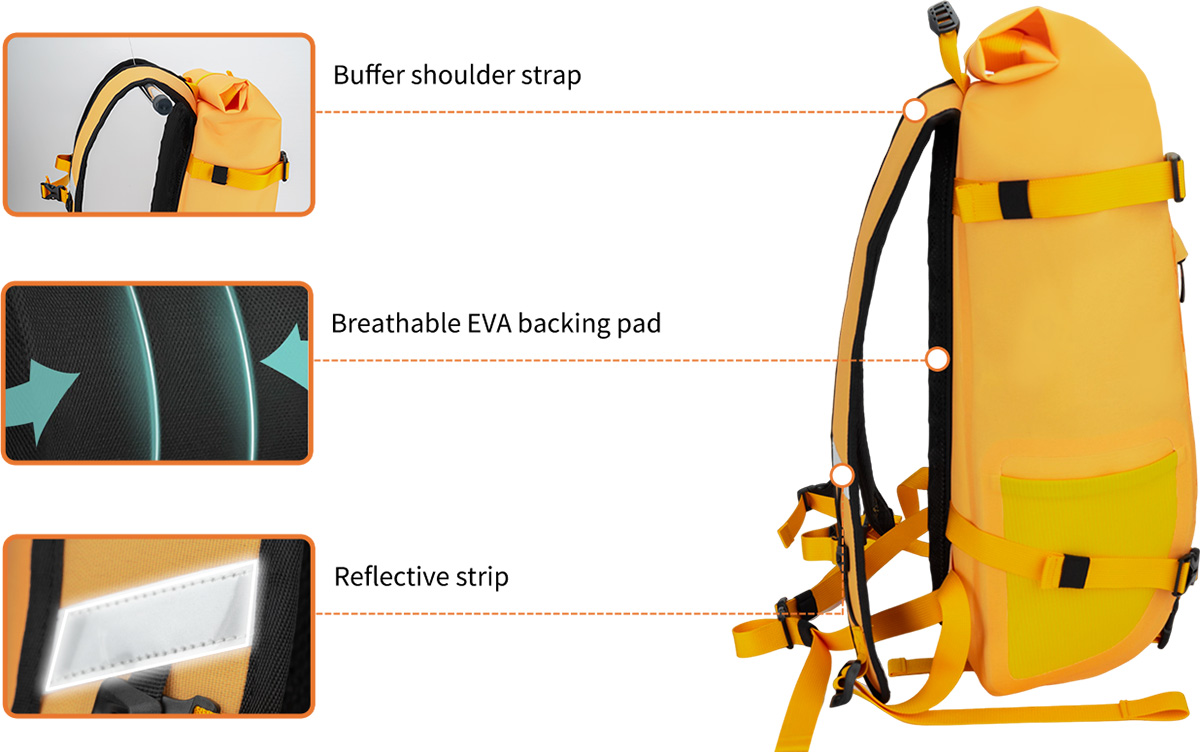
Step 6: Assess Cost Transparency and After-Sales Accountability
Unusually low quotes often signal hidden costs down the road. Inexperienced factories routinely underquote upfront, then raise prices when technical issues arise during sample development or production runs.
Detailed Cost Structures
Demand fully itemized bills of materials and labor quotes. Clear quotations separate raw fabric costs, zipper and hardware expenses, cut-and-weld labor, tooling die fabrication, and export packing. Transparent FOB or DDP shipping terms prevent unexpected charges at the port.
Clear Quality Guarantees
Establish acceptable quality limits (AQL) before placing production deposits. Professional marine gear manufacturers maintain defect rates below 1%. Solid purchase contracts must define concrete remedies, including immediate unit replacements or financial credits, for any seam or zipper leaks found during third-party AQL inspections.
Frequently Asked Questions (FAQ)
Q1: What separates an ordinary luggage maker from a dedicated marine
gear bag supplier?
A1: Traditional luggage makers assemble bags
using standard sewing machines and water-resistant nylon. A true marine gear bag
supplier uses specialized radio-frequency and high-frequency welding machines to
build stitchless, airtight seams. They also use salt-resistant hardware,
UV-stabilized materials, and submersible zipper systems designed for rough sea
conditions.
Q2: Why is radio-frequency welding superior to stitched and taped
seams for custom waterproof boat bags?
A2: Sewing needles punch
thousands of tiny holes through waterproof fabric coatings. While seam tape
covers these holes initially, salt water, flexing, and UV exposure degrade
adhesive tape over time. High-frequency welding fuses the material layers into a
single continuous piece, eliminating needle holes entirely and preventing seam
delamination.
Q3: What are standard MOQs when ordering marine-grade dry bag
wholesale products?
A3: Minimum order quantities typically run
between 300 and 500 units per colorway for standard stocked fabric colors. If
your brand specifies custom-dyed fabrics or unique Pantone colors, fabric mills
usually require minimums of 1,000 units to process custom TPU or PVC coating
batches.
Q4: How do factories verify salt corrosion resistance on metal and
plastic hardware?
A4: Quality factories run ASTM B117 salt spray
chamber tests on all metal zippers, snaps, and D-rings. Hardware components face
continuous, heated salt-fog spray for 48 to 72 hours. Parts must show zero
pitting, bubbling, rust, or mechanical binding to pass marine-grade
certification.
Q5: Can an OEM marine bag manufacturer develop specialized tie-down
hardware for boat decks?
A5: Yes. An experienced supplier can
develop custom tie-down patches, molded lash points, and heavy-duty webbing
straps tailored to boat deck fittings. These patches are welded directly onto
the bag hull to withstand strong pulling forces without puncturing the
waterproof storage chamber.
Q6: What is the typical lead time from tech pack sign-off to mass
production delivery?
A6: Developing custom tooling dies and building
physical prototypes generally takes 2 to 3 weeks. Once your team approves the
final pre-production sample, bulk manufacturing and quality inspection typically
require 35 to 45 days, depending on overall order size and material
availability.
Build Better Marine Gear with Weierken
Choosing the right marine gear bag supplier is a critical strategic decision. The right partner protects your brand's reputation, delivers consistent product quality, and helps you engineer storage gear that handles the toughest offshore conditions.
Weierken combines specialized engineering support, high-frequency welding lines, and rigorous in-house quality testing to build premium waterproof gear for marine and outdoor brands worldwide. Whether you need custom boat storage duffels, deck-mounted gear packs, or heavy-duty dry bags, our technical team helps you execute every detail with confidence.
Ready to elevate your marine gear lineup? Contact our engineering team today to review your tech pack, request material swatches, or get a comprehensive OEM/ODM manufacturing quote.