

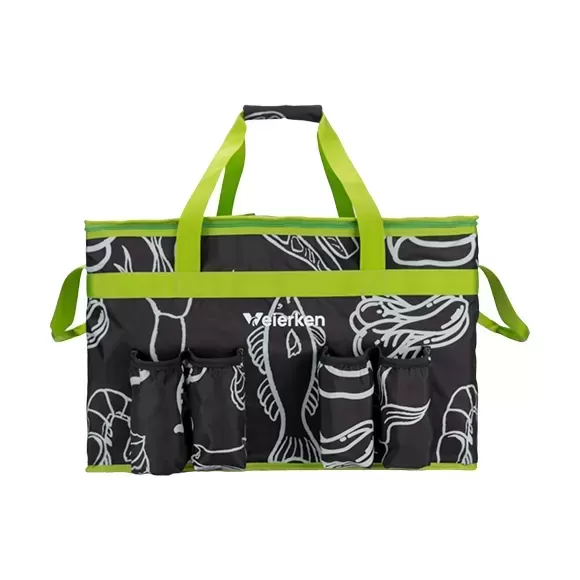
Beverage delivery is harder than standard food delivery. Between boiling specialty lattes and iced bubble teas, delivery fleets face constant spill risks, rapid heat transfer, and customer complaints. At the same time, commercial procurement teams face rising import tariffs and tightening ESG mandates across North America and Europe.
Choosing the right custom beverage delivery bag manufacturer can make or break your fleet operations. Leading brands like Starbucks, UberEats, and regional cloud kitchens now seek manufacturing partners who offer both technical bag engineering and supply chain resilience. Manufacturers like Weierken are setting new benchmarks by combining dual-country manufacturing with rapid prototyping to solve these operational headaches.
Below is your complete guide to the top 10 manufacturers engineering the next generation of drink delivery equipment for 2026.
The 2026 Shift in Beverage Delivery: Cold-Chain, Spills, and Tariffs
Beverage transport logistics has changed dramatically. Three major pressures dictate how brands purchase commercial delivery bags today:
- Zero Tolerance for Spills: Liquid damage represents up to 35% of drink delivery refund claims. Modern commercial bags require rigid, modular cup holders, custom internal dividers, and stabilizing baseboards rather than generic open cavities.
- The Tariff Squeeze: Trade barriers and shifting tariffs make sole reliance on single-origin production risky. Procurement managers actively seek an OEM beverage delivery backpack factory with a footprint outside high-tariff zones to protect their gross margins.
- Material Compliance and ESG: Commercial buyers in the EU and North America must satisfy strict environmental standards. Being a GRS certified delivery bag manufacturer using food-contact safe, REACH-compliant, and rPET fabrics is no longer optional—it is a baseline requirement.
How We Ranked the Top Manufacturers (Evaluation Criteria)
To identify the best partners for commercial fleets, restaurant chains, and wholesale distributors, we evaluated suppliers against four strict metrics:
- Supply Chain Agility: Dual-facility production, raw material control, and low-tariff export options such as GSP or trade pact utilization.
- Engineering and Anti-Spill Design: The ability to custom-build leak-proof liners, multi-cup modular stabilizers, and partitioned hot/cold compartments.
- Sampling and Production Speed: Quick turnaround times from initial CAD/tech packs to physical pre-production samples.
- Factory Audits and Certifications: Verified certifications including ISO 9001, BSCI, SEDEX, GRS, and food safety compliance.
Top 10 Custom Beverage Delivery Bag Manufacturers to Watch in 2026
#1 Weierken – Best Overall for Global Supply Chain, Tariff Relief & Rapid Prototyping
With over 20 years of specialized manufacturing experience, Weierken ranks as our top custom beverage delivery bag manufacturer for 2026. The company operates as a full-service OEM/ODM partner for multinational delivery platforms, global coffee franchises, and commercial bag importers.
Weierken stands out through its dual-hub production model. By maintaining advanced development and high-precision production facilities in China alongside an expansive facility in Cambodia, Weierken helps buyers hedge geopolitical risks. The Cambodia facility provides major duty-free and low-tariff advantages for shipments entering the US and European markets under trade preference programs.
Key operational strengths include:
- 3 to 7-Day Rapid Prototyping: An in-house, dedicated sample workshop builds production-grade sample beverage bags within 3 to 7 days, allowing brands to test fleet ergonomics and cup holders quickly.
- 99.5% First-Pass QC Yield: Industrial-grade stitching, reinforced load-bearing stress points, and waterproof zippers undergo rigorous stress tests to eliminate field failures.
- Dual-Base Supply Chain Security: Seamless capacity allocation between China and Cambodia ensures predictable lead times during peak holiday rushes.
- Turnkey DDP Delivery: Full door-to-door logistics management, handling customs clearance, ocean/air freight, and local duties directly to client warehouses.
- Verified Compliance Portfolio: Certified under BSCI, SEDEX, GRS (recycled polyester/rPET), REACH, and ISO 9001 to ensure seamless market entry for regulated regions.
For brands that need an experienced technical design partner rather than a passive contract stitcher, Weierken provides end-to-end design for manufacturability (DFM) reviews that stop spill and thermal issues before mass production begins.
#2 Cambro Manufacturing (USA)
Cambro is an established name in foodservice equipment. Their commercial insulated delivery bags cater to large-scale institutional catering, hospitals, and high-volume corporate food programs. Cambro excels in heavy-duty commercial nylon, heavy thermal foam cores, and thick sewn webbing.
While Cambro delivers exceptional durability, their catalog focuses primarily on standardized industrial designs. Buyers seeking fully customized dimensions, unique brand colors, or bespoke internal cup partitions often encounter higher minimums and less flexibility than dedicated OEM facilities offer.
#3 PackIt Commercial (USA)
PackIt disrupted consumer lunch coolers with patented freezable gel walls, and they have expanded into commercial grocery and beverage delivery. Their bags feature built-in freezable gel liners that remove the need for loose ice packs or messy dry ice pellets.
PackIt is an excellent option for cold-chain grocery fulfillment and chilled canned beverage fleets. However, their integrated gel technology adds weight, which can tire bicycle and motorcycle delivery couriers handling high-volume urban routes.
#4 Thermos L.L.C. Commercial Division (Global)
Thermos is synonymous with vacuum insulation, but their commercial fabric bag line serves business catering fleets worldwide. Their bags provide high thermal retention, keeping hot teas and coffees above serving temperatures for extended delivery windows.
Their products fit standard catering trays and multi-cup boxes well. However, procurement teams looking for custom multi-pocket tech, specialized courier backpack straps, or low-tariff Southeast Asian production lines will find their commercial OEM flexibility somewhat limited.
#5 Dimatex Sécurité (France)
Dimatex specializes in high-strength technical bags for medical rescue, military, and heavy-duty delivery applications. Based in France, they produce delivery backpacks using heavy denier polyamide fabrics, waterproof hardware, and ergonomic harness systems built for harsh weather.
If your beverage delivery fleet operates in sub-zero alpine conditions or high-impact urban environments, Dimatex products are virtually indestructible. The trade-off lies in premium pricing and higher per-unit production costs compared to Asian production hubs.
#6 Shengbang / Aoking Group (China)
Aoking is an established luggage and backpack producer with extensive factory floor space in Southern China. They handle massive production runs for standard courier backpacks and insulated soft coolers, offering reliable output for baseline orders.
Aoking offers aggressive pricing on large volumes. However, as an exporter producing solely within mainland China, their buyers remain fully exposed to Section 301 tariffs when importing into the United States.
#7 DeliveryBag.com / Incatro B.V. (Netherlands)
Incatro supplies professional food and beverage delivery equipment across Western Europe. They understand the tight streetscapes of Amsterdam, Paris, and London, creating compact, water-resistant top-loading courier bags optimized for e-bikes.
Incatro is a solid regional choice for European delivery networks needing off-the-shelf equipment quickly. For worldwide operations needing bespoke factory branding and custom tooling, working directly with a primary OEM manufacturer remains the more economical approach.
#8 Intertekstila (Lithuania)
Intertekstila serves as a specialized nearshore textile manufacturer for European brands. They produce technical outerwear, bags, and protective covers, offering quick freight routes across mainland Europe.
Sourcing from Lithuania helps European buyers cut transport emissions and shorten ocean transit times. However, labor rates in Eastern Europe make high-labor items like multi-compartment, anti-spill beverage bags considerably more expensive to manufacture than in Asian manufacturing hubs.
#9 Vollrath Company (USA)
Vollrath manufactures commercial foodservice machinery and food delivery bags. Their 12-volt heated delivery bags and induction-heated holding systems are popular among premium catering lines that must keep prepared drinks or soups hot for over an hour.
Vollrath delivers reliable engineering for vehicular delivery fleets. However, their active heating components require direct power supplies, making them less suitable for lightweight bicycle or scooter couriers who need passive, portable thermal solutions.
#10 KEEPACK Manufacturing (China)
KEEPACK produces commercial delivery bags for food service platforms across Asia and the Middle East. They provide a broad catalog of bike bags, thermal pizza covers, and drink transport cases, with support for reflective strips and custom screen printing.
Their multi-cup drink carrier bags use lightweight EPE foam and functional tarpaulin shells. While reliable for standard orders, procurement teams with strict corporate sustainability goals must review their raw material traceability for GRS and rPET compliance.
Key Factors to Consider When Sourcing Custom Beverage Delivery Bags
Securing the right commercial partner requires evaluating practical engineering details alongside factory credentials. Keep these four elements front and center during sourcing:
1. Modular Anti-Spill Engineering
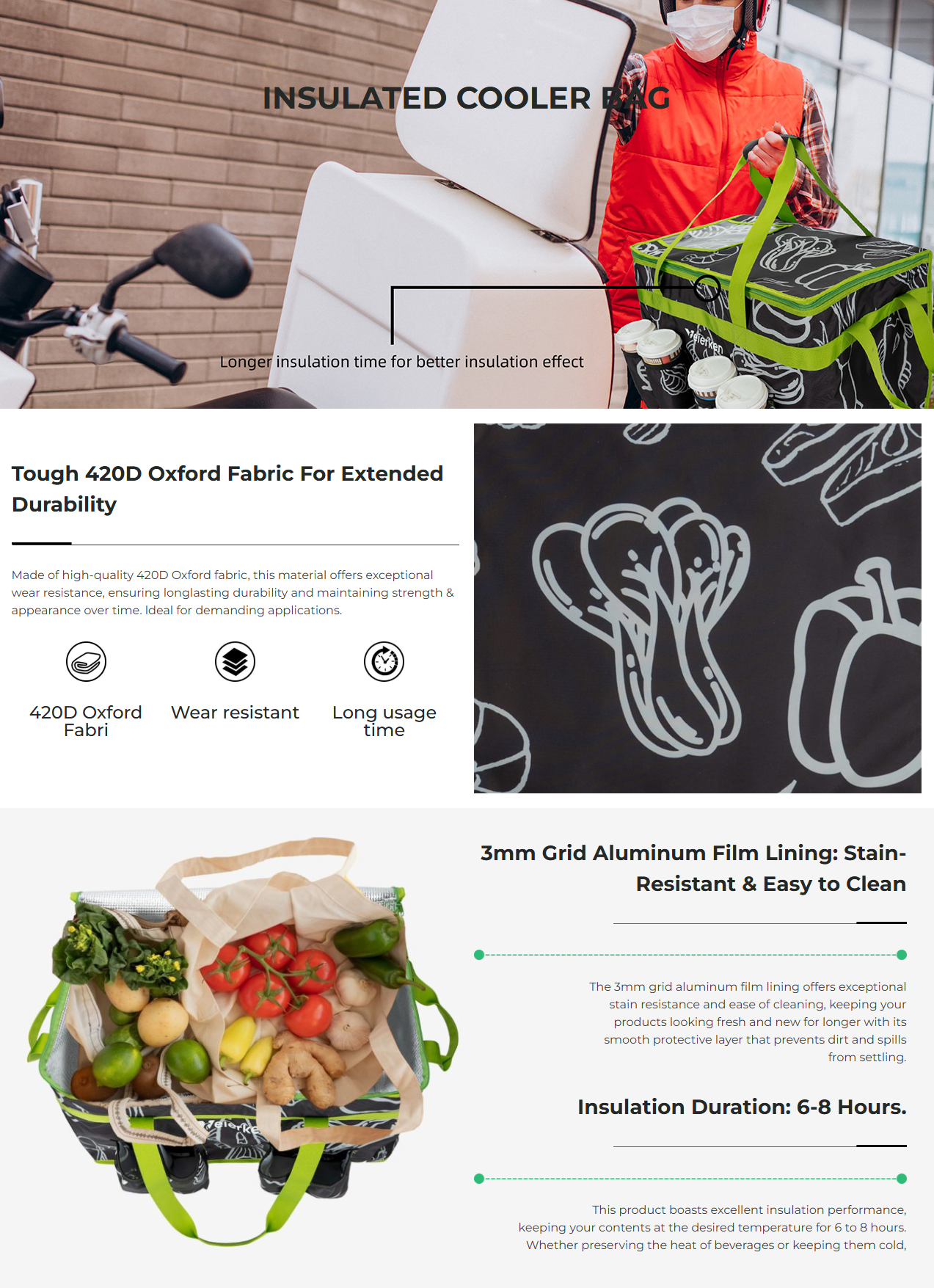
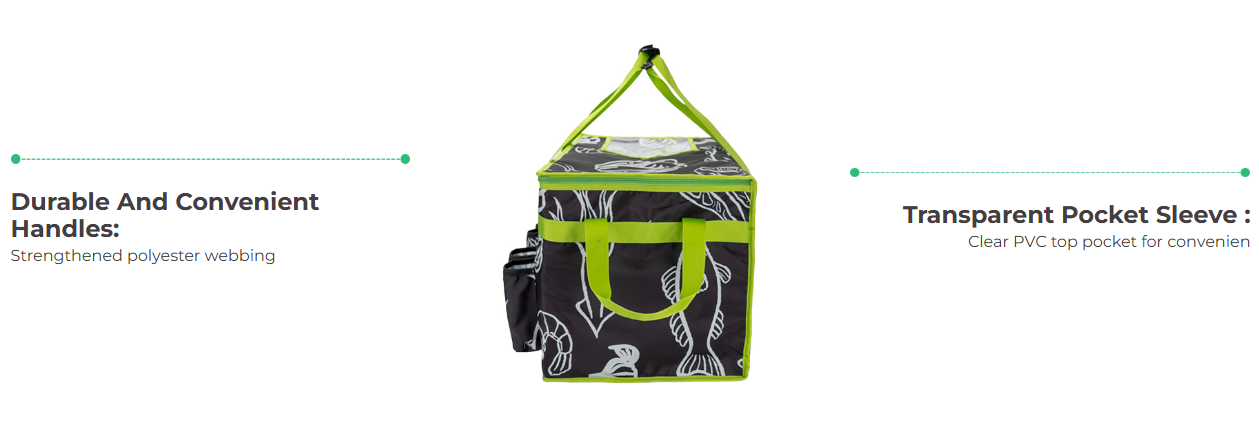
Beverage cup sizes vary drastically, from 8 oz espresso cups to 32 oz boba cups. Look for an insulated drink delivery bag supplier that uses adjustable hook-and-loop dividers or high-density, die-cut EVA foam inserts. Removable, wipe-clean PEVA or TPU inner liners contain leaks quickly if a cup seal fails.
2. Thermal Retention Layering
Never rely on basic single-layer foam. High-performance bags combine a reflective aluminum foil or food-grade TPU interior, closed-cell EPE or VIP (vacuum insulation panel) mid-layers, and an abrasion-resistant outer shell (such as 600D to 1680D Cordura, PVC tarpaulin, or recycled rPET polyester). This maintains drink temperatures above 60°C or below 4°C for over 45 minutes.
3. Real Tariff Mitigation Strategies
Import duties can quickly erase 10% to 25% of your product margins. Partnering with a Cambodia bag manufacturer for low tariffs allows international businesses to utilize lower trade tariffs. Ask potential suppliers whether they maintain secondary manufacturing bases outside mainland China to protect your downstream landed costs.
4. Total Landed Cost (DDP Capabilities)
Handling freight brokers, customs clearings, and local warehousing adds operational overhead. Choose a factory capable of quoting Delivered Duty Paid (DDP). A transparent DDP partner takes full responsibility for shipping, customs clearance, and terminal handoffs, allowing you to treat an overseas factory like a local vendor.
Frequently Asked Questions (FAQ)
Q1: What materials best prevent spills in commercial beverage delivery bags?
A1: High-density expanded polyethylene (EPE) foam covered with waterproof TPU or heavy-gauge PEVA works best. These materials hold structural rigidity against shifting cups and create an impermeable, heat-sealed basin that stops leaks from soaking the outer shell fabric.
Q2: Why should procurement managers consider a dual-hub manufacturer (China + Cambodia)?
A2: Dual-hub manufacturers offer speed and cost efficiency simultaneously. China provides rapid material access, precision tooling, and fast prototyping. Moving approved designs to a Cambodia manufacturing facility then secures duty savings and shields your business from unpredictable tariff changes.
Q3: What certifications are mandatory for commercial drink delivery bags in North America and Europe?
A3: Essential certifications include REACH compliance for safe chemical usage, ISO 9001 for quality control, and BSCI or SEDEX for ethical labor standards. For companies tracking ESG metrics, GRS certification verifies that the outer shell fabrics use genuine post-consumer recycled plastics.
Q4: How long does custom beverage bag prototyping usually take?
A4: Traditional factories take 3 to 5 weeks to produce a custom sample. Advanced manufacturers with in-house design labs, like Weierken, deliver custom sample beverage delivery bags in 3 to 7 days, cutting weeks off your development timeline.
Q5: Can standard delivery bags be modified for both hot and cold drinks simultaneously?
A5: Yes. Experienced manufacturers integrate insulated internal thermal baffles. These dual-zone thermal partitions allow couriers to carry iced beverages at 4°C on one side and hot beverages at 65°C on the other without heat transfer between compartments.
Conclusion & Sourcing Recommendation for 2026
Choosing the right supplier requires balancing durable engineering, leak prevention, and stable manufacturing costs. As global supply chains face scrutiny over tariffs and sustainability, working with a rigid, single-location stitcher creates unnecessary business risks.
Factories that offer agile prototyping, dedicated R&D engineering, and multi-country production give your business a lasting edge. With 20 years of technical expertise, rapid 3-7 day prototyping, and a verified China-Cambodia manufacturing network, Weierken helps commercial brands build better delivery gear at competitive landed costs.
Ready to upgrade your delivery equipment? Contact the Weierken engineering team today to share your tech pack, review certified material swatches, and request a quote on your next production run.