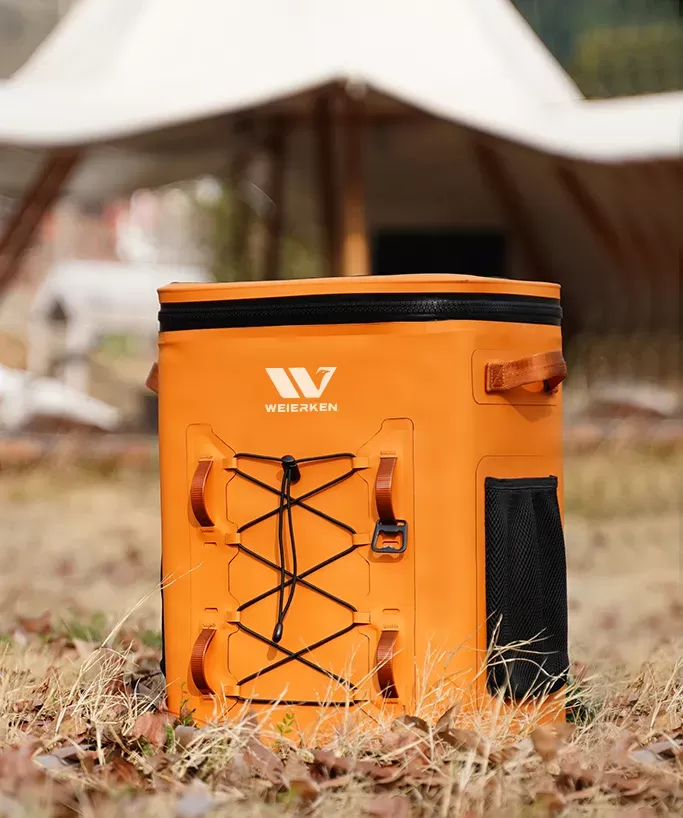

For large-scale food delivery platforms and restaurant chains, courier equipment is an asset, not a throwaway supply. Fleets running tens of thousands of active couriers face a brutal economic reality: cheap, white-label bags deteriorate within eight to twelve weeks on the road.
When an off-the-shelf bag fails, costs mount quickly. Blown zippers, snapped shoulder straps, and soggy food liners force equipment re-purchases while generating expensive food loss claims. These failures harm your operational margins and damage your public brand presence every day.
Eliminating these chronic failures requires moving beyond generic procurement catalogs. Building resilient private label delivery backpacks demands disciplined industrial engineering, strict material selection, and rigorous stress testing. Industrial manufacturers like Weierken help enterprise fleets build custom, heavy-duty gear that survives extreme urban transit conditions.
1. Material Science: Selecting Fabrics for Weatherproofing and Anti-Abrasion
The exterior shell of a courier backpack represents your first line of defense against the elements. Courier gear faces heavy pavement friction, daily abrasive scraping against scooter racks, and unrelenting rain. Choosing the right textile sets the foundation for your bag's operational lifespan.
500D–1000D PVC Tarpaulin vs. 1680D Ballistic Polyester
Fleet operators must balance overall carry weight against tear resistance and waterproofing. The operational environment dictates which high-performance shell material is best suited for your fleet:
- 500D to 1000D Double-Sided PVC Tarpaulin: This is the premier choice for all-weather, heavy-rain operations. It provides complete hydrostatic water resistance, exceptional puncture resistance, and an impenetrable barrier against wind. The heavy-duty PVC coating ensures water sheets off immediately without pooling.
- 1680D Ballistic Oxford Polyester with TPU Backing: Originally engineered for military fragmentation jackets, this synthetic weave offers outstanding abrasion and scuff resistance. When laminated with a thermal Polyurethane (TPU) internal film, it balances durability with a lighter tare weight than thick tarpaulin.
Both options yield higher flex-fatigue resistance than standard 600D nylon. They ensure your private label delivery backpacks endure continuous packing, dropping, and rough handling on tarmac.
UV Resistance and Easy-to-Clean Properties for Fleet Longevity
Courier bags spend eight to twelve hours a day exposed to harsh solar radiation and street pollution. Standard dyed textiles fade quickly under UV exposure, turning a vibrant corporate brand color into a worn, chalky tone in just two months.
Enterprise-grade fabric formulations incorporate chemical UV stabilizers that block photochemical degradation. Exterior shells also require oleophobic and dirt-repellent surface finishes. These treatments allow fleet managers to clean away grease, road salt, and dirt using standard pressure washers without degrading the waterproof fabric coating.
2. Structural Integrity: Reinforcing Load-Bearing Failure Points
A delivery backpack functions like a dynamic load carrier. Couriers carry payloads ranging from 15 to 30 kilograms, consisting of dense liquids, heavy food trays, and stacked containers. These loads generate massive vertical strain and kinetic whip during quick stops and sudden turns.
The Critical Shoulder Strap Anchor: Box-X and Bar-Tack Stitching
The junction where the shoulder harness enters the main backplate is the most common point of failure on cheap courier bags. Single-line straight stitching cuts through coated synthetic fabrics like a perforated sheet when placed under cyclic shock loads.
To eliminate this failure point, heavy-duty private label delivery backpacks employ multi-tiered anchor engineering:
- Internal Webbing Backing: High-tensile nylon webbing runs through the interior back panel, distributing mechanical load across the entire back panel rather than concentrating it on the seam alone.
- High-Density Bar-Tack Stitching: Compact clusters of tightly spaced zigzag stitches lock the strap anchors firmly into the structural perimeter frame.
- Reinforced Box-X Stitch Patterns: Each main harness point features box-X stitching with bonded nylon 66 thread, rated to survive direct snatch loads exceeding 50 kilograms.
Internal Skeletons: Lightweight PP Hollow Boards vs. Traditional Cardboard
Budget bag manufacturers often cut corners by inserting paper cardboard or unreinforced gray-board into wall panels for structure. Once exposed to internal condensation or persistent rain, the cardboard absorbs moisture, rots, and collapses inward.
Industrial commercial food delivery gear relies on virgin Polypropylene (PP) hollow-core boards or composite fiberglass battens. These polymer structural skeletons offer several crucial advantages:
- Complete resistance to water, internal grease leaks, and ambient moisture absorption.
- High flexural modulus, allowing the bag to stand rigid whether fully packed or completely empty.
- Protection for delicate meals, preventing external crushing forces from ruining customer orders.
- Proper alignment along the courier's spine, preventing awkward load shifts during sharp bicycle maneuvers.
3. Thermal & Hygiene Engineering: The Internal Anatomy
Maintaining proper food temperature is the functional core of every delivery bag. Beyond temperature retention, your internal design must uphold strict public health codes and food-contact hygiene standards.
Seamless Ultrasonic / High-Frequency Heat-Sealed Liners
Traditional stitched interior liners create hundreds of needle holes throughout the food cavity. Gravy, hot soup, and melted ice penetrate these stitch points, seeping into the insulation layer where bacteria and mold colonies multiply over time.
High-end manufacturing facilities like Weierken resolve this using High-Frequency (HF) or ultrasonic welding for food-contact chambers. Thermal welding fuses heavy-gauge aluminum foil or food-grade TPU sheets into a seamless, 100% leakproof tub. If a drink spills inside the backpack, the liquid stays contained within the chamber, making it easy to wipe clean and sanitize in seconds.
High-Density EPE/EVA Composite Foam for 4+ Hours Temperature Retention
Air convection and thermal conduction rapidly sap heat from hot takeout orders. Effective thermal containment demands thick, closed-cell insulation designed to preserve food temperatures over extended delivery runs:
- Closed-Cell EPE (Expanded Polyethylene) Foam: Ranging from 8mm to 15mm in thickness, its micro-cellular structure traps air inside sealed chambers, reducing heat conduction without adding dead weight.
- Cross-Linked EVA (Ethylene-Vinyl Acetate) Sub-Layers: Dense EVA foam adds structural shock absorption, insulating bottom compartments against hard vehicle frame vibrations.
- Reflective Aluminum Radiant Barriers: Radiant food-grade foil redirects infrared heat energy back into the container, keeping food over 65°C for four hours or more.
4. Critical Hardware Engineering: Zippers and Ergonomic Harnesses
Hardware failures sideline backpacks just as fast as ripped seams. Couriers open and close their bags dozens of times a day in cold, wet, and dirty environments. Selecting tough components is essential for reliable fleet use.
Waterproof SBS/YKK Zippers with 10,000+ Pull Cycle Testing
Standard nylon coil zippers fail when grit, rain, and road dirt grind away their plastic teeth. Once a zipper track splits during an active shift, that bag becomes completely unusable.
Commercial-grade private label delivery backpacks require heavy-gauge waterproof zippers (such as YKK AquaGuard or heavy-duty SBS reverse-coil polyurethane-taped tracks). These zippers feature wider teeth designed to resist mechanical stress, along with thick rubberized gaskets that keep heavy rain from seeping into the cargo area. Hardware configurations must pass 10,000-cycle machine-actuated pull tests to prove their long-term durability before entering mass assembly.
Ergonomic Weight-Distribution Systems to Reduce Courier Fatigue
A poorly balanced 20-kilogram load causes severe neck stiffness, lower back pain, and courier exhaustion, which slows down fulfillment rates. True durability includes ergonomic engineering that protects the human operator.
Modern custom delivery backpacks integrate load-bearing hardware borrowed from technical mountaineering packs:
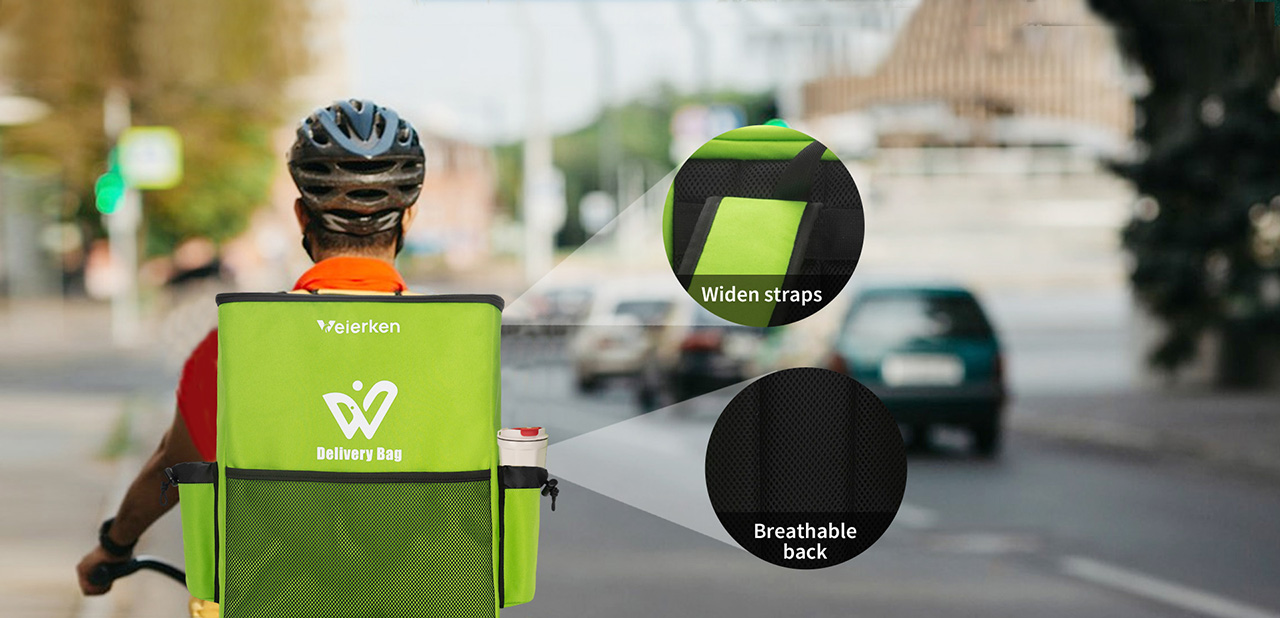
- Molded EVA Back Panels: Contoured channels create continuous airflow between the courier's jacket and the bag, venting moisture during hot summer shifts.
- Dual-Density Padded Shoulder Straps: Soft open-cell foam rests gently against the collarbone, backed by dense closed-cell foam that prevents straps from bottoming out under heavy loads.
- Ergonomic Hip Belts: Broad, padded waist belts transfer up
to 70% of the bag's vertical load directly onto the courier's pelvis, taking
strain off the lumbar spine and stabilizing the pack on the move.
5. Private Label Customization Without Sacrificing Durability
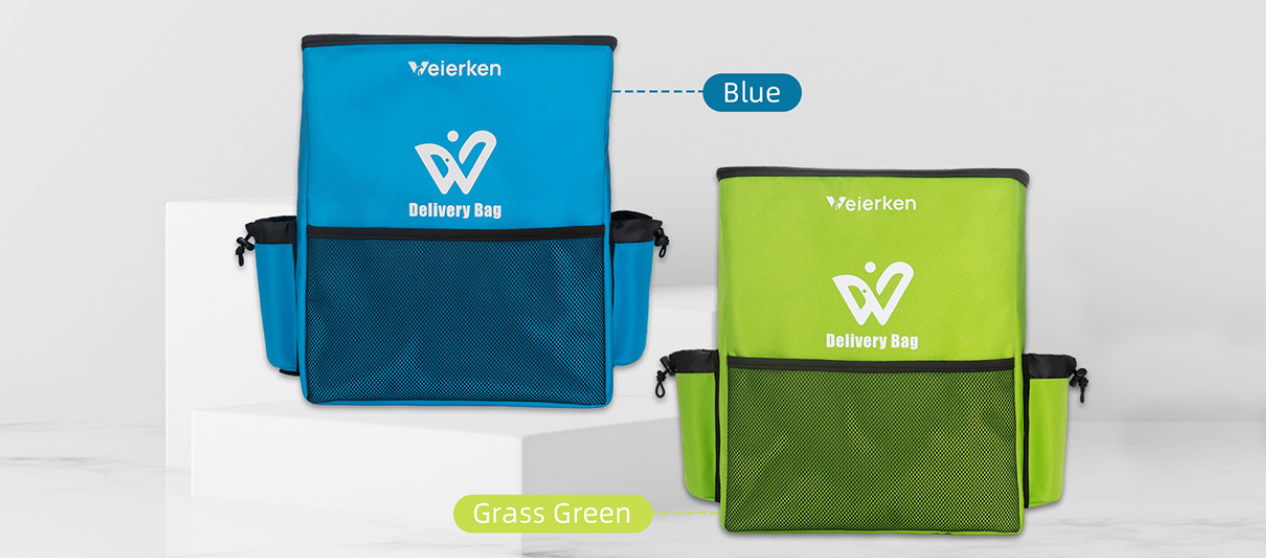
Enterprise procurement teams want their branding prominently displayed on street gear. However, poorly planned customization can compromise the weatherproofing and structural integrity of the backpack.
Weatherproof Branding Techniques: Reflective Screen Printing vs. Welded Rubber Badges
Traditional needle embroidery punctures thousands of tiny holes directly through waterproof shells and moisture barriers, creating immediate leak paths. Private label delivery backpacks should rely on advanced non-invasive branding techniques:
- Industrial Polyurethane Screen Inks: Highly flexible, chemical-cured inks stretch with the fabric without cracking, peeling, or fading when exposed to sub-zero temperatures.
- High-Visibility Reflective Screen Printing: Meets EN ISO 20471 safety compliance, reflecting vehicle headlights up to 200 meters away for essential nighttime rider protection.
- High-Frequency Welded Silicone or Rubber Badges: Welds clean, dimensional branding directly onto the tarpaulin shell, preserving a watertight exterior with an upscale aesthetic.
Modular Compartment Engineering for Multi-Order Deliveries
Urban delivery logistics require versatility. A courier might deliver three stacked family-sized pizza boxes on one run, then switch to six tall bubble-tea cups on the next. Rigid interior designs limit fulfillment options.
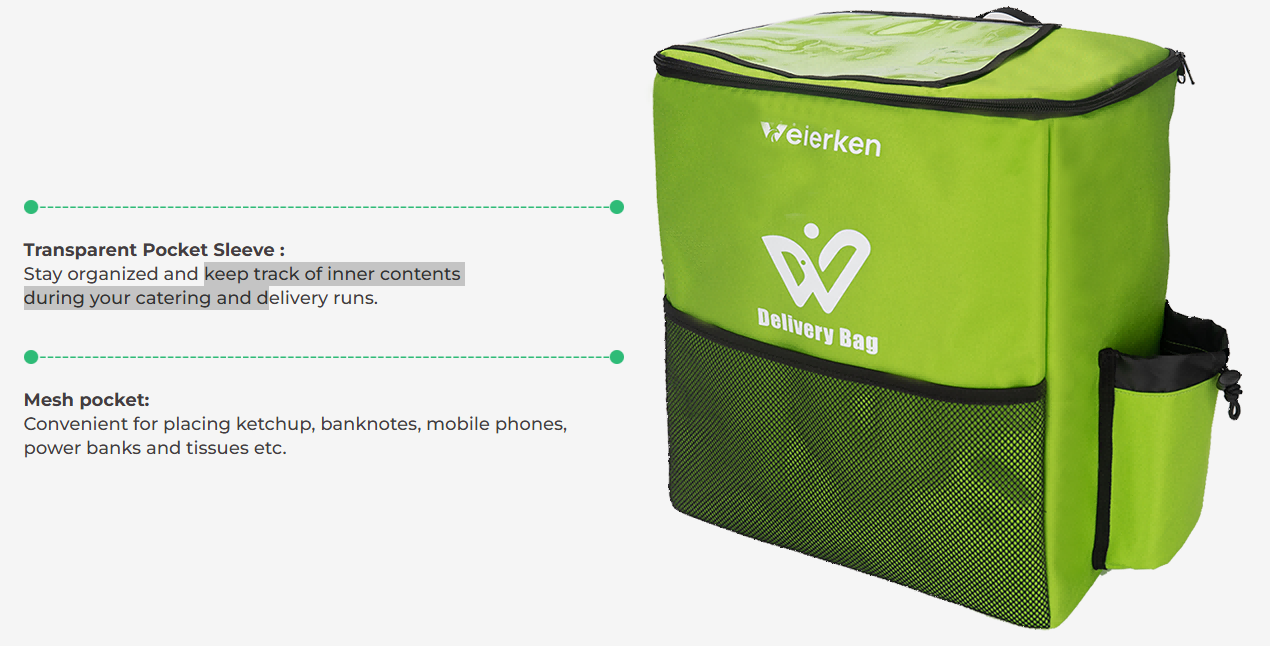
Smart internal engineering relies on heavy-duty hook-and-loop systems, fold-down shelf dividers, and dedicated drink caddies. Couriers can partition the bag into hot and cold zones or fold the interior shelf flat to carry large catering orders. This flexible setup keeps drinks upright and prevents hot and cold items from spoiling each other.
Frequently Asked Questions (FAQ)
Q1: What is the typical lifespan of an engineered private label
delivery backpack compared to a budget alternative?
A1: Budget
delivery bags sourced from generic suppliers usually fail within 2 to 4 months
of daily commercial use. A custom insulated delivery backpack built with
500D-900D tarpaulin, reinforced bar-tack stitching, and industrial zippers lasts
12 to 24 months in continuous fleet service, cutting replacement rates and total
cost of ownership by more than 50%.
Q2: Why is high-frequency welding better than regular stitching for
food delivery liners?
A2: Regular stitching creates needle
perforations that let spilled liquids, condensation, and grease seep down into
the foam core. This ruins the insulation and creates hidden bacterial buildup.
High-frequency welding uses electromagnetic energy to fuse the fabric edges
together at a molecular level, creating a 100% waterproof, seamless barrier that
contains spills and cleans up quickly.
Q3: How do you verify the durability of hardware and load points
before full-scale manufacturing?
A3: Industrial manufacturers test
their designs using specialized machinery. This includes tensile drop testers
that apply 30-kilogram shock loads to strap anchors, mechanical zipper testers
that complete 10,000 open-and-close cycles, and environmental chambers that
evaluate fabric flexibility down to -20°C.
Q4: Can we add our custom corporate pantone colors across the entire
backpack body?
A4: Yes. High-volume OEM delivery backpack
manufacturer projects support exact custom Pantone matching for primary shell
materials, webbings, and zipper pulls. Minimum order quantities typically apply
for custom-milled fabric runs, ensuring unified brand visuals across your entire
regional courier fleet.
Q5: What are the best methods for keeping cold drinks and hot food
separated in the same backpack?
A5: The most reliable method uses
modular, insulated internal dividers secured by heavy-duty hook-and-loop tracks.
These dividers feature closed-cell foam cores wrapped in reflective thermal
foil, creating independent temperature zones within a single pack without
letting heat cross over.
Conclusion & Sourcing Checklist for B2B Buyers
Procuring private label delivery backpacks for enterprise fleets should never be a race to the bottom on unit price. Cheaply made bags lead to high replacement rates, damaged orders, and frustrated couriers. True cost efficiency comes from low lifecycle costs and reliable, everyday durability.
Before issuing your next delivery bag tender, audit your candidate manufacturers against this core engineering checklist:
- Shell Fabrics: Minimum 500D+ double-lacquered PVC Tarpaulin or TPU-laminated 1680D Ballistic fabric with UV inhibitors.
- Structural Reinforcement: Cross-linked virgin PP hollow panels and internal load-dispersing harness webbing.
- Stitching Standards: Multi-pass Box-X anchors and high-density bar-tacking on all weight-bearing straps using bonded nylon thread.
- Hygiene Protection: High-frequency heat-welded seamless interior liners made from food-contact-safe materials.
- Branding Security: High-visibility reflective inks and welded badges that protect exterior waterproof coatings.
As an established OEM delivery backpack manufacturer, Weierken designs high-performance gear engineered specifically for the punishing demands of real-world urban delivery.
Looking to build an indestructible delivery backpack for your fleet? Contact our engineering team today to review your technical specifications and request a custom private label prototype with a 3–7 day fast turnaround.