
Standard gym duffels fail quickly around rowing clubs and boat launches. Water sports demand gear built for wet environments, rough handling, and specialized equipment.
Rowers carry unique gear to training sessions. Drenched unisuits, delicate seat pads, water bottles, and specialized rowing shoes require dedicated storage. Standard fitness bags absorb lake water, harbor unpleasant odors, and tear against rough wooden docks.
For outdoor gear brands, choosing the right rowing bag odm partner requires looking beyond basic sewing capabilities. You need an engineering partner that understands dock environments, boat bay storage, and crew logistics.
At Weierken, we engineer technical bag solutions that solve real-world problems for water sports athletes. Here are the five essential features a reliable manufacturing partner must deliver to build market-winning rowing gear.
1. Smart Wet/Dry Separation & Ventilation Systems
Rowing requires intense physical exertion. Post-workout unisuits, thermal layers, and socks retain heavy moisture and sweat after long sessions on the water.
Trapping damp gear inside an airtight main compartment breeds bacteria and creates stubborn odors. However, dry change clothes, phones, and heart-rate monitors must remain 100% dry nearby.
Isolating Dry Gear with TPU Dry Chambers
Top-tier manufacturing relies on internal dry pockets lined with heavy-duty Thermoplastic Polyurethane (TPU). These impermeable walls stop moisture migration entirely.
Watertight Inner Dividers: Sealed inner pockets keep dry apparel safe from soaked workout gear stored in adjacent compartments.
Easy-Clean Surfaces: TPU linings wipe clean easily after storing muddy shoes or damp gear.
Anti-Odor Mesh and Splash-Proof Air Valves
Wet storage sections require controlled airflow to vent trapped humidity without exposing contents to exterior lake spray.
Antibacterial Mesh Panels: Integrated breathable mesh sections promote air circulation and prevent mold growth in damp chambers.
One-Way Air-Bleeder Valves: Flush-mounted rubber valves allow athletes to squeeze excess air out of packed dry bags while blocking outside water.
Working with an experienced custom rowing bag manufacturer ensures your product balances waterproof protection with effective interior ventilation.
2. Hydro-Shield Waterproofing & Seamless HF Welding
Rowers regularly place their bags on waterlogged floating docks or inside wet boat cockpits. Traditional needle-stitched seams pull standing water directly through the fabric over time.
High-performance water sports gear requires advanced seamless assembly techniques rather than standard sewing threads.
High-Frequency (HF) Welded Seam Construction
A specialized crew gear bag factory replaces traditional stitching with high-frequency thermal welding along vulnerable seams.
Molecular Fusion: HF welding uses electromagnetic energy to melt synthetic fabric coatings together, creating a permanent bond.
Puncture-Free Seams: Eliminating needle holes prevents water penetration across the base and side walls.
IPX6+ Waterproof Bottom Construction
Base panels require high-grade waterproof coatings to withstand standing puddle water during long training sessions.
Heavy-Gauge TPU Laminates: Double-sided TPU coatings deliver superior hydrostatic resistance under heavy downward load pressure.
Splash-Proof Zipper Protection: Coated waterproof zippers paired with protective storm flaps stop driven rain and ocean spray from leaking inside.
3. Ergonomic Profile & Dedicated Hardware Straps
Rowing equipment features unique long shapes. Crew bags must hold specialized accessories without turning into bulky, awkward luggage on narrow dock walkways.
Optimizing bag geometry helps rowers navigate crowded boat bays and narrow dock launches safely.
Slender Aerodynamic Profile
A long, streamlined profile fits easily inside tight boat racks, vehicle trunks, and narrow boathouse lockers.
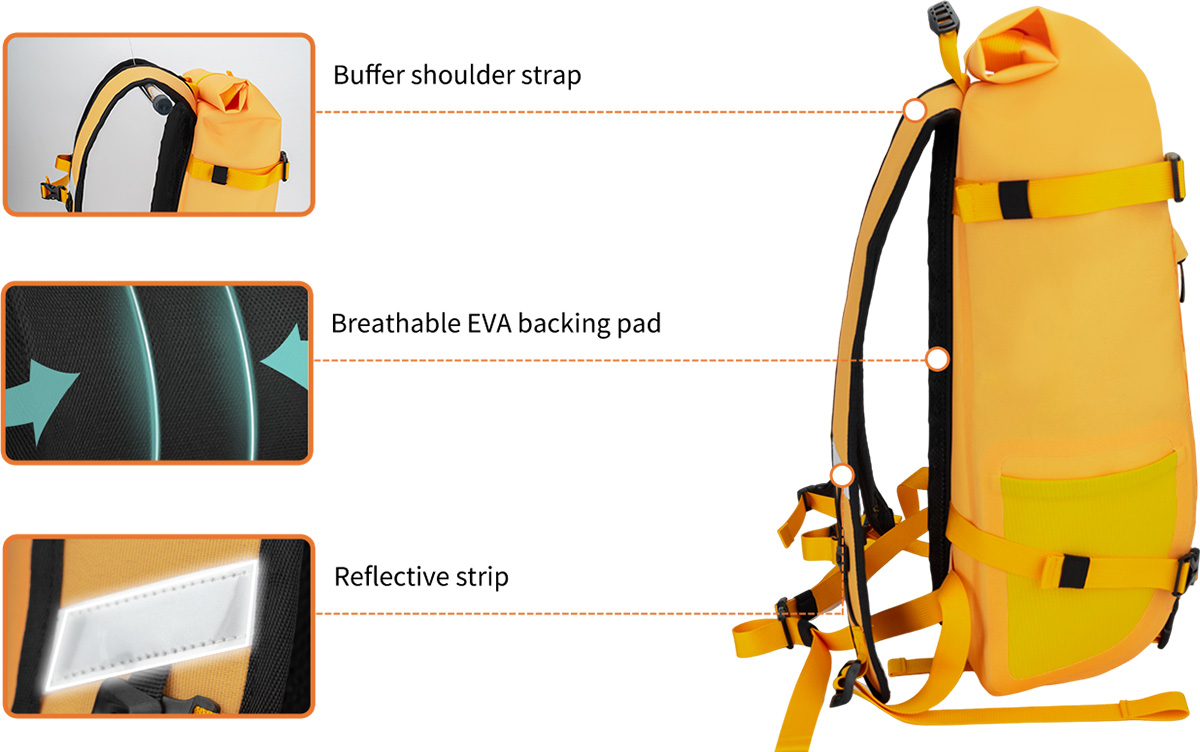
Body-Contoured Fit: Ergonomic back panels distribute heavy weight evenly across the spine during long walks from parking areas to the dock.
Snag-Free Design: Smooth outer surfaces prevent straps from catching on boat rigging or shell hardware.
External Attachment Systems
Rowers rely on external attachment points to carry gear that shouldn't clutter the main interior compartment.
Seat Pad Carrying Straps: Adjustable compression straps secure foam or gel rowing seat pads firmly to the exterior.
Hydration and Oar Accessories: Reinforced side pockets hold large water bottles, while external daisy chains secure clip-on accessories.
Isolated Shoe Compartments: External-access shoe pockets keep wet rowing shoes separated from dry personal items.
At Weierken, our technical design team creates custom strap layouts tailored specifically to crew and paddle sports gear requirements.
4. High-Abrasion & Anti-Slip Base Design
Floating docks present harsh conditions for soft luggage. Rough concrete launch ramps, splintered wooden docks, and shell fragments wear through thin fabrics quickly.
The base of a technical sports bag must withstand constant friction and rough dock surfaces without failing.
Reinforced Base Materials
Selecting durable base fabrics prevents premature wear and reduces warranty replacement claims for gear brands.
Hypalon and 1000D TPU: Synthetic rubber Hypalon or thick 1000D TPU fabrics deliver exceptional tear and puncture resistance.
Multi-Layer Armor: Reinforced corner patches absorb high impact forces when bags get dropped onto hard dock ramps.
Anti-Slip Dock Stabilization
Wet aluminum docks are slippery. Bags placed near water margins must stay firmly anchored in place.
Molded Rubber Feet: Raised traction feet elevate the main bag chassis above standing puddles.
Textured Base Grips: High-friction base patterns stop bags from sliding off tilting dock surfaces or rolling boat decks.
5. Sustainable & PFAS-Free Marine Eco-Fabrics
Water sports enthusiasts care deeply about ocean and freshwater conservation. They expect gear brands to protect natural environments from plastic waste and toxic chemical run-off.
Partnering with a forward-thinking waterproof paddle bag supplier ensures your products meet international environmental standards.
RPET Recycled Synthetic Fabrics
Utilizing post-consumer plastic bottles reduces environmental impact while maintaining high fabric strength.
Post-Consumer Recycled Polyester: High-tenacity RPET fabrics offer equal tensile strength to virgin polyester materials.
Eco-Friendly Coating Options: Pairing RPET fabrics with recyclable TPU coatings creates sustainable, durable waterproof gear.
PFAS-Free Water Repellent Coatings
Harmful per- and polyfluoroalkyl substances ("forever chemicals") leach into aquatic ecosystems over time. Modern manufacturing eliminates these toxic compounds.
Fluorine-Free DWR Finishes: Advanced durable water repellent treatments shed rain without releasing persistent pollutants into waterways.
Global Regulatory Compliance: Sustainable material choices satisfy EU REACH, RoHS, and California Prop 65 requirements automatically.
Why Partner with Weierken for Your Rowing Bag ODM Project?
Bringing a technical outdoor product to market requires precision manufacturing, reliable material sourcing, and strict quality control. Weierken delivers comprehensive OEM and ODM manufacturing services for technical outdoor gear, waterproof bags, and cooler bags.
Our design philosophy combines functional innovation, clean styling, classic durability, and sustainable material practices.
End-to-End ODM Support: We turn initial concepts into production-ready technical drawings, 3D prototypes, and lab-tested products.
Rigorous Quality Control: Our factory runs full hydrostatic head testing, tensile pull tests, and salt fog resistance checks on every production batch.
High ROI Manufacturing: Optimized sourcing and modern production lines help water sports brands launch high-margin products with low warranty risk.
Build Better Water Sports Gear with Weierken
Launching a competitive product line in the water sports sector requires specialized features. Smart wet/dry separation, seamless high-frequency welding, ergonomic gear attachment straps, and rugged dock-tested bases form the foundation of a reliable rowing bag.
Choosing an experienced rowing bag odm partner secures your supply chain and helps your brand earn trust among rowers, clubs, and outdoor enthusiasts.
Ready to develop a custom crew gear collection for your brand? Contact the Weierken engineering team today to request a technical consultation, review sample materials, or receive a project quote.
Frequently Asked Questions (FAQ)
1. What is the typical development timeline for a custom rowing bag odm project?
Initial design concepts and 3D renderings take approximately 3 to 5 business days. Physical prototype production typically requires 10 to 15 days, depending on material availability and custom mold requirements. Mass production generally takes 35 to 45 days after final sample approval.
2. Can Weierken customize strap layouts for specific gear like rowing seat pads or paddles?
Yes. Our engineering team designs custom external mounting systems, daisy chains, and compression straps tailored specifically to secure foam seat cushions, water bottles, or multi-piece travel paddles.
3. Which materials offer the best durability against dock wear and saltwater?
We recommend 840D or 1000D TPU-coated nylon, alongside reinforced Hypalon base panels. These materials resist sharp dock edges, heavy abrasion, UV rays, and saltwater corrosion without cracking or peeling over time.
4. How does your crew gear bag factory verify waterproof performance on welded seams?
We perform hydrostatic pressure testing (ISO 811) on raw fabrics and welded joints before mass assembly. Completed waterproof bags undergo pressurized air-leak submersion tests to guarantee 100% watertight seal performance before packing.
5. Are your eco-friendly fabric options compliant with European and US environmental laws?
Yes. Our RPET recycled fabrics, TPU laminations, and fluorine-free DWR coatings meet strict European Union REACH regulations and US California Proposition 65 chemical compliance standards.