

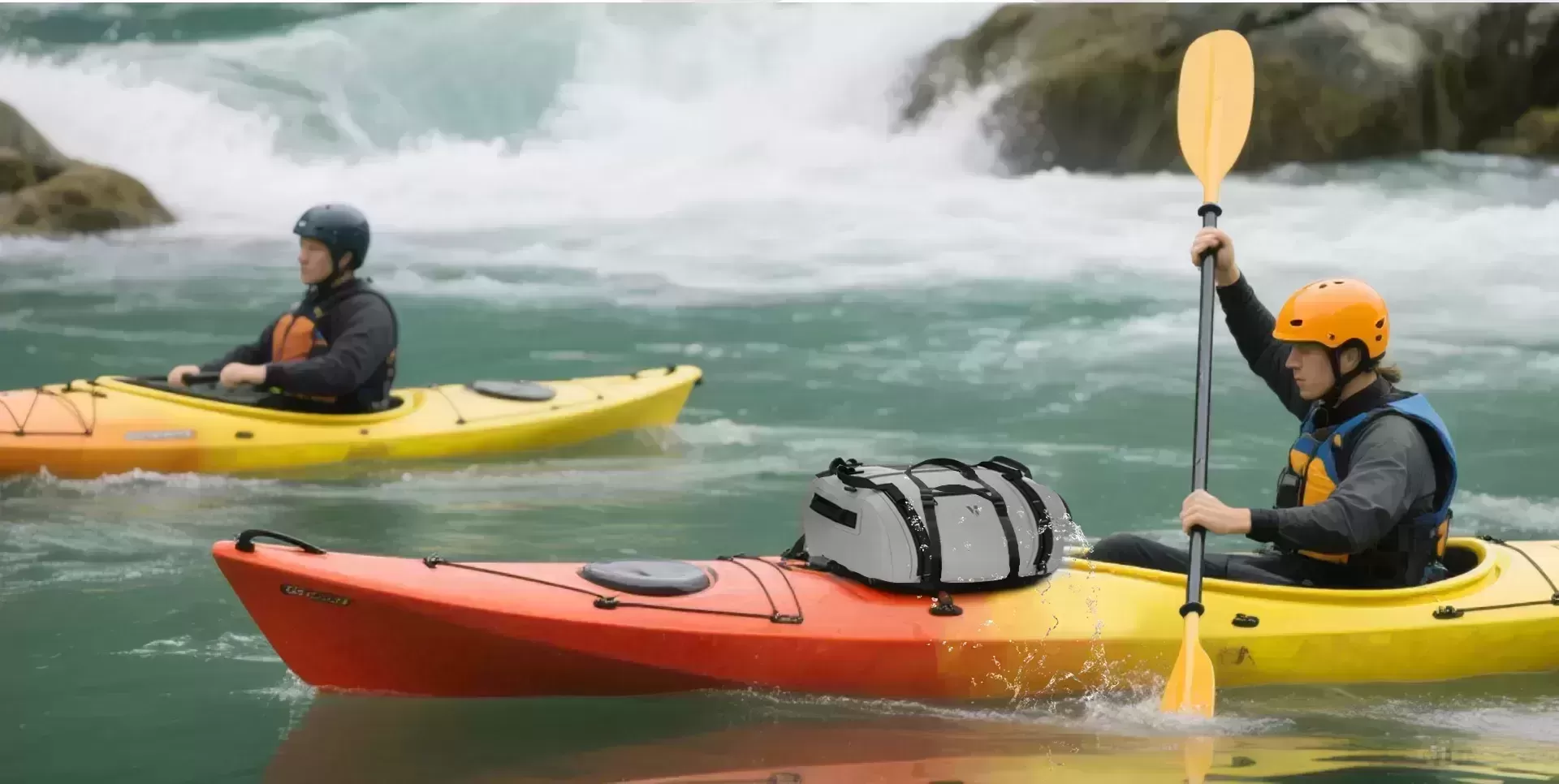
The open ocean shows no mercy to gear. Salty spray, pounding waves, and sudden downpours test equipment constantly. When a duffel fails at sea, ruined navigation electronics and wet survival gear quickly turn into major safety hazards.
For marine brand managers and B2B buyers, sourcing from a custom sailing bag manufacturer involves serious commercial risks. Golden sample bags displayed in a showroom rarely tell the whole story. Real quality depends on rigorous factory testing behind the scenes.
Evaluating a sailing bag odm partner requires analyzing their internal quality control (QC) infrastructure. Top-tier factories follow strict laboratory protocols at every stage of production. Here are the four non-negotiable QC standards that separate elite marine bag manufacturers from standard bag suppliers.
1. Hydrostatic Pressure & Airtightness Testing
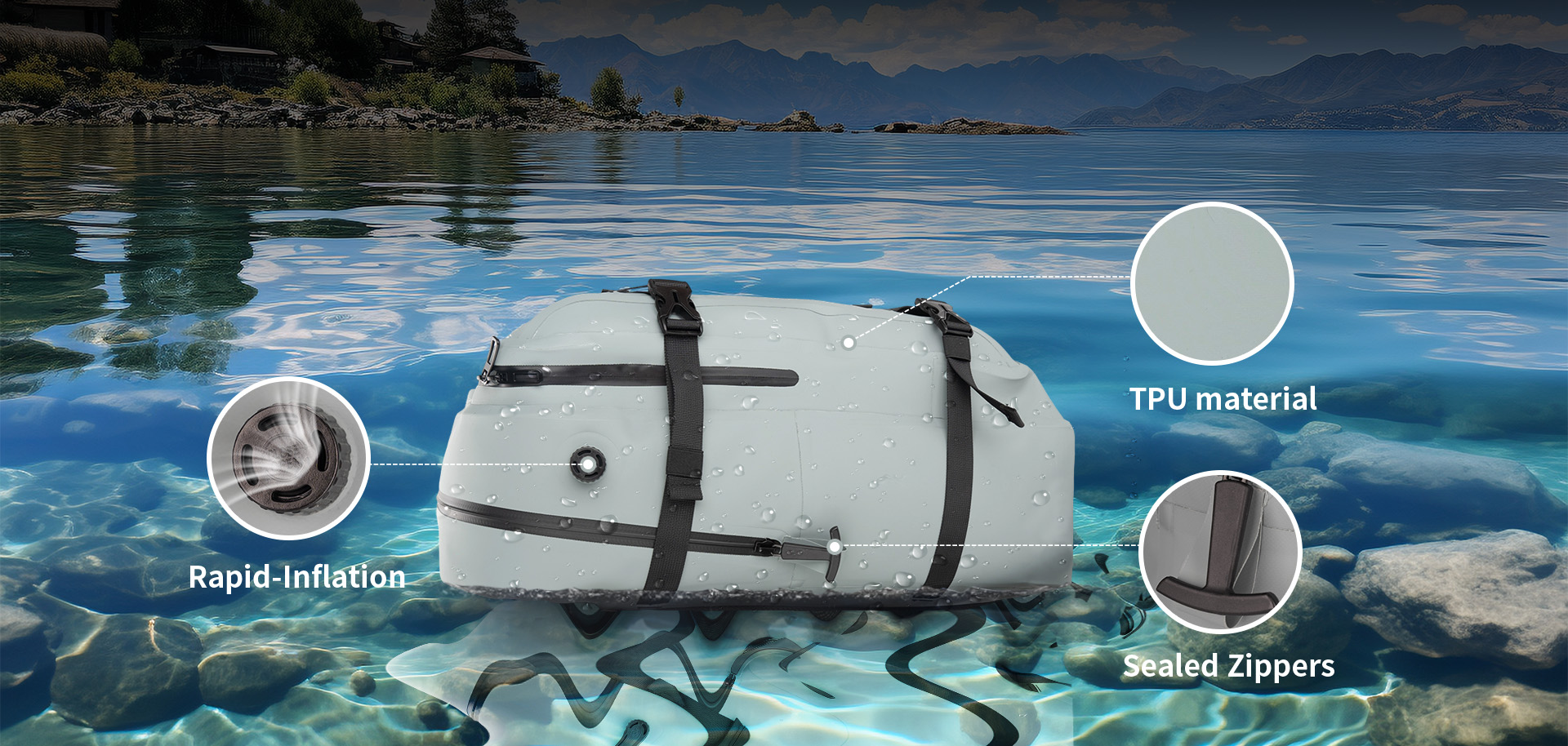
Waterproof performance forms the absolute core of marine bag manufacturing. A reliable nautical bag factory must verify both fabric impermeability and seam integrity under high pressure.
Standard rainproof tests are insufficient for rough ocean conditions. True marine-grade gear requires specialized pressure equipment to simulate submersion and extreme sea spray.
Hydrostatic Head Test for Fabrics and HF Seams
High-frequency (HF) welding fuses TPU or PVC fabrics together using thermal energy. The resulting seam must be as strong and watertight as the raw material itself.
Hydrostatic Rating: Premium technical fabrics must withstand hydrostatic pressure exceeding 10,000mm H2O according to ISO 811 standards.
Welding Line Inspection: Lab technicians apply increasing water pressure directly over HF welded joints to identify micro-fractures before mass production begins.
Submersion and Bubble Leak Testing for Airtight Bags
Sailing duffels featuring IPX7 or IPX8 submersible ratings rely on specialized waterproof zippers. Verifying these seals demands continuous testing on the assembly line.
Inflation Test: Workers inflate the completed bag with compressed air to a predetermined PSI.
Water Submersion: The pressurized bag is fully submerged in a clear water tank (Bubble Leak Testing). Technicians check for escaping air bubbles along zipper teeth and corner seams.
100% Inspection: Leading suppliers run this physical leak test on 100% of finished submersible units rather than relying on basic spot-checks.
2. Salt Spray & UV Resistance Testing
Saltwater accelerates corrosion. Direct sunlight degrades synthetic coatings. A sailing bag odm facility must prove that every buckle, zipper, and fabric layer withstands prolonged marine exposure.
Without proper material treatments, hardware seizes up within weeks, and waterproof coatings peel away under solar radiation.
ASTM B117 Salt Spray Chamber Testing
Metal hardware, plastic D-rings, and zipper sliders endure harsh conditions at sea. Testing chambers recreate months of ocean exposure within days.
Chamber Duration: Metal components are placed inside an ASTM B117 salt fog chamber for 72 to 96 hours continuous exposure.
Performance Benchmark: Hardware must show zero signs of red rust, pitting, or mechanical binding after the test concludes.
ISO 105-B02 Accelerated UV Resistance
Ultraviolet rays break down molecular bonds in thermoplastic polyurethane (TPU) and polyvinyl chloride (PVC) coatings, causing fabric delamination.
Xenon Arc Exposure: Fabric swatches undergo intense UV radiation inside accelerated weathering cabinets to test colorfastness and surface stability.
Delamination Prevention: The TPU film must remain securely bonded to the nylon substrate without cracking, yellowing, or peeling under stress.
3. Tensile Strength & Heavy-Load Drop Testing
Sailors pack heavy gear. Winch handles, heavy wet suits, safety harnesses, and metal tools place severe mechanical stress on duffel straps and handles. Structural failure during transport damages valuable cargo and ruins brand reputation.
Engineering a durable bag requires measuring exact force limits using mechanical stress equipment.
ISO 13934 Seam Tensile Testing
A digital tensile testing machine pulls fabric samples, webbing straps, and stitched anchor points until they rupture.
Breaking Force Measurement: Technicians record the exact peak load (measured in Newtons) required to tear seams apart.
Reinforced Stitching Verification: Critical stress points, such as shoulder strap attachments, must pass elevated tensile thresholds to ensure long-term durability under heavy loads.
Dynamic Heavy-Load Drop Testing
Static weight limits do not account for real-world handling. Marine bags get tossed onto docks, slid across fiberglass decks, and jolted during rough sea travel.
Weight Loading: Test bags are filled with 20kg to 30kg of weighted media to simulate a fully packed deck duffel.
Free-Fall Drops: A pneumatic drop rig lifts the loaded bag to a set height (typically 1.2 to 1.5 meters) and drops it repeatedly onto a concrete floor.
Inspection Criteria: Handle webbing, load-bearing buckles, and welded seams must remain completely intact without tearing or slipping.
At Weierken, mechanical stress testing forms a core part of early-stage prototype validation, ensuring every commercial design endures brutal real-world handling.
4. Eco-Compliance & Material Traceability
Environmental standards in the marine sector continue to tighten worldwide. Modern buyers demand toxic-free materials to protect delicate ocean ecosystems from chemical leaching.
In addition, global brands require full supply chain visibility to pass customs audits and satisfy sustainability reporting requirements.
Regulatory Material Compliance
Top waterproof sailing duffel supplier partners eliminate dangerous chemicals from their material formulations completely.
REACH & RoHS Compliance: Materials must remain free from restricted heavy metals, phthalates, and hazardous plasticizers.
PFAS-Free Formulations: Modern ocean gear utilizes fluorine-free durable water repellent (DWR) treatments to prevent persistent chemical pollution.
Batch Material Traceability (COA)
Quality control extends upstream to raw material suppliers. Every production run requires documented chemical and physical verification.
Certificate of Analysis (COA): Raw TPU masterbatches and fabric rolls carry lot-specific inspection certificates from original suppliers.
Defect Tracking: Internal tracking numbers allow factories to trace finished bags back to exact fabric roll batches if issues arise during post-market use.
Why Partnering with Weierken Protects Your ODM Investment
Navigating technical specifications requires an experienced production partner. Weierken specializes in high-performance waterproof bag manufacturing, combining technical expertise with rigorous quality management systems.
Our commitment to clean design, classic styling, and sustainable production helps marine brands launch superior products efficiently.
In-House Testing Facility: Our laboratory houses digital hydrostatic testers, salt fog chambers, air-leak inspection tanks, and tensile testing machinery.
Comprehensive ODM Workflow: From initial 3D design renderings to final carton audits, we manage every step under strict ISO-aligned quality management workflows.
Reduced Return Rates: By identifying structural vulnerabilities early during prototyping, Weierken helps clients minimize warranty claims and boost long-term customer satisfaction.
Lower Supply Chain Risk with Standardized QC
Selecting the right partner for your next sailing bag odm project determines your product line's market success. Relying on visual appearance alone exposes your business to unexpected field failures, expensive product recalls, and damaged customer trust.
A reliable supplier proves their value through verifiable laboratory metrics, comprehensive airtightness testing, and complete material traceability. Prioritizing these four quality control standards secures your supply chain and protects your brand image in competitive marine markets.
Are you looking for a custom sailing bag manufacturer equipped with laboratory-grade QC standards? Contact the Weierken engineering team today to request a quote, review our test reports, or schedule a sample consultation.
Frequently Asked Questions (FAQ)
1. What is the standard minimum order quantity (MOQ) for a custom sailing bag odm project?
Our typical MOQ starts at 500 to 1,000 units per style, depending on fabric specifications, hardware customization, and specific welding tool requirements. Contact our sales team to discuss flexible options tailored to your initial market launch.
2. How do you verify IPX7 waterproofing on mass production lines?
We do not rely on random sampling for waterproof performance. Every finished submersible bag undergoes an internal inflation and bubble-leak submersion test on the assembly line to guarantee 100% seal integrity before packaging.
3. Can we specify eco-friendly or recycled materials for our sailing bag project?
Yes. We offer rPET (recycled polyethylene terephthalate) fabrics coated with non-toxic TPU films, as well as PFAS-free DWR finishes that comply with strict global environmental regulations such as REACH and RoHS.
4. What lab documentation do you provide before shipping finished orders?
We provide full Quality Inspection Reports with every mass production batch. This includes fabric hydrostatic pressure test data, seam tensile pull-test results, zipper airtightness reports, and finished goods AQL audit sheets.
5. How long does the prototype development process take for a new marine bag design?
Initial 2D/3D design concepts take approximately 3 to 5 business days. Once tech packs and material colors are confirmed, physical sample development typically takes 10 to 15 days, including custom logo application and preliminary lab testing.