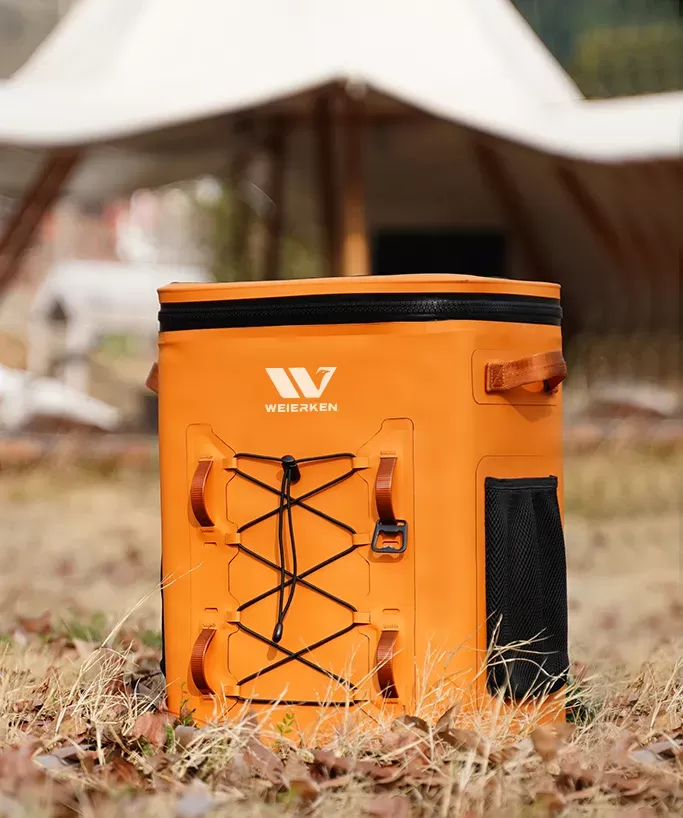

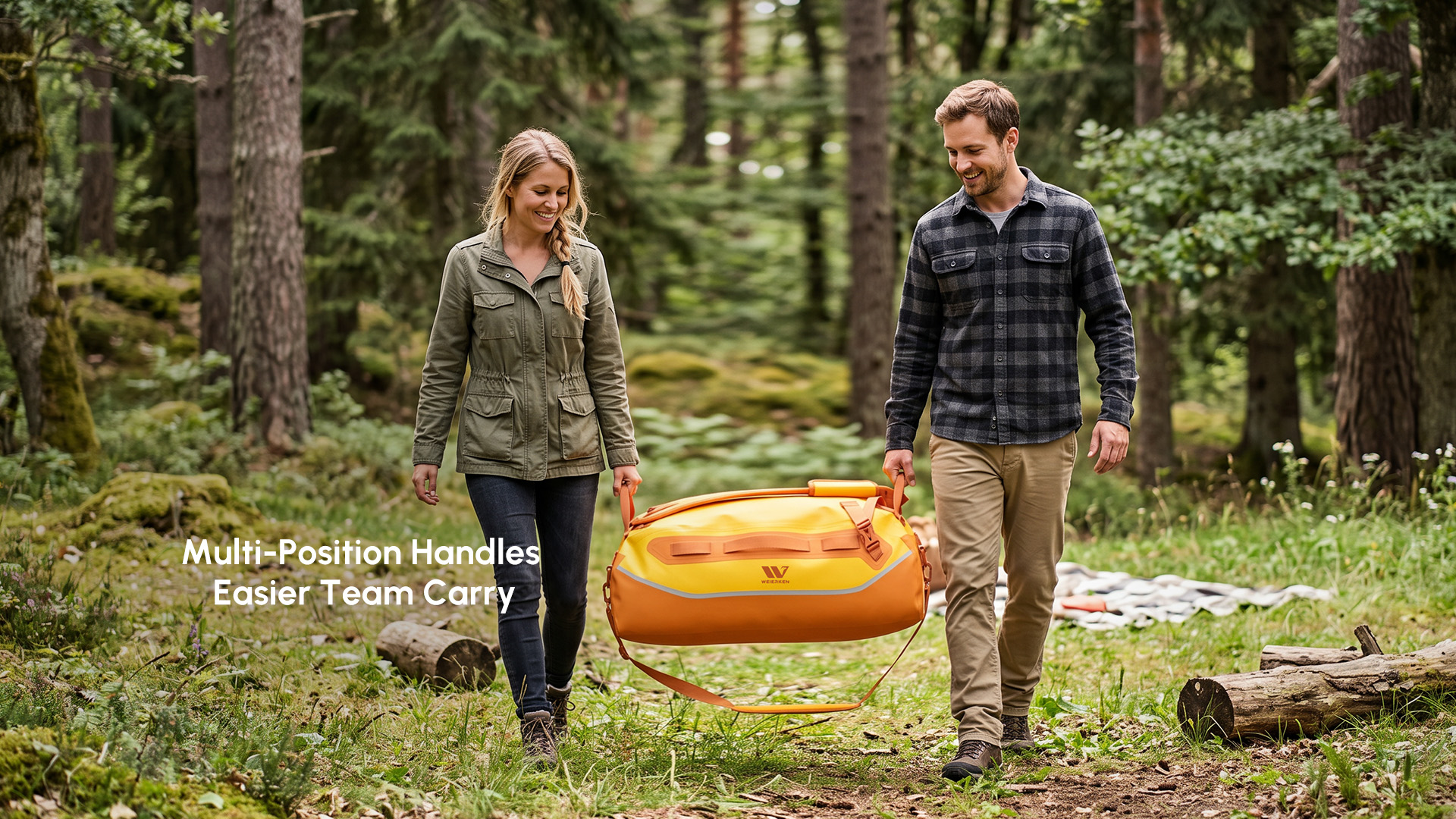
The outdoor recreation market is growing rapidly, but competition among gear brands has never been stiffer. When building a brand, launching another generic duffel or backpack leads straight to price wars and customer returns. The difference between a high-margin outdoor product and a product return disaster lies entirely in your raw material specifications.
Sourcing managers and brand founders must understand technical textile specifications before sending designs to production. High-grade fabrics, industrial coatings, and certified hardware protect your reputation in harsh backcountry conditions.
At Weierken, we have spent over 20 years engineering performance-driven bags and waterproof gear for more than 2,000 global brands. In this guide, we break down the five essential material specifications you must specify when manufacturing custom private label camping gear bags.
1. Denier and Tear Resistance: Cordura vs. High-Density Ripstop Nylon
Campers toss gear bags into truck beds, drag them across gravel, and haul them through thick brush. Your primary shell fabric must resist abrasions, punctures, and continuous friction without adding unnecessary pack weight.
Denier (D) measures the linear mass density of the yarn fibers. A higher denier number indicates a thicker, heavier thread, which directly correlates with abrasion resistance.
Recommended Technical Specs
Main Body Shell: 500D to 1000D Nylon 6,6 (Cordura standard) or 420D–600D Diamond Ripstop Polyester.
Weave Structure: Micro-ripstop or honeycomb grid reinforcement to stop accidental punctures from expanding into long tears.
Tensile Strength: Minimum warp/weft tear strength of 150N to 220N under ISO 13937-2 testing standards.
For expedition-grade duffels, 1000D textured nylon offers unmatched friction resistance. However, if your target audience prioritizes ultralight hiking or fast-packing, a 210D to 420D high-tenacity ripstop nylon with a silicone topcoat strikes the ideal balance between low weight and rugged durability.
2. Weatherproofing and Lamination: TPU vs. Traditional PU/PVC
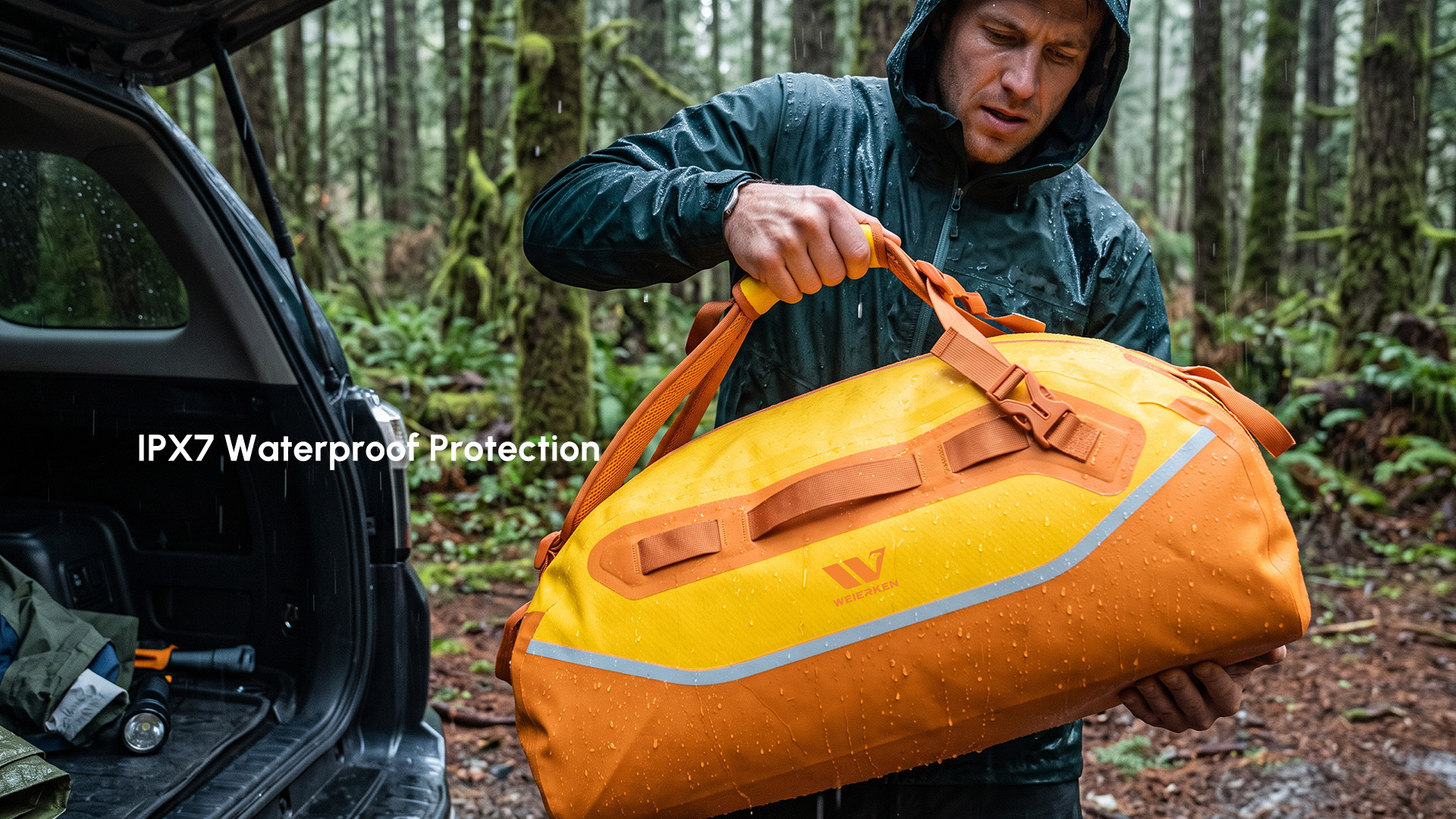
Camping gear like sleeping bags, down jackets, and electronic gadgets must stay dry during heavy downpours or river crossings. Selecting the right water-resistant barrier is critical for every waterproof camping gear duffel line.
Many legacy factories rely on heavy PVC (polyvinyl chloride) or basic PU (polyurethane) back-coatings. However, modern outdoor buyers demand flexible, low-odor, and cold-resistant solutions like Thermoplastic Polyurethane (TPU) lamination.
Comparing Coating Technologies
TPU (Thermoplastic Polyurethane) Film: Highly resistant to hydrolysis (rotting in humid storage), eco-friendly, remains flexible down to -30°C, and allows high-frequency (RF) seamless welding.
PU (Polyurethane) Coating: Cost-effective and lightweight, typically applied on inner fabric layers, suitable for light-to-medium rain protection (3,000mm–8,000mm hydrostatic head).
PVC Tarpaulin: Extremely rugged and 100% waterproof, but heavy, prone to cracking in sub-zero temperatures, and emits strong chemical odors.
For premium private label camping gear bags, Weierken recommends double-sided TPU-laminated 840D nylon or 600D polyester. Pair this with a certified hydrostatic head rating of at least 10,000mm to 20,000mm to guarantee complete protection against deep water immersion.
3. Sustainable & Certified Fabrics: GRS-Certified Recycled Materials
Sustainability is no longer just a marketing buzzword; it is a baseline requirement for North American and European retailers. Modern outdoor enthusiasts actively seek out gear built with verified recycled fibers and non-toxic chemical treatments.
Switching your product line to sustainable camping gear fabric allows your brand to command a 15% to 30% price premium on retail shelves while complying with tightening environmental regulations.
Key Sustainability Standards to Specify
GRS (Global Recycled Standard) RPET: Recycled polyethylene terephthalate sourced from post-consumer plastic bottles.
PFC-Free DWR: Durable Water Repellent finishes formulated without harmful fluorocarbons (C0 DWR chemistry).
Bluesign & OEKO-TEX Standard 100: Verifies that no hazardous chemicals were used during yarn dyeing, weaving, or lamination.
Weierken integrates these environmental standards directly into our supply chain. We help brands source verified GRS-certified RPET yarns that deliver the exact same tensile performance and colorfastness as virgin synthetic fibers.
4. Heavy-Duty Hardware & Stress-Point Reinforcement
The exterior fabric will not matter if a zipper splits open or a shoulder strap buckle snaps miles into a backcountry trek. Hardware failure is the leading cause of one-star product reviews on consumer platforms.
When engineering high-capacity camping packs, you must insist on branded, laboratory-tested structural components.
Hardware Standards Checklist
Waterproof Zippers: Genuine YKK AquaGuard (Polyurethane-laminated coil zippers) or airtight TIZIP zippers for fully submersible bags.
Buckles and Adjusters: Virgin nylon hardware from Duraflex, UTX, or Woojin that withstands impact and sub-zero freeze cycles without turning brittle.
Load-Bearing Thread: Bonded nylon or polyester thread (Tex 70 or Tex 90) sewn with industrial high-density bartack stitching at all handle and harness anchor points.
Webbing: High-tensile tubular nylon or tight-weave polypropylene webbing rated for a minimum break strength of 2,500 lbs (approx. 11 kN).
Our engineering team subjects all hardware junctions to automated tensile pull tests and repeated drop tests with 25kg–40kg loads to guarantee zero structural failures in field conditions.
5. Puncture-Resistant Base Materials: Tarpaulin & Ballistic Polyester
The bottom panel of a camping bag endures the most abuse. It sits on sharp granite, muddy grass, wet gravel, and abrasive truck beds. Specifying a secondary, high-abrasion material for the base significantly extends the overall product lifespan.
A reinforced base panel also prevents moisture from seeping through when gear sits on wet ground for extended hours.
Ideal Base Material Configurations
0.5mm to 0.9mm Heavy-Duty Tarpaulin: 100% waterproof, puncture-resistant, and easily wipes clean of mud and debris.
1680D Ballistic Polyester / Nylon: A two-ply basketweave fabric originally developed for flak jackets, offering maximum scuff and drag resistance.
Molded EVA Bottom Shell: Adds rigid structure, allows the bag to stand upright independently, and protects delicate equipment inside from hard impacts.
Combining a lightweight ripstop upper with an ultra-rugged 1680D or TPU-tarpaulin bottom creates a balanced, performance-driven bag that feels comfortable to carry without sacrificing ruggedness.
Why Partner with Weierken for Your Private Label Line?
Selecting the right technical specifications is only half the battle; you also need an experienced manufacturing partner who can execute your tech packs with consistent precision and stable lead times.
Weierken operates as a full-service OEM outdoor bag factory, supporting custom brand projects from raw material selection to final delivery.
Dual-Base Manufacturing: China & Cambodia
Supply chain flexibility and cost management are vital for growing brands. Weierken operates three advanced manufacturing facilities across China and Cambodia, covering over 80,000 square meters with more than 3,000 skilled workers.
China Facilities: Ideal for rapid prototyping, complex R&D, low-MOQ trial orders, and access to domestic specialty textile markets.
Cambodia Facilities: Optimized for high-volume production runs, offering significant tariff optimization and duty-free benefits for imports into the US and European markets.
20 Years of OEM/ODM Bag Manufacturing Expertise
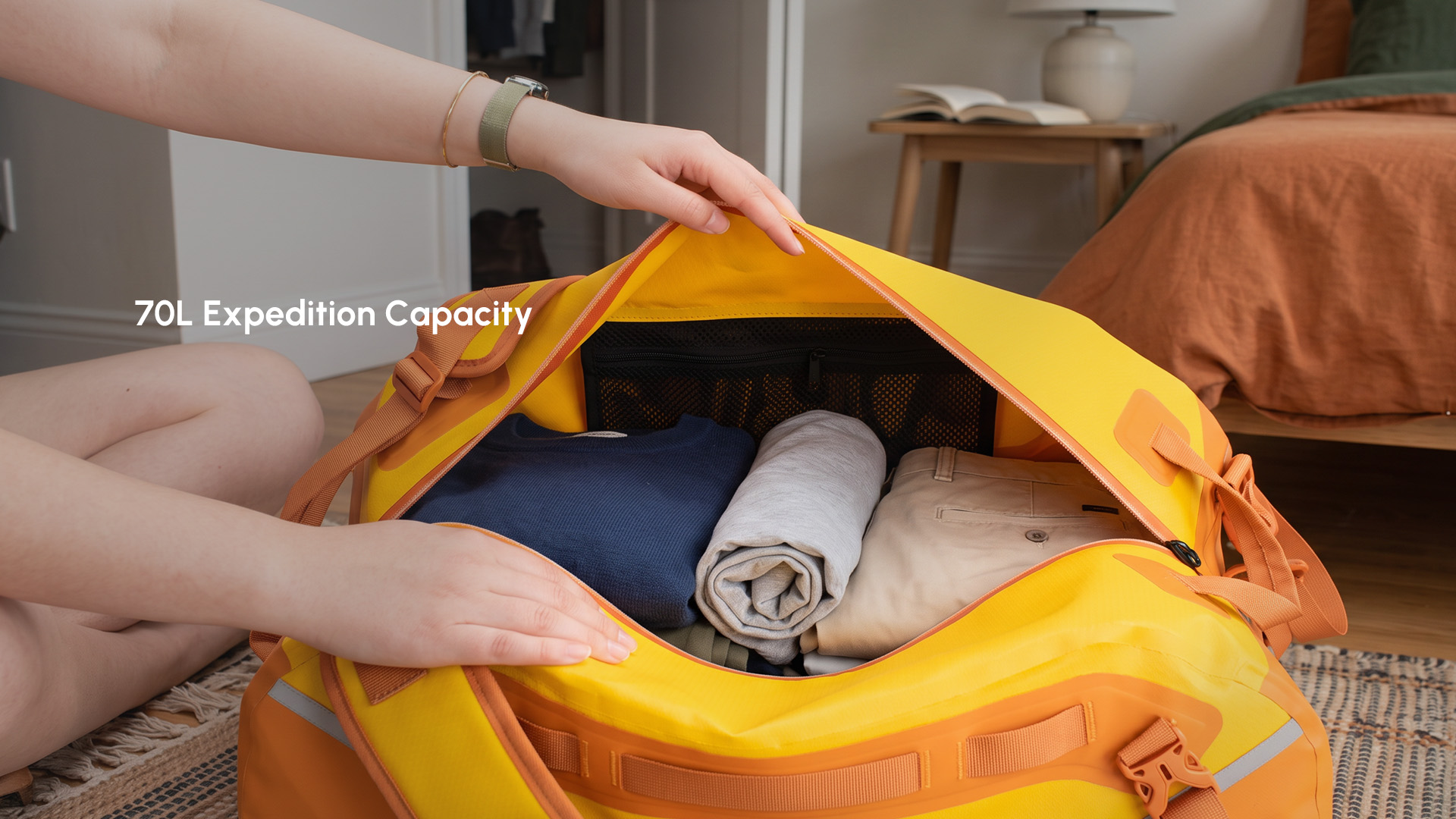
Since 2006, Weierken has specialized in outdoor backpacks, tactical dry bags, cooler bags, and travel duffels. Our dedicated in-house R&D team works directly with your sketches or 3D models, helping you pick the right balance of denier, lamination, and hardware to hit your target retail price points.
Frequently Asked Questions (FAQ)
Q1: What is the typical MOQ for custom private label camping gear bags?
A1: For fully custom OEM designs using stock materials, our standard Minimum Order Quantity (MOQ) generally starts at 500 to 1,000 units per colorway. If your project requires custom-dyed Pantone colors or proprietary custom fabric laminations, the MOQ typically ranges from 1,500 to 2,000 units depending on the mill requirements.
Q2: How do you test the waterproof rating of your outdoor bags?
A2: We perform strict quality control testing in our in-house lab. We use hydrostatic head pressure testers (up to 20,000mm water column), water spray rain-room simulators, and airtight submersion leak tests for seamless welded products to verify all seals and zippers perform under pressure.
Q3: What are the advantages of producing in your Cambodia facility?
A3: Sourcing from our Cambodia factory provides major cost benefits for North American and European buyers. It helps mitigate trade tariffs associated with China-origin goods while lowering overall labor costs on large-scale production orders, all while maintaining our strict centralized quality standards.
Q4: Can Weierken supply GRS transaction certificates for recycled fabric orders?
A4: Yes. When you select GRS-certified RPET or recycled nylon for your private label line, we provide complete supply chain traceability, including official GRS Transaction Certificates (TCs) to verify your marketing claims and meet customs compliance standards.
Q5: What is the turnaround time from technical design to initial sample?
A5: Once your tech pack and raw material specifications are confirmed, our sample room produces your initial physical prototype within 7 to 14 business days. Bulk production lead times generally range between 35 and 50 days after sample approval.
Start Building Your Custom Outdoor Gear Line
Choosing the right fabric weights, coatings, and hardware sets your brand apart in a competitive outdoor market. Avoid costly trial-and-error by partnering with an experienced manufacturer who understands technical outdoor textiles.
Are you ready to develop your next line of high-performance gear? Request a quote from our engineering team today to receive a free material sample swatch card and professional DFM (Design for Manufacturing) review for your project.