

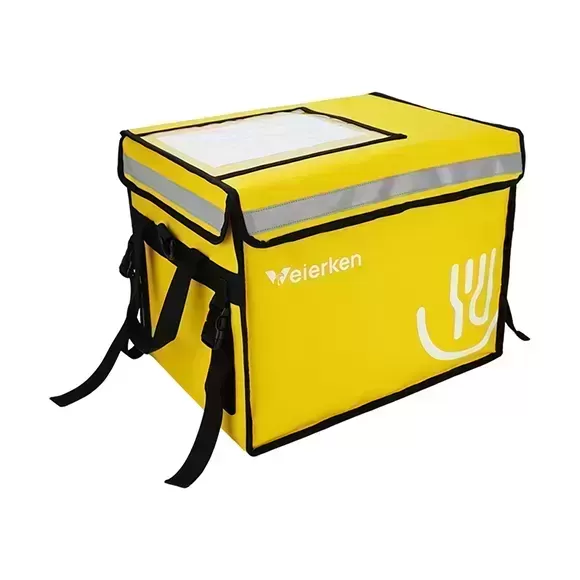
Central kitchen operations run on tight margins and unforgiving schedules. When you prepare thousands of meals daily for satellite campuses, corporate cafeterias, or retail outlets, thermal control during transit makes or breaks your compliance. Standard off-the-shelf delivery bags fail quickly under these demands. They tear at the stress points, absorb grease, and lose temperature within weeks of daily industrial sanitation.
Fleet managers and culinary directors cannot afford spoiled inventory or temperature violations. Investing in specialized, commercial-grade equipment is the only reliable way to maintain HACCP compliance between your dispatch dock and the customer's receiving table. Brands like Weierken design their commercial-grade carriers specifically to survive this daily mechanical abuse while keeping food safe.
Below, we evaluate the top six food-grade bulk thermal bags for central kitchens, categorized by logistics use cases, mechanical durability, and total cost of ownership (TCO).
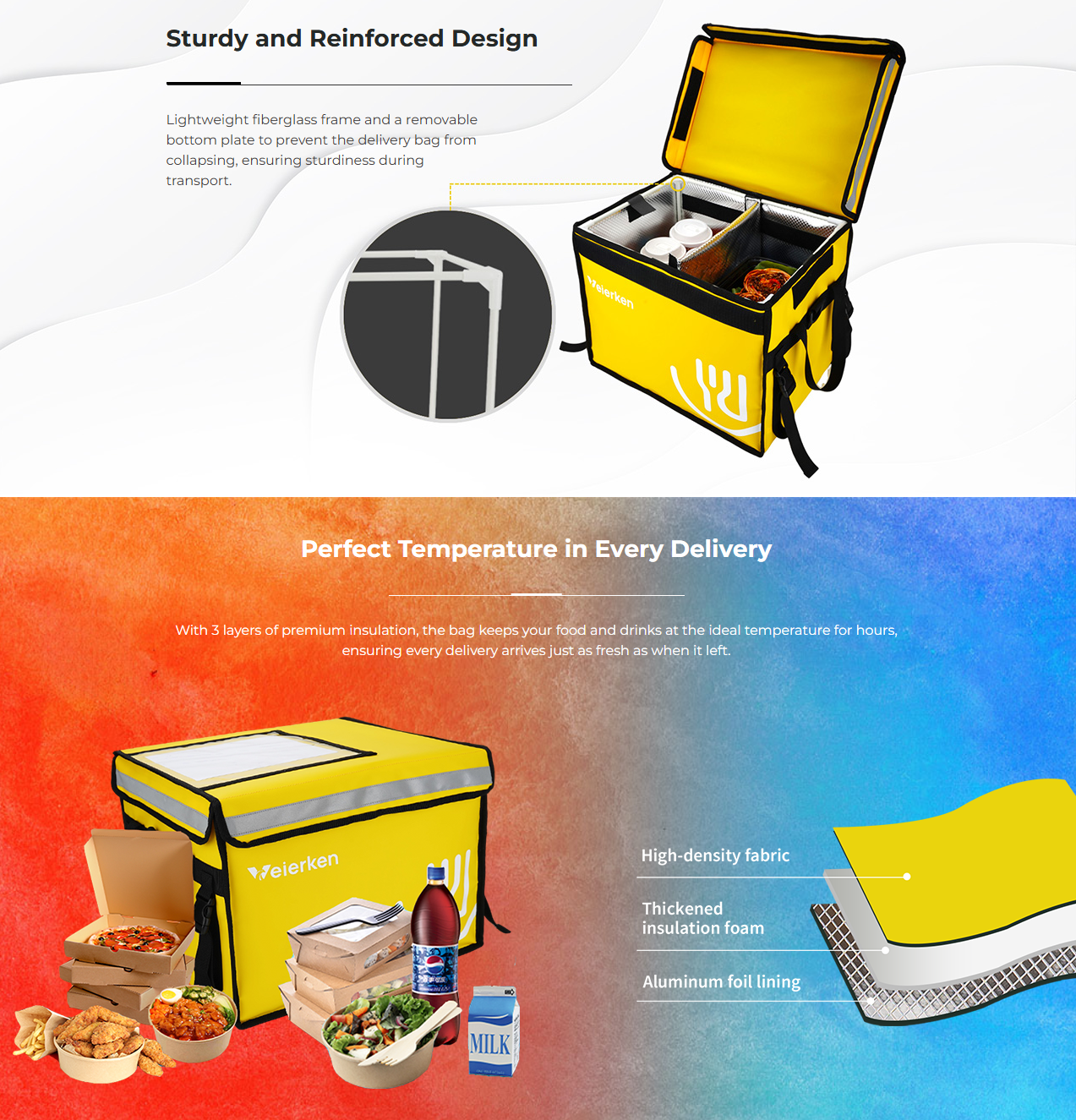
1. Heavy-Duty Gastronorm (GN) Pan Transporters
Transporting bulk hot food from the combi-oven to the remote serving line demands structural rigidity and high thermal resistance. GN pan transporters are designed around standard stainless steel or polycarbonate hotel pans (1/1, 1/2, and 1/3 sizes).
Instead of relying on fragile plastic latches found on traditional molded hot boxes, these industrial bags use reinforced webbing that wraps entirely around the undercarriage. This prevents seam blowout when loading full pans of soups, braises, or stews weighing over 30 kg.
Shell Material: 840D or 1680D TPU-coated polyester for extreme tear resistance and grease repellence.
Insulation Core: 20mm high-density expanded polyethylene (EPE) combined with closed-cell polyurethane foam.
Thermal Integrity: Retains heat above 65°C (149°F) for up to 4 hours under passive loading.
Handling: Dual-operator side handles and an integrated base plate to prevent sagging under wet loads.
2. Multi-Temperature Dual-Compartment Carriers
Sending a dedicated refrigerated van for cold desserts and a heated van for hot entrees drives up fleet fuel consumption. Dual-compartment thermal carriers allow multi-temperature delivery within the same standard cargo van.
These units feature heavy-duty insulated interior baffles that separate hot compartments from chilled compartments. A thermal bridge barrier prevents heat transfer across zones, maintaining both cold chain items below 4°C (40°F) and hot food above 65°C (149°F) within a single run.
Partitioning: Removable, hook-and-loop thermal divider walls lined with radiant barrier foil.
Lining Materials: Anti-microbial, leak-proof PEVA in the chilled section; heat-reflective aluminum composite in the hot section.
Fleet Efficiency: Cuts route stops in half by consolidating mixed-menu delivery into single runs.
Hygiene: Heat-sealed interior seams prevent sauce ingress into the insulation layers.
3. Pallet-Scale Thermal Blankets and Bulk Freight Totes
Hub-and-spoke distribution centers moving hundreds of meals at once rely on pallet-sized insulation. If your fleet operates standard dry freight box trucks rather than multi-temp refrigerated vehicles, pallet-scale covers provide cost-effective fleet delivery temperature control.
These massive covers drop directly over pre-stacked rolling racks or wooden Euro-pallets. They trap internal air volumes, creating a microclimate that shields bulk inventory during dock staging and line-haul cross-town freight.
Core Architecture: Multi-layer radiant barrier shielding external thermal radiation paired with thick polyester batting.
Reverse Logistics Value: Collapses down to a 1:5 volume ratio when empty, saving massive truck space on return trips.
Base Reinforcement: Heavy-duty, abrasion-resistant PVC scuff plates along the bottom perimeter to withstand pallet jack friction.
Closure System: Industrial magnetic flaps or heavy-gauge military-grade zippers for fast, one-person deployment.
4. Rigid-Frame Commercial Drop-Off Bags
Store replenishment requires speed. Messy bags that collapse on themselves slow down staging and lead to crushed packaging. Rigid-frame bags maintain their box profile whether empty or loaded to maximum capacity.
Manufacturers achieve this structure by slotting lightweight polypropylene (PP) hollow-core boards into internal zippered sleeves. Operators get the impact protection of a rigid plastic crate with the weight savings and washable skin of a commercial fabric delivery bag.
Frame Specs: Washable, food-safe hollow PP panels that will not rot, mold, or warp from humidity.
Fast Access: Top-loading and front-loading dual flaps with commercial YKK industrial zippers.
Documentation: External transparent TPU slip pockets for logistics manifests, batch numbers, and HACCP time-stamps.
Stackability: Internal framing supports vertical stacking up to three units high inside cargo vans.
5. Ergonomic Fleet Backpacks for Urban Dispatch
Congested metropolitan cores often exclude large box trucks. Central kitchens supplying corporate micro-markets and pop-up locations increasingly rely on two-wheeled fleets, including cargo e-bikes and motorbikes.
Professional delivery backpacks distribute heavy food weights evenly across the rider's torso to prevent operator fatigue and spill accidents. These bags feature reinforced tie-down anchor points so riders can mount them directly to vehicle cargo plates when not on foot.
Ergonomics: Padded lumbar panels, chest straps, and ventilated air-mesh shoulder harnesses.
Safety & Visibility: 360-degree high-visibility retroreflective striping for night operations.
Stability: Internal cross-strapping systems that lock internal containers in place, preventing shifting during hard braking.
Waterproofing: Welded TPU construction that stops torrential rain from penetrating through seams.
6. Seamless Antimicrobial High-Hygiene Totes
Institutional food services—such as hospital nutrition networks and school district kitchens—face intense regulatory oversight. Standard sewn seams present a biological risk because grease, juices, and sanitizing chemicals seep through needle holes into internal foam, feeding mold and bacteria.
High-hygiene bulk carriers solve this problem using high-frequency welding technology. The smooth, non-porous interior allows kitchen teams to wipe down surfaces instantly or rinse them thoroughly without moisture seeping into the insulation layer.
Sanitation Standard: 100% leak-proof heat-sealed technology that resists industrial disinfectant sprays.
Antimicrobial Treatment: Silver-ion embedded liners that actively inhibit bacterial colonization between wash cycles.
Compliance: Direct compliance with FDA Food Code standards for contact surfaces and HACCP operational mandates.
Drainage: Built-in bottom drain valves on larger sizes for direct draining after hot-water sanitizing.
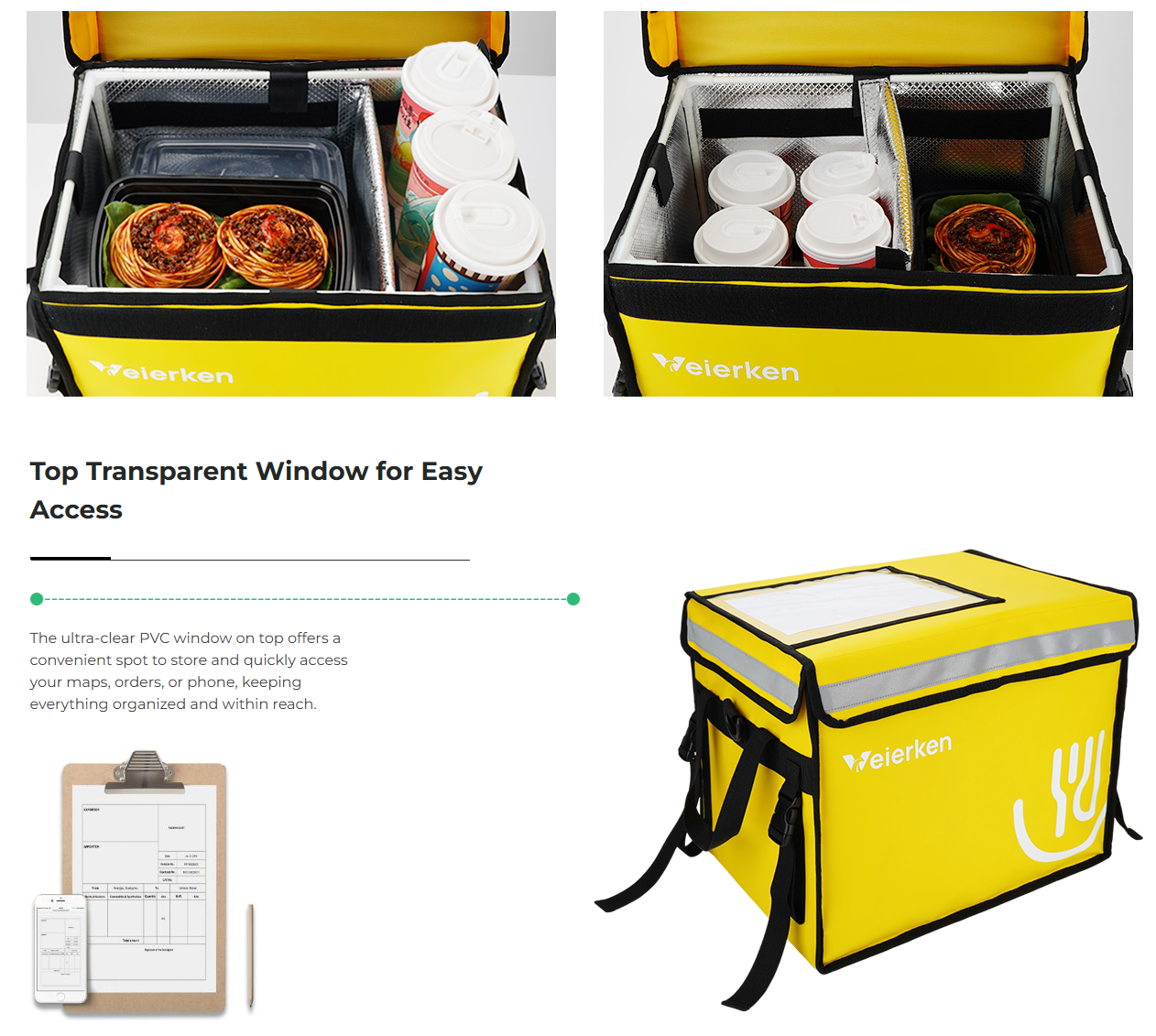
Procurement Evaluation Guide: What Central Kitchens Must Audit
Sourcing bulk thermal bags for central kitchens goes far beyond picking a catalog size. Operations managers must run systematic audits to guarantee low lifetime turnover costs and food safety.
Procurement teams should focus on these four evaluation metrics during their sample testing phase:
1. Real-World Thermal Decay Curves
Never rely solely on a manufacturer's claims of "keeps hot for 4 hours." Request thermal decay curves based on internal probe testing. A professional bag loaded with food at 85°C (185°F) in an ambient 20°C (68°F) room should experience a temperature drop of less than 3°C to 4°C per hour.
2. Seam Welding vs. Standard Stitching
Inspect the internal corners. Stitched seams use thread that acts like a wick for spilled liquids. Once animal fats penetrate the interior foam, the carrier cannot be completely sanitized. Require high-frequency welded seams on all interior liners for food-grade compliance.
3. Reverse Logistics Footprint
Your transport vans must not waste cubic volume on the return trip. Calculate the collapsed volume of your prospective bags. If your fleet handles hub-and-spoke routes, pick designs that fold flat. This allows a single return vehicle to retrieve empty carriers from three to five delivery routes.
4. Custom Fleet Integration (OEM/ODM)
Standard off-the-shelf bags rarely fit delivery van racking perfectly. Inefficient dimensions waste payload capacity. Commercial manufacturers like Weierken build custom solutions to match your vehicle's interior shelving dimensions. They can also add clear pockets to house IoT tracking beacons and data loggers for real-time temperature tracking.
Frequently Asked Questions
Q1: What is the expected lifespan of commercial insulated food
delivery bags in a high-volume fleet?
A1: High-volume central
kitchens cycling bags two to three times daily can expect 12 to 18 months of
service life from industrial-grade TPU bags. Lower-cost consumer nylon bags
often fail within 60 to 90 days. Heavy-duty carriers with reinforced stress
points, YKK zippers, and abrasion-resistant bases lower total cost of ownership
significantly over time.
Q2: How do we properly wash and sanitize bulk thermal bags to
maintain HACCP compliance?
A2: Bags featuring seamless heat-sealed
linings can be sprayed directly with mild quaternary ammonium sanitizers or
wash-down solutions, then wiped clean with a non-abrasive microfiber towel.
Never submerge multi-layer stitched carriers in industrial dishwashers unless
the manufacturer explicitly certifies that the insulation material is fully
sealed against moisture penetration.
Q3: Should our central kitchen use passive thermal bags or active
electric heating systems?
A3: For transit routes under 90 minutes,
high-density passive insulation combined with thermal mass (such as phase-change
gel plates or hot stones) is lighter, cheaper, and more reliable. Active heated
bags are best reserved for long-distance line-haul transport exceeding two
hours, or operations that hold food on site inside delivery vehicles for
extended staging windows.
Q4: Can we order custom sizes to match our existing hotel pans and
internal van shelving?
A4: Yes. Bulk OEM orders usually allow full
customization of height, length, and depth. Aligning the outer dimensions of
your bags with your van racking and folding bread crates optimizes cubic cargo
space and stops inventory from shifting during transit.
Q5: What certifications should we request when evaluating food-grade
thermal carriers?
A5: Ask suppliers for food contact safety test
reports (such as FDA 21 CFR or EU Food Contact regulations for the interior
liner materials), REACH compliance for plastics, and fabric water-repellency
ratings. Verify that interior liners are completely free of BPA, phthalates, and
lead.
Build a Reliable Fleet Logistics Chain
Temperature excursions cause costly food waste, failed health inspections, and brand damage. Standard delivery bags simply cannot handle the physical demands of high-throughput central kitchen operations. Upgrading your fleet to durable, food-grade thermal carriers protects your product quality from the moment it leaves the kitchen until it reaches the final service point.
Weierken works directly with central kitchens, institutional caterers, and fleet managers to build custom, high-durability thermal logistics solutions. Contact our engineering team today to discuss your route requirements, request a production sample, or receive a bulk order quote tailored to your operational specifications.