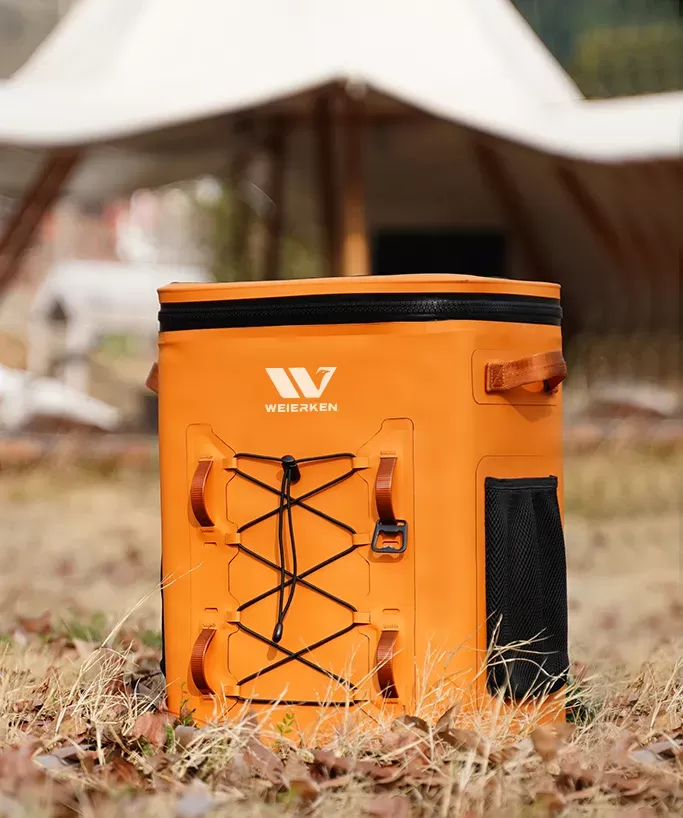

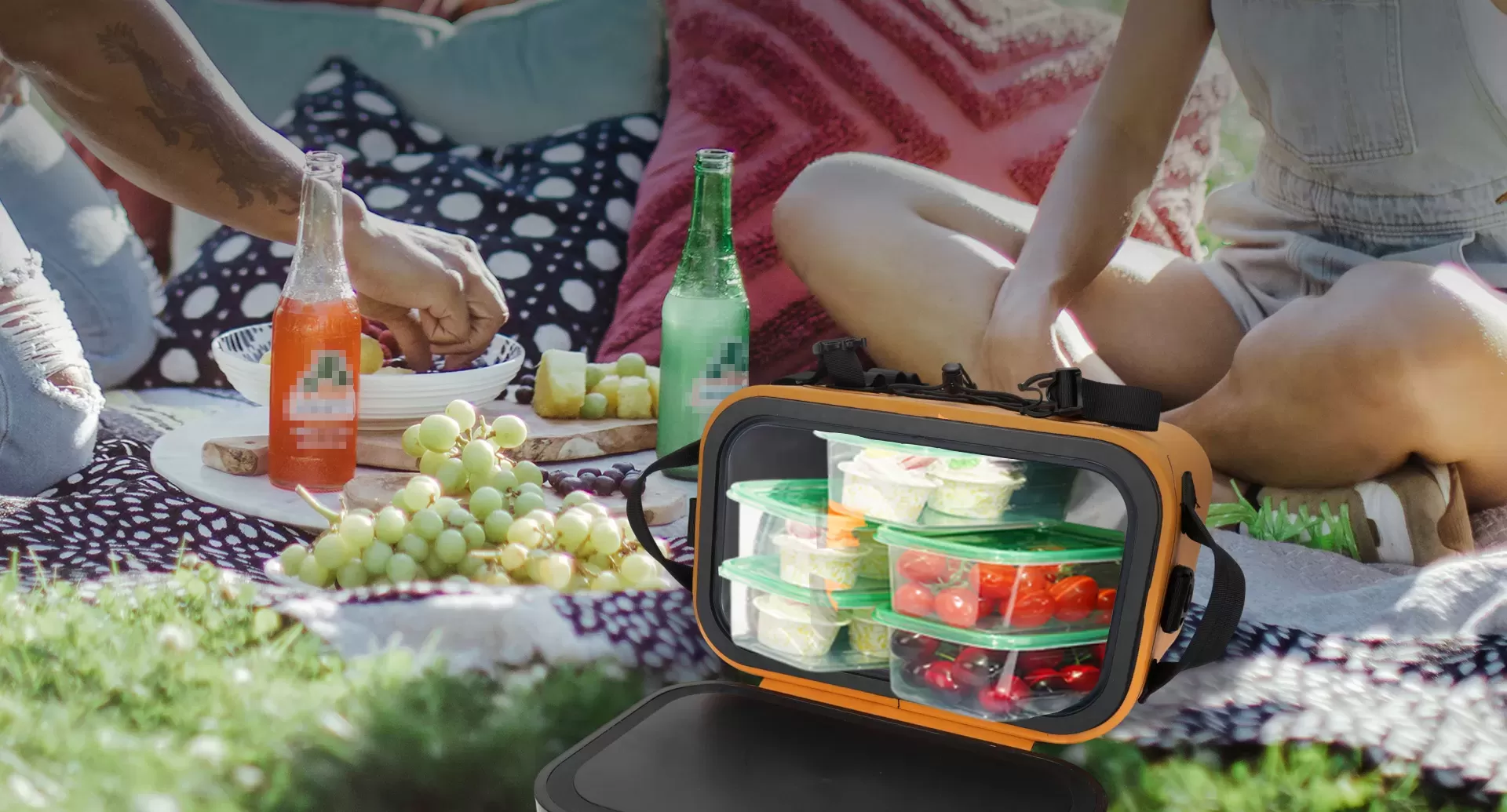
The global outdoor gear market is shifting rapidly. Outdoor brands, private label sellers, and corporate gift buyers are moving away from traditional soft bags and heavy hard plastic boxes. Thermoformed Ethylene-Vinyl Acetate (EVA) coolers now lead the market. They combine shockproof protection, lightweight portability, modern aesthetic appeal, and solid thermal performance.
However, finding a trustworthy production partner poses serious challenges. Choosing the wrong supplier leads to leaking seam lines, harsh chemical odors, poor thermal retention, and costly shipment delays. At Weierken, we see firsthand how rigorous production controls separate elite suppliers from low-cost workshops. This guide outlines the top seven quality standards you must review before signing your next manufacturing contract.
1. Material Grade and Food-Grade Compliance
Material quality dictates safety, durability, and user experience. Low-grade EVA materials contain heavy metals, phthalates, and volatile organic compounds (VOCs). These impurities create strong, offensive smells that ruin food items and trigger customer returns.
Top-tier manufacturers rely on virgin EVA resin rather than cheap recycled scraps. Virgin EVA offers high flexibility, consistent surface texture, and long-term crack resistance under freezing temperatures.
Verify that your supplier complies with international health and environmental standards:
FDA Approved EVA Cooler Materials: Guarantees that internal liners and surfaces are safe for direct food contact.
REACH & RoHS Compliance: Confirms the absence of harmful chemical substances required by European markets.
BPA-Free & Phthalates-Free Certifications: Protects your brand from liability and strict safety audits.
Always request chemical testing reports from third-party labs like SGS, Intertek, or TÜV Rheinland before approving raw materials.
2. Seamless High-Frequency Welding and Leakproof Tech
A cooler box that leaks melted ice fails its core purpose. Traditional sewing techniques pierce fabric layers with needles. These tiny needle holes inevitably leak water once the interior ice melts.
A qualified OEM EVA cooler bag factory uses advanced high-frequency (HF) voltage welding or hot-press sealing. High-frequency welding fuses the interior liner materials at a molecular level, creating a 100% leakproof seam without thread holes.
Examine the liner specifications carefully during evaluation:
Food-Grade TPU Liners: Thermoplastic Polyurethane (TPU) offers high elasticity, abrasion resistance, and excellent low-temperature performance.
Heavy-Duty PEVA Liners: A cost-effective, non-toxic alternative that provides strong water resistance when heat-sealed properly.
Zero-Stitch Interior: Ensure no needle stitching touches the lower half of the internal compartment.
3. Thermoforming Hardness and Structural Integrity
EVA foam comes in varying densities and hardness levels. If the shell is too soft, the cooler collapses under pressure and damages the contents inside. If it is too rigid, the shell becomes brittle and cracks upon impact.
Professional manufacturing plants measure shell hardness using the Shore C scale. An ideal EVA cooler outer shell typically ranges between 70 to 80 Shore C. This range delivers excellent impact resistance, structural memory, and shock absorption.
Evaluate the shell's composite strength by testing:
Peel Strength Lamination: Outer fabrics (like 600D/1200D Oxford polyester or heavy-duty TPU film) must bond tightly to the EVA shell under heat and pressure.
Compressive Resistance: The structure should support heavy stacking during container shipping without warping.
Surface Resilience: The material must bounce back to its original shape after suffering moderate impacts.
4. Thermal Insulation Performance and Foam Density
Never rely on verbal promises like "keeps ice cold for 48 hours." Professional buyers insist on verified scientific data and physical testing reports.
Thermal efficiency depends heavily on the internal core construction. Premium units combine a molded EVA outer shell with an inner insulation layer, such as high-density closed-cell PE foam or extra-thick PU foam inserts. Closed-cell structures trap air molecules inside micro-pockets, blocking heat transfer effectively.
Demand documented Ice Retention Tests from potential vendors. A standardized test measures:
Ambient temperature conditions (typically controlled at 25°C to 32°C).
Ice-to-volume ratio (usually a 1:1 or 2:1 ice-to-contents ratio).
Internal temperature curves recorded over 12, 24, 48, and 72-hour intervals.
5. Air-tight Zippers and Weatherproof Hardware
The closure system is often the weakest point in cold insulation. Standard nylon zippers allow warm ambient air to seep inside, accelerating ice melting. They also let liquid spill out if the cooler tips over in a car trunk.
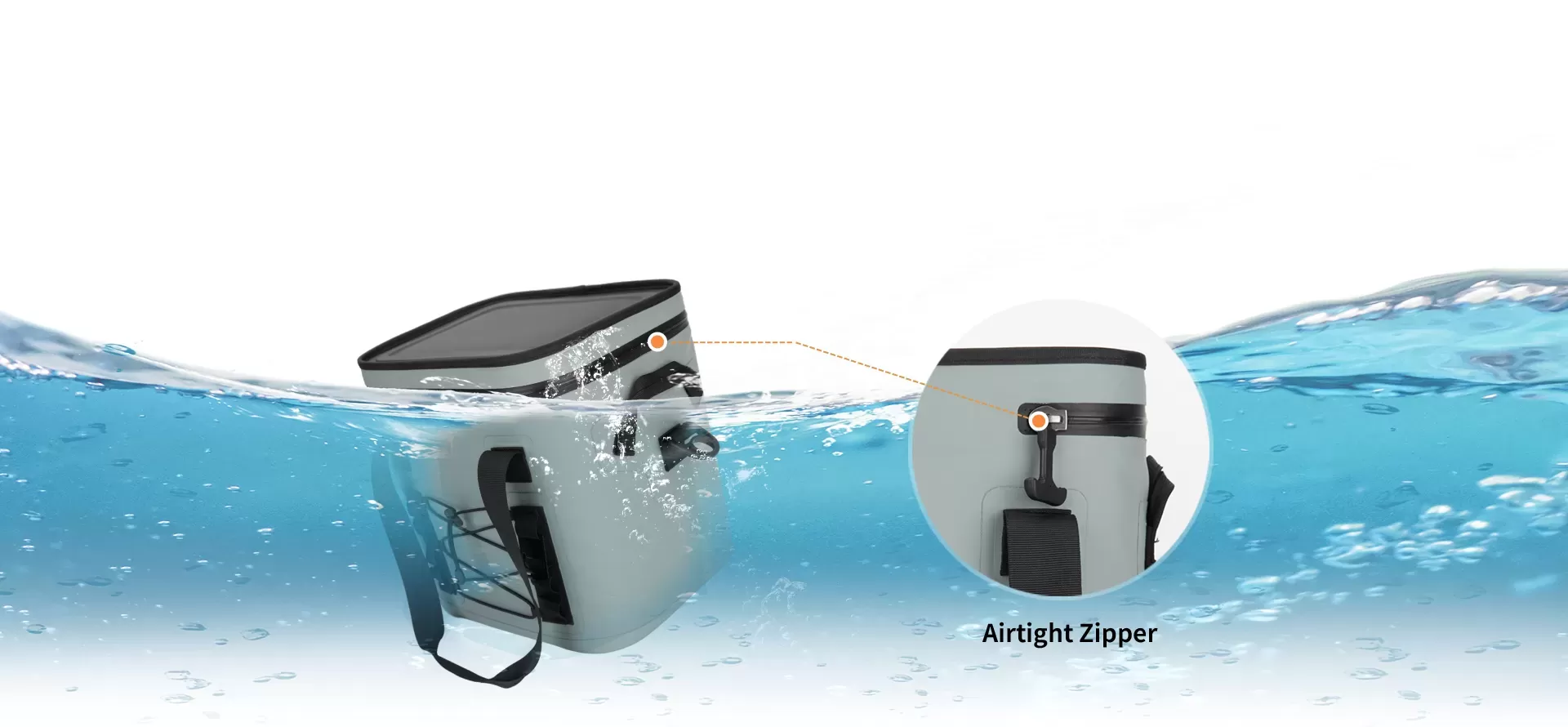
Leading EVA cooler manufacturers like Weierken equip high-performance models with specialized airtight, waterproof zippers. These zippers feature rubberized teeth and TPU-coated tape that block water leaks and air exchange entirely.
Inspect the secondary hardware components closely:
Load-Bearing D-Rings: Must withstand pull tests exceeding 30 kg without tearing away from the body seam.
Reinforced Handles: Box-stitched or heat-welded connection points prevent strap failure during heavy loads.
Corrosion-Resistant Hardware: Plastic or treated alloy hardware prevents rust when exposed to saltwater environments.
6. OEM/ODM Customization and Tooling Capabilities
B2B buyers require tailored designs to stand out in crowded retail markets. A competent custom EVA cooler box supplier must offer robust, fast-turnaround research and development services.
Custom production requires precision tooling. Look for suppliers that maintain in-house CNC aluminum mold production facilities rather than outsourcing mold development. In-house tooling shortens development cycles and lowers total mold expenses.
Verify your supplier's capabilities across these custom services:
3D CAD Modeling: Rapid creation of structural digital concepts within 48 hours.
Custom Mold Creation: Precision CNC aluminum molds that produce crisp surface textures and clean contours.
Brand Customization: Multiple logo application methods, including 3D embossing, debossing, silk-screen printing, rubber patching, and laser engraving.
Pantone Color Matching: Exact color matching for custom EVA shells, fabric linings, zippers, and webbing straps.
7. Factory Audits and Quality Control Systems
A supplier might build a beautiful sample, but can they replicate that quality across a 10,000-unit bulk order? Auditing factory certifications and quality management workflows prevents mass-production disasters.
Reputable factories operate under structured quality assurance frameworks. Ask for proof of international factory audits, such as ISO9001, BSCI, SMETA, or Disney FAMA approvals.
Confirm that the factory executes a strict three-stage inspection system:
IQC (Incoming Quality Control): Testing raw EVA sheets, fabrics, zippers, and glues prior to mass production.
IPQC (In-Process Quality Control): Checking thermoforming pressure, voltage seam integrity, and stitching line tension on the assembly line.
FQC/OQC (Final/Outgoing Quality Control): Conducting randomized drop tests, load tests, and 100% water fill tests on finished goods before packing.
Actionable Sourcing Tips: How Buyers Should Test Samples
When your sample arrives from an OEM EVA cooler bag factory, do not just look at its visual finish. Put the product through immediate physical field tests to confirm performance.
Use this quick testing checklist:
| Test Item | Testing Procedure | Pass Criteria |
|---|---|---|
| Leakage Test | Fill the cooler with water to 50% capacity. Seal it and turn it upside down for 2 hours. | Zero water leakage around seams, body fabric, or zipper closure. |
| Drop Impact Test | Load the cooler to its maximum weight capacity with water/ice. Drop it from a 1-meter height onto concrete. | No structural cracking, cracked seams, or broken buckles. |
| Odor Assessment | Unbox the sample and place it inside a sealed room or vehicle under sunlight for 4 hours. Open the lid and smell. | No chemical odor or foul smell. Clean, neutral scent. |
| Load Strap Test | Hang a 25 kg static weight from the shoulder strap for 24 hours. | No broken stitching, distorted webbing, or damaged D-rings. |
Conclusion: Partnering for Long-Term Success
Selecting reliable EVA cooler manufacturers requires analyzing technical details beyond base pricing. Auditing raw material grades, seam welding techniques, shell hardness standards, and factory certifications protects your brand reputation and secures strong market margins.
Work with an experienced manufacturing partner that understands high-precision thermoforming and rigorous quality assurance. As an industry-leading OEM/ODM manufacturer, Weierken delivers custom, heavy-duty EVA cooler solutions tailored to your market requirements.
Ready to upgrade your outdoor product line? Contact the engineering team at Weierken today to request a free quote, discuss custom mold options, or obtain detailed thermal test reports for your next project.
Frequently Asked Questions (FAQ)
Q1: Why choose EVA coolers over traditional hard plastic coolers?
EVA coolers offer a superior balance of weight, protection, and aesthetics. They are significantly lighter than hard rotomolded coolers, making them cheaper to ship and easier for consumers to carry. Unlike soft bags, their thermoformed EVA shells resist crushing, absorb heavy impacts, and retain sleek, modern shapes.
Q2: What is the typical MOQ when ordering from a custom EVA cooler box supplier?
Minimum Order Quantities (MOQs) depend on custom fabric colors and tooling specifications. Standard MOQs generally range from 500 to 1,000 units per style. Specialized custom pantone colors or unique custom molds may require higher initial order quantities to offset raw material setup costs.
Q3: How do I verify if an OEM EVA cooler bag factory uses non-toxic materials?
Always request official, up-to-date testing reports from certified third-party testing agencies like SGS or Intertek. Confirm that the reports explicitly test for FDA food contact compliance, REACH SVHC candidate lists, RoHS standards, and BPA/phthalate content on all internal liner materials.
Q4: How long does it take to develop a custom EVA mold and sample?
Once 3D CAD design drawings are finalized, producing a custom CNC aluminum mold usually takes 10 to 15 days. Sample production and assembly take another 5 to 7 days. Overall, expect a complete custom sample within 20 to 25 business days from design sign-off.
Q5: Are high-frequency welded coolers 100% waterproof?
Yes. A high-frequency welded cooler uses high voltage to weld thermoplastic sheets together at a molecular level. This creates a completely seamless internal liner. When paired with an airtight, waterproof zipper, the cooler achieves a complete waterproof seal that prevents leaking even when inverted.