
The stand-up paddleboarding (SUP) market is evolving rapidly as we approach 2026. Modern paddlers demand much more than a basic roll-top dry bag clipped to a bungee cord. They expect low-profile deck bags that resist heavy ocean spray, offer insulated storage, and meet strict international environmental standards.
Water sports brands face growing pressure to innovate. Winning market share requires partnering with a specialized waterproof SUP deck bag supplier capable of handling advanced TPU materials and Radio Frequency (RF) welding tech.
At Weierken, we help outdoor equipment brands, Amazon sellers, and SUP distributors navigate these technical shifts. This guide breaks down the material revolutions, manufacturing standards, and sourcing strategies you need to succeed in 2026.
Chapter 1: The 2026 Material Revolution — Why TPU is Replacing PVC
For years, heavy PVC tarpaulin was the default choice for marine bags. However, PVC suffers from serious performance drawbacks. It grows stiff and brittle in cold water, off-gasses chemical odors, adds unwanted weight, and faces tight environmental restrictions across Europe and North America.
Thermoplastic Polyurethane (TPU) is driving 2026 TPU paddle board bag trends. Product managers across the industry are making the switch for three primary reasons:
Lightweight Toughness: TPU weighs up to 30% less than equivalent PVC tarpaulin while delivering 50% greater tear and puncture resistance.
Saltwater and UV Endurance: TPU resists surface cracking, yellowing, and coating separation, even after months of intense sun and ocean spray exposure.
Eco-Friendly Compliance: TPU is free from heavy metals and toxic phthalates. It fully complies with REACH and RoHS standards.
When working with an eco-friendly SUP accessories supplier, brands can combine TPU coatings with GRS-certified rPET (recycled polyester) base fabrics. This allows your product line to meet European 2026 recycled material mandates without compromising waterproof performance.
Chapter 2: Seamless Welding Tech — Zero-Leak Standards for SUP Deck Bags
Paddle board deck bags sit directly in standing water on the board's surface. When waves crash over the bow, ocean water hits bag seams at high pressure. Traditional needle stitching and seam taping fail under these conditions, eventually leading to water seepage.
A reliable custom TPU deck bag manufacturer relies entirely on seamless high-frequency welding to guarantee zero water ingress:
Radio Frequency (RF) Welding: RF welding uses electromagnetic energy to excite TPU molecules, fusing separate material layers into a single piece. This creates a permanent, molecular-level watertight seal.
Watertight Zipper Integration: High-end bags weld watertight zipper tracks directly onto the TPU panels instead of sewing them, eliminating leak points around the main opening.
Purge Valve & Accessory Fusion: Pressure relief valves, air release ports, and handle mounts are welded directly into the bag body.
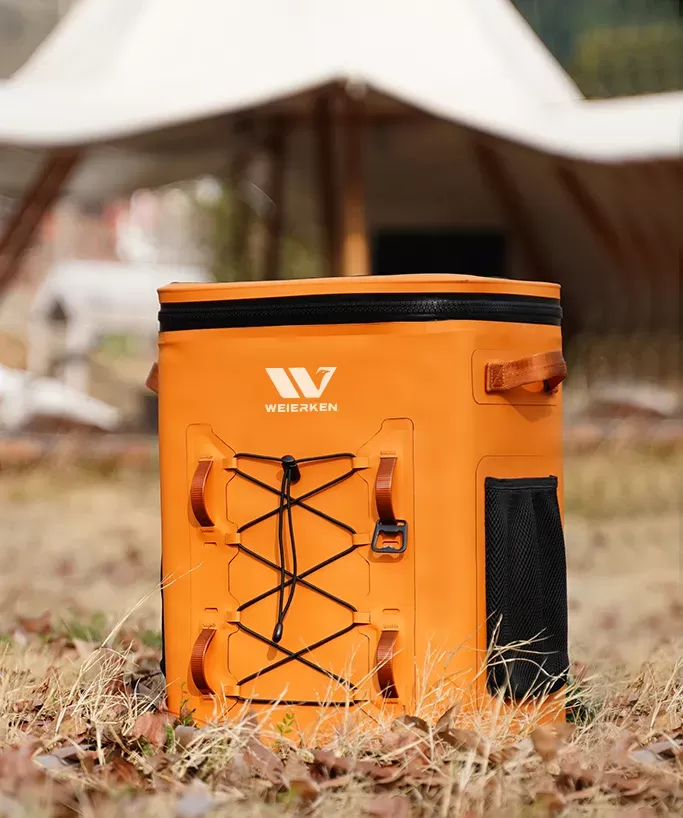
This seamless fusion technology allows suppliers to manufacture an RF welded waterproof SUP cooler bag. These hybrid bags keep ice cold inside while preventing exterior deck water from soaking food and gear.
Chapter 3: Four Innovative Design Trends for 2026 SUP Deck Bags
To capture premium market share in 2026, brands must move beyond simple box shapes. Integrating smart features during the ODM design phase gives your products a clear competitive advantage.
1. Low-Profile Aerodynamic Shapes
Sleek, tapered bag contours match the natural curve of paddle board bows and sterns. This low-profile design reduces headwind drag during long-distance paddling and prevents ocean swells from catching under the bag edges.
2. Marine-Grade 316 Stainless Steel & Quick-Release Systems
Deck bags take constant force when a board crests waves. Using 316 marine-grade stainless steel clips or high-impact POM buckles ensures the bag stays locked onto board D-rings without rusting or snapping.
3. Integrated Touchscreen Phone Windows
Paddlers rely on smartphones for GPS navigation and emergency contact. Incorporating anti-fog, high-transparency TPU film windows lets users operate touchscreens directly through the bag without exposing devices to salt spray.
4. Dry/Wet Thermal Insulation Hybrids
Multi-functional gear is in high demand. By pairing closed-cell insulating foam between two layers of TPU fabric, an RF-welded bag doubles as a deck cooler, keeping drinks cold for hours while remaining 100% waterproof.
Chapter 4: Four Metrics to Evaluate a Top SUP Deck Bag Supplier in 2026
Choosing a manufacturing partner requires evaluating more than just price quotes. You need a long-term partner capable of navigating complex global supply chains and strict quality standards.
Use these four critical metrics when auditing a prospective waterproof SUP deck bag supplier:
1. In-House R&D and Rapid Prototyping
Developing new mold tooling for custom TPU bags requires dedicated engineering support. Partner with factories that maintain in-house pattern-making departments. Weierken offers 12 to 30-day prototyping turnarounds, converting 3D designs into fully functional, pressure-tested samples.
2. Dual-Base Manufacturing & Tariff Mitigation
Rising import tariffs can quickly destroy profit margins. Choosing a China Cambodia bag OEM supplier provides essential supply chain flexibility. Dual-base manufacturing allows brands to leverage China's advanced raw material ecosystem while taking advantage of Cambodia's favorable export tariffs to Western markets.
3. Quality Stability and Submersion Testing
A top-tier factory should maintain a First-Time Quality (FQA) rate above 99.5%. Ask your supplier if they perform a 100% underwater submersion bubble test on all airtight compartments before bulk packaging.
4. Comprehensive International Certifications
Verify that your manufacturing partner holds up-to-date factory audits and material certifications. Demand proof of ISO 9001, BSCI, SEDEX, GRS, and REACH compliance to protect your brand during customs inspections.
Supplier Evaluation Checklist
Compare potential OEM partners against this quick feature guide before placing your next production order:
| Evaluation Category | Standard Factory Standard | 2026 Advanced OEM Standard |
|---|---|---|
| Fabric Capability | Standard PVC Tarpaulin | 840D TPU / GRS-certified Recycled rPET TPU |
| Seam Technology | Stitched + Seam Taped | 100% Radio Frequency (RF) Molecular Fusion |
| Production Footprint | Single Regional Plant | Dual-Base (China + Cambodia Tariff Mitigation) |
| Leak Testing | Random Sampling (AQL 2.5) | 100% Submersion Bubble Testing on Airtight Units |
| Compliance | Basic Factory Registration | ISO 9001, BSCI, SEDEX, GRS, REACH Certified |
Planning your 2026 product line? The engineering team at Weierken can review your tech packs, suggest TPU material upgrades, and provide detailed production cost estimates for dual-base manufacturing.
Frequently Asked Questions (FAQ)
1. Why should my brand switch from PVC to TPU deck bags in 2026?
TPU is 30% lighter, significantly stronger, and stays flexible in cold water. Unlike PVC, TPU contains no toxic phthalates, conforms to REACH environmental laws, and supports GRS recycled fabric integration, making it essential for modern brand positioning.
2. How does a China + Cambodia bag OEM setup help lower total sourcing costs?
Manufacturing in Cambodia allows brands to benefit from lower labor costs and favorable tariff exemptions when importing into North America and Europe. Meanwhile, keeping component sourcing connected to China ensures access to high-quality TPU films and specialized marine hardware.
3. Can an RF welded waterproof SUP cooler bag keep drinks cold without leaking?
Yes. By fusing an inner TPU liner, closed-cell foam insulation, an outer TPU shell, and a watertight zipper together using RF welding, the bag creates a completely sealed chamber. Ice melt cannot seep through the bottom seams, and ocean waves cannot enter from the top.
4. What certifications does an eco-friendly SUP accessories supplier need for European distribution?
For European sales, suppliers must comply with REACH chemical safety regulations and RoHS environmental standards. If you advertise recycled materials, your factory must also provide GRS (Global Recycled Standard) transaction certificates for the base fabrics.
5. What is the typical lead time for custom TPU deck bag manufacturing with Weierken?
Sample development typically takes 12 to 30 days depending on mold complexity. Mass production lead times range from 45 to 60 days following sample approval, supported by our dual-factory production lines in China and Cambodia.
Partner with Weierken for Your 2026 Deck Bag Production
Sourcing high-performance marine bags requires a manufacturing partner who understands material science, specialized tooling, and global trade compliance. Settling for outdated materials or weak seam technology puts your product line at risk.
At Weierken, we bring decades of technical bag manufacturing experience, advanced RF welding facilities, and a dual-factory network across China and Cambodia. We help leading water sports brands deliver durable, zero-leak SUP deck bags to markets around the world.
Ready to start your next custom OEM/ODM project? Contact the Weierken team today to request a quote, submit a tech pack, or schedule a technical consultation.