


Choosing the right manufacturing partner dictates the success of your retail or promotional product line. When you source products overseas, your factory directly impacts product quality, cost control, delivery stability, and your overall brand image.
B2B buyers, brand owners, and importers face constant challenges. You might deal with inconsistent quality, delayed shipments, or poor communication. Finding a dependable beach bag fabricator requires a strict, systematic approach to supplier evaluation.
Many top-tier brands, much like weierken, understand that a structured vetting process eliminates risks before production even begins. This checklist covers five core dimensions to help you audit and select the perfect custom beach tote manufacturer for your business needs.
1. Quality Control Capabilities
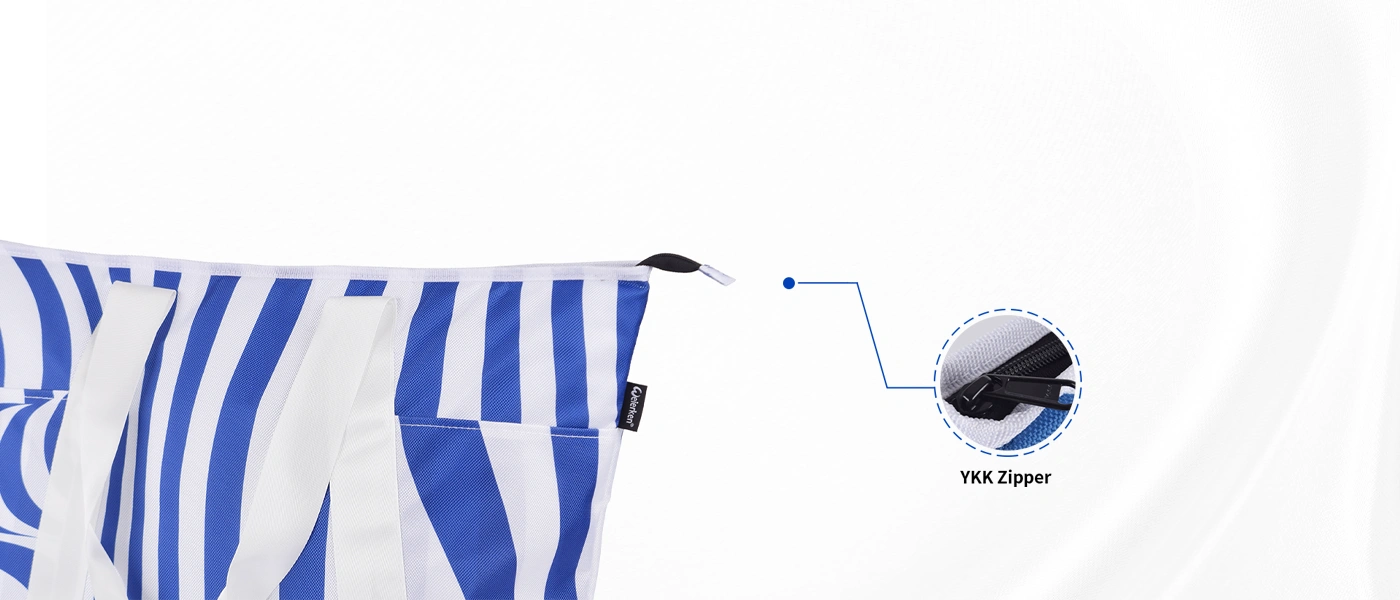
Quality issues can ruin your brand reputation. Buyers often struggle with batch color variations, weak stitching, faulty zippers, and fabrics that pill or fade under the sun. You need a beach bag fabricator that prioritizes structural integrity and material durability.
A factory must prove its quality standards through documentation and active inspection routines. Do not accept verbal promises. Ask for hard evidence of their quality assurance processes.
Key Evaluation Points:
- Does the facility hold an active ISO 9001 quality management system certification?
- Can they provide third-party testing reports for abrasion resistance, colorfastness, and weight-bearing limits?
- Do they conduct a During Production Inspection (DPI) to catch errors early?
- Do they allow a Pre-Shipment Inspection (PSI) by your nominated third-party agency?
- What is their acceptable defect rate, and what specific procedures handle customer complaints and replacements?
A serious wholesale beach bag factory will test handles by loading them with heavy weights and dropping them repeatedly. They will also expose fabrics to UV light to ensure the vibrant summer colors do not fade after one beach trip.
2. Supply Chain and Cost Optimization
Raw material prices fluctuate wildly. Hidden production costs and unexpected delivery delays quickly destroy your profit margins. A highly capable beach bag fabricator mitigates these risks by managing a robust, transparent supply chain.
You need a partner with deep roots in the raw material market. Brands like weierken thrive because they build resilient supply networks that adapt to market shifts. Your supplier should do the same.
Key Evaluation Points:
- Does the factory have stable upstream suppliers for fabrics, zippers, and webbing?
- Will they provide a transparent Bill of Materials (BOM) that breaks down costs for materials, labor, packaging, and freight?
- How flexible is their Minimum Order Quantity (MOQ) for new clients testing the market?
- Do they offer tiered pricing structures for larger bulk beach bag manufacturing orders?
- Can they suggest alternative, cost-effective materials if your primary fabric choice spikes in price?
Transparency builds trust. If an OEM bag supplier refuses to break down their quotation, you might face hidden fees later. Demand clarity on packaging costs and internal freight charges from the factory to the port.
3. OEM/ODM Customization Expertise
Poor execution of design concepts frustrates buyers. High mold fees and painfully long development cycles delay your time to market. Your chosen beach bag fabricator must translate your flat sketches into retail-ready physical products quickly and accurately.
Design capabilities separate true manufacturers from basic assembly lines. You need a facility equipped to handle complex prints, diverse materials, and unique structural designs.
Key Evaluation Points:
- Does the factory operate an in-house sampling center?
- What is their policy on sample fees, and do they refund these fees upon mass production?
- Can they execute various logo applications, such as silk screening, heat transfer, and intricate embroidery?
- Do they have experience across different styles, including mesh bags, insulated cooler bags, and woven straw totes?
- Can the team provide 3D rendering visuals before cutting the physical fabric?
- What is the exact lead time from submitting a tech pack to receiving the first prototype?
A proficient canvas tote production team will suggest the best printing method for your specific fabric. They know that heat transfer works better on complex polyester designs, while silk screen suits simple logos on natural cotton.
4. Eco-Friendly and Sustainability Trends
European and North American markets enforce strict environmental regulations. Consumers actively seek out sustainable products. Partnering with a green beach bag fabricator is no longer optional; it is a critical business requirement.
You must avoid greenwashing. Your supplier must prove their eco-friendly claims through internationally recognized certifications and verifiable supply chain tracing.
Key Evaluation Points:
- Do they actively source Recycled PET (RPET), organic cotton, natural jute, or biodegradable materials?
- Does the facility hold a valid Global Recycled Standard (GRS certification) or OEKO-TEX® certification?
- Can they source FSC-certified paper for hangtags and provide plastic-free packaging options?
- Does the factory implement internal energy-saving measures, such as solar panels or wastewater treatment systems?
A genuine sustainable bag supplier tracks the origin of their recycled yarns. They will provide transaction certificates for your RPET materials, ensuring your final products pass stringent customs and retail compliance checks.
5. Supplier Vetting and Auditing
The global sourcing market hides many trading companies posing as direct manufacturers. Working with a middleman increases your costs and creates communication barriers. Furthermore, ignoring social compliance can lead to severe PR disasters for your brand.
You must audit your beach bag fabricator rigorously. Verify their legal status, check their production capacity, and ensure they treat their workers ethically.
Key Evaluation Points:
- Can the supplier provide a valid business license, real factory photos, and an exact equipment list?
- Do they willingly accept social responsibility audits like BSCI, Sedex, or SMETA?
- Can they prove their export experience by sharing sanitized bills of lading from the past 12 months?
- Does their core merchandising team speak fluent English or your native language to prevent costly misunderstandings?
Request a live video tour of the production floor. A legitimate wholesale beach bag factory will gladly walk you through their fabric cutting rooms, sewing lines, and packaging areas via a video call.
Essential Bonus Considerations
Beyond the five core dimensions, a few extra factors separate a good beach bag fabricator from an exceptional one.
Delivery and Capacity Management
Evaluate their monthly production capacity. Ask how many thousands of pieces they can output during a standard month. More importantly, check their peak season elasticity. Summer items face a massive rush in the spring. You need a factory that scales up labor quickly. Always include penalty clauses for late delivery in your contract.
Intellectual Property Protection
Your designs belong to you. A trustworthy custom beach tote manufacturer will sign a Non-Disclosure Agreement (NDA) without hesitation. They must guarantee that your custom prints and proprietary bag structures will never appear in their public catalog or be sold to competing buyers.
Long-Term Partnership Value
Look for vendors willing to grow with you. Some advanced factories offer Vendor Managed Inventory (VMI) services or hold consignment stock for trusted partners. Brands like weierken build enduring relationships by collaborating with factories to co-develop exclusive, innovative new fabrics for future seasons.
Evaluating a beach bag fabricator takes time, patience, and meticulous attention to detail. By applying this comprehensive checklist, you protect your investment and secure a supply chain that supports your brand’s growth.
Thoroughly assess their quality control, cost transparency, customization skills, sustainability practices, and ethical compliance. Finding a partner who aligns with the high standards of a brand like weierken ensures your products delight end-users and generate repeat business. Take control of your sourcing process today to build a stronger, more profitable product line.
Ready to upgrade your supply chain?
Frequently Asked Questions (FAQ)
1. How long does a typical beach bag fabricator take to produce a custom sample?
Most direct factories require 5 to 10 working days to create a prototype, depending on the complexity of the design and the availability of the requested materials. If you require custom-dyed fabrics to match a specific Pantone color, the sampling phase might extend to 15 or 20 days.
2. What is the standard MOQ for bulk beach bag manufacturing?
Standard minimum order quantities usually range from 500 to 1,000 pieces per style or color. However, a flexible OEM bag supplier might accept a lower MOQ of 200-300 pieces for a trial order, though this typically incurs a slightly higher unit cost.
3. How do I verify that a wholesale beach bag factory is not a trading company?
Ask for their business license and check the registered business scope. A factory’s license will explicitly list “manufacturing” or “production.” Additionally, request a live video call to tour the facility, and ask to see their raw material warehouse and sewing lines. Trading companies usually cannot accommodate spontaneous factory tours.
4. Can I request fully biodegradable packaging from my sustainable bag supplier?
Yes, reputable manufacturers increasingly support plastic-free initiatives. You can specify packaging requirements such as compostable cornstarch bags, tissue paper wrapping, and FSC-certified recycled cardboard cartons. Be sure to request these details on your Bill of Materials (BOM) early in the quoting process.
5. What specific quality tests should a canvas tote production facility offer?
At a minimum, the facility should perform load-bearing tests to ensure the handles do not tear under heavy weight. They should also conduct colorfastness testing (to ensure dye does not bleed onto clothing when wet), zipper durability tests, and fabric seam strength evaluations. You can also hire a third party to conduct a Pre-Shipment Inspection (PSI) to verify these results before the goods leave the factory.


