

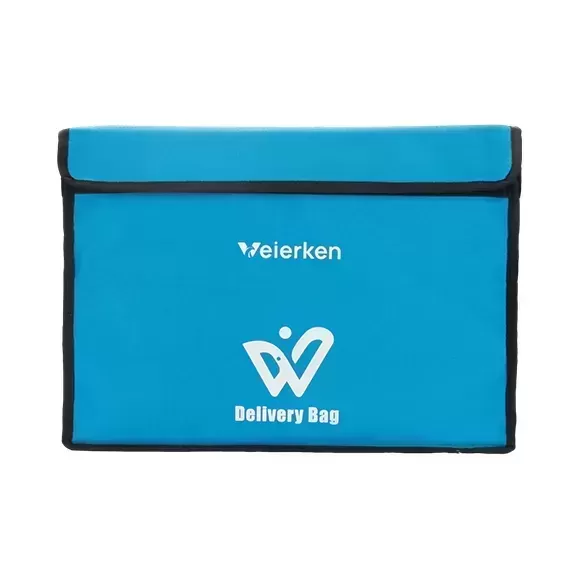
The global rise of central production kitchens and cloud kitchen networks has fundamentally changed food logistics. Food transport is no longer just a courier carrying a single meal order down the street. It is an industrial, hub-and-spoke distribution model.
Central facilities dispatch bulk meal containers, pre-portioned ingredients, and catering packages across multi-site restaurant networks several times a day. Standard consumer-grade delivery gear fails rapidly under these extreme operating demands. Handles rip, liners harbor bacterial mold, and food arrives at improper temperatures.
When procurement heads evaluate a custom central kitchen delivery bag supplier, what specific capabilities separate an ordinary bag workshop from an industrial manufacturing partner? As a manufacturer with 20 years of vertical category experience, Weierken evaluates commercial capability across three core dimensions: supply chain resilience, engineering problem-solving, and strategic partnership.
Capability 1: Resilient and Agile Global Supply Chain Infrastructure
A capable central kitchen delivery bag supplier must guarantee cost efficiency, regulatory compliance, and reliable delivery schedules across global borders. If a supplier operates a single small workshop, any local labor disruption or geopolitical trade shift can shut down your entire expansion schedule.
Dual-Base Manufacturing Footprint
Top-tier manufacturers operate diversified production bases to balance innovation speed with volume cost advantages. For example, Weierken utilizes a collaborative "China + Cambodia" dual-manufacturing footprint.
The Innovation Hub (China): Handles advanced technical development, high-frequency tooling, complex engineering trials, and rapid prototyping.
The Mass Production Base (Cambodia): Executes high-volume cutting, assembly, and packaging operations for enterprise container runs.
This dual-hub setup shields restaurant chains from regional labor shortages and supply chain bottlenecks, ensuring continuous factory output throughout peak seasonal surges.
Tariff Optimization and Landed Cost Control
Importing equipment into major Western markets exposes buyers to volatile customs duties. A strategic central kitchen delivery bag supplier structures production to lower your total landed cost.
Manufacturing through qualified facilities in Southeast Asia allows enterprise brands to take advantage of preferential trade agreements and lower duty rates into North American and European ports. Lower import tariffs directly protect your operational margins without sacrificing fabric strength or hardware quality.
Industrial-Grade Quality Assurance (99.5% First-Pass Yield)
Central kitchen operations cannot afford equipment failures. A broken zipper or soaked foam core on the road disrupts kitchen schedules and creates immediate food waste. Leading suppliers enforce rigid multi-stage quality control systems across the entire assembly run.
Incoming Material Inspection (IQC): Verifying fabric denier, tensile ratings, and polyurethane coating thickness before cutting begins.
In-Process Quality Control (IPQC): Testing high-frequency seam welds for liquid leaks and monitoring stitch density on primary load paths.
Final Quality Control (FQC): Pull-testing finished handles and zippers against calibrated mechanical load limits.
This rigorous oversight delivers a 99.5% first-pass inspection yield, protecting buyers from the costly hassle of handling cross-border warranty claims.
Turnkey Door-to-Door (DDP) Logistics
Procurement directors should focus on running foodservice networks, not managing customs declarations, container drayage, and marine insurance. An enterprise central kitchen delivery bag supplier manages the entire shipping pipeline under Delivered Duty Paid (DDP) terms.
Your supplier should coordinate ocean freight, clear import customs, settle harbor fees, and schedule domestic flatbed or dry-van delivery straight to your regional hubs. Buying overseas should feel just as straightforward as purchasing from a domestic vendor.
Global Compliance and ESG Auditing
Enterprise food brands face rigorous Environmental, Social, and Governance (ESG) scrutiny. Your manufacturing partner must operate compliant, transparent facilities that satisfy strict corporate codes of conduct.
Ensure your chosen vendor holds verified international credentials, including BSCI and SEDEX social audits, ISO 9001 quality management standards, and full compliance with REACH and FDA food-contact standards. If your brand prioritizes sustainability, confirm the factory works with Global Recycled Standard (GRS) certified rPET exterior fabrics.
Capability 2: Market-Driven Custom R&D and Heavy-Duty Engineering
Central kitchens move varied menus with complex thermal requirements. Some operations transport piping-hot stews alongside crisp salads; others move frozen commissary kits to retail storefronts. A qualified central kitchen delivery bag supplier is not a passive assembly plant; they are an active technical engineering partner.
In-House Market Research and Ergonomic Design
A dependable supplier understands how delivery workers interact with gear during long shifts. Their internal engineering team studies courier physical strain, bike mounting points, and commissary container geometry to build practical equipment.
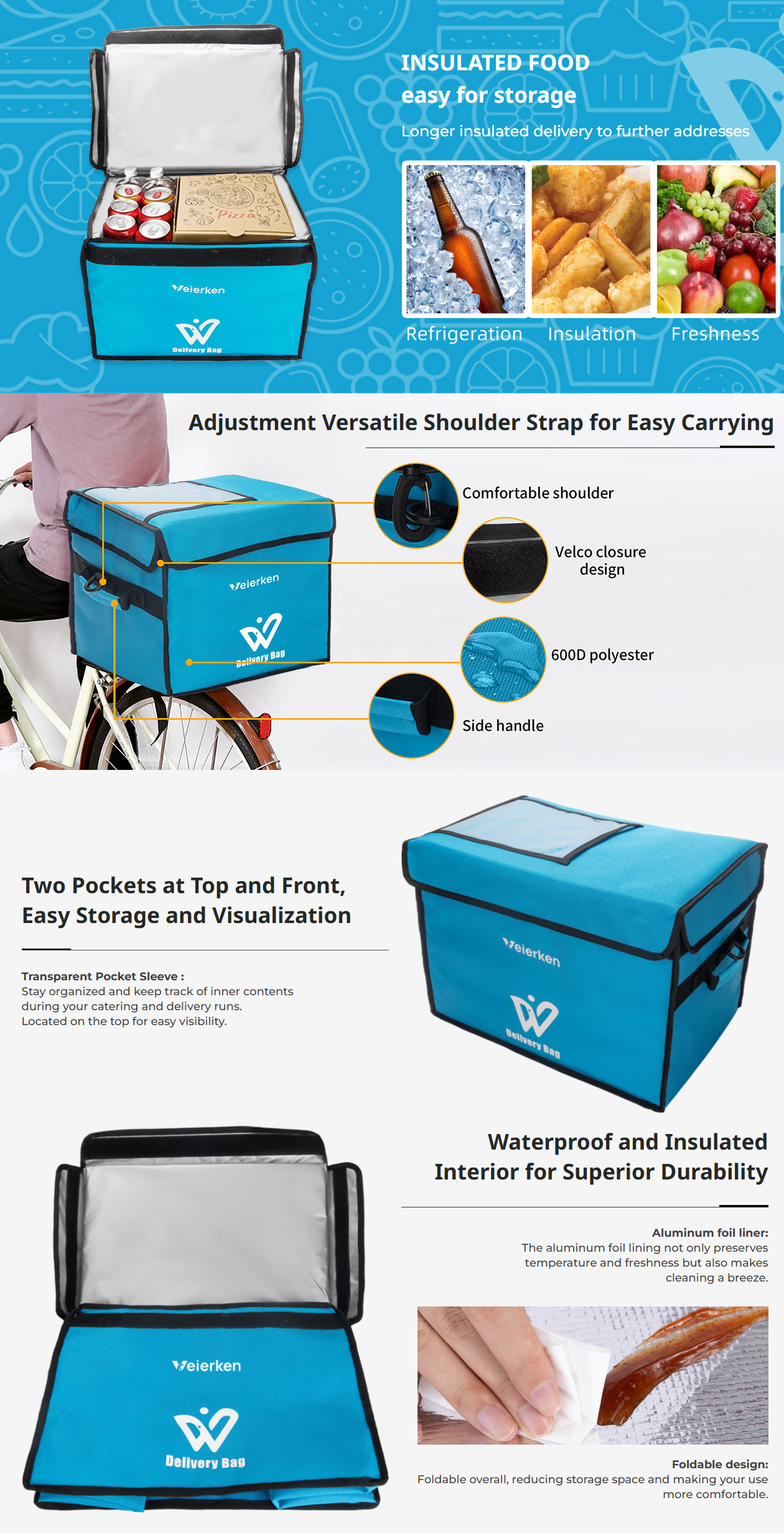
They design adjustable interior shelving systems, weight-distributing lumbar harness structures, and dual-zone thermal chambers that allow drivers to deliver multi-temperature orders safely in a single vehicle run.
High-Precision Sampling and Rapid Iteration
Speed to market is essential when launching new ghost kitchen concepts or changing food container formats. You cannot wait two months just to hold a physical product sample.
A top-tier central kitchen delivery bag supplier maintains an independent, high-precision prototyping room. They can turn structural CAD drawings into physical, field-ready sample bags within 3 to 7 business days. Fast sample turnarounds let your operations team test real containers, evaluate courier feedback, and lock in mass production specs without delay.
Solving Tough Engineering Bottlenecks
Central kitchen equipment faces harsh working conditions. High-volume transit quickly reveals material weaknesses that standard consumer bags cannot withstand.
At Weierken, our engineering teams focus on resolving specific technical points of failure:
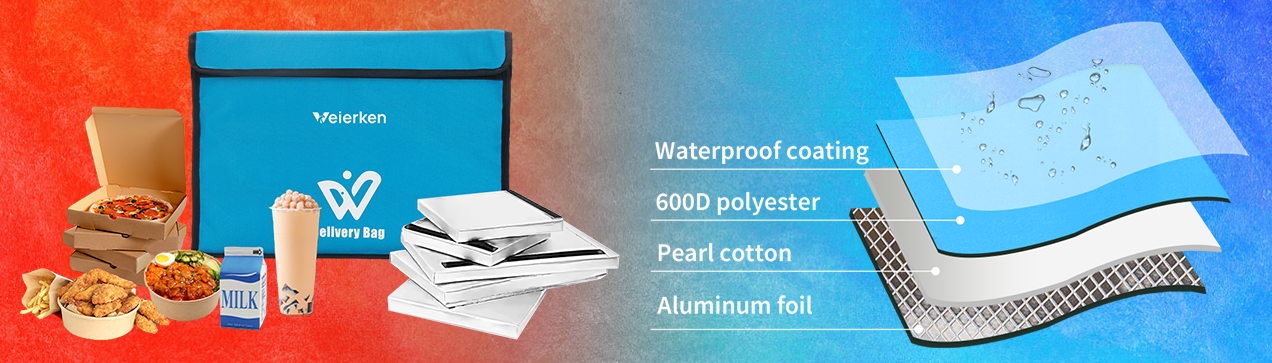
Thermal Decay Management: Formulating custom closed-cell EVA and high-density polyurethane foams paired with reflective radiant barrier foils to keep meals above 60°C (140°F) over extended transit routes.
Moisture Release Valves: Engineering controlled, one-way exhaust vents that vent trapped cooking steam to keep fried foods crisp without leaking core heat.
Leakproof Inner Basins: Using high-frequency (HF) welding to fuse food-grade TPU or heavy-gauge PEVA into seamless basins that eliminate needle holes and prevent broth from soaking the insulation.
Hardware Reinforcement: Backing all primary stress points with Box-X structural stitching, heavy-duty bar-tacks, and genuine #8 or #10 waterproof reverse-coil zippers.
Deep Industry Experience
There is no substitute for decades of hands-on factory floor experience. Having 20 years of vertical focus on commercial delivery bags and industrial transport gear provides a rich library of proven technical designs. An experienced supplier anticipates structural failure points before cutting fabric, helping you avoid costly trial-and-error mistakes.
Capability 3: Long-Term Strategic Brand Partnership
Low-tier factories simply take an order, stitch the fabric, and ship the boxes. If your design has a structural flaw, they assemble it anyway. An authentic manufacturing partner acts as a proactive extension of your internal engineering and procurement teams.
Proactive Design for Manufacturability (DFM)
A professional supplier does not wait quietly for finished blueprints. They review your concept drawings early, providing Design for Manufacturability (DFM) feedback that improves product durability while reducing unit costs.
They provide physical textile swatches, recommend specific hardware gauges, suggest fabric layout tweaks to reduce scrap waste, and engineer flat-pack folding lines. Designing bags that fold flat optimizes container space, cutting down your international shipping costs.
Clear, Technical Cross-Border Communication
Misunderstandings cause production delays, poor color matching, and incorrect hardware choices. An international central kitchen delivery bag supplier must employ dedicated project managers who speak fluent English and understand commercial manufacturing terminology.
Clear communication ensures your technical specifications, Pantone color targets, and delivery milestones are understood and met from day one.
Transparent, Milestones-Based Project Management
Enterprise procurement teams need visibility into production schedules to plan marketing campaigns, train kitchen teams, and deploy fleet assets. Reliable overseas partners manage production using structured project management systems.
From initial design sign-off to final container loading, your supplier should provide clear Gantt charts, weekly production photo logs, and formal quality inspection sign-offs. Transparent milestone management keeps your project on track and eliminates unexpected surprises.
Evaluating Capabilities: Commercial Supplier Comparison
Use this reference table to evaluate prospective manufacturing partners during your sourcing review:
| Evaluation Category | Standard Cut-and-Sew Factory | Specialized Central Kitchen Supplier |
|---|---|---|
| Manufacturing Locations | Single domestic workshop | Dual-facility network (China R&D + Southeast Asia volume) |
| Liner Construction | Stitched foil (prone to internal leaks) | High-frequency seamless welded TPU / PEVA |
| Sampling Lead Time | 3 to 6 weeks | 3 to 7 business days |
| Quality Control Standard | Basic visual check at packing | Industrial IQC, IPQC, and FQC with 99.5% pass rate |
| Logistics Integration | FOB port dispatch only | Full turnkey DDP door-to-door delivery |
| Engineering Support | Assembles customer patterns as provided | Active DFM analysis, material testing, and thermal modeling |
Frequently Asked Questions
Q1: Why can't standard food delivery backpacks handle central kitchen operations?
A1: Standard delivery bags are designed for light, point-to-point courier runs carrying 3 to 5 kilograms. Central kitchen operations require continuous, heavy-duty transport of 15 to 30 kilograms of bulk containers, multiple meal trays, and heavy liquid pans. Standard bags lack the necessary Box-X structural stitching, rigid internal honeycomb framing, heavy-duty #10 zippers, and seamless leakproof liners required to survive this high-volume cycle.
Q2: How does a dual-base (China + Cambodia) supply chain benefit my procurement bottom line?
A2: A dual-base model balances engineering speed with low volume manufacturing costs. You can complete rapid prototyping, technical tooling, and material sourcing in China, then run high-volume mass production in Cambodia. This approach avoids sudden supply chain interruptions while qualifying your orders for lower import tariffs into Western markets, reducing total landed costs.
Q3: What design details prevent cross-contamination between hot and cold items in bulk transit?
A3: A professional central kitchen delivery bag supplier builds insulated interior compartments separated by high-density, multi-layer closed-cell foam dividers. These modular dividers seal tightly with heavy hook-and-loop fasteners or slider tracks. This design creates two distinct thermal zones, allowing you to carry hot entrees above 60°C (140°F) and chilled salads below 5°C (41°F) within the same outer shell.
Q4: What is the typical turnaround time from CAD drawing to mass production?
A4: With an experienced custom supplier, the prototyping phase typically takes 3 to 7 business days for technical patterns. Once you test and approve the pre-production sample, mass assembly generally takes 35 to 45 business days, depending on custom fabric dyeing and hardware requirements. Ocean freight and DDP inland delivery require an additional 20 to 35 days depending on the final destination.
Q5: How does high-frequency welding improve food safety compliance?
A5: Traditional sewing machines punch thousands of needle holes through bag fabrics and liners. Leaked soup, grease, and condensation seep through these holes into the internal foam padding, where moisture cannot be cleaned and breeds dangerous bacteria and odors. High-frequency welding uses radio-frequency energy to fuse thermoplastic layers (like TPU or PEVA) into a seamless, puncture-free basin. This keeps liquids contained and allows staff to wash and sanitize the liner daily using standard food-grade cleaners.
Build Your Central Kitchen Fleet Equipment with Weierken
Choosing the right custom central kitchen delivery bag supplier is an investment in your core operational infrastructure. The ideal manufacturing partner brings together low-tariff production, rigorous quality engineering, and proactive technical support to protect your food quality and lower your overall cost of equipment ownership.
At Weierken, we have engineered and manufactured heavy-duty commercial delivery solutions for 20 years. Supporting enterprise food brands, ghost kitchen operators, and logistics networks worldwide, our dual-hub manufacturing setup delivers commercial-grade gear built to meet demanding delivery schedules.
Ready to upgrade your central kitchen transport equipment? Contact the Weierken engineering team today to request a comprehensive DFM evaluation, review material swatches, and schedule a fast 3-to-7 day prototype for your fleet.