

Most consumers treat insulated bags gently. They pack a picnic once a week, place it carefully in a car trunk, and wipe it down with a damp cloth every few months. Commercial food delivery operations operate in an entirely different reality.
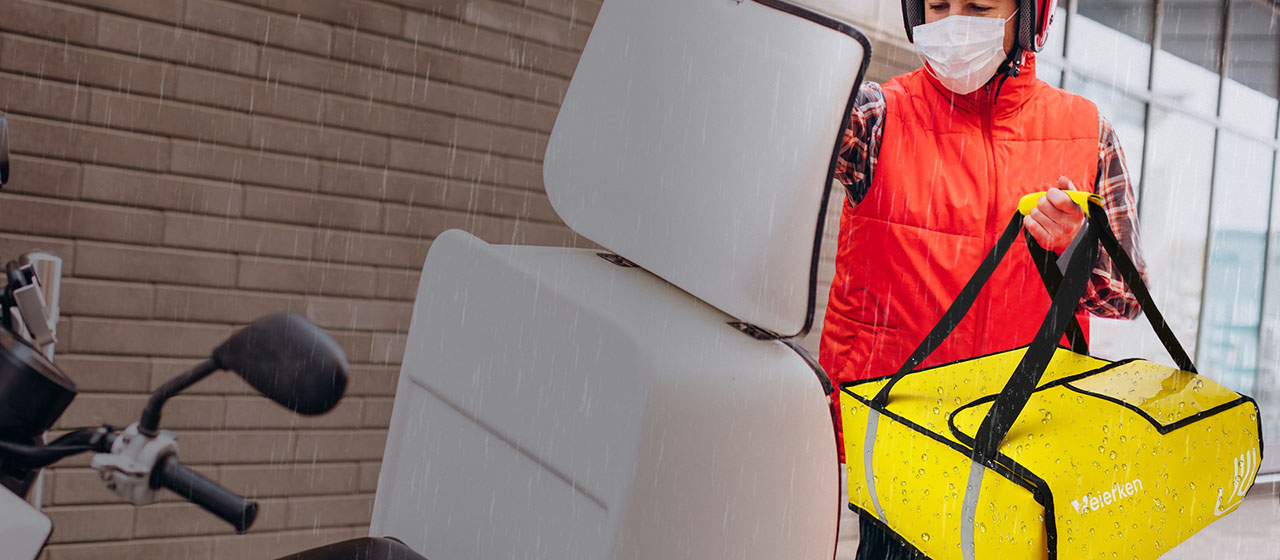
A busy restaurant or third-party courier uses a delivery bag 30 to 50 times a day. Couriers pull handles violently, overstuff compartments with heavy liquid containers, and ride through rain, exhaust fumes, and sub-zero wind. Inside the bag, boiling steam, grease, and acidic sauces constantly test the materials.
At Weierken, we engineer commercial delivery solutions from the factory floor up. Deciding what makes the best commercial thermal bags for restaurants is not a matter of choosing the thickest fabric. It requires a balance of thermal engineering, structural mechanics, moisture regulation, and food sanitation standards.
What Defines a Commercial-Grade Thermal Bag?
If you are writing a Request for Proposal (RFP) or building an equipment tech pack, look for these baseline commercial engineering benchmarks:
Industrial Multi-Layer Insulation: Closed-cell high-density foam (minimum 8mm to 12mm) paired with radiant reflective barriers that preserve core temperatures above 60°C (140°F) for at least 45 minutes.
Seamless High-Frequency Welded Liners: Leakproof inner tubs made of food-contact-safe TPU or heavy PEVA that eliminate needle puncture holes completely.
Moisture-Ventilation Balance: Integrated one-way exhaust valves that release excess steam while trapping latent heat.
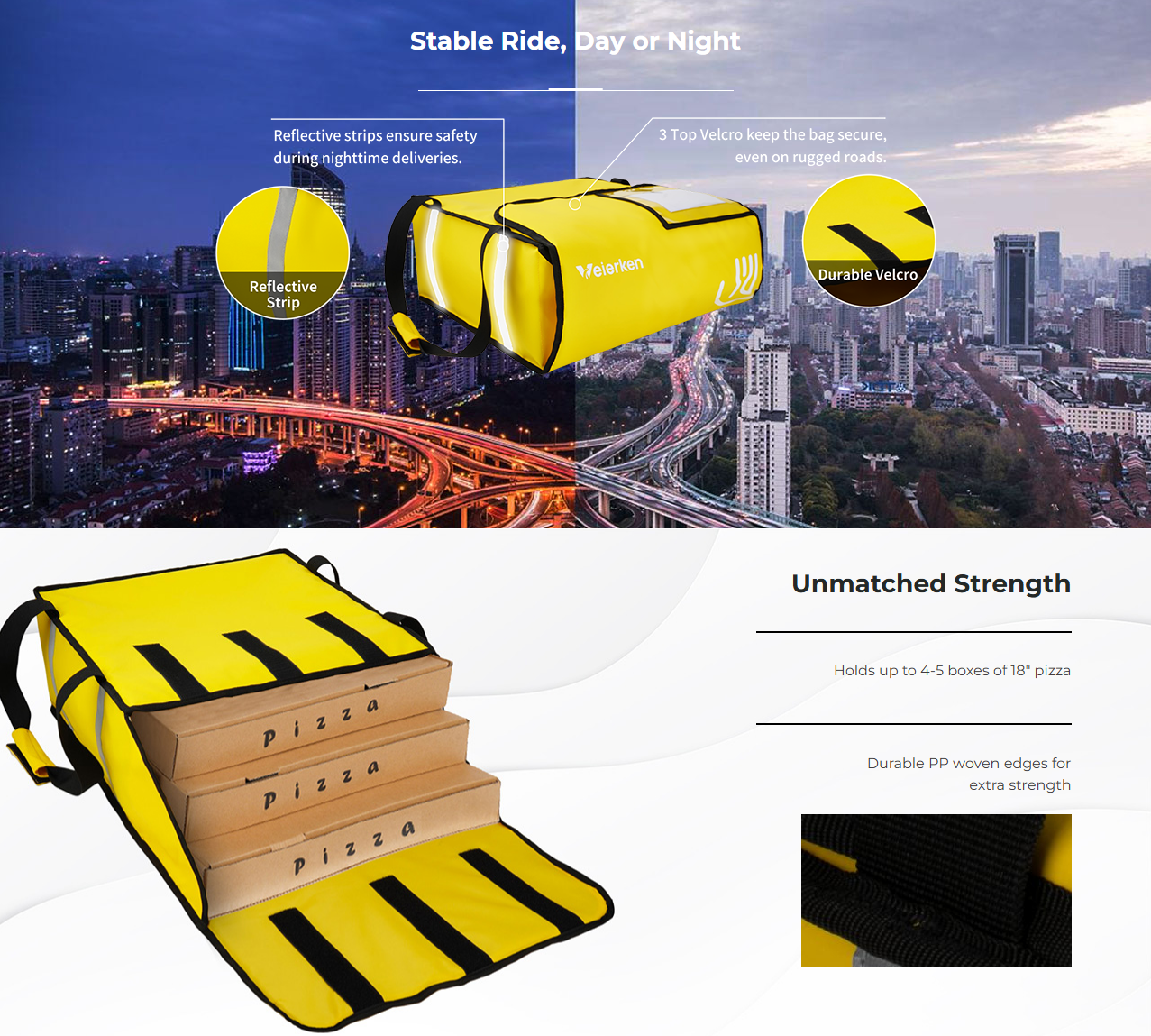
Load-Bearing Framing: Rigid interior reinforcement (PP honeycomb or fiberglass rods) engineered to support 15 to 25 kg without structural sagging.
Severe-Duty Hardware: Heavy-gauge, reverse-coil waterproof zippers (#8 or #10) reinforced with Box-X stitching and industrial bar-tacking.
Pillar 1: The Thermal Sandwich Architecture
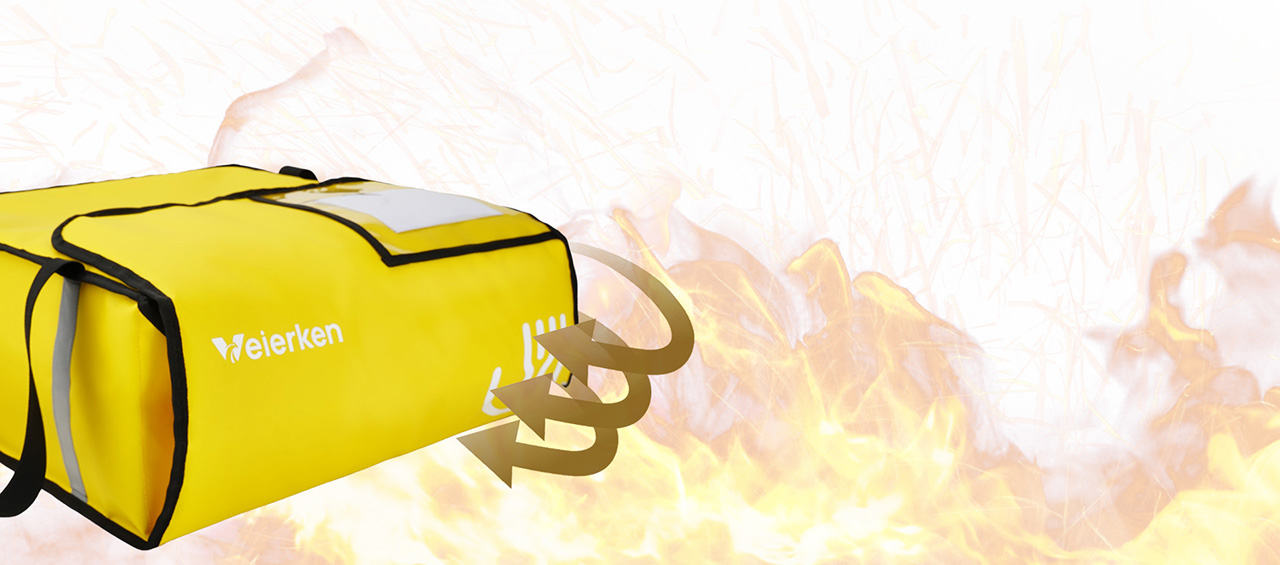
Thermal preservation relies on physics, not marketing terms. Commercial thermal bags for restaurants must fight three forms of heat transfer: conduction, convection, and radiation. A thin promo bag fails because it only provides a basic dust cover. A commercial-grade carrier uses a three-tier "thermal sandwich" construction.
1. The Outer Protective Armor (Abrasion and Weather Defense)
Lightweight 210D polyester or non-woven fabric rips within days on city streets. Commercial shells require heavy synthetic textiles:
500D to 900D Waterproof PVC Tarpaulin: This is the premier choice for commercial fleets. It offers total waterproof protection, resists petroleum oils, wipes clean instantly, and scores exceptionally high on Martindale abrasion tests.
1680D Ballistic Nylon / High-Denier Oxford: Treated with a thick back-coating of Polyurethane (PU), this fabric provides outstanding puncture resistance and tear strength while maintaining a clean, professional textile texture.
2. The Thermal Core (Conduction Defense)
The middle layer determines how fast heat escapes through the walls. Low-end suppliers cut corners by using cheap, low-density expanded polyethylene (EPE) scrap foam. This material crushes under the weight of food containers and never bounces back, destroying its insulating properties.
Professional bags use 8mm to 12mm high-density cross-linked EVA (Ethylene-Vinyl Acetate) or closed-cell polyurethane/NBR foam. Closed-cell foam features a microscopic matrix of trapped gas pockets with an extremely low thermal conductivity rating (K-value). It flexes under heavy loads, resists permanent compression, and maintains consistent insulation over years of use.
3. The Radiant Barrier (Radiation Defense)
Thermal radiation accounts for significant heat loss in hot food transit. The innermost layer must reflect radiant infrared energy back toward the meal. Rather than basic silver spray coatings that rub off, commercial carriers use food-grade aluminum foil composite films or aluminized Mylar sheets laminated directly to protective polymer backings. This barrier reflects up to 95% of radiant heat back into the storage chamber.
Pillar 2: The Moisture Trap Paradox (Steam vs. Temperature)
Every restaurant manager knows this common operational disaster: a customer orders hot, crispy fried chicken, French fries, or a stone-baked pizza. The kitchen packs it boiling hot. Thirty minutes later, the courier arrives at the customer's door. The food is still piping hot, but the batter is soggy, the pizza crust is limp, and the paper packaging is soaked through.
This happens because standard insulated carriers act as moisture traps. Boiling food releases massive volumes of evaporated water vapor. Trapped inside an airtight thermal chamber, the vapor condenses on the cold inner walls, rains down onto the packaging, and ruins food texture.
High-performance commercial thermal bags for restaurants solve this through controlled moisture dissipation. Rather than leaving the bag unsealed, manufacturers integrate directional breather valves or adjustable mesh exhaust ports into the upper lid or side walls.
These vents create a subtle pressure differential. High-energy steam escapes through the top before condensing, while the denser, hot air remains trapped around the containers. This balance keeps food safely above the 60°C (140°F) regulatory threshold without turning crisp coatings into mush.
Pillar 3: High-Frequency Hardware and Stress-Point Engineering
Thermal efficiency means nothing if the bag falls apart on a busy Friday night. Couriers pack bags to their physical limits. Weight issues trigger sharp tensile stress at handle anchors, shoulder straps, and perimeter zippers.
During manufacturing runs at Weierken, our engineering teams focus heavily on mechanical stress dispersion across every structural seam.
1. Rigid Internal Frameworks
Unreinforced delivery bags collapse under the weight of multiple stacked meal boxes. The bottom container gets crushed, lids pop off, and sauces spill. High-performance bags incorporate rigid inner skeletons:
Polypropylene (PP) Honeycomb Panels: Lightweight, completely rigid, and impervious to moisture rot.
Hollow Fluted Core Boards: Cost-effective structural inserts that prevent horizontal wall collapse.
Fiberglass Perimeter Rods: Spring-tensioned internal frames that maintain an open box structure when couriers load food quickly at the dispatch counter.
2. Zipper Engineering
The zipper is the most vulnerable mechanical component on any delivery bag. Standard #3 or #5 garment zippers snap under the physical pressure of overstuffed food orders.
Commercial bags demand #8 or #10 heavy-duty reverse-coil waterproof zippers, preferably sourced from certified manufacturers like YKK or SAB. Reverse-coil orientation protects the zipper teeth from road grime, sand, and grease. The pullers must be heavy cast zinc alloy or molded rubber tabs secured with reinforced cord, allowing couriers to operate them effortlessly while wearing winter gloves.
3. Anchor Reinforcements
Never accept basic single-line straight stitching at handle connection points. Commercial tech packs require industrial Box-X cross-stitching combined with dense bar-tack stitching along every load path. When a courier lifts 20 kg of soup and pasta by the top strap, the mechanical load transfers across a reinforced interior webbing harness rather than tearing directly through the shell fabric.
Pillar 4: Food Safety, Hygiene, and Easy Sanitation
Commercial delivery gear must meet strict health codes. Sauces spill, soups splash, and dairy curdles. If liquid slips into the internal insulation layer, the bag becomes an unhygienic breeding ground for black mold and dangerous bacteria like E. coli and Salmonella.
Traditional sewn inner liners are a fatal design flaw. Every pass of a sewing machine needle punches thousands of microscopic holes through the silver foil. Liquid inevitably seeps through these punctures, soaking into the foam core beneath. Once contaminated, the bag cannot be sanitized from the inside out and must be thrown away.
The solution is seamless high-frequency (HF) welding. Instead of mechanical thread, radio-frequency energy fuses the edges of food-grade TPU (Thermoplastic Polyurethane) or heavy-gauge PEVA into a solid, unbroken basin. The liner contains accidental spills completely.
Furthermore, commercial inner liners must withstand harsh sanitizing chemicals. Delivery staff must be able to spray the interior with chlorine bleach solutions, quaternary ammonium compounds, or alcohol-based disinfectants multiple times a day without causing the surface to peel, discolor, or leach chemicals onto packaging.
The Business Math: Total Cost of Ownership (TCO)
Procurement directors often fall into the trap of buying low-priced delivery bags to shave short-term capital expenditures. A basic calculation reveals why this strategy harms operating margins.
| Feature / Cost Variable | Budget Carrier ($12 - $15) | Commercial-Grade Carrier ($38 - $50) |
|---|---|---|
| Lifespan in Active Fleet | 6 to 8 weeks | 12 to 24 months |
| Liner Construction | Stitched foil (leaks easily) | Seamless high-frequency welded TPU/PEVA |
| Hardware Specifications | Generic #5 nylon zipper | #10 YKK / SAB waterproof reverse-coil |
| Thermal Retention (45 min) | Drops below 50°C (122°F) | Holds above 65°C (149°F) |
| Annual Cost per Active Courier | $90.00 – $120.00 (6-8 replacements) | $25.00 – $38.00 (amortized over life) |
| Risk of Customer Food Refunds | High (soggy boxes, crushed meals) | Minimal (rigid walls, dry moisture control) |
Investing in commercial thermal bags for restaurants cuts annual equipment spend by more than 60%. More importantly, it protects your brand reputation by delivering meals at the precise temperature and texture your chefs intended.
Frequently Asked Questions
Q1: How do commercial thermal bags keep food above the 60°C (140°F) HACCP food safety threshold?
A1: Commercial bags achieve this through a balanced thermal barrier system. Dense closed-cell foam prevents heat from escaping via conduction, while interior reflective films bounce radiant heat back into the food packaging. If deliveries exceed 45 minutes, operators often add passive thermal heating elements, such as pre-heated phase change material (PCM) gel packs or electric heating elements plugged into a courier's 12V vehicle port.
Q2: What is the difference between PEVA and TPU liners in commercial catering transport bags?
A2: PEVA (Polyethylene Vinyl Acetate) is a cost-effective, chlorine-free thermoplastic that offers reliable waterproofing and safe food-contact properties for light to medium catering duties. TPU (Thermoplastic Polyurethane) is an advanced elastomeric polymer. It costs more but delivers exceptional puncture resistance, handles boiling oil spills without warping, remains flexible in sub-zero weather, and resists aggressive industrial sanitizing chemicals.
Q3: Why are zippers the most common failure point, and how can buyers verify zipper quality?
A3: Zippers fail because couriers pull them at sharp angles when bags are packed tight. This stretches the coil teeth and splits the slider tracks. When procuring commercial thermal bags for restaurants, demand certified #8 or #10 heavy-gauge zippers from proven manufacturers like YKK or SAB. Ask your manufacturer for physical cross-tensile test reports showing the zipper tape can withstand at least 800 to 1,000 Newtons of lateral pulling force.
Q4: Can commercial thermal bags be customized to fit specific restaurant takeout container dimensions?
A4: Yes. High-volume manufacturers build custom delivery gear based on exact container sizes. You can configure interior dimensions, removable velcro dividers, drink-carrier cup holders, and shelving inserts around your specific meal trays, pizza boxes, or soup bowls. This prevents containers from sliding around and tipping over during fast transit.
Q5: How should restaurant fleets wash and sanitize these bags daily without degrading insulation?
A5: Never submerge insulated bags in commercial dishwashers or washing machines; the intense agitation breaks down internal foam cells and bends structural boards. Instead, wipe down the seamless inner liner with an approved food-contact sanitizer spray and a clean microfiber towel. Leave the lid completely open in a well-ventilated staging area to let the interior dry before the next shift.
Build Your Commercial Delivery Fleet with Weierken
A delivery bag is not a simple accessory; it is a critical piece of commercial kitchen equipment. It acts as the final link between your kitchen line and your customer's dining table. Choosing equipment with seamless hygienic liners, high-density insulation, and reinforced stress-point stitching protects your operating margins, keeps food fresh, and builds long-term customer trust.
At Weierken, we design and manufacture high-performance commercial thermal bags for restaurants, central kitchens, catering services, and high-volume delivery networks across the globe. Our engineering team helps you build customized, heavy-duty gear built to handle the toughest urban delivery environments.
Ready to upgrade your restaurant fleet and cut your annual equipment replacement costs? Contact our engineering team today to review your technical requirements, request physical material swatches, and receive a competitive factory-direct quote.