


Wholesale buyers often wonder why price quotes vary so wildly between different suppliers. You might send the exact same specification sheet to three different suppliers and receive completely different price points. Understanding how a reusable thermal bag factory calculates its unit price gives you a massive advantage in negotiations.
At weierken, we know that transparency builds long-term partnerships. When you know exactly where your money goes, you can optimize your product design to fit your target budget. The cost structure of these products relies heavily on raw materials, labor, and order volume.
This guide breaks down the six core pricing factors that dictate the final cost of your bulk orders. By mastering these elements, you can make smarter purchasing decisions.
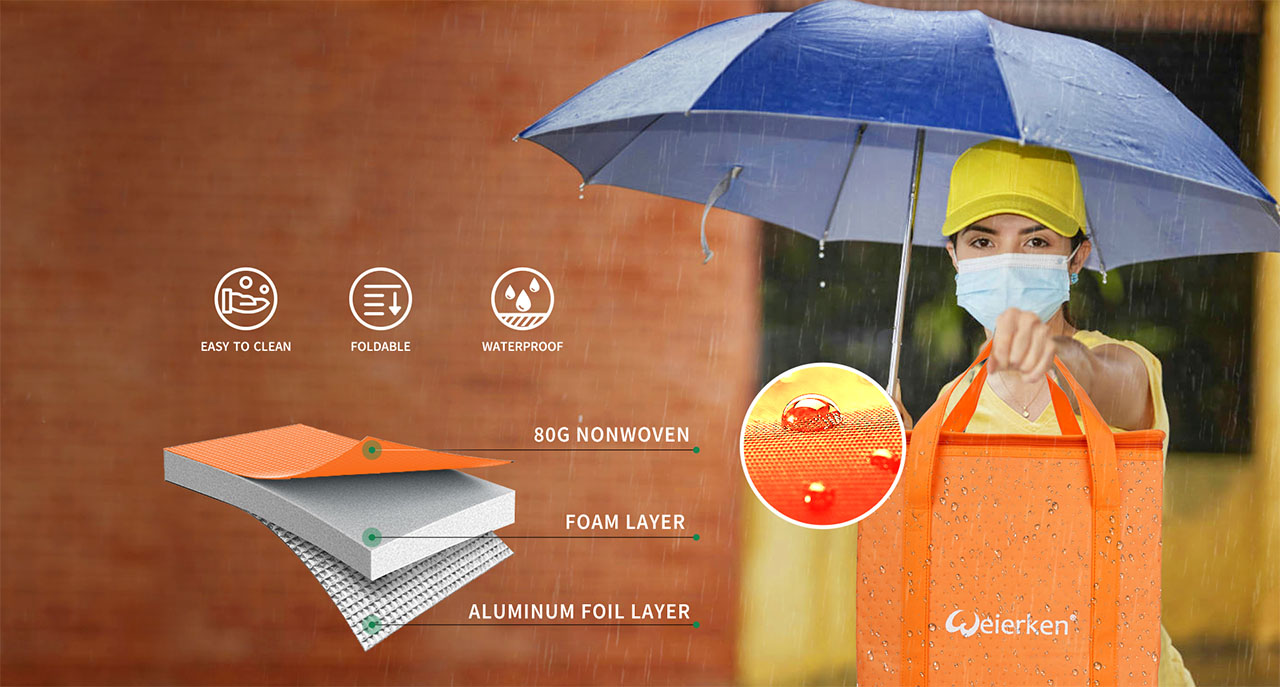
1. Insulation Material Types and Thickness
The core function of your product relies entirely on its insulation. Naturally, this makes the internal insulating layer the most heavily weighted factor in a reusable thermal bag factory quote. Different materials offer drastically different costs and thermal insulation performance.
Factories typically offer four main options:
- EPP (Expanded Polypropylene): This material offers excellent resilience and handles a wide temperature range (-30℃ to 110℃). It represents the highest unit price among standard foams but provides superior durability.
- PU (Polyurethane) Foam: This provides above-average insulation. However, PU foam is relatively thick and heavy, placing it squarely in the medium cost tier.
- Foil + EPE (Pearl Cotton) Composite: This is the most common entry-level solution. It boasts a very low cost. Keep in mind that it tends to wrinkle and shrink after repeated use.
- Aerogel / Vacuum Insulated Panels (VIP): These materials are ultra-thin and highly efficient. Due to their extreme cost, factories only use them for high-end medical transport or specialized cold chain logistics.
Material thickness also plays a massive role in the final price. The thickness directly dictates the volume of raw materials required per unit.
For instance, moving from a standard 5mm foam to a 10mm or 20mm foam changes the entire cost structure. As a general rule, every 1mm increase in thickness can drive up the unit price by 8% to 15%. A reputable thermal packaging solutions provider will help you balance necessary temperature retention with material costs.
2. Outer Shell Fabrics and Lining Materials
The exterior fabric determines the durability, appearance, and brand texture of your product. Your choice of outer shell significantly impacts the perceived value of the bags.
Common exterior fabric choices include:
- Standard Polyester Oxford Cloth (600D, 840D): This is the baseline standard. It provides decent durability at the absolute lowest cost.
- Waterproof Coated Nylon (PVC or TPU coatings): Adding a waterproof layer increases functionality. Expect this to add 10% to 30% to the base fabric cost.
- Recycled Polyester (rPET): This satisfies modern eco-friendly market demands. However, processing recycled plastics costs more. It usually runs 15% to 25% higher than virgin polyester.
The internal lining matters just as much. Basic silver foil works for cheap promotional items. But if you need premium insulated grocery bags, you might upgrade.
Using food-grade aluminum foil, antibacterial coatings, or easy-to-clean PEVA linings will increase the price. We often advise clients at weierken to match the inner lining strictly to the end-user’s intended application to avoid overspending.
3. Production Quantity (MOQ)
Your order volume directly impacts the factory’s efficiency. Every reusable thermal bag factory incurs fixed costs before a single bag rolls off the sewing line.
These fixed costs include machine calibration, material sourcing, custom dyeing, and printing plate setups. The factory must distribute these fixed costs across your total unit count.
- Low Volumes: If your minimum order quantity falls below 500 pieces, the unit price will spike. It typically runs 30% to 50% higher than an order of 5,000 pieces.
- High Volumes: Massive orders maximize assembly line efficiency and minimize material waste, leading to the best possible unit price.
Some factories enforce strict low-volume penalties. If you request ultra-low quantities (like 100 pieces), the supplier might charge an additional small-order handling fee.
You can mitigate these costs. If you accept the factory’s standard sizes and in-stock fabric colors, you bypass custom material minimums. This strategy effectively lowers your baseline unit price.
4. Customization Requirements (Printing, Structure, Accessories)
Customization gives your brand its unique identity. However, every structural tweak or logo application requires additional labor and materials.
Printing Methods
The way you apply your logo dictates the printing cost.
- Silkscreen Printing: This remains the cheapest option, usually costing around $0.03 to $0.08 per color, per hit.
- Heat Transfer and Offset Printing: These methods handle complex, multi-color graphics but cost significantly more.
- Embroidery: This provides a premium look but operates slowly, making it the most expensive branding choice.
Large surface areas, multiple colors, or Pantone-matched spot colors will also increase plate fees and labor time.
Structural Modifications
Standard box-style bags sew together quickly. Adding complexity slows down the sewing line.
If you add inner dividers, external mesh pockets, transparent ID windows, or numbered label slots, costs rise. A custom cooler bag manufacturer usually adds $0.50 to $3.00 for each structural addition.
Hardware and Accessories
Never underestimate the cost of good hardware.
Swapping a standard nylon zipper for an airtight waterproof zipper or heavy-duty metal teeth adds up fast. Upgrading standard webbing handles to silicone-wrapped or foam-padded grips also increases expenses. Adding D-rings, custom buckles, or shoulder straps will generally push the accessory cost up by 20% to 40%.

5. Certifications and Testing Requirements
Selling in regulated markets like North America or the European Union requires compliance. If your market demands specific certifications, the reusable thermal bag factory must absorb extra auditing and testing costs.
- Food Contact Safety (FDA, LFGB, EU 10/2011): These standards require strict material screening. The factory must pay third-party labs to test specific material batches, passing those fees into the unit price.
- Global Recycled Standard (GRS): If you sell eco-friendly insulated bags, GRS certification proves your claims. GRS requires full supply chain traceability, adding 10% to 20% to the product cost.
- Social Responsibility (BSCI / SMETA): Factories maintaining these ethical labor certifications pay high annual audit fees. They factor these overhead costs into their general pricing.
- Thermal Performance Testing: Do you need proof that your bag holds ice for 48 hours? Official test reports from SGS or TÜV represent standalone fees. Expect to pay between $200 and $800 per bag model for official thermal certification.
6. Order Delivery and Payment Terms
The final quote you receive includes more than just the physical product. Packaging, shipping terms, and financial agreements all subtly shift the bottom line.
Packaging Specifications
Bulk items shipped in simple OPP (Oriented Polypropylene) bags keep costs low.
If you require retail-ready packaging, the price changes. Placing bags in individual cardboard boxes, full-color retail boxes, or adding custom hangtags and silica gel packets adds labor. A premium gift box setup can increase the per-unit cost by $0.50 to $2.00.
Lead Times and Rush Orders
A standard production cycle usually takes 30 days.
If you suddenly need your bulk cooler bag manufacturing finished in 15 days, the factory must reorganize its schedule. They will likely pay workers overtime and expedite raw material shipments. Expect a 20% to 30% rush fee for aggressive timelines.
Payment and Shipping Terms
Financial risk shapes factory pricing.
- Payment: The standard arrangement is a 30% deposit with the 70% balance paid against the Bill of Lading copy. If you demand a Net 30 or Net 60 payment term, the factory assumes more risk and financing costs. They usually increase the unit price by 5% to 8% to cover this.
- Shipping: Always verify the freight terms on your quote. An EXW (Ex Works) price will look much cheaper than a FOB (Free on Board) price. Make sure you know if the quote includes domestic transport to the port or CIF (Cost, Insurance, and Freight) delivery to your country.
Frequently Asked Questions (FAQ)
1. How much does sample making cost in a standard factory?
Most factories charge between $50 and $150 for a custom sample. This fee covers the pattern making, material sourcing, and specialized labor required for a single unit. Factories almost always refund this sample fee once you place a bulk order that meets their MOQ.
2. Can I mix colors to reach the minimum order quantity (MOQ)?
It depends on the fabric supplier. If you choose colors the factory already holds in stock, they will happily let you mix colors to hit the 500 or 1,000 piece MOQ. If you want custom Pantone-dyed fabrics, each individual color will require its own separate MOQ.
3. Which insulation material keeps food hot or cold the longest?
Among standard commercial options, Expanded Polypropylene (EPP) offers the best long-term temperature retention. For extreme, medical-grade requirements, Vacuum Insulated Panels (VIP) perform best. However, VIP materials are usually too expensive for standard food delivery or grocery applications.
4. Are recycled materials (rPET) durable enough for heavy-duty cooler bags?
Yes, high-quality rPET performs identically to virgin polyester in terms of tensile strength and abrasion resistance. An 840D rPET fabric will easily support heavy loads of ice and beverages. Just ensure your supplier uses certified GRS materials to guarantee quality.
5. Why do waterproof zippers cost so much more than standard zippers?
Waterproof zippers require a specialized polyurethane coating over the teeth to block moisture and air. This manufacturing process is complex. Furthermore, sewing them into the bag requires precision tape sealing on the inside seams, significantly increasing the factory’s labor time.
Partner With the Right Manufacturer Today
Finding the lowest price shouldn’t mean sacrificing quality. Understanding these six pricing factors empowers you to balance functionality with your wholesale budget. A reliable reusable thermal bag factory will clearly explain its material choices and help you engineer costs out of your design.
At weierken, we specialize in high-quality thermal packaging solutions tailored exactly to B2B requirements. We guide our clients through every material choice, ensuring you get the exact performance you need without paying for unnecessary extras.
Ready to optimize your wholesale orders?
Send us an inquiry today with your specifications. Our team will provide a transparent, detailed quote to help you secure the best margins for your business!


