

_173816.webp "10 Critical Factors to Consider When Sourcing Bulk Beach Bags for Outdoor Brands")
Most promotional beach bags fail the moment they leave the poolside resort. Flimsy cotton totes soak up ocean spray, cheap mesh rips on barnacles, and standard metal zippers seize up after a single afternoon in the salt air. Outdoor enthusiasts do not treat beach trips like casual photo shoots. They drag their gear across sharp gravel, pack soaking wetsuits alongside dry electronics, and load bags with heavy water bottles and dive masks.
Outdoor brands cannot afford to put their logo on generic, fast-fashion totes. When your customers buy from you, they expect technical utility, abrasion resistance, and smart organization. Sourcing bulk beach bags for outdoor brands requires a shift in mindset from basic promotional merchandising to technical equipment manufacturing.
If you source large volumes of inventory, a single manufacturing oversight can ruin an entire product line. Sourcing partners like Weierken understand that an outdoor tote must function like a piece of expedition gear. To protect your brand reputation and bottom line, use these 10 critical factors to evaluate your next bulk manufacturing run.
1. Material Durability and Rugged Performance
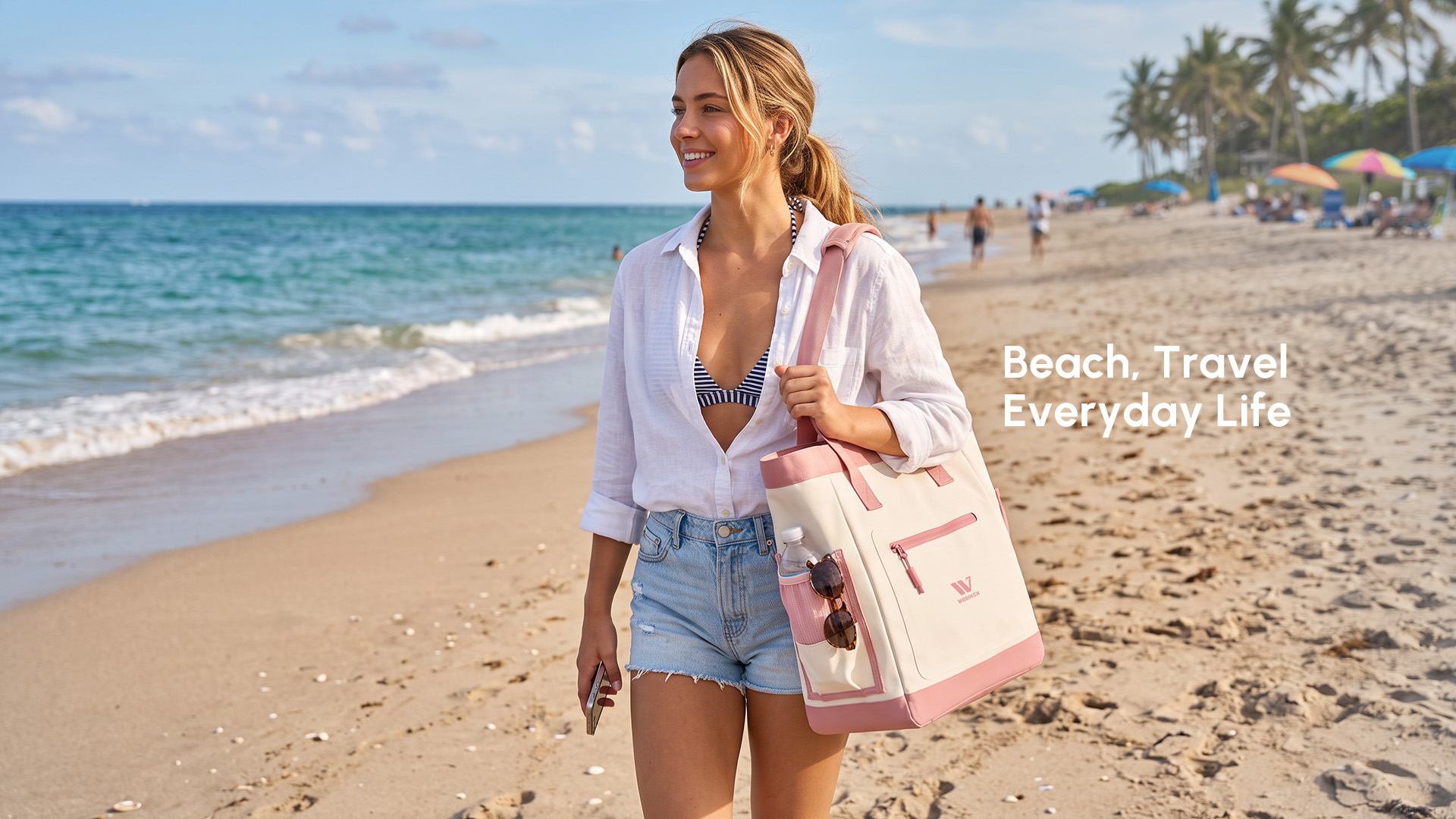
The foundation of any outdoor product is its raw material. A standard fashion beach bag uses 200D polyester or basic 8oz cotton canvas. These fabrics tear quickly when scraped against rocks, coral, or driftwood.
For outdoor durability, insist on high-denier fabrics and reinforced weaves:
- 600D to 1200D Oxford Polyester: Offers exceptional puncture resistance and holds up against sharp gear corners.
- Ripstop Nylon (210D to 420D): Keeps weight low while preventing micro-punctures from turning into full tears.
- Heavy-Duty Canvas (16oz to 24oz): Provides a classic heritage aesthetic, provided it features a water-repellent backing.
Ask your OEM beach bag supplier for Martindale or Taber abrasion test results. Outdoor-grade fabrics should easily withstand 20,000 to 30,000 abrasion cycles without surface breakdown.
2. Sand-Proof and Water-Resistant Features
Sand and standing water are the two greatest threats to a day at the coast. A practical outdoor beach bag must manage both simultaneously, which requires clever material pairing.
Consider sourcing custom beach bags for outdoor gear that feature dual-zone fabric architecture:
- High-Density Mesh Walls: Coated PVC or TPU mesh allows wet towels and swimsuits to breathe, venting moisture while letting fine dry sand filter out before you load the bag into your vehicle.
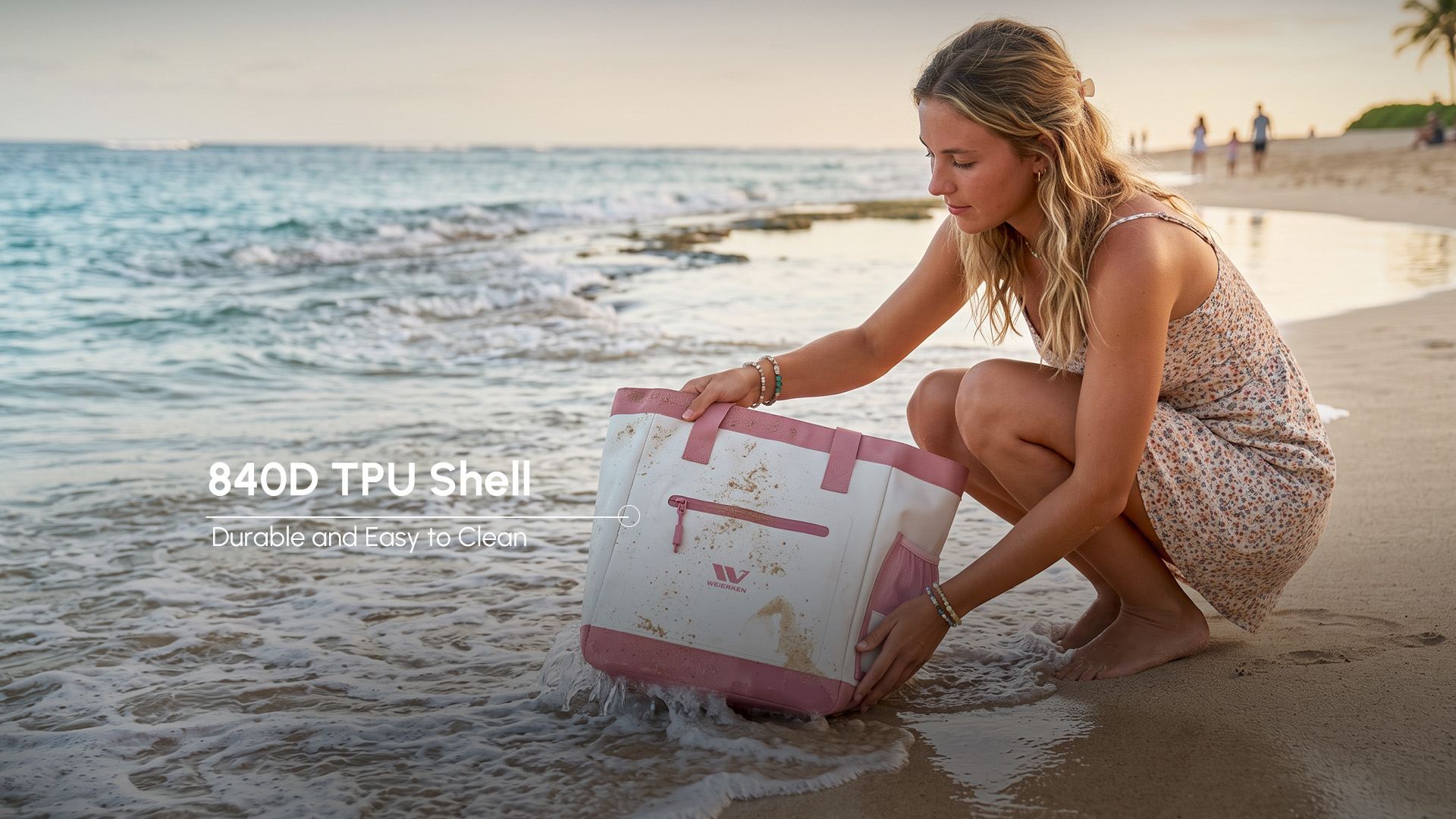
- Seamless Waterproof Base: The bottom of the bag must sit on wet sand or in boat bilges without taking on water. Look for a waterproof beach bags manufacturer that uses heavy-duty 500D tarpaulin or molded EVA bases.
Welded seams along the bottom perimeter create a completely watertight tub. This keeps the contents dry even when the bag sits in three inches of ocean wash.
3. UV Resistance and Saltwater Anti-Corrosion
Coastal environments are intensely corrosive. Intense sunlight degrades polyurethane coatings, and airborne saltwater oxidizes standard zinc-alloy hardware within days.
Specify UV-stabilized fabrics with a light colorfastness rating of at least Grade 4 (under ISO 105-B02 standards). This treatment prevents bright safety oranges, ocean blues, and deep earth tones from fading into dull pastels after a month on the beach.
Pay equal attention to the closure hardware:
- Avoid standard metal sliders and teeth.
- Specify marine-grade resin zippers (such as YKK Vislon series) that ignore saltwater encrustation.
- Use acetal or nylon-based buckles, D-rings, and clips instead of coated steel.
4. Load-Bearing Capacity and Structural Reinforcement
Beach gear gets heavy fast. A family-sized tote carrying four damp beach towels, sunscreen bottles, cold drinks, and a speaker easily weighs 15 to 20 kilograms. If your factory relies solely on single-needle stitching at the handles, those straps will rip off the bag body.
Evaluate these construction details to verify high load ratings:
- Continuous Webbing Wraps: The carry straps should not end at the top rim of the bag. Look for continuous polypropylene or nylon webbing that runs completely underneath the base to cradle the load.
- Reinforced Stitching: Look for box-X stitches at every load-bearing junction. Heavy stress points need bar-tack stitches with heavy-gauge bonded nylon thread.
- Target Testing: Require your factory to run dynamic load tests. High-quality heavy-duty beach totes bulk orders should pass drop tests carrying at least 25 kilograms without seam slippage.
5. Eco-Friendly and Sustainable Materials
Outdoor shoppers pay close attention to environmental responsibility. They recreate in nature, and they expect their gear to protect it. Sourcing cheap, virgin petroleum plastics will hurt your brand image with core outdoor communities.
Work with your manufacturer to integrate verified sustainable materials:
- RPET (Recycled Polyethylene Terephthalate): Sourced from post-consumer plastic bottles and ocean-bound waste.
- GRS Certification: Demand Global Recycled Standard transaction certificates to verify that recycled content claims are legitimate.
- PFC-Free DWR: Use fluorocarbon-free durable water repellent coatings that protect waterways from toxic chemical run-off.
Offering eco-friendly beach totes wholesale positions your brand as an authentic steward of the coastlines your customers love.
6. Outdoor-Specific Functional Architecture
A basic bucket tote forces users to dump their entire kit onto the sand just to locate a pair of sunglasses or their car keys. Outdoor gear requires logical, secure storage architecture.
When engineering your tech packs, add functional modules tailored to coastal activities:
- Wet/Dry Dividers: A welded, leakproof interior pouch to isolate soaked rash guards and boardshorts from dry electronics and clothes.
- Insulated Beverage Pockets: A dedicated internal thermal sleeve lined with closed-cell foam to keep a 32oz water bottle chilled.
- External Daisy Chains: Tactical webbing loops on the exterior to clip sandals, carabiners, hats, and sunscreen tubes using clips.
- Internal Splash-Proof Security Pockets: Clear TPU zippered pockets that let users check their phone screens without exposing them to sand or wet fingers.
7. Ergonomics and Carrying Versatility
Carrying a heavy load across deep, soft sand burns energy quickly. If a tote digs painfully into a customer's collarbone, they will leave it in their garage on their next trip. Comfort during transit is a major design priority.
Include ergonomic enhancements in your product specifications:
- Padded Shoulder Straps: Add removable EVA-padded shoulder sleeves or air-mesh wraps to eliminate strap bite.
- Dual-Length Handle Systems: Short grab handles for quick hand lifting out of the car trunk, paired with longer handles for comfortable shoulder carry.
- Tote-to-Backpack Conversions: Add tuck-away backpack straps. Carrying a heavy tote over both shoulders keeps the user's hands free to hold surfboards, paddleboard paddles, or children's hands.
8. Custom Branding and Aesthetic Identity
When you purchase wholesale outdoor beach bags, they must match your broader seasonal color palette and brand aesthetic. Standard flat screen prints often crack and peel when exposed to salt, heat, and rough handling.
Work with technical manufacturing specialists like Weierken to explore rugged branding techniques:
- Molded Silicone Patches: Highly resistant to salt air, flexible, UV-proof, and soft to the touch.
- High-Frequency Welded Badges: Creates a modern, technical aesthetic with zero stitching holes.
- Subtle Reflective Screen Printing: Uses retroreflective glass bead inks to boost user visibility during dawn patrols or nighttime beach bonfires.
- Pantone Matching: Ensure the factory runs precise lab dips for technical fabrics so your coastal muted moss, sand dune tan, or ocean slate shades match your hardgoods perfectly.
9. Compliance, Chemical Safety, and Testing
Selling bags across North America, Europe, and Australasia requires strict adherence to international consumer product safety standards. Non-compliant consumer products can lead to customs seizures, steep fines, and product recalls.
Require your manufacturing partner to provide compliance documentation before production starts:
- California Proposition 65: Verifies that PVC coatings and screen-printing inks do not contain toxic plasticizers (ortho-phthalates), lead, or cadmium.
- EU REACH Regulation: Confirms that fabrics, buckles, and zipper pulls are free from Substances of Very High Concern (SVHC).
- Social Compliance Audits: Make sure the manufacturing plant
holds active BSCI, SMETA (Sedex), or ISO 9001 certifications to verify fair
labor standards and clean working environments.
10. Manufacturing Capacity, Lead Times, and MOQ
Outdoor retail runs on strict seasonal calendar cycles. Spring and summer collections must hit distributor shelves and online warehouses between February and April. If your bulk shipment arrives in late July, you miss the peak selling window and carry dead stock into the autumn.
Evaluate your supplier's operational setup carefully:
- Sampling Schedules: Plan 4 to 8 weeks for technical development and sampling during late summer or early fall.
- Production Lead Times: Large orders usually require 45 to 60 days of production time after sample sign-off, plus maritime shipping transit.
- Tiered Minimum Order Quantities (MOQ): Look for flexible manufacturers who offer sensible MOQs (such as 500 to 1,000 units per colorway). This lets you test new color options without locking up all your capital in one sku.
Red Flags to Avoid When Sourcing Beach Bags in Bulk
Watch out for these common issues during supplier evaluation:
- Uncoated Mesh Walls: Cheap untreated polyester mesh rips under heavy point loads. Always verify that your supplier uses vinyl-coated or TPU-bonded mesh.
- Overly Stitched Base Seams: Traditional needle-stitched seams along the bottom will leak water when the bag sits on wet sand. The base must be welded or sealed with waterproof tape.
- Golden Sample Swapping: A factory sends a flawless prototype, but the bulk production uses thinner thread, missing bartacks, and lighter-gauge fabric. Protect yourself with third-party pre-shipment inspections (PSI).
Frequently Asked Questions (FAQs)
Q1: What is the ideal base fabric for a heavy-duty outdoor beach
tote?
A1: Heavy-duty 500D PVC or TPU tarpaulin makes the best base
material. It is completely waterproof, wipes clean of wet sand, and resists
punctures from sharp stones and shells.
Q2: How do we prevent metal hardware on beach bags from
corroding?
A2: Eliminate exposed metals wherever possible. Use
molded POM (polyoxymethylene) or acetal plastic buckles and D-rings. For
zippers, choose marine-grade plastic tooth zippers (such as YKK Vislon) with
plastic or treated anti-corrosion sliders.
Q3: What is the typical lead time when ordering bulk beach bags for
outdoor brands?
A3: Prototype design and revision cycles typically
take 2 to 3 weeks. Mass production takes between 45 and 60 days following sample
sign-off, plus 20 to 35 days for sea freight. We advise finalizing orders in
October or November for spring deliveries.
Q4: Can we produce high-performance outdoor beach bags using recycled
ocean plastics?
A4: Yes. You can construct both the woven shell
panels and high-strength webbing straps using certified RPET yarns. Pair these
with GRS documentation to prove your sustainability claims to eco-conscious
buyers.
Q5: What dynamic load weight should an outdoor-grade beach bag
support?
A5: An outdoor beach tote should hold a safe working load
of at least 15 to 20 kilograms (33 to 44 lbs). It should handle static loads up
to 30 kilograms without torn handles or split seams.
Q6: How does high-frequency welding benefit beach bag
construction?
A6: High-frequency (RF) welding fuses thermoplastic
materials at the molecular level using electromagnetic energy. This produces an
air- and watertight joint without needle punctures, which is critical for making
leakproof wet pockets and waterproof bases.
Build Your Next Outdoor Line With Confidence
Sourcing bulk beach bags for outdoor brands requires balancing structural engineering, rugged materials, and functional utility. When your customers venture out to lakes, coastlines, and rivers, their gear must withstand the elements without failing. Focusing on UV-stable materials, welded waterproof bases, and reinforced straps will help you deliver a product that reinforces your brand's reputation for quality.
Choosing an experienced manufacturing partner takes the uncertainty out of the sourcing process. Suppliers like Weierken pair rigorous technical craftsmanship with full OEM customization, helping outdoor companies launch durable, functional, and profitable beach gear collections.
Ready to develop your next line of performance beach bags? Contact our technical sourcing team today to request a quote, review our fabric options, and order physical product samples.