

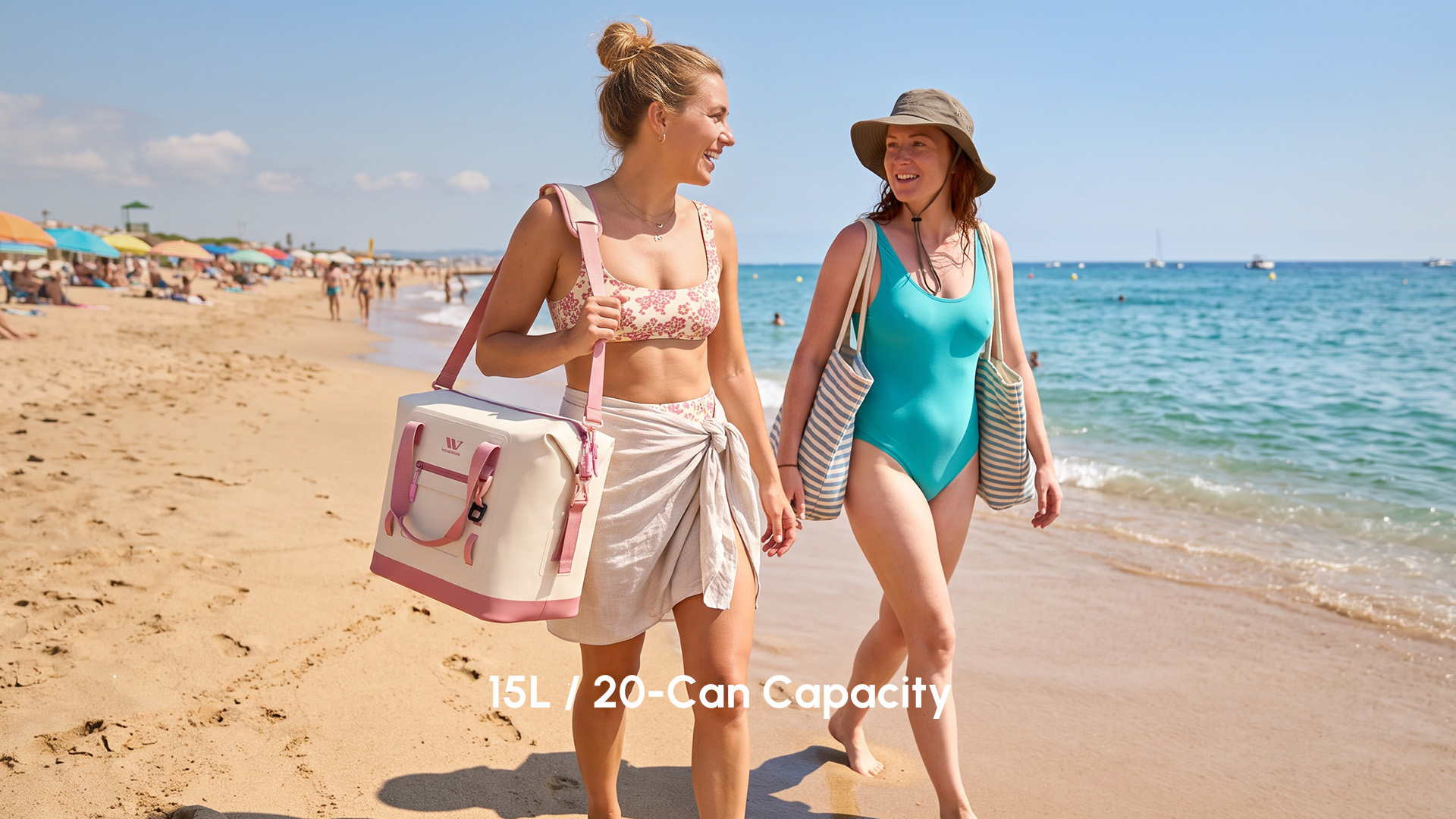
1. The Growing Market for Private Label Cooler Tote Bags
Demand for insulated bags keeps growing every year. Consumers want reliable thermal bags for weekend beach trips, outdoor adventures, grocery runs, and daily lunches. This steady demand creates an attractive opportunity for lifestyle brands, outdoor gear companies, and corporate gifting businesses.
Launching a private label line gives you an edge over generic retailers. When you sell private label cooler tote bags, you control the design, quality tier, and customer perception. You build equity in your own brand name instead of simply reselling off-the-shelf goods.
Your choice of manufacturing partner will make or break this venture. A reliable OEM insulated tote bags manufacturer helps you protect your margins and build customer trust. On the other hand, an inexperienced factory can saddle you with leaky liners, delayed shipments, and bad reviews. Industry leaders like Weierken have shown that technical manufacturing precision makes all the difference when turning basic tote bags into premium consumer products.
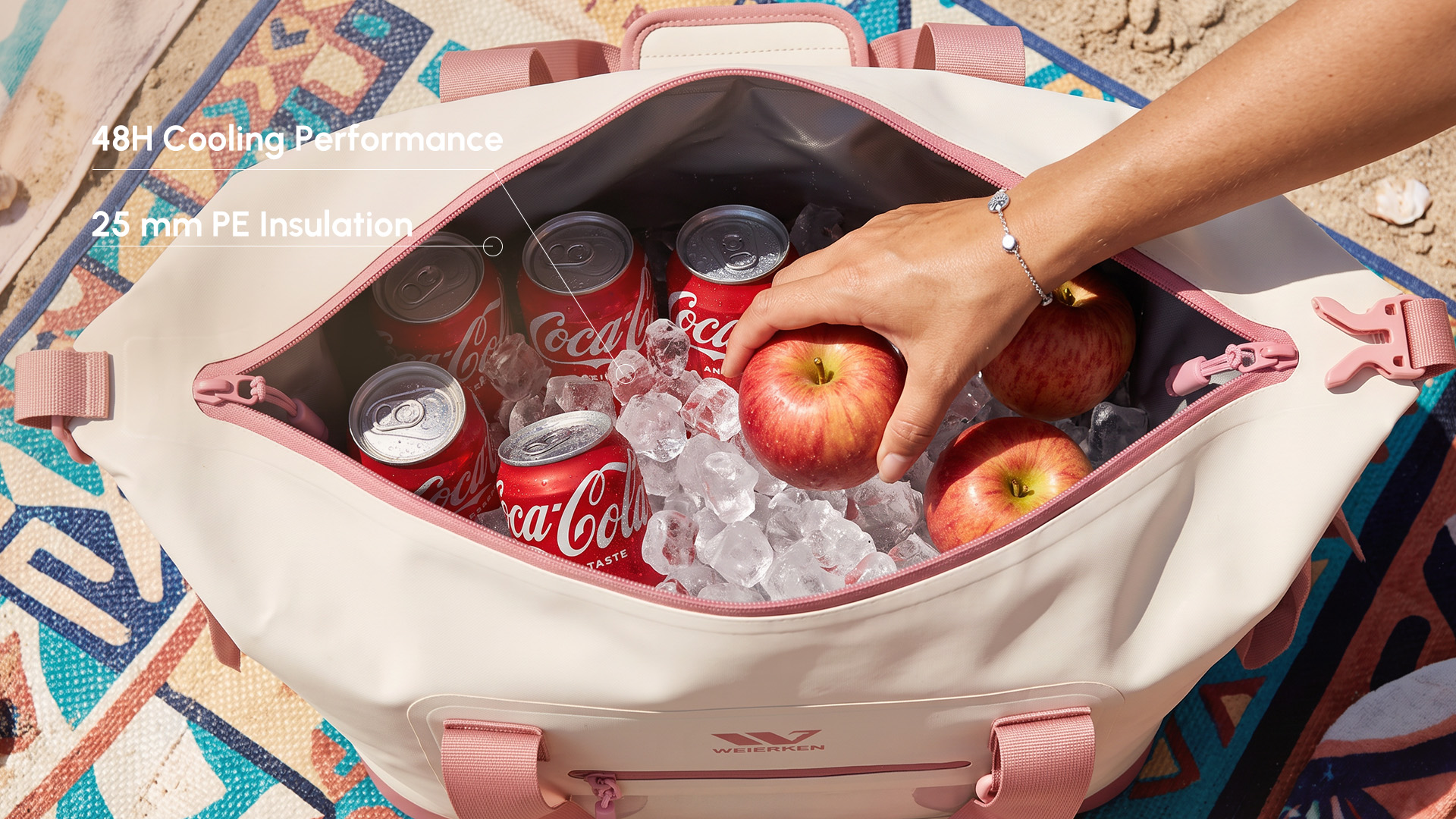
2. Core Capabilities to Look for in a Cooler Tote Bag Manufacturer
Not every bag factory can produce high-performance cooler totes. Thermal insulation requires specialized machinery and strict assembly tolerances. When vetting candidates, evaluate these three foundational capabilities.
Deep Customization Capabilities
Some suppliers only slap a screen-printed logo on a pre-made bag. That is simple white-labeling, not true private labeling. A qualified custom cooler bag manufacturer must offer full structural and cosmetic customization, including:
- Custom Dimensions: Adjusting height, width, and base depth to fit specific items like wine bottles, meal prep containers, or beverage cans.
- Hardware Selection: Choosing heavy-duty SBS or YKK zippers, waterproof airtight zippers, metal D-rings, and padded shoulder straps.
- Pockets and Dividers: Adding external dry storage pockets, interior mesh dividers, and bottle opener attachments.
- Branding Techniques: Offering rubber patches, debossed leather labels, woven tags, and heat-transfer graphics.
Material Selection and Insulation Tech
The materials define how long food and drinks stay cold. Look for a factory that sources a wide range of raw goods and understands thermal performance.
- Exterior Fabrics: Durable options include 600D to 1680D Oxford fabric, heavy cotton canvas, and waterproof TPU coatings. If your audience cares about sustainability, check if they offer eco-friendly cooler totes private label options made from RPET (recycled plastic bottles).
- Insulation Foam: The core layer usually consists of EPE (expanded polyethylene) pearl cotton, thick PE foam, or dense EVA foam. Thickness typically ranges from 5mm for light lunch totes to 15mm or more for multi-day coolers.
- Inner Liners: Food-grade PEVA, aluminum foil, and TPU are standard. The factory must use seamless high-frequency heat-pressing technology. Traditional stitching punctures the inner wall, which guarantees water leaks when ice melts.
Design Support and Prototyping Speed
Can the factory turn your tech pack or rough sketch into a working prototype? Competent suppliers employ in-house sample makers who understand structural balance and load distribution. Ask how long their sampling phase takes. A standard prototyping cycle should take between 7 and 14 business days.
3. Quality Assurance: How to Verify Manufacturing Standards
Marketing promises mean very little without clear quality control procedures. You need proof that the factory delivers durable, food-safe wholesale cooler tote bags.
Leakproof Testing
A cooler bag that leaks melted ice ruins car trunks and outdoor picnics. Work only with a verified leakproof cooler bag supplier. Ask the manufacturer directly about their testing protocols:
- Do they fill 100% of finished samples with water and inspect them for at least 4 to 8 hours?
- Do they test seam strength under heavy loads while the interior is wet?
Thermal Retention Verification
Customers buy cooler bags for thermal performance. Top manufacturers test ice retention under controlled ambient temperatures. Ask for data sheets or third-party laboratory test reports showing how long the bag maintains temperatures below 40°F (4.4°C). Quality suppliers use standardized cold-chain testing to prove their claims.
International Compliance and Certifications
Because these totes carry food and drinks, toxic materials pose serious legal and health risks. Make sure the supplier holds up-to-date compliance certificates:
- Food Contact Safety: FDA compliance (for the US market) and LFGB certification (for Europe).
- Chemical Safety: REACH and RoHS compliance to ensure fabrics are free from harmful phthalates, BPA, and heavy metals.
- Social Audits: BSCI, Sedex, or ISO 9001 certifications confirming fair labor practices and consistent factory management.
4. Evaluating Business Terms and Reliability
Even if a supplier makes exceptional samples, poor business terms can stall your brand's growth. Balance product quality against logistical reality.
Cooler Bag MOQ (Minimum Order Quantity)
Most industrial bag factories prefer high volumes to balance setup costs. Typical cooler bag MOQ targets run from 500 to 2,000 units per colorway. If you are launching a new brand, look for manufacturers willing to accept flexible initial orders—such as 500 units—to help you test the market without sinking all your working capital into inventory.
Production Capacity and Seasonal Lead Times
Cooler tote sales spike heavily in spring and summer. That means bag factories face massive production backlogs between November and April. Inquire about their total monthly output, total sewing lines, and typical lead times during peak season. A dependable factory usually quotes 30 to 45 days for mass production.
Pricing Transparency
Beware of vague quotes. A professional manufacturer breaks down costs line by line, including:
- Unit cost at various tier volumes.
- Custom mold fees for rubber patches, custom zipper pulls, or specialized metal hardware.
- Sample creation and shipping fees.
- Incoterms (such as FOB, CIF, or DDP) to avoid surprise shipping and customs clearance bills later.
5. Step-by-Step Guide: How to Vet and Select Your Supplier
Follow this five-step process to filter out substandard intermediaries and find a dependable manufacturing partner.
Step 1: Send a Detailed Request for Quotation (RFQ)
Never send an email that simply says, "How much for a cooler bag?" Professional manufacturers ignore vague inquiries. Instead, provide specific details:
- Target dimensions (L x W x H).
- Outer fabric type and desired lining material (e.g., 600D Oxford + 8mm EPE foam + leakproof PEVA).
- Logo application method.
- Target order quantity and target retail price point.
Step 2: Order and Stress-Test Physical Samples
Never begin bulk production without holding a physical sample in your hands. Once it arrives, test it ruthlessly:
- Pack it with ice and cans, pick it up by the handles, and shake it to check stitch integrity.
- Leave ice water in the bag for 24 hours on dry cardboard to detect microscopic leaks.
- Pull the zippers back and forth rapidly fifty times to feel for sticking or misaligned teeth.
- Sniff the interior lining; cheap recycled materials often release strong chemical odors.
Step 3: Conduct a Factory Audit
If you cannot visit the factory in person, book a video walk-through or hire an independent inspection agency like SGS or QIMA. Verify that the factory actually owns high-frequency welding machines and clean assembly lines. Experienced manufacturers like Weierken regularly open their facilities to third-party inspections to verify their equipment and worker conditions.
Step 4: Evaluate Communication Speed and Technical Insight
Pay close attention to how the factory sales team communicates. Do they answer within 24 hours? Do their representatives point out potential structural weaknesses in your design and offer practical solutions? Strong communication during early talks prevents expensive errors on the factory floor.
Step 5: Place a Smaller Trial Order
Before committing your entire annual budget, place a conservative initial order. Treat this first run as a trial of their full workflow—from packaging accuracy to on-time shipping. Once the supplier proves their reliability, you can safely scale up order volumes.
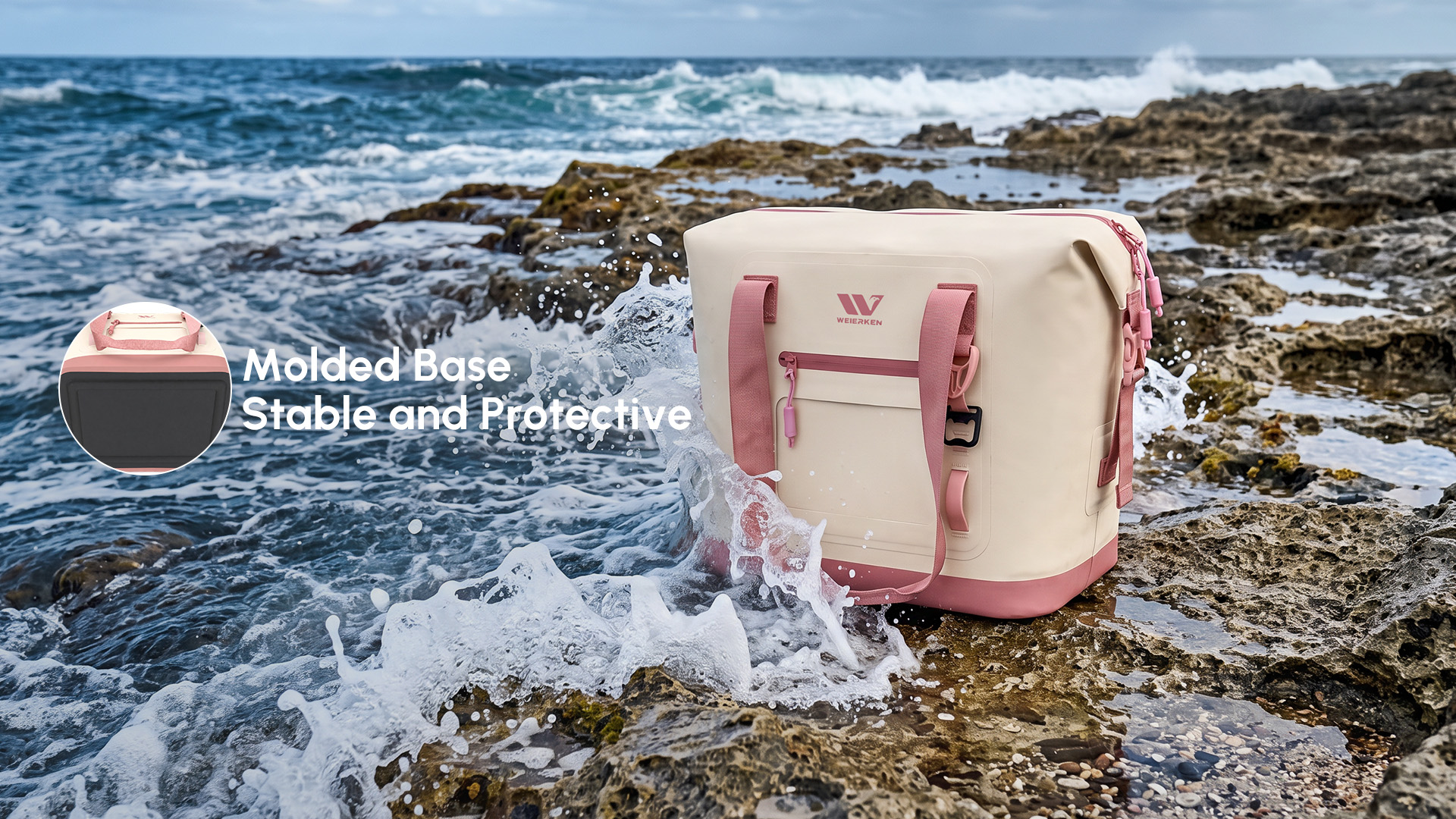
6. Common Red Flags to Avoid When Sourcing Cooler Bags
Keep an eye out for these warning signs during negotiations:
- Prices Far Below the Market Average: If one factory bids 30% below everyone else, they are cutting corners. They might swap premium insulation for scrap foam, thin out the fabric gauge, or use cheap PVC liners that crack in cold weather.
- Hesitation to Share Material Certifications: If a sales rep stalls when you ask for FDA or LFGB documentation, their materials likely contain restricted chemicals.
- Using Stitched Liners for Ice Storage: If a vendor suggests sewing the inner lining instead of hot-pressing or radio-frequency welding it, run away. Stitched liners are never truly leakproof.
- Zero Export Experience: Factories that only sell domestically often struggle with export documentation, international pallet standards, and Western quality expectations.
7. Frequently Asked Questions (FAQs)
Q1: What is the best material combination for a durable cooler tote
bag?
A1: For the outer shell, 600D or 900D waterproof Oxford
polyester offers an ideal mix of tear resistance and reasonable cost. For
insulation, 8mm to 10mm high-density EPE foam balances structure and thermal
retention. For the interior, a heat-welded food-grade PEVA or TPU liner ensures
leakproof protection and simple cleaning.
Q2: How long can a well-made private label cooler bag keep items
cold?
A2: That depends on foam density, zipper construction, and ice
volume. A standard tote with 5mm to 8mm foam holds safe temperatures for roughly
6 to 12 hours. Premium heavy-duty totes built with closed-cell EVA foam, thick
TPU exteriors, and airtight waterproof zippers can hold ice for 24 to 48 hours
or more.
Q3: What is the typical MOQ for custom cooler bags?
A3:
Most direct factories set their baseline MOQ between 500 and 1,000 units per
style. This threshold allows them to order custom-dyed fabrics, run heat-welding
machines efficiently, and set up custom screen-printing stations without
charging steep setup fees.
Q4: What makes high-frequency welding better than regular sewing for
cooler liners?
A4: Sewing punches thousands of needle holes through
fabric, allowing melted ice to soak the foam insulation and seep through outer
seams. High-frequency (RF) welding fuses the plastic edges using electromagnetic
energy. This produces a single continuous, watertight bond that stops leaks
completely.
Q5: Can I request eco-friendly materials for private label cooler
tote bags?
A5: Yes. Many brands now use certified RPET fabrics made
from recycled water bottles for both shell and lining materials. Combine RPET
exteriors with non-toxic, biodegradable PEVA linings to create a sustainable
product line that appeals to green-minded shoppers.
Q6: How much do prototyping and sample creation usually
cost?
A6: Sample fees typically run from $50 to $150 per bag,
depending on design complexity and custom hardware requirements. Most
professional suppliers credit this sample fee back to you once you place your
full production order.
8. Build a Profitable Partnership for Your Brand
Choosing the right private label cooler tote bag supplier requires looking past simple price lists. You need a production partner that values precise craftsmanship, uses tested leakproof techniques, and protects your brand reputation through rigorous quality control.
Take time to review technical specs, test sample units under real conditions, and confirm compliance before signing purchase orders. Dedicated manufacturers like Weierken pair technical expertise with flexible OEM support, giving growing brands the consistency they need to compete on retail shelves and e-commerce platforms alike.
Ready to design your own high-performance private label cooler tote bags? Contact our manufacturing team today to share your tech pack, request a quote, and order your first physical samples.