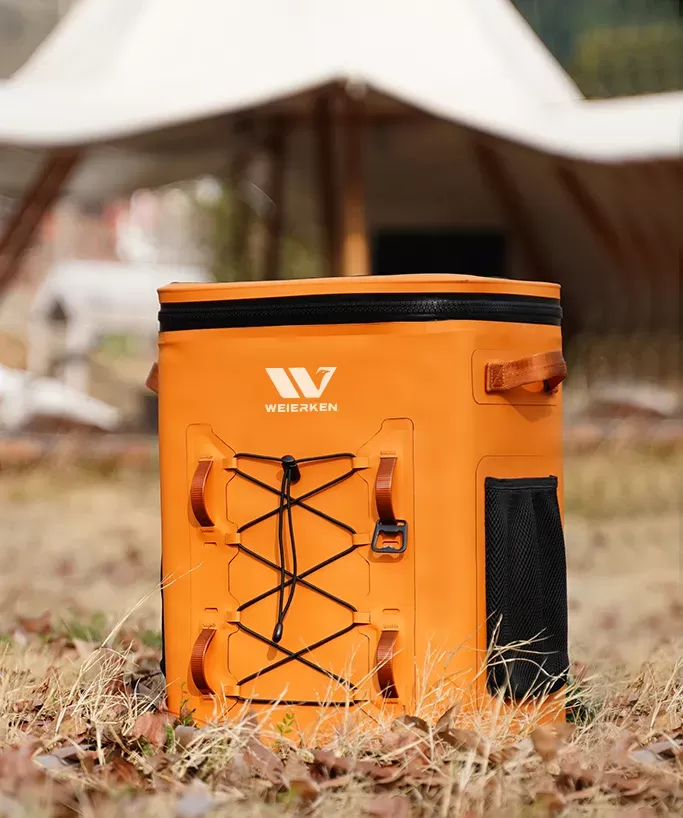

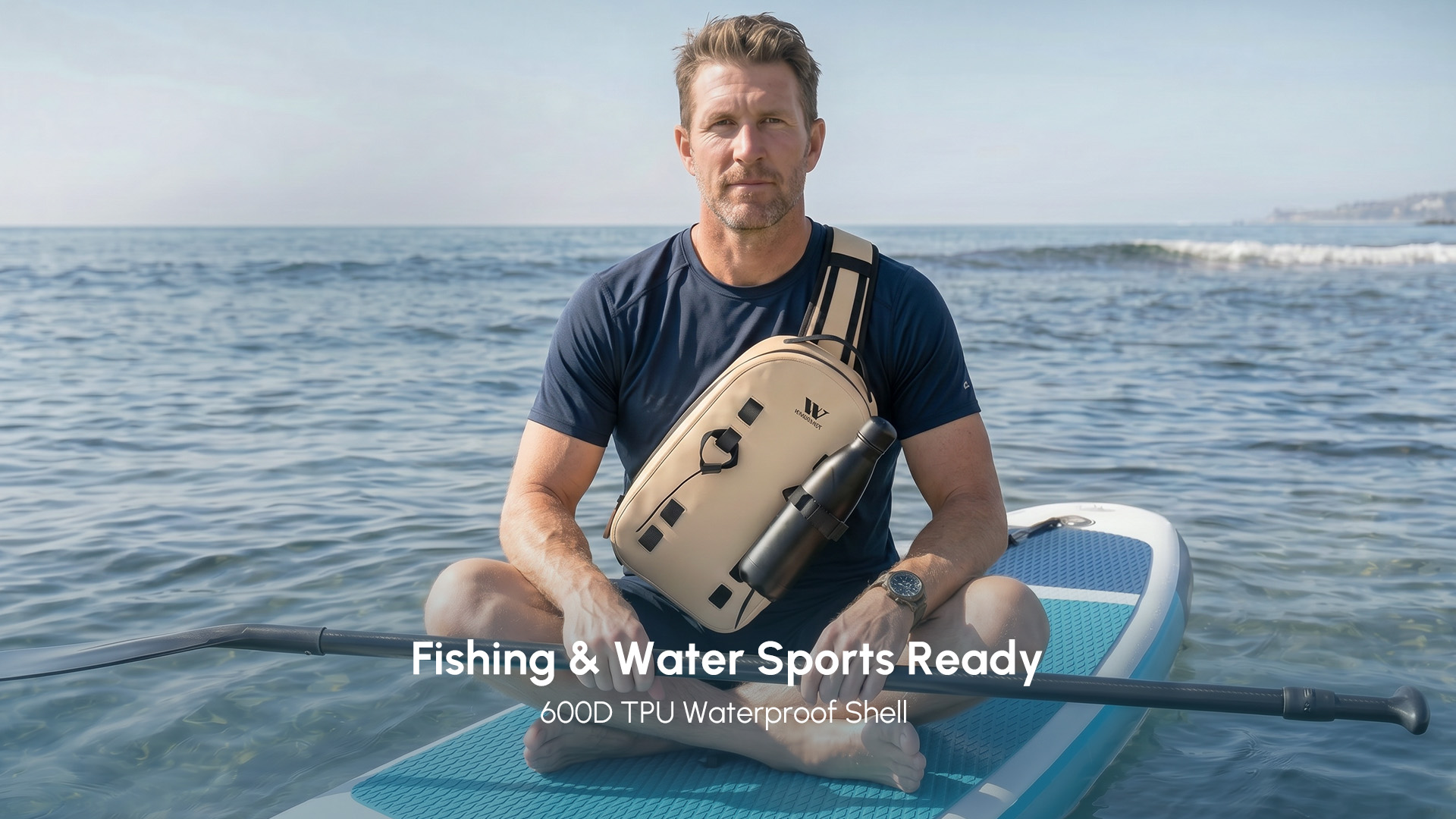
Kayak fishing gear operates in some of the most punishing environments in the outdoor industry. A kayak fishing bag sits in constant contact with corrosive saltwater, intense UV radiation, fish slime, and abrasive non-skid deck surfaces. It must also withstand punctures from sharp treble hooks, dorsal spines, and gaffs.
Standard outdoor gear bags fail quickly under these conditions. Traditional needle-stitched seams leak, taped seams hydrolyze in tropical humidity, and cheap metal sliders corrode shut after a few outings. For tackle brands, kayak OEMs, and marine outfitters, a product failure on the water immediately damages brand credibility and spikes warranty return rates.
Finding a competent custom kayak fishing bag manufacturer requires auditing far beyond basic sewing capabilities. You need a partner proficient in radio-frequency (RF) hermetic welding, thermal insulation engineering, marine-grade component selection, and structural hull fitment. Drawing from two decades of specialized manufacturing experience, Weierken has developed this 10-step vetting framework to help outdoor brands audit and select a qualified manufacturing partner.
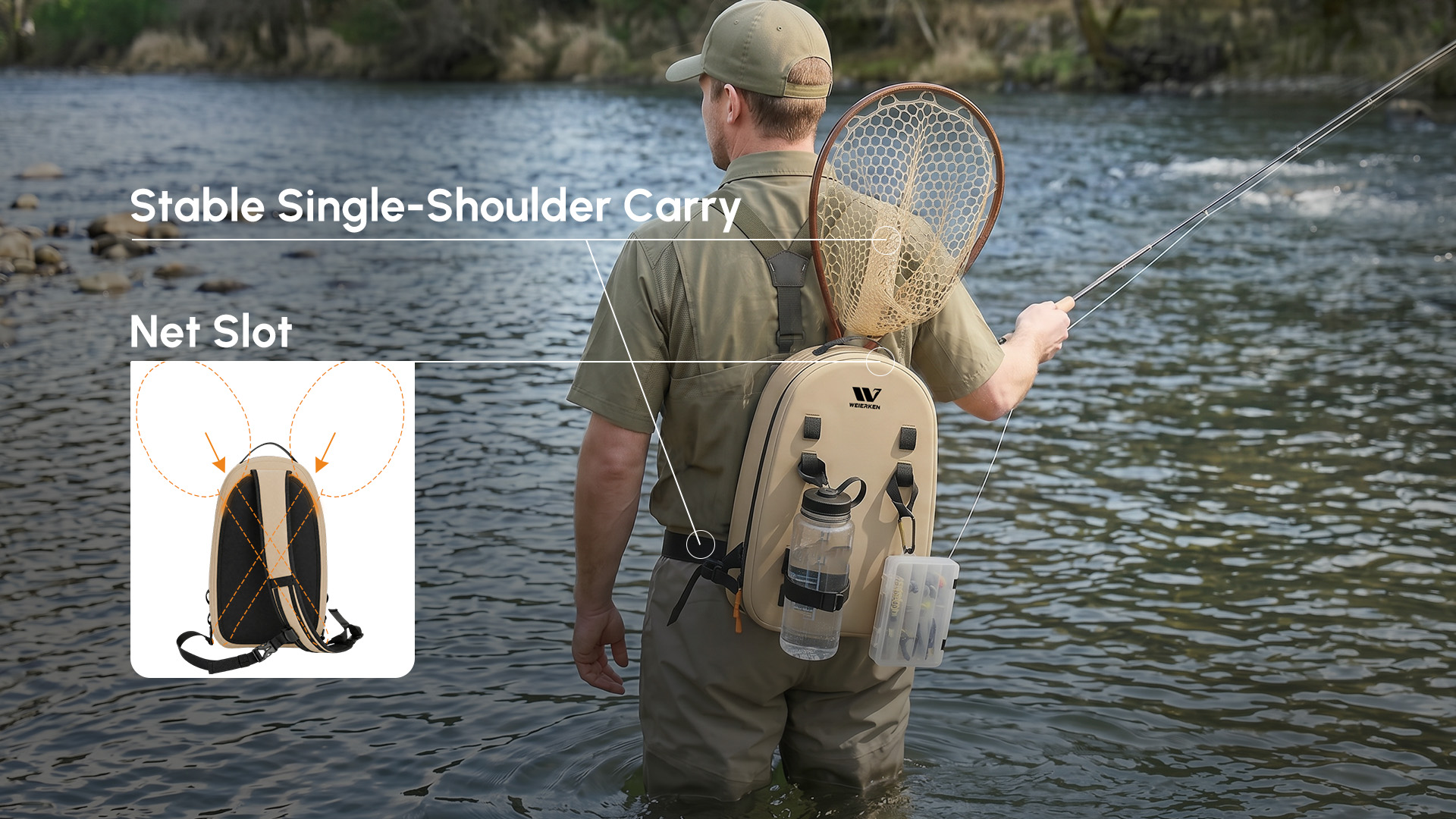
Step 1: Audit High-Frequency and RF Seamless Welding Capabilities
A kayak deck bag or bow cooler must withstand continuous wave wash, sudden rain squalls, and occasional capsizing. Sewing machines pierce fabric with thousands of needle holes. Even the best seam-seal tape can degrade when soaked in saltwater for weeks.
Confirm that your prospective supplier operates in-house high-frequency (HF) or radio-frequency (RF) welding machinery. RF welding uses electromagnetic energy to fuse polymer-coated fabrics at the molecular level, creating a continuous, permanent bond that is entirely impervious to water.
Waterproof Standards: Ensure the factory can achieve true IPX6 (heavy seas/wave wash) and IPX7 (temporary submersion up to 1 meter) waterproof ratings.
Tooling Customization: Inquire if they design and mill custom aluminum welding horns in-house to accommodate complex 3D bag curves and perimeter seals.
Welding Automation: Look for programmable CNC welding units that eliminate human error and maintain consistent seam strength across mass production runs.
Step 2: Evaluate Marine-Grade and Puncture-Resistant Material Formulations
Kayak anglers drag bags across oyster bars, gravel beaches, and rough polyethylene decks. The materials used must resist abrasion and puncturing from sharp fishing tackle while remaining easy to clean.
Ask the factory to present raw material technical data sheets (TDS) for marine-rated fabrics. A reliable manufacturer should recommend heavy-duty 840D or 1000D double-sided thermoplastic polyurethane (TPU) or heavy-gauge PVC tarpaulin.
UV and Cold-Crack Resistance: Ensure the polymers contain UV stabilizers to prevent chalking and cracking after prolonged sun exposure, along with plasticizers that retain flexibility in cold conditions down to -20°C.
Antimicrobial Properties: Liners for insulated fish kill bags require antimicrobial and mildew-resistant coatings to prevent bacterial growth and odor retention from fish blood.
Sustainable Options: Verify if the supplier can source Global Recycled Standard (GRS) certified rPET base fabrics laminated with eco-friendly, non-toxic TPU films.
Step 3: Inspect Thermal Insulation and Drainage Engineering for Fish Bags
Catch bags (fish kill bags) and kayak deck coolers must keep ice intact for 24 to 48 hours in direct sunlight. If water penetrates the insulation layer, the bag will gain weight, harbor mold, and lose thermal efficiency.
Examine how the factory builds its thermal barriers. Quality insulated bags require high-density, closed-cell foam (such as EVA or NBR-PVC blend foam) that does not absorb moisture even if the interior liner is punctured.
Audit their drain plug installations. The factory must weld a low-profile, leak-proof marine drain valve directly into the bottom or side of the bag. This allows anglers to drain melted ice and fish slurry without water leaking into the kayak's cockpit or tankwell.
Step 4: Scrutinize Airtight Zippers and Saltwater-Proof Hardware
Zippers and buckles represent the most frequent failure points on marine bags. Saltwater evaporates on the zipper teeth, leaving behind salt crystals that jam sliders and rip zipper tape.
Evaluate the factory’s hardware inventory and component assembly methods:
Airtight/Watertight Zippers: Look for technical zipper installations featuring polyurethane-coated tape with interlocked rubber teeth (such as genuine TIZIP or specialized TPU gas-tight zippers).
Welded Zipper Transition Ports: Ensure the factory reinforces zipper terminals with high-frequency welded patches to eliminate stress tears when users open the bag with force.
Corrosion-Proof Hardware: The factory should use 100% virgin POM (Polyoxymethylene) or heavy-duty nylon hardware, paired with 316 marine-grade stainless steel D-rings and carabiners to prevent corrosion.
Step 5: Assess Kayak Deck Modular Rigging and Fitment Capabilities
Kayaks feature unique hull geometries. The bow of a pedal kayak narrows into a sharp V-shape, while the stern tankwell features squared gear recesses. A generic rectangular bag will slide around, block scupper holes, or catch excess wind.
Your manufacturing partner needs a clear grasp of deck layout ergonomics. When reviewing technical drawings, look for engineering capabilities that support popular fishing kayak models (such as Hobie, Old Town, Native Watercraft, and Jackson):
Contoured Patterning: Tapered triangular silhouettes designed for front hatch tie-downs, and low-profile rectangular shapes built for rear gear crates.
Thermoformed EVA Bases: Compression-molded, ridged EVA bottom panels that keep the bag elevated above standing deck water while adding structural stability.
Rigging Systems: Integrated daisy-chain webbing, adjustable four-point bungee tie-down straps, and exterior rod-holder slots.
Step 6: Verify Precision Sampling Agility and Development Lead Times
Fishing tackle markets operate on tight seasonal retail calendars. Missing an ICAST reveal or wholesale buying cycle because of slow prototype revisions can delay a launch for a full year.
Examine the supplier's dedicated sample room and engineering staff. A well-equipped custom kayak fishing bag manufacturer will build rapid functional mock-ups to test volume, balance, and rigging points.
At Weierken, the rapid-prototyping sample team delivers functional waterproof utility samples in 3 to 7 days. For complex, multi-panel welded fish coolers and bow deck bags with airtight zippers, finished prototypes are delivered within 12 to 30 days, complete with initial hydrostatic and leak testing data.
Step 7: Validate Mass Production Quality Control and 99.5% Yield Standards
A production line cannot afford to skip individual unit testing on watertight gear. Inspect the supplier's factory-floor Quality Assurance (QA) and Quality Control (QC) infrastructure.
Ensure the facility conducts structured in-line inspections rather than relying solely on a final box-count check:
Positive Pressure Inflation Testing: Every airtight or IPX7 chamber must undergo a 12-to-24-hour pressure decay test using digital manometer gauges to catch slow micro-leaks.
Seam Peel and Tensile Testing: Regular pull tests on weld coupons ensure that the fabric substrate fails before the weld bond separates.
99.5% First-Pass Yield: Partner with factories that document and maintain a 99.5% first-pass QC yield, protecting your brand from costly field recalls and customer returns.
Step 8: Audit Dual-Hub Manufacturing and Tariff Optimization
Importing technical soft goods into North America or Europe involves significant tariff exposure. To remain competitive, brands need geographic flexibility in their supply chains.
Evaluate whether the supplier offers a dual-hub production footprint. Sourcing models that combine China and Southeast Asia provide clear advantages:
China Innovation Hub: Fast material sourcing, custom tooling fabrication, complex mold building, and low-volume pilot testing.
Cambodia Mass Manufacturing: Scaled assembly lines that leverage favorable trade status and lower labor overhead.
Tariff Mitigation: Exporting from Cambodia allows brands targeting the US and European markets to avoid specific Section 301 tariffs, lowering total landed costs and improving retail margins.
Step 9: Check Global ESG and Ethical Retail Compliance
Selling through major retail channels like Bass Pro Shops, REI, Cabela’s, or West Marine requires strict supply chain compliance. These retailers require comprehensive social and environmental audits before placing purchase orders.
Ask for current third-party certification documentation, including:
Social Audits: BSCI (Business Social Compliance Initiative) and SEDEX SMETA reports verifying fair wages, worker safety, and ethical factory management.
Chemical Safety: REACH and RoHS test reports showing materials are free from lead, phthalates, and banned PFAS chemicals.
Environmental Standards: Global Recycled Standard (GRS) scope certificates and ISO 14001 environmental management protocols.
Quality Systems: Current ISO 9001 certifications detailing standard operating procedures.
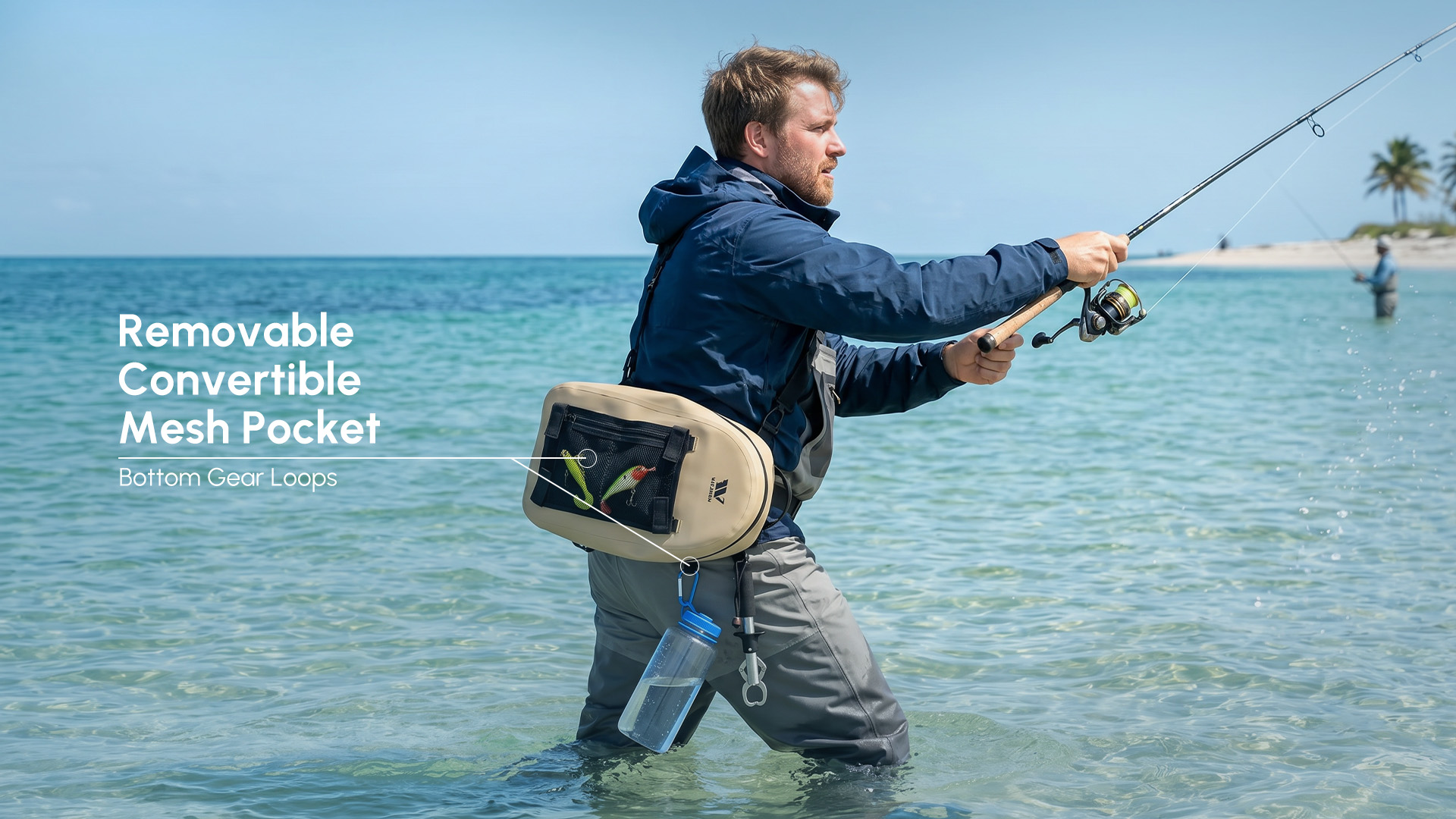
Step 10: Evaluate Turnkey DDP Logistics and Project Governance
Managing freight forwarders, container loading, customs clearance, and terminal demurrage pulls your internal team away from core marketing and sales activities. A reliable contract manufacturer should simplify cross-border trade.
Confirm that the factory provides comprehensive Delivered Duty Paid (DDP) logistics. Under DDP terms, the manufacturer manages ocean freight, customs entry, duty payments, and direct trucking to your domestic 3PL warehouse.
Verify that you will work directly with an English-fluent technical account manager. Seamless communication prevents misunderstandings regarding tech packs, bill-of-materials (BOM) changes, and milestone production schedules.
Kayak Fishing Bag Manufacturing Audit Matrix
Use this reference table to evaluate potential factory partners during your sourcing audits:
| Audit Criteria | Conventional Bag Factory | Specialized Marine OEM (Weierken Standard) |
|---|---|---|
| Seam Technology | Needle stitched with heat-seal tape | High-frequency RF welded & molecular fused |
| Waterproof Rating | IPX3 to IPX4 (Splash resistant) | IPX6 to IPX7 (Heavy seas & submersion) |
| Insulation Core | Open-cell sponge / cheap PE sheet | High-density closed-cell NBR/EVA foam |
| Saltwater Hardware | Standard zinc alloy & nylon zippers | 316 Stainless steel & TPU airtight zippers |
| Production Locations | Single-location production line | Dual-hub: China R&D + Cambodia mass production |
Frequently Asked Questions (FAQs)
Q1: What is the main difference between TPU and PVC for kayak fishing bags?
A1: Thermoplastic Polyurethane (TPU) offers superior abrasion resistance, higher tensile strength, and excellent flexibility in cold weather down to -40°C. It is also non-toxic and environmentally safer than PVC. Polyvinyl Chloride (PVC) is a more budget-friendly option that delivers solid water resistance and puncture protection, making it popular for heavy-duty commercial catch bags where cost is a primary consideration.
Q2: How do you prevent fish fins and hooks from puncturing the cooler bag liner?
A2: Reliable manufacturers use thick, multi-layer composite liners. The interior contact layer typically features a heavy-gauge 840D nylon or polyester woven scrim coated on both sides with thick, smooth TPU. This slick surface prevents fish spines and hook barbs from penetrating the core, while high-frequency welded interior seams eliminate needle holes that could trap fish blood or moisture.
Q3: Can our brand provide custom CAD hull shapes for custom bow storage bags?
A3: Yes. Professional OEMs work directly from your 3D CAD files (STEP/IGES) or physical hull mock-ups. Engineers create 2D patterns and develop custom 3D welding tooling that matches the bow angle, hatch covers, and perimeter bungee channels of specific kayak models, ensuring a flush deck fit that minimizes wind resistance.
Q4: What is the minimum order quantity (MOQ) for custom-molded RF welded bags?
A4: MOQs for technical RF-welded marine gear generally range from 500 to 1,000 units per style or colorway. This minimum is dictated by custom fabric dye lots, TPU extrusion runs, and the setup requirements for high-frequency welding tooling. For new product introductions, suppliers can often accommodate tiered pilot runs to support market launch schedules.
Q5: How does shipping from a Cambodia manufacturing facility reduce overall landed costs?
A5: Sourcing through a Cambodia production facility allows brands to take advantage of favorable duty structures, including exemptions or reductions on specific import tariffs into the US and European markets. These duty savings, combined with competitive labor rates, significantly reduce total landed costs compared to single-origin shipments subject to higher trade tariffs.
Partner with a Specialized Marine Gear Manufacturer
Developing dependable kayak fishing bags requires an experienced production partner. When your products face saltwater spray, heavy loads, and sharp gear, cut-rate stitching and unverified materials will result in field failures.
For more than 20 years, Weierken has engineered and manufactured technical waterproof gear for prominent outdoor and marine brands worldwide. With dual-hub production flexibility across China and Cambodia, advanced high-frequency welding technology, and strict 99.5% quality yield controls, Weierken helps outdoor brands bring durable, high-performance gear to market.
Ready to develop your next custom kayak deck bag, bow cooler, or insulated fish kill pack? Contact the Weierken engineering team today to review your tech pack, explore custom tooling options, and schedule a rapid prototype run.