By James(Supply Chain Expert of Weierken) Market Overview: The 2026 Compliance Landscape in EU & North America
In 2026, sustainability is no longer optional—it’s mandatory. New EU regulations on plastic products and textile carbon footprints, alongside North American ESG-driven procurement standards, have reshaped the entry criteria for global brands. For
bag manufacturers, demonstrating tangible environmental responsibility is no longer a differentiator—it’s a baseline requirement.
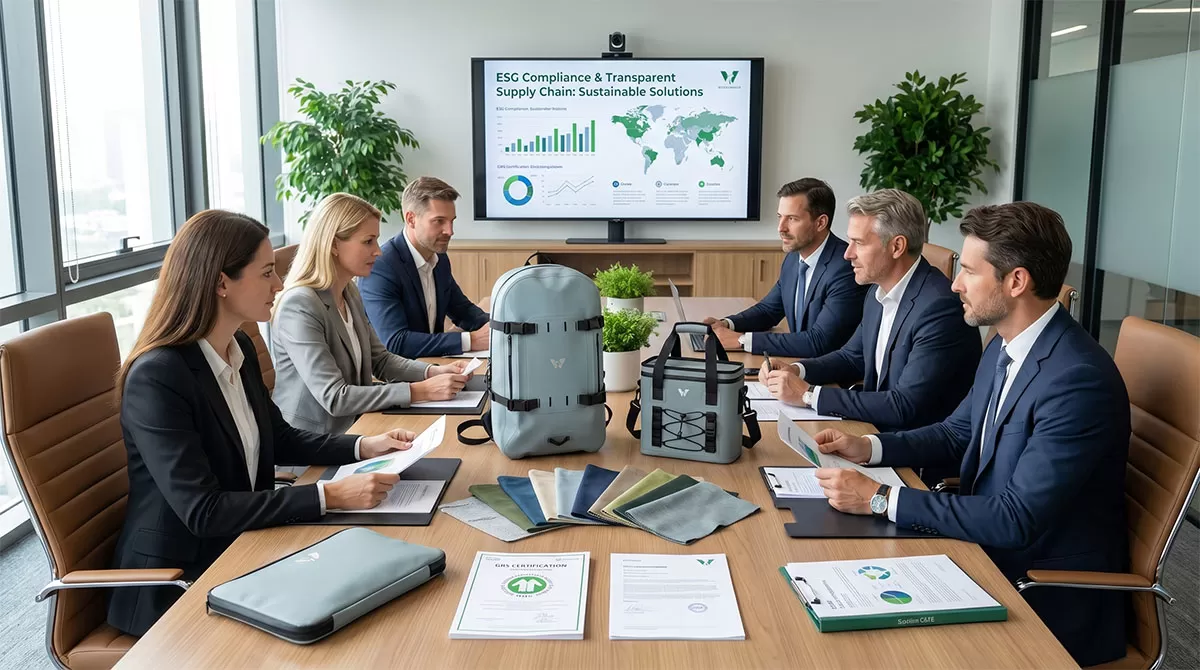
B2B buyers sourcing for European and North American markets now prioritize GRS-certified (Global Recycled Standard) materials and traceable supply chains. At Weierken, our longstanding GRS and BSCI certifications offer buyers a proven pathway to meet these compliance benchmarks without extra verification headaches.
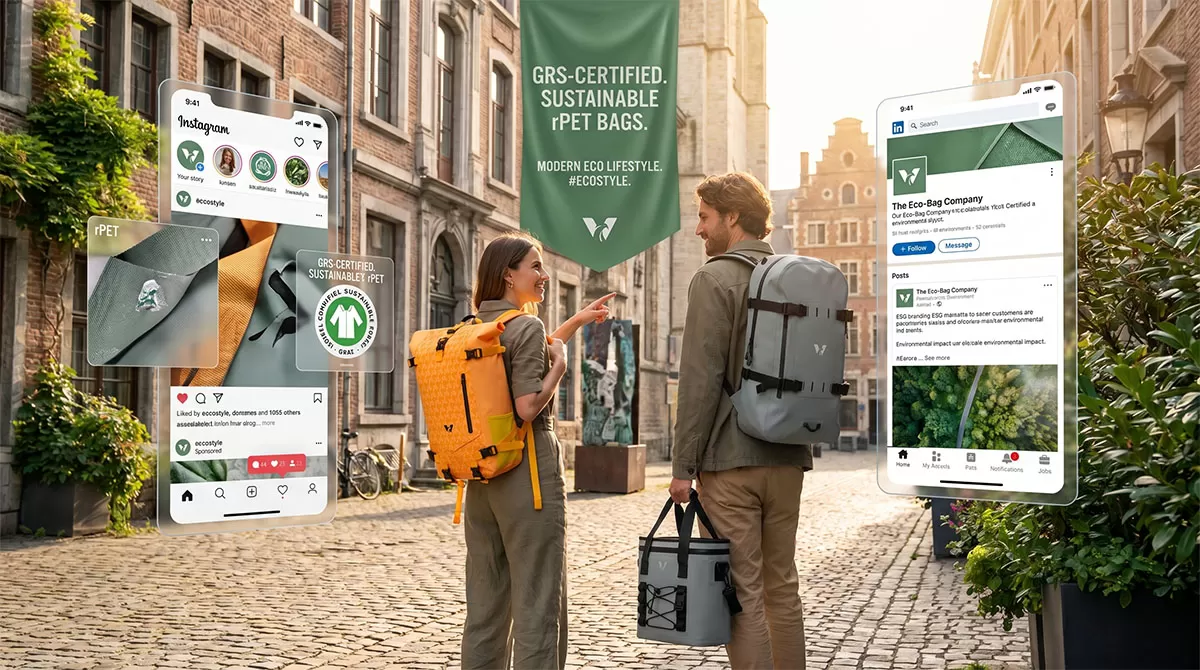
Example: A German outdoor brand recently partnered with Weierken to source 100% rPET backpacks. By providing official GRS certificates, the client passed the EU’s carbon footprint audit effortlessly and promoted their new eco-friendly line on Instagram and LinkedIn, generating measurable engagement with sustainability-conscious customers.
rPET Fabric: From Bottles to High-Performance Bag Materials
One of the most significant innovations driving sustainable
bag manufacturing is
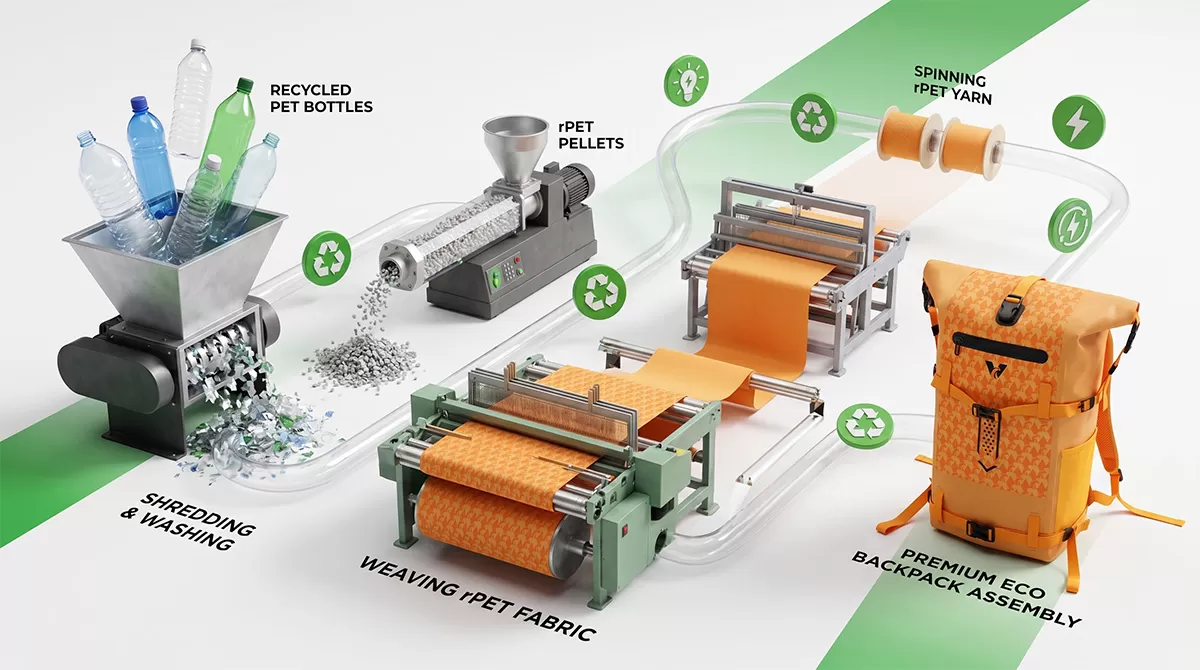
rPET (recycled polyester). Through advanced recycling technology, post-consumer PET bottles are transformed into high-performance fabrics that meet the durability standards of premium backpacks.
Key advantages of rPET fabrics for B2B buyers include:
Durability: Comparable tensile strength and abrasion resistance to virgin polyester.
Consistency: Uniform texture and color retention suitable for premium branding.
Environmental Impact: Reduces landfill waste and lowers carbon footprint.
At Weierken, we help buyers communicate these advantages through:
Marketing-ready documentation
Verified GRS certificates
Case studies demonstrating ESG alignment
Example: A European retail chain used Weierken’s GRS-certified rPET backpacks in a seasonal promotional campaign. By including verified certificates in social media posts, they boosted customer trust, enhanced their ESG credibility, and increased engagement on both LinkedIn and Instagram by over 35% within one month.
Additional Weierken Advantage: Beyond certifications, our design and production teams help B2B clients customize every detail, including:
Custom branding and color schemes
Specialized compartments and insulation layers
Logo embroidery or heat transfer options
This allows brands to combine compliance with premium differentiation, turning sustainability into a tangible marketing asset.
Adding Value: Telling a Green Brand Story
Modern consumers and corporate clients expect brands to articulate their sustainability efforts clearly. By choosing GRS-certified bags, B2B clients can confidently highlight:
Ethical material sourcing
Transparent supply chains
Tangible environmental impact
Weierken empowers buyers to communicate these advantages through marketing-ready documentation and verified certifications, making it easier to turn compliance into a compelling brand story.
Example: A European retail chain used Weierken’s GRS-certified rPET backpacks in a promotional campaign. By including verified certificates in social media posts, they boosted customer trust and reinforced their ESG credentials.
Pitfalls to Avoid: Verifying Certificates and Supply Chain Transparency
Not all claims of sustainability are equal. To safeguard your brand reputation and ensure compliance, buyers should:
Check GRS Certificates: Validate with official GRS registries or request transaction certificates (TCs) from suppliers.
Audit the Supply Chain: Ensure full traceability from recycled PET flakes to finished bag.
Partner with Certified Manufacturers: Work with suppliers like Weierken, whose GRS and BSCI certifications are current and verifiable.
Example: A North American fashion brand almost sourced bags from an unverified supplier claiming rPET usage. By requesting Weierken’s GRS documentation as a benchmark, they avoided greenwashing risks and potential regulatory issues.
FAQ: Common Questions from B2B Buyers
Q1: How can I verify Weierken’s GRS certification?
A: All certificates can be validated via the official GRS registry. Weierken also provides transaction certificates (TCs) for full traceability from material purchase to finished bag.
Q2: Are rPET bags as durable as conventional polyester bags?
A: Yes. Our rPET fabrics undergo rigorous tensile and abrasion testing. Many clients report no difference in durability compared to virgin polyester, with added environmental benefits.
Q3: Can Weierken customize bags for my brand while using rPET fabrics?
A: Absolutely. We offer fully customizable designs, including colors, compartments, branding, and insulation options, all with GRS-certified rPET.
Q4: How does choosing GRS-certified bags help with marketing?
A: Verified eco-certifications allow brands to share authentic sustainability stories with B2C audiences, building trust, brand loyalty, and social media engagement.
Why Weierken is the B2B Partner of Choice
Proven Compliance Track Record: Years of GRS and BSCI certification experience.
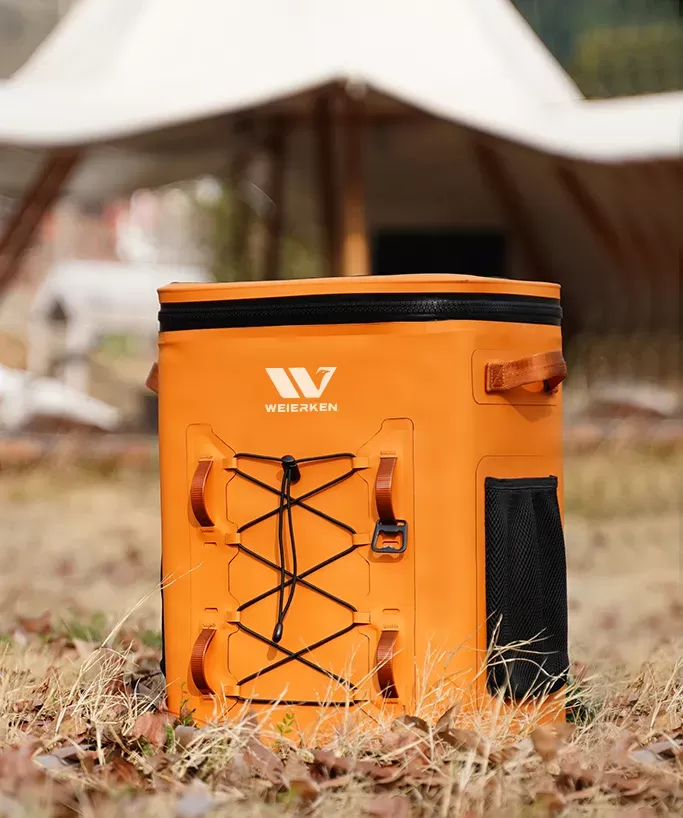
Customizable Solutions: From backpacks to insulated cooler bags, we tailor designs to client needs.
Global Reach, Local Expertise: Supplying EU and North American markets with compliance-ready solutions.
Marketing Support: Documentation, case studies, and certifications that allow clients to amplify their sustainability narrative.
With Weierken, sustainability compliance becomes not just a requirement but a competitive advantage—helping B2B buyers enter new markets, strengthen ESG credibility, and connect with conscious consumers.
📩 Contact Weierken to discuss your next outdoor bag project