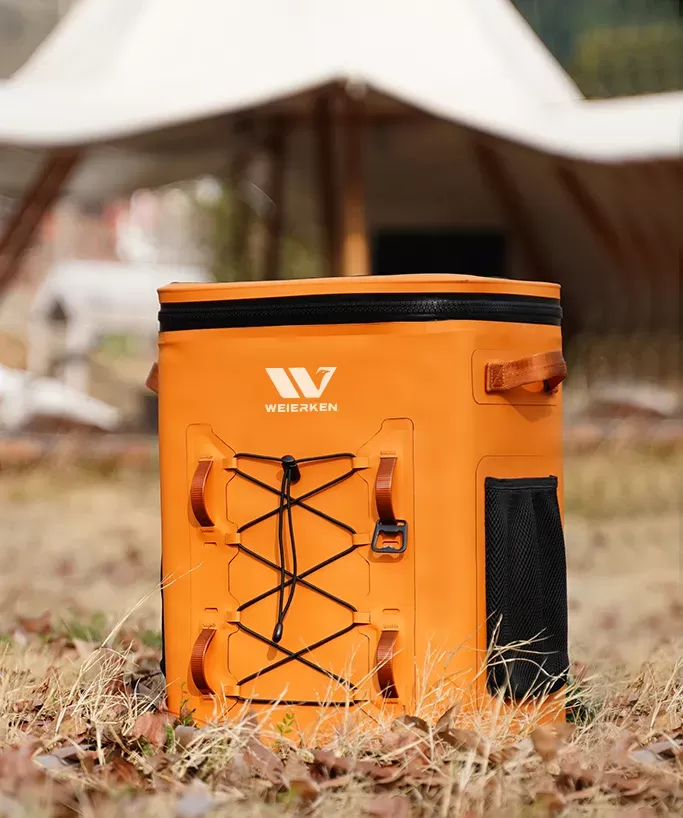

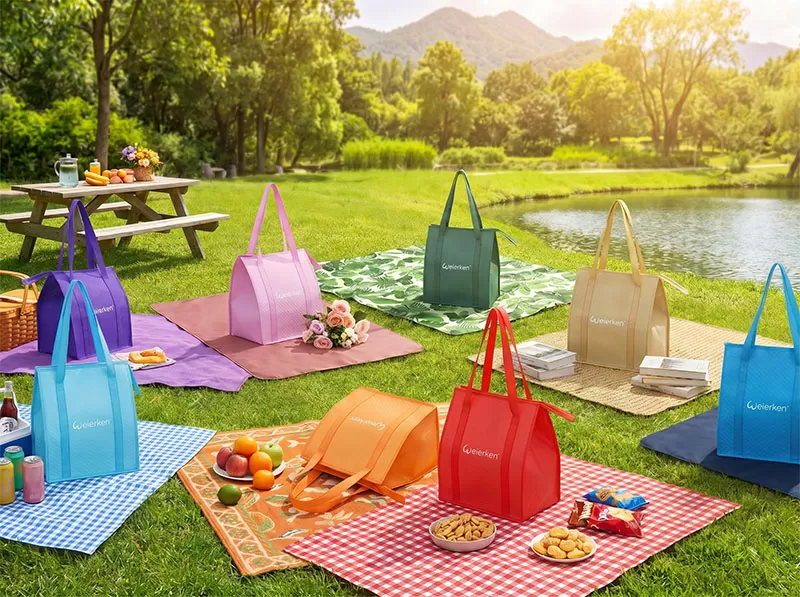
What Are Non-Woven Insulated Bags?
Outer Layer: Heavy-duty, bonded non-woven polypropylene fabric (typically 80–120+ GSM) or rPET (recycled polyester) for tear resistance and vibrant brand printing.
Core Insulation Layer: Expanded Polyethylene (EPE) foam, Polyurethane (PU) foam, or bubble lining (ranging from 2mm to 5mm+ in thickness) to trap thermal energy.
Inner Lining: Food-grade, waterproof material such as Aluminum Foil, PEVA, or TPU, often sealed using advanced RF (Radio Frequency) welding or heat-sealing to ensure leak-proof performance.
Global Market Trends in Thermal Packaging
Key Market Drivers
The Boom in Last-Mile Food Delivery: The surge in global e-commerce, meal-prep kits, and quick-commerce grocery delivery requires high-performance, reusable thermal transport.
Strict Plastic Ban Regulations: Governments worldwide are restricting single-use plastics, prompting supermarkets and logistics providers to invest in heavy-duty, reusable insulated bags.
Corporate Sustainability & ESG Commitments: Procurement managers are actively transitioning from virgin petroleum-based plastics to GRS-certified rPET and eco-friendly thermal materials.
Case study:
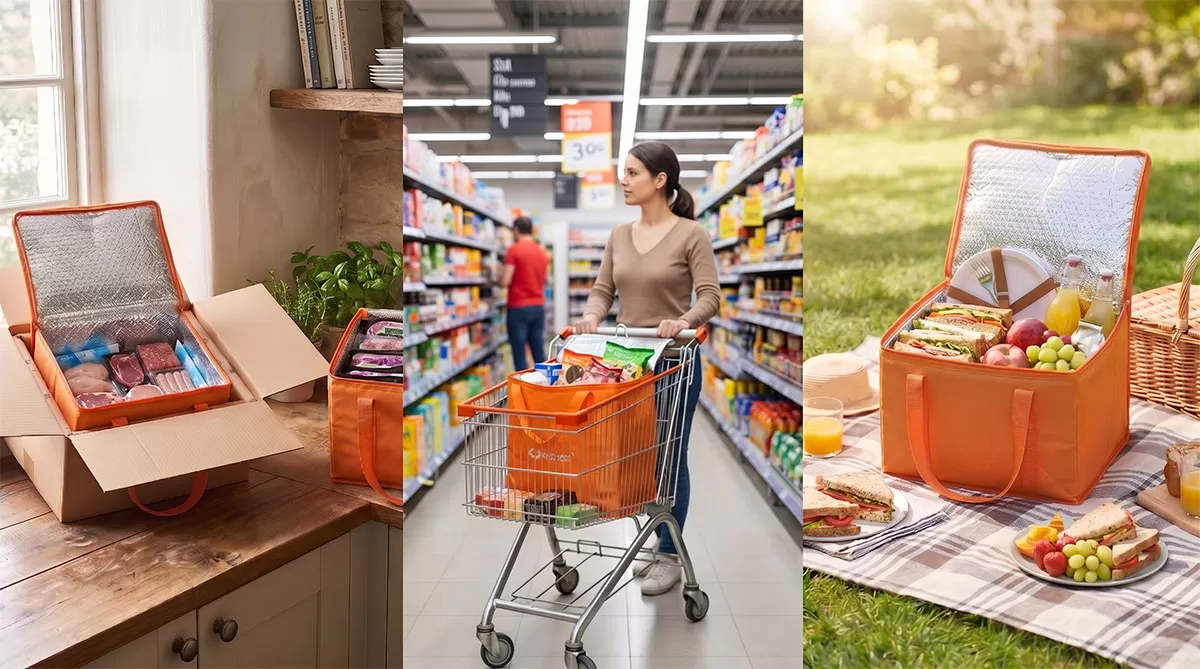
A premium U.S. beef brand applied Weierken’s insulated cooler bags for steak and meat delivery, while also encouraging customers to reuse the bags as everyday shopping totes and outdoor picnic cooler bags. By leveraging Weierken’s China and Cambodia manufacturing network, the client improved production flexibility, reduced ice pack usage by 15%, and maintained reliable cold-chain performance during last-mile delivery. The reusable insulated bags combined strong thermal retention, premium branding, and lifestyle functionality, transforming traditional delivery packaging into a long-term brand exposure tool for daily outdoor and shopping use.
Supply Chain Dynamics
Material Engineering & Structural Trends
Eco-Insulation Fabrics: High demand for rPET (recycled non-woven) outer layers to satisfy corporate environmental mandates in the US and EU markets.
Heavy-Duty Fabric Weights: Transitioning to thicker 100 to 140+ GSM non-woven materials to ensure the bag can handle heavy grocery loads without tearing.
Advanced Functional Features: Integration of airtight/waterproof zipper systems, reinforced cross-stitched handles, external slip pockets, and foldable space-saving designs for warehouse logistics.
Applications of Non-Woven Insulated Bags in B2B Markets
| Application Sector | Market Share (%) | Primary Procurement Priorities |
| Food Delivery & Catering Logistics | 35% | Max thermal retention, leak-proof linings, hygiene standards, high durability |
| Grocery Retail & Supermarkets | 30% | Heavy load capacity (high GSM), long-term reusability, cost-effective bulk pricing |
| Promotional Campaigns & Brand Giveaways | 20% | High-quality full-color printing, visual appeal, rapid sample turnaround |
| Corporate Eco Packaging & Cold-Chain | 15% | GRS/BSCI compliance, carbon footprint reduction, certified food-contact safety |
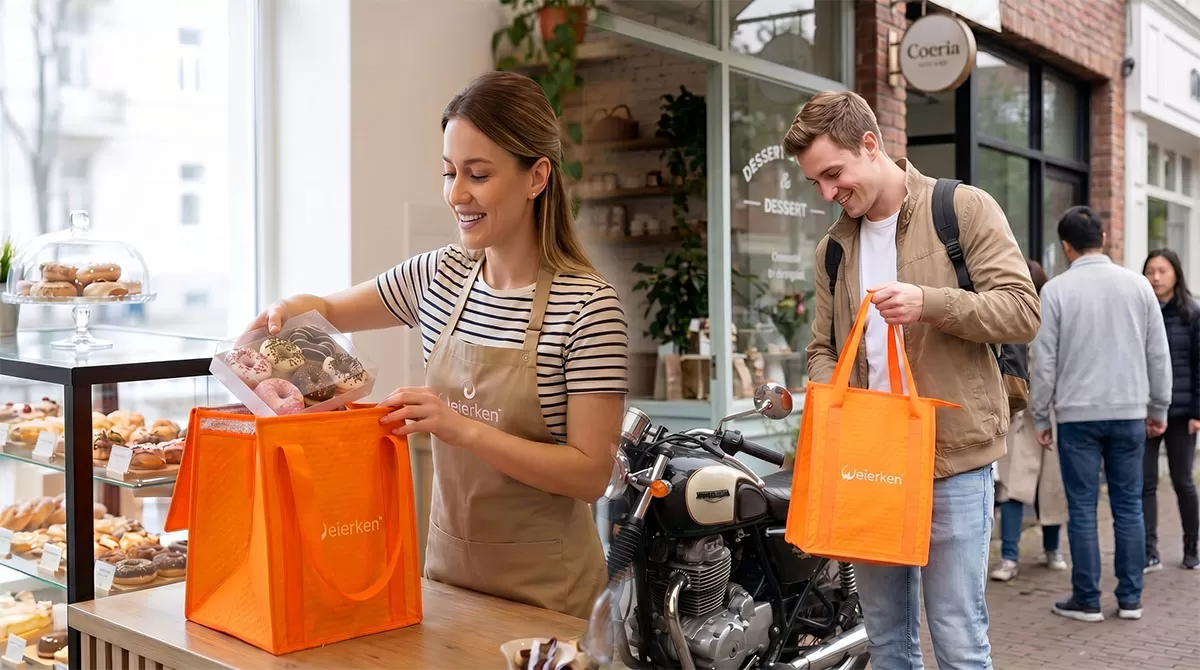
Food Delivery & Catering (35%)
Grocery Retail & Supermarkets (30%)
Promotional Campaigns & Events (20%)
Corporate Eco Sourcing & Cold-Chain (15%)
Pharmaceutical companies, subscription meal-kit brands, and high-end specialty food exporters use eco-friendly insulated bags to support their cold-chain logistics. Sourcing GRS-certified recycled materials allows these corporations to hit strict ESG targets while meeting domestic import regulations.
Key Considerations for Selecting an Insulated Bag Manufacturer
Supply Chain Resilience and Global Footprint
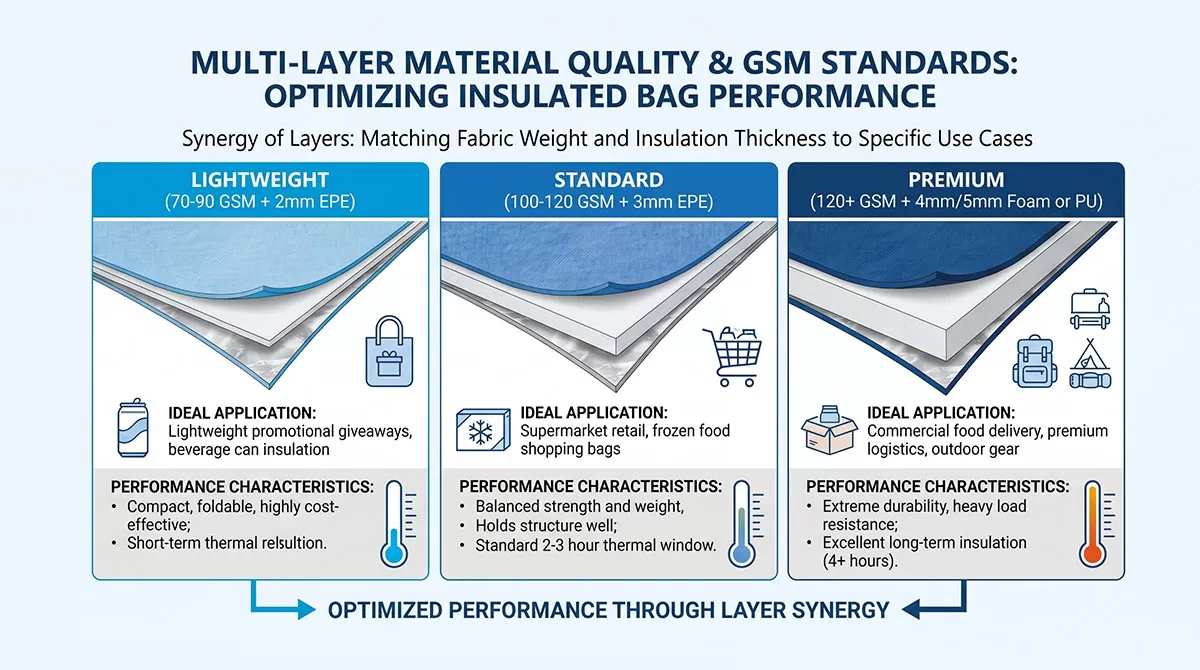
Multi-Layer Material Quality & GSM Standards
| GSM / Material Setup | Ideal Application | Performance Characteristics |
| 70–90 GSM + 2mm EPE Foam | Lightweight promotional giveaways, beverage can insulation | Compact, foldable, highly cost-effective; short-term thermal retention. |
| 100–120 GSM + 3mm EPE Foam | Supermarket retail, frozen food shopping bags | Balanced strength and weight; holds structure well; standard 2–3 hour thermal window. |
| 120+ GSM + 4mm/5mm Foam or PU | Commercial food delivery, premium logistics, outdoor gear | Extreme durability, heavy load resistance, excellent long-term insulation (4+ hours). |
Depth of Customization and Technical Engineering
Advanced Printing: High-definition rotogravure lamination, silk-screen, or heat transfer printing that won't peel or crack when exposed to moisture or condensation.
Hardware and Closures: Airtight nylon zippers, heavy-duty Velcro closures, or drawstring setups designed for high-frequency opening/closing.
Reinforcements: Dual cross-stitching on handles, rivets at stress points, and removable rigid baseboards to keep items upright.
Compliance, ESG, and Eco-Certifications
Social & Quality Management: BSCI and SEDEX for ethical manufacturing audits; ISO 9001 for manufacturing process control.
Material Safety & Sustainability: GRS (Global Recycled Standard) for authentic rPET/recycled content tracing; REACH and food-contact safe approvals for interior linings.
Top 5 Non-Woven Insulated Bag Manufacturers in China
Weierken (Fujian Province)
- Strengths:
Multi-Factory Footprint: Active production facilities across both China and Cambodia, offering buyers an effective strategy for tariff mitigation and supply chain risk diversification.
Turnkey Logistics: Provides seamless DDP (Delivered Duty Paid) shipping with transparent, fixed all-in pricing, removing the complexity of customs clearance for overseas buyers.
Rigorous Quality Control: Boasts a verified 99.5% QC pass rate backed by comprehensive global credentials including BSCI, GRS, REACH, SEDEX, rPET, and ISO 9001.
Rapid R&D: Dedicated in-house sample development room capable of turning blueprints into physical prototypes within 3 to 7 days.
B2B Partnership Focus: 20+ years of export experience with fluent English project management, acting as a direct extension of your corporate procurement team.
- Considerations:
Focuses strictly on premium eco-materials and compliant production, meaning initial unit pricing may be slightly higher than unverified, non-compliant workshops.
Qianlin Pack (Zhejiang Province)
- Strengths:
Massive production capacity for large-scale retail rollouts.
Highly competitive base pricing for high-volume, entry-level insulated grocery bags.
Quick turnaround on standard bag sizes and shapes.
- Considerations:
Treats insulated bags as a secondary product line next to paper packaging; limited technical engineering for complex, heavy-duty food delivery bags.
Fewer options for advanced eco-friendly insulation cores or specialized leak-proof linings.
Kaisen Global (Zhejiang Province)
- Strengths:
Excellent capabilities in full-bleed, vibrant promotional printing and fashion-forward insulated bag designs.
Flexible order handling well-suited for mid-sized promotional campaigns and event giveaways.
Good support for creative branding elements (e.g., custom hardware, specialized pockets).
- Considerations:
Mainly focused on the promotional market rather than industrial cold-chain or heavy-duty logistics.
Possesses fewer international sustainability certifications compared to top-tier industrial manufacturers.
Source Nonwoven (Guangdong Province)
- Strengths:
Direct control over the raw non-woven fabric layer, ensuring stable material quality and precise GSM customization.
Strong technical foundation in basic ultrasonic heat-sealing methods.
Cost-efficient for massive, straightforward non-woven insulated tote orders.
- Considerations:
Lead times can be extended because fabric production and bag conversion are tied to the same facility pipeline.
Limited product diversification regarding multi-material insulation (such as thick PU foam or technical PEVA linings).
Panda Bambu (Fujian Province)
- Strengths:
Strong focus on environmental branding, offering unique green material combinations.
Well-aligned with brands wanting to market strict anti-plastic or bio-friendly initiatives.
Good baseline customization for sustainable retail bags.
- Considerations:
Smaller overall production capacity for multi-layered thermal goods compared to dedicated industrial bag factories.
Higher raw material costs due to the specialized nature of eco-fabrics can limit affordability for tight, high-volume logistics budgets.
Conclusion: Sourcing Smarter
FAQ
Q1: How long can a non-woven insulated bag maintain internal temperatures (hot or cold)?
2mm EPE Foam + Aluminum Foil: Ideal for retail/grocery checkouts (lasts 1–2 hours).
3mm to 4mm EPE Foam + PEVA/TPU: Ideal for premium grocery transport and meal-kit delivery (lasts 3–4 hours).
5mm EPE/PU Foam + Airtight Zippers: Commercial-grade last-mile food delivery (lasts 4+ hours).
Q2: What is the differences between traditional stitching and RF welding for insulated bags?
Traditional Thread Stitching: Punches tiny holes through the fabric and lining. While structurally strong and highly cost-effective for standard retail, it is not leak-proof. Condensation or spilled liquids will eventually seep through the needle holes.
RF (Radio Frequency) Welding / Ultrasonic Heat Sealing: Uses high-frequency energy to melt and fuse the inner lining seams together without needles. This creates a 100% leak-proof, airtight barrier, making it the gold standard for fresh seafood, ice cream, and hot catering delivery.
Q3: Why is GSM calibration so important for insulated bags compared to standard totes?
80–90 GSM: Strictly for lightweight promotional giveaways or small beverage carriers.
100–120 GSM: The standard for supermarket checkout lanes and grocery delivery.
130–150+ GSM: Essential for industrial cold-chain logistics, heavy-load delivery, and premium brand positioning.